




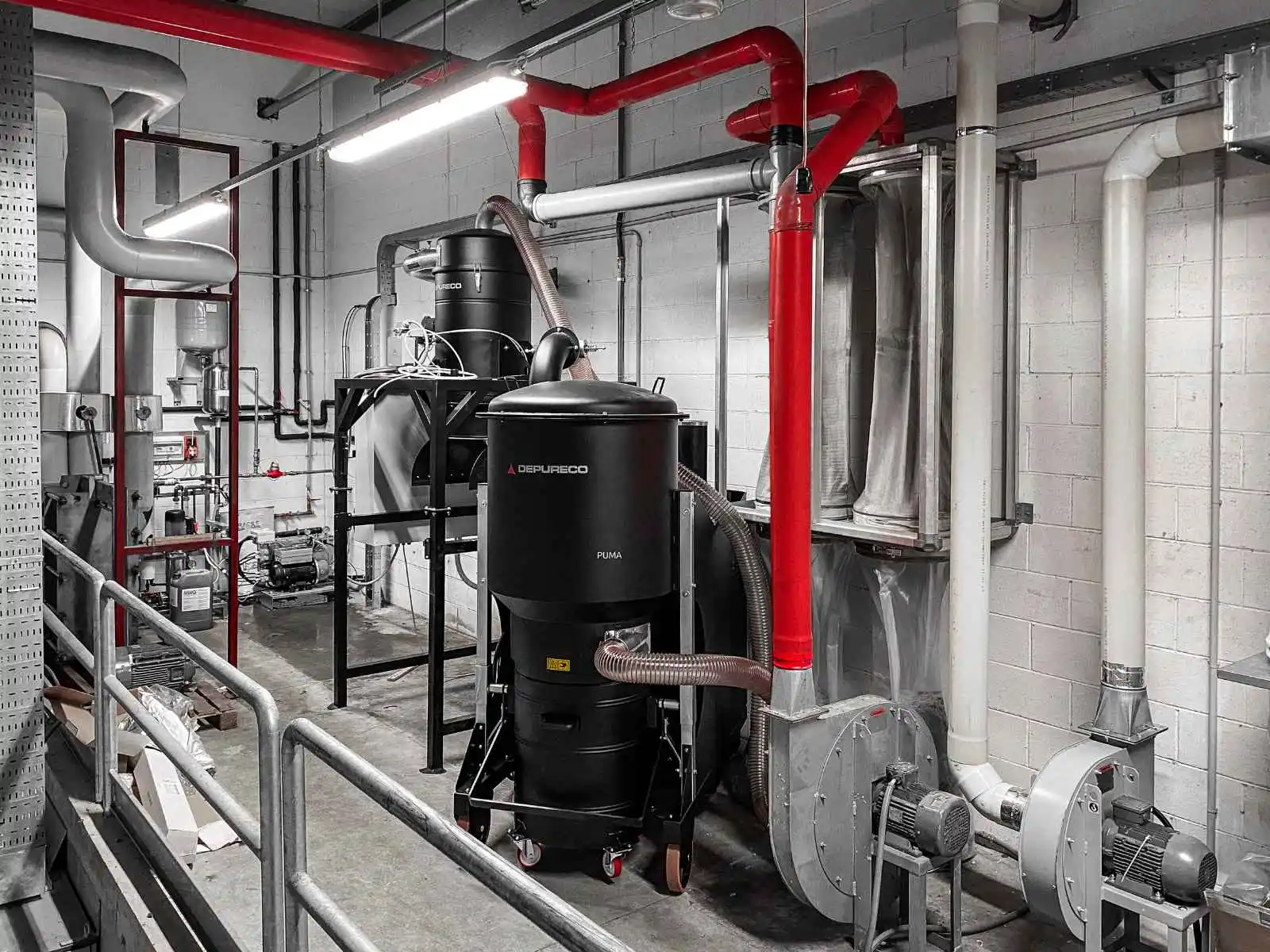
How Industrial Central Vacuum Systems work
A lot of people hear the term central vacuum system and think it just means a bigger vacuum with a longer hose. That is not really what it is.
An industrial central vacuum system is a fixed suction system built into the facility. Instead of moving a vacuum from area to area, the vacuum source stays in one location, and suction is routed through pipework to the points where operators actually need to clean.
That difference matters more than it sounds.
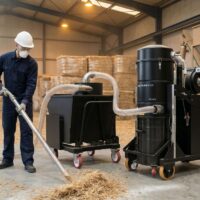
In a busy plant, portable vacuums can become one more thing to work around. They take up floor space. They get dragged through production areas. Cords and carts end up in walk paths. In some environments, that is just annoying. In others, it creates a real safety, contamination, or housekeeping problem.
A central vacuum system solves that by taking the machine out of the work area and leaving only the suction where the work happens.
That is why these systems are used in manufacturing plants, processing environments, pharmaceutical spaces, food facilities, and other operations where cleaner layout, better control, and safer cleanup all matter.
It Starts With One Simple Idea
The easiest way to understand how an industrial central vacuum system works is to think of it as a network.
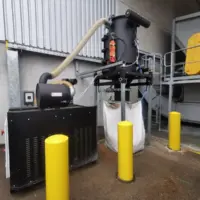
The main vacuum unit is installed in a dedicated location. That could be indoors or outdoors, depending on the facility and the application. From that unit, pipework runs through the plant to a series of drops or connection points. Operators connect a hose to those drops when cleanup is needed.
Once connected, the system pulls air and material through the hose, through the pipe, and back to the central unit. The material is then filtered, collected, and discharged.
That is the whole operating concept. The vacuum does not travel. The suction does.
It sounds straightforward, but it changes the cleaning process in a big way. Instead of pushing a vacuum cart across the floor every time material needs to be picked up, operators can just go to the nearest drop and start working.
Why Facilities Move to a Central System

A lot of facilities do not switch to a central vacuum system because they want something more complicated. They switch because portable vacuums are becoming a hassle.
In many plants, the problem is not that the portable vacuum cannot pick up the material. The problem is everything that comes with it. The machine has to be moved. The hose has to be dragged around the equipment. The power cable ends up across a walkway. The cart gets dirty, and then it gets pushed into another area.
That is where a central system starts to make sense.
By keeping the unit stationary, the facility can reduce clutter in active work zones. It can make cleaning easier to access. It can also reduce unnecessary movement of equipment between spaces.
That is especially helpful in industries where cross-contamination is a concern. Pharmaceutical, nutraceutical, and some food operations often want as little unnecessary equipment traffic as possible in the production area. A fixed vacuum system helps with that.
Even in general manufacturing, the benefit is obvious. Less equipment on the floor usually means a cleaner and safer working environment.
The Main Pieces of the System
The design can vary a lot from one application to another, but most industrial central vacuum systems are built around four main sections.
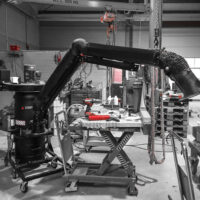
The first is the vacuum unit. This is what creates the suction. In industrial systems, that is usually a stationary unit equipped with a side channel blower.
The second is the pipework network. This is what carries suction from the main unit to the drops placed around the facility.
The third is the filtration section. Once dust, debris, or other material is pulled back to the unit, the system has to separate that material from the airflow. That is the job of the filters.
The fourth is the collection or discharge section. After the material is separated, it needs to go somewhere practical. Depending on the system, that might be a removable bin, a drum, a hopper, or an automatic discharge arrangement.
That is the foundation of the system. Suction, pipework, filtration, and collection.
How Suction is Generated
Most industrial central vacuum systems are powered by three-phase electricity. In many industrial facilities, that means 480V, although the exact electrical setup depends on the installation.
The suction source is often a side channel blower. That is common in industrial central systems because it is well-suited for continuous-duty operation. These systems are not built for occasional cleanup once a week. Many are expected to handle regular daily use, and some are designed around multiple operators working at the same time.
The size of the blower depends on the application. A system serving a small area with one user is very different from a system serving several drops across a larger facility. Pipe length matters. Material type matters. Simultaneous usage matters.
That is why a central vacuum system cannot be sized the same way as a portable vacuum. The layout has to be part of the design from the beginning.
What Happens Once Material Enters The System
When an operator picks up material through a hose, that material travels through the pipe network back to the central unit. Once it gets there, the system has to do two things well.
First, it has to keep airflow moving.
Second, it has to separate the collected material so it does not just pass through the unit.
That is where the filtration section comes in.
In many industrial central vacuum systems, the material enters a filtration chamber fitted with cartridge filters. Those filters allow air to continue through the system while holding dust and debris back. That protects the vacuum source and keeps the system from blowing collected material back into the environment.
This part is more important than some buyers realize. Strong suction alone is not enough. If the filtration setup is wrong for the material, performance suffers. Filters load up too fast. Airflow drops. Maintenance increases. The whole system becomes less effective than it should be.
A good central vacuum system is not just powerful. It is matched to the material it will actually collect.
How Automatic Filter Cleaning Works

In a lot of industrial applications, filter cleaning cannot be a constant manual task. If operators have to stop, open the unit, and deal with dirty filters all the time, the system becomes a burden instead of a solution.
That is why many industrial central vacuum systems use automatic filter cleaning.
The basic idea is simple. Compressed air is used to pulse-clean the filters from the clean side to the dirty side. That quick reverse pulse knocks dust off the filter surface so it can fall into the collection area below.
The system does that automatically through compressed air and electronically controlled valves.
Why does that matter? Because filter loading is one of the fastest ways to lose performance. When filters stay cleaner, airflow stays more stable. That means better suction, less downtime, and less operator involvement.
For facilities running routine cleanup or continuous material collection, that is a major advantage.
How Material is Collected and Discharged
After the material is separated from the airflow and drops off the filters, it still has to be handled properly.
In some systems, the collected material falls into a removable bin. That works well when volumes are manageable, and the facility is comfortable emptying the bin during normal housekeeping.
In other systems, especially where material volume is higher, the discharge setup is often more automated. The system may use a rotary valve, an airlock, or another automatic discharge method to move material into a larger container.
That container could be a hopper, a drum, or another collection vessel chosen around the process.
This is one of those details that sounds minor until it is not. A system might vacuum well, but if the discharge method does not fit the workflow, operators end up fighting the collection process. The best systems are designed so that the discharge side makes just as much sense as the suction side.
How Many Operators Can Use The System
Not every central vacuum system is built the same way.
Some are designed for a single operator working from one drop at a time. Others are built so several drops can be used simultaneously. Some systems only need to cover a small area. Others may run across hundreds of feet of facility space.
That is why layout matters so much. The distance from the vacuum unit to the drops affects performance. The number of users affects sizing. The type of material affects both filtration and discharge.
The system has to be engineered around all of it.
That is also why central vacuum systems work so well when they are designed correctly. They are not generic machines dropped into a facility after the fact. They are built around how the facility actually operates.
Where Central Vacuum Systems Usually Make The Most Sense

Industrial central vacuum systems are a strong fit when portable vacuums are creating more problems than they solve.
That could mean large facilities where operators need access to suction in several areas. It could mean production spaces where equipment congestion is already an issue. It could mean cleaner environments where moving a vacuum cart from room to room is not ideal.
Manufacturing plants, food-related operations, pharmaceutical facilities, nutraceutical environments, and processing applications are all common fits.
The common thread is pretty simple. These facilities do not just need suction. They need a cleaner way to manage suction.
Final Thoughts
An industrial central vacuum system works by creating suction at one stationary point and distributing that suction through fixed pipework to the areas where operators need it. The material is then filtered, collected, and discharged in a controlled way.
But the real value goes beyond how the airflow moves.
A central vacuum system helps get mobile vacuum equipment out of active work areas. It helps reduce clutter. It can improve housekeeping. It can support a safer cleaning process. In the right environment, it can also help reduce contamination concerns tied to moving equipment through the facility.
That is why a central vacuum system is not just another vacuum option. It is a different way to design cleaning and material collection into the operation from the start.
Need a Central Vacuum System Built Around Your Facility?
Depureco USA designs industrial central vacuum systems around real operating conditions, including pipe length, operator demand, material type, and discharge needs. If you are planning a system for your facility, we can help you build the right setup for the application.
