



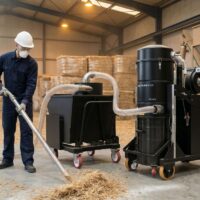

How to Choose a Vacuum for Combustible Dust Housekeeping
Choosing a combustible dust housekeeping vacuum starts with the material, pickup area and cleanup method.
The correct vacuum is the one matched to the dust, the documented area classification and the way cleanup actually happens. Horsepower, HEPA filtration or an antistatic hose cannot answer that question by themselves.
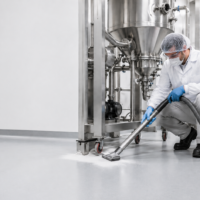
For settled combustible dust in an ordinary, unclassified area, the right path may be a documented ordinary-location configuration with appropriate construction, a conductive or static-dissipative pickup path, bonded and grounded conductive parts, suitable filtration and a collection method that controls release during emptying.
If the cleanup area is classified, the complete vacuum configuration must be suitable for the exact Class, Division, Group or Zone identified by the facility.
HEPA is a filtration rating, not an ignition-protection rating. ORD LOC is not a hazardous-location certification. ATEX and Class II Division 2 are not interchangeable labels.
Start With the Required Cleanup Path
- Settled dust in an ordinary, unclassified area:
Review an ORD LOC or other documented combustible-dust housekeeping configuration against the material and complete pickup path. - Cleanup inside a documented Class II location:
Use only a complete, model-specific configuration whose listing or marking matches the location classification and conditions of use. - Multiple cleanup points or long hose runs:
Evaluate an engineered central vacuum system instead of moving portable units throughout the plant. - Dust still airborne at the machine or process:
Evaluate source capture and an industrial dust collector. A housekeeping vacuum addresses deposited material, not the capture problem by itself. - Reactive metal powder, hot particulate or chemistry-sensitive waste:
Stop at material-specific engineering review. Some applications require an immersion, inertization or another specialized collection path.
Grounding, Bounding, and Antistatic Construction Are Not Optional
Static control has to be built into the entire vacuum system.
One of the biggest mistakes buyers make is focusing only on horsepower, voltage, or capacity while overlooking static control. In combustible dust housekeeping, that is a serious mistake.
A properly built vacuum for combustible dust should be grounded and bonded throughout the machine, from the base and casters up through the collection container, housing, inlet, and motor head. The accessories matter just as much. Hoses, wands, nozzles, and other tools should be conductive or antistatic so that electrostatic energy can dissipate safely rather than build up and discharge where it should not.
That same logic applies to wall drops, piping, and wider vacuum networks. If the machine is part of a larger system, the protection cannot stop at the tank. Safe housekeeping in combustible dust environments depends on the full path of the vacuumed material being considered, not just the main unit.
Filtration Has to Protect More Than Air Quality

The filter package should help protect the machine, the operator, and the process.
For combustible dust housekeeping, filtration is not only about capturing airborne particulate. It is also about keeping fine dust contained inside the machine, protecting internal components, and maintaining reliable airflow during cleanup.
That is why the right vacuum is typically built with antistatic filter media as the primary stage. In many applications, a secondary HEPA H14 safety filter is also a smart part of the package. That backup stage helps stop finer particles, protects the motor or blower area, and provides the system with another layer of defense if the main filter is damaged or overloaded.
This is one of the areas where facilities get into trouble with underspecified equipment. A machine may look acceptable on paper, but if the filtration system is too small, too basic, or not designed for combustible dust, performance drops fast once real material starts loading the filter. Good housekeeping depends on consistent airflow, controlled containment, and a vacuum design that does not let dust migrate where it should not.
The Vacuum Has to Be Sized for the Dust Load

A vacuum that is too small for the job becomes a problem fast.
Not every combustible dust housekeeping job calls for a large vacuum, but using a vacuum that is too small is one of the fastest ways to create a mess.
If the vacuum does not have enough filter surface area, enough collection capacity, or the right filter cleaning system, it will load up too quickly. Airflow drops. Performance falls off. Operators stop more often to empty the bin or clean the filters. Productivity slows down, and the cleanup process becomes harder to manage safely.
This is why vacuum selection should be based on more than just motor power. You need to look at the full application:
- What dust is being collected
- How much material is being picked up
- How often is housekeeping performed
- How fine the particulate is
- How much filter surface is needed
- Whether filter cleaning is manual or automatic
- How much capacity makes sense before disposal is required
- What power supply is available on site
A small unit may be perfect for localized cleanup and point-of-use housekeeping. A larger continuous-duty machine may be necessary where dust loads are heavier, the cleanup frequency is higher, or the work area is larger.
Portable Vacuums and Centralized Systems Solve Different Problems
The right answer depends on how the facility actually has to clean.
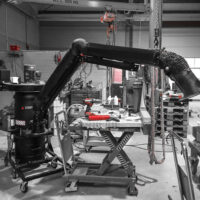
For many facilities, a portable industrial vacuum is the right place to start. Portable units make sense when cleanup is limited to one area, one machine, or one operator at a time. They are also useful when housekeeping needs are occasional or when flexibility matters more than facility-wide coverage.
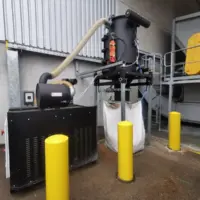
But once housekeeping expands to multiple collection points, longer distances, multiple operators, or larger dust volumes, a centralized vacuum system often becomes the better answer. Instead of moving portable machines from point to point, a centralized system can support multiple operators, reduce congestion on the floor, and create a more consistent cleanup process throughout the plant.
Depureco’s centralized vacuum materials emphasize exactly those kinds of advantages: multi-operator capability, modular system sizing, side-channel blower power, automatic filter cleaning, and the ability to customize discharge and collection around the application.
That difference matters commercially too. Buyers are often not deciding between two similar vacuums. They are deciding between two housekeeping strategies: localized cleanup with a portable unit and facility-wide dust control with a centralized system.
Common Mistakes Buyers Make
Most vacuum selection mistakes happen before the machine is ever ordered.
A lot of combustible dust vacuum problems do not start with the machine itself. They start with the assumptions behind the purchase.
One common mistake is assuming any industrial vacuum can be adapted to combustible dust housekeeping. Another is treating classified and unclassified areas as if they carry the same equipment requirements. Some buyers focus too heavily on horsepower while ignoring grounding, bonding, filter surface area, or collection capacity. Others choose a unit that can technically collect dust, but cannot do it for long without clogging, overheating, or slowing production.
Another mistake is overlooking the accessories. A properly selected vacuum can still become the weak link if the hose, tools, fittings, or piping are not aligned with the application. In combustible dust housekeeping, the accessories are not just attachments. They are part of the control strategy.
The Standard Reference Has Changed, but the Goal Has Not
Cleaner housekeeping still comes down to safer dust control.
When facilities talk about combustible dust compliance, many still reference older standards individually. The more current reference point is NFPA 660, which consolidates prior combustible dust standards into one framework. The goal, however, remains the same: identify the hazard, control ignition risk, and manage dust accumulation before it creates a larger problem.
That is why housekeeping deserves more attention than it usually gets. It is not just a maintenance detail. It is one of the most practical, visible parts of dust hazard control in a working facility.
Final Takeaway
The safest vacuum is the one matched to the real hazard.
Choosing a vacuum for combustible dust housekeeping starts with understanding the environment, the material, and the way cleanup actually happens in your facility. Area classification matters. Grounding and bonding matter. Antistatic construction matters. Filtration matters. Capacity, filter surface, and cleaning method matter.
The best choice is not the biggest vacuum in the catalog or the cheapest one that looks close enough. It is the machine or system that matches your dust load, your housekeeping routine, your utility setup, and your risk profile.
Depureco offers portable industrial vacuums, compressed-air solutions, and centralized systems designed around real-world industrial cleanup demands, with U.S. inventory and application support to help customers select the right setup instead of guessing.
