SP – 3C – 14,000
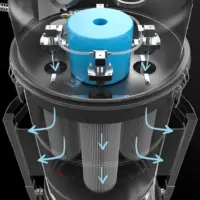
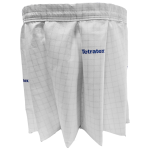
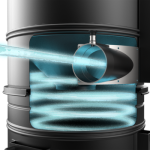
Automatic reverse jet cleaning system. Antistatic M class filter (EN-60335-2-69), 3x Polyester filter cartridges, 14,000 in² filter surface.
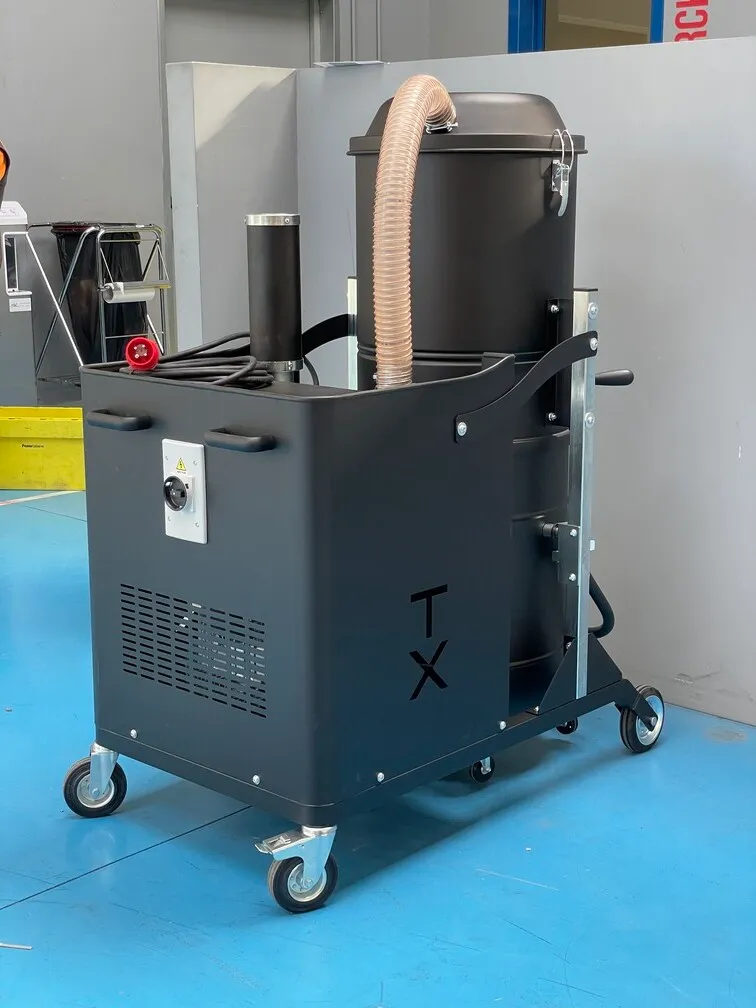
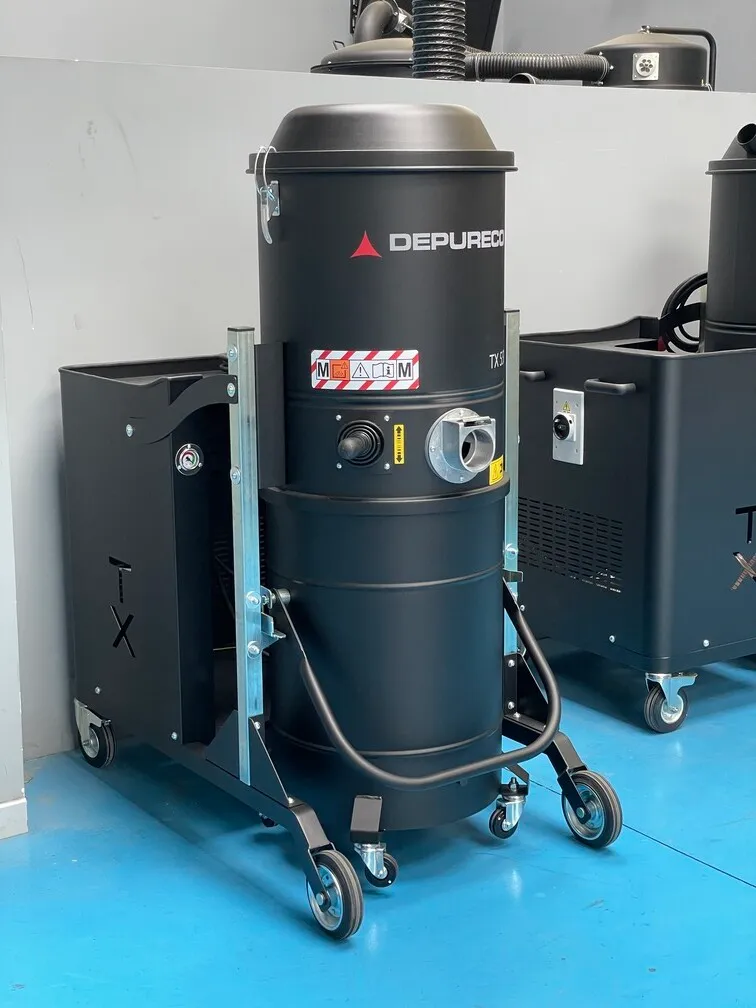
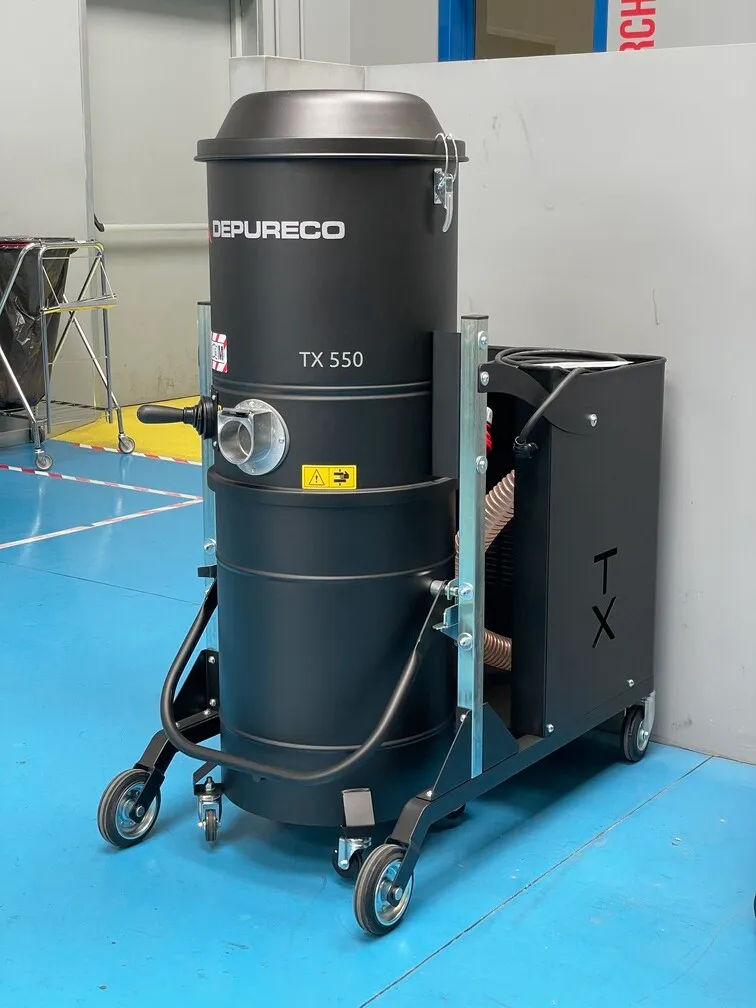
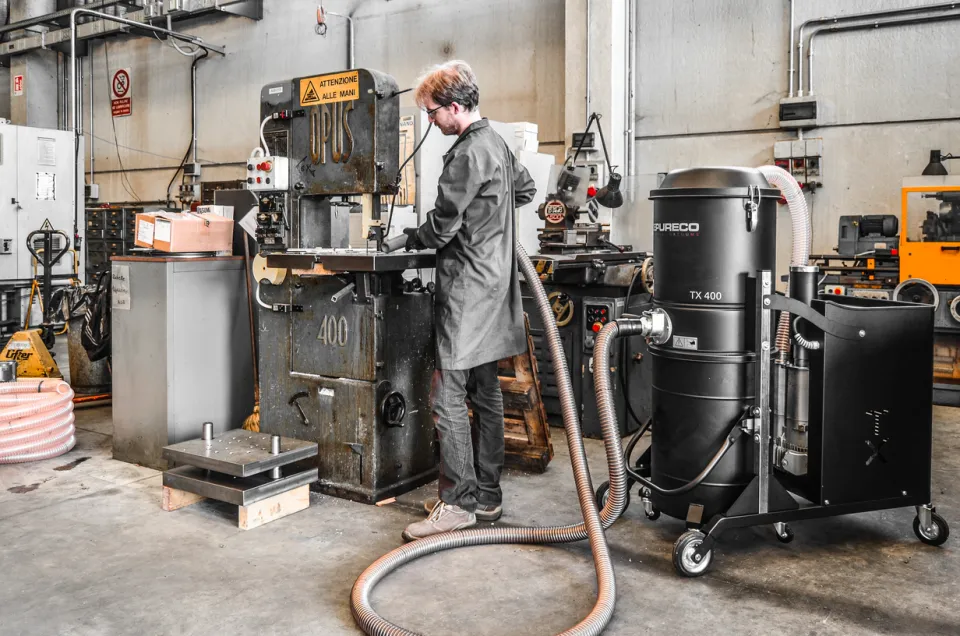
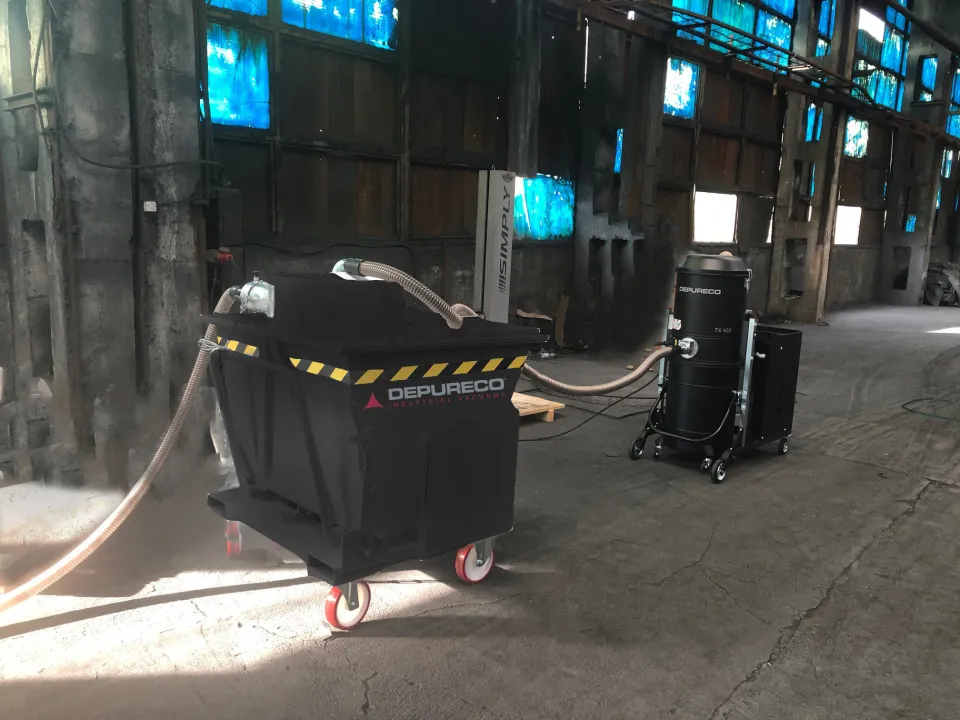
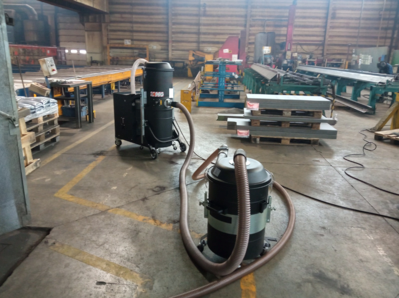

4.6 to 12 HP

5,900 in²

26 gal
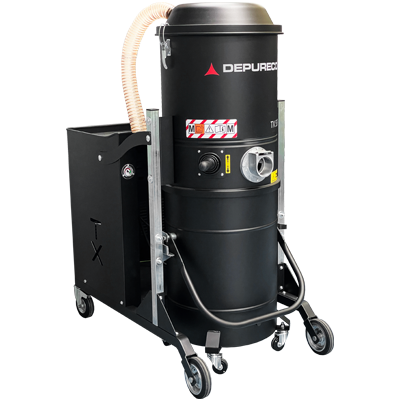
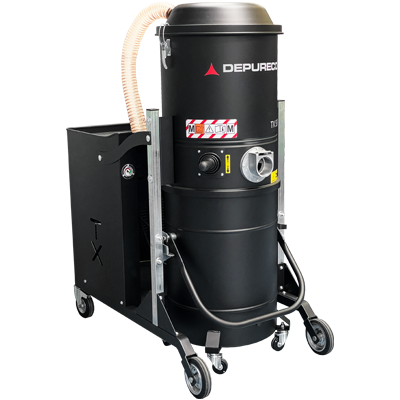
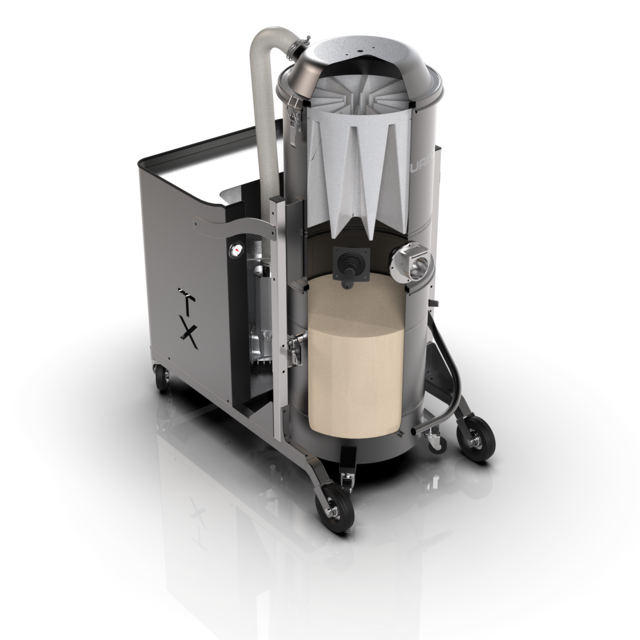
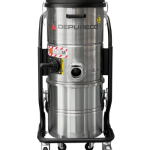
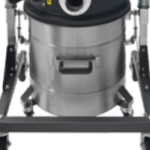
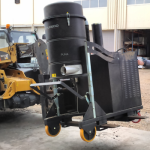
The TX is a heavy-duty three-phase industrial vacuum built for continuous-duty cleanup in production environments, machining areas, fabrication shops, foundries, and central vacuum support applications. Its side-channel blower delivers steady suction for long run times, while the Class M polyester star filter captures fine dust down to 1 micron during dry material recovery.
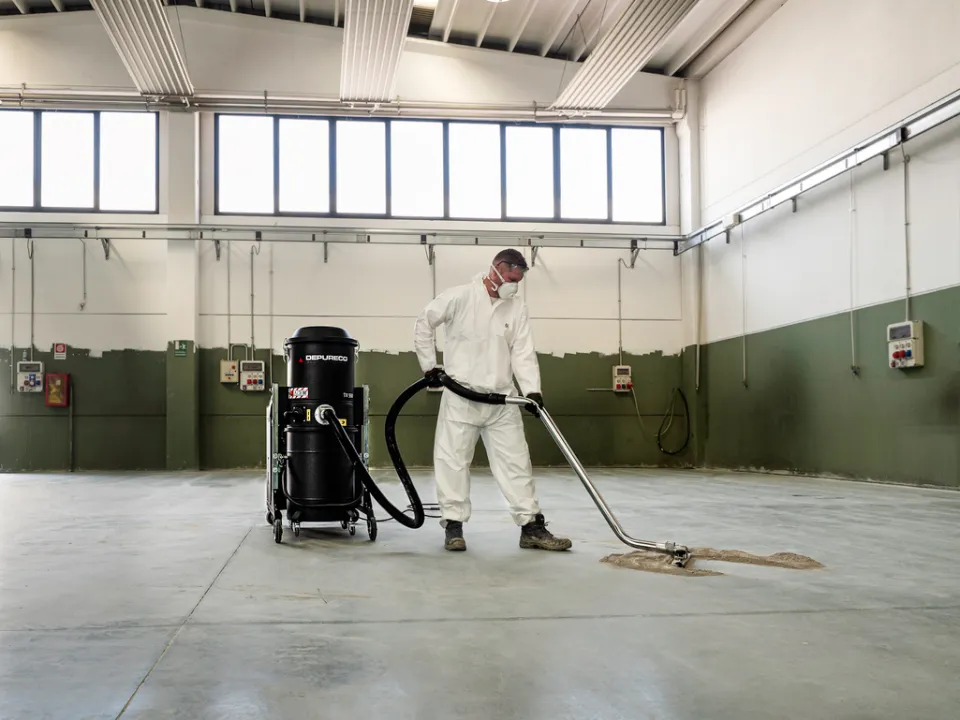
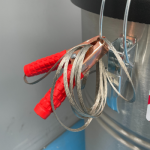
The TX is designed for dust, solids, metal chips, swarf, abrasive media, dry debris, and production-floor cleanup. The manual filter shaker helps restore airflow without removing or washing the filter, and the detachable 26-gallon wheeled collection bin makes disposal faster on busy shop floors. Optional configurations include HEPA secondary filtration, antistatic filtration, PTFE, Nomex, tangential/cyclone inlet, grounding, spark-trap, safe-bagging, forklift bracket, and liquid float options depending on the material, application, and compliance requirements.

The TX uses a three-phase side-channel blower for continuous-duty suction in production environments. The direct-coupled motor and impeller design supports long run times, while the safety valve and metal silencer help protect the blower and reduce operating noise.

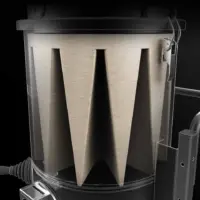
The primary Class M polyester star filter provides 5,900 in² of filter surface for fine dust and dry material recovery. The star-shaped design helps maintain airflow as dust loads on the filter, and optional filter media can be matched to fine dust, static-prone dust, hot material, or difficult powders.

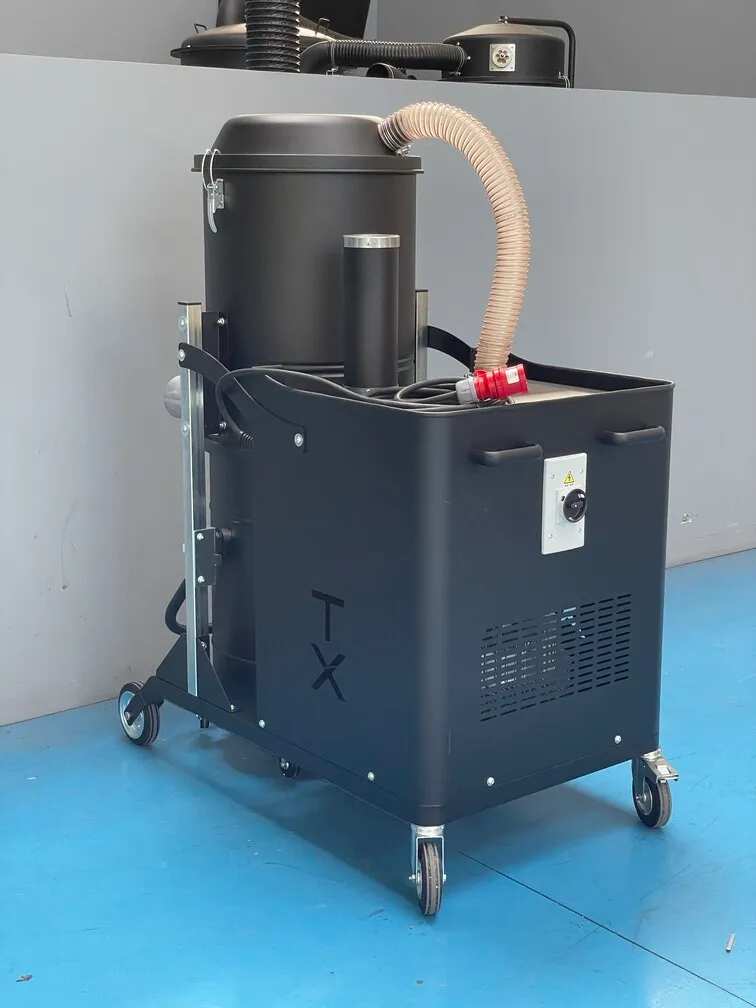
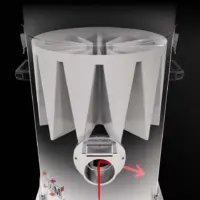
The manual filter shaker lets the operator clean dust from the filter surface and restore airflow during use. This helps reduce downtime, extend filter life, and keep the vacuum working through recurring production cleanup tasks.

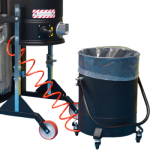
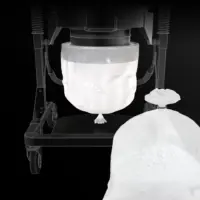
Collected material drops into a detachable 26-gallon wheeled bin for faster emptying and handling. Optional disposal configurations include safe-bagging, bag-use kits, forklift handling, and floating device setups depending on the material and cleanup process.
Automatic reverse jet cleaning system. Antistatic M class filter (EN-60335-2-69), 3x Polyester filter cartridges, 14,000 in² filter surface.
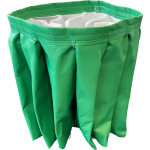
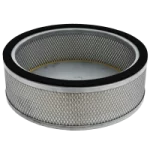
H14 Absolute Filter (EN 1822) Glass fiber
Get answers about using the TX for continuous-duty industrial cleanup, dust and bulk solids recovery, metal chips and swarf, abrasive media, three-phase vacuum performance, TX model selection, M Class and HEPA filtration, wet pickup configurations, and choosing between TX and smaller industrial vacuum platforms.
The TX is a heavy-duty three-phase industrial vacuum range designed for continuous-duty cleanup and material recovery in demanding manufacturing and production environments.
TX models use side-channel blowers for sustained industrial suction and are available in different airflow and vacuum-pressure configurations so the vacuum can be matched more closely to the material, hose setup, pickup rate, and operating requirements.
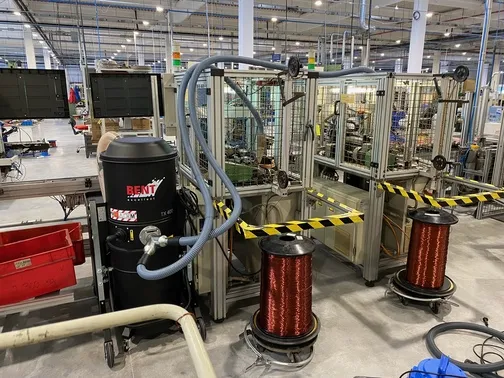
Typical applications include production-floor housekeeping, machine-side cleanup, metal chip and swarf recovery, dust and powder collection, abrasive-media recovery, foundry cleanup, fabrication debris, dry bulk solids, and repeated industrial maintenance.
All regular TX models use a 26-gallon detachable wheeled collection bin, 2.75-inch inlet, large Class M primary filter, and 480 V / 60 Hz three-phase power.
The TX is particularly useful when an operation has moved beyond intermittent portable cleanup and needs a stronger continuous-duty platform for longer operating cycles or more demanding daily material loads.
Choose the TX model according to the airflow, vacuum pressure, material, hose configuration, pickup rate, and operating conditions required by the application.
The TX 300 provides 247 CFM and 108 inH₂O and is the smallest regular TX model.
Within the TX 400 and TX 550 families, the P and S configurations provide different performance balances. The TX 400 P delivers 300 CFM and 80 inH₂O, while the TX 400 S provides 240 CFM and 130 inH₂O. The TX 550 P increases airflow to 360 CFM with 85 inH₂O, while the TX 550 S provides 240 CFM with substantially higher vacuum pressure at 180 inH₂O.
The TX 750 is the largest regular model, delivering 390 CFM and 130 inH₂O with 12 HP.
In general, applications involving high volumes of lighter material often benefit from greater airflow, while dense materials, restrictive hose paths, longer runs, vertical lift, or greater system resistance can increase the importance of vacuum pressure.
The model should therefore be selected from the actual pickup application rather than horsepower alone.
The TX is designed for continuous-duty recovery of suitable industrial dusts and solids, including production dust, powders, granules, metal chips, swarf, shavings, abrasive media, grit, dry process debris, and other loose manufacturing material.
Its combination of continuous-duty side-channel blower suction, a 2.75-inch inlet, and multiple airflow and vacuum-pressure configurations makes the TX particularly useful when material loads become more demanding than routine portable housekeeping.
In machining and fabrication environments, TX models can support repeated recovery of chips, swarf, and dry production debris. In foundries and surface-treatment applications, the platform can also be considered for suitable grit, shot, abrasive media, and heavier dry solids when the model and accessories are matched to the material.
Fine, sticky, electrostatic, abrasive, dense, stringy, or temperature-sensitive material may require different filtration, inlet configurations, hoses, accessories, or a specific TX model.
Material density, particle or chip geometry, temperature, moisture, abrasiveness, pickup rate, hose distance, and disposal requirements should be reviewed before final selection.
Yes. Continuous-duty operation is one of the defining characteristics of the TX range.
Each TX uses a three-phase side-channel blower rather than the by-pass motors commonly found on smaller portable industrial vacuums. The motor and impeller are directly coupled, allowing the vacuum to support longer operating cycles and repeated production-duty use.
This makes TX well suited to applications where vacuuming occurs for extended periods, throughout multiple production cycles, or frequently enough that the duty cycle of a smaller intermittent-duty vacuum would become a limitation.
Examples include repeated machine cleanup, larger production areas, sustained chip and debris recovery, foundry housekeeping, material recovery across longer hose runs, and demanding maintenance operations.
Continuous duty does not mean unlimited performance under every condition. Filter loading, material density, hose restrictions, collection-bin capacity, inlet size, and the selected TX model still determine how effectively the system performs.
The regular TX uses a large polyester star filter with approximately 5,900 in² of primary filter surface and a Class M classification under EN 60335-2-69.
A manual filter shaker is standard. The operator can mechanically shake accumulated dust from the star filter so material falls toward the collection bin and airflow can be restored without removing the primary filter for routine cleaning.
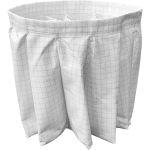
For applications requiring an additional high-efficiency filtration stage, an H14 secondary absolute filter is available. The current U.S. H14 option provides approximately 4,400 in² of fiberglass filter surface.
Other filter-media configurations are available for materials that are sticky, electrostatic, fine, or temperature-sensitive, including Teflon-treated, antistatic, PTFE, and Nomex options depending on the application.
The filter configuration should be selected according to the material rather than automatically specifying HEPA for every job. HEPA filtration, antistatic filtration, and hazardous-location suitability are separate considerations.
Yes. The TX platform can be configured for wet pickup when liquid recovery is part of the industrial cleanup application.
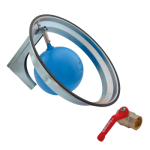
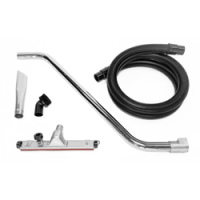
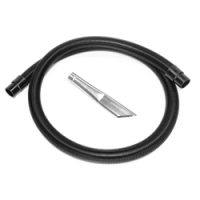
The regular TX is primarily specified for dusts and solids. An optional floating-device configuration is available for liquid pickup, and wet/dry hose and floor-tool kits can be used when the application requires recovery of suitable liquids as well as dry production debris.
This can make a properly configured TX useful in facilities where the same continuous-duty vacuum platform needs to support general production cleanup and occasional wet recovery.
The TX should not automatically be treated as a dedicated CNC sump vacuum. Applications centered on coolant recovery, cutting oil, chip-and-liquid separation, tank cleanout, or powered liquid transfer are generally better evaluated against Depureco’s dedicated OIL and RAM OIL ranges.
Fluid chemistry, temperature, flash point, solids loading, disposal requirements, and the exact quoted TX configuration should be reviewed before liquid recovery.
Choose the ECOBULL when the application needs a more compact continuous-duty three-phase vacuum for routine production cleanup. Move to the TX range when the application requires a broader choice of airflow and vacuum pressure, greater installed power, or more demanding material-recovery performance.
Both platforms use three-phase side-channel blower technology and are designed for continuous-duty industrial operation.
The TX range extends from 4.6 to 12 HP and offers several performance combinations, with airflow up to 390 CFM and continuous vacuum pressure up to 180 inH₂O. This allows the TX to be matched to applications ranging from higher-volume airflow requirements to more restrictive or higher-vacuum pickup conditions.
TX also uses a 5,900 in² primary Class M filter and a 26-gallon collection bin.
The decision should be based on material density, pickup rate, hose length, vertical lift, required vacuum pressure, airflow demand, daily operating time, filtration, and collection requirements—not simply on choosing the machine with the larger motor.
The regular TX may not be the correct choice when the application requires hazardous-location equipment, combustible-dust controls, substantially higher bulk-material throughput, a fixed centralized vacuum system, dedicated process source capture, or specialized liquid handling.
The standard TX page represents the ordinary heavy-duty three-phase product range. It should not automatically be treated as a TX C2D2, TX ORD LOC, explosion-proof, or combustible-dust configuration. If the material or facility presents a dust or ignition hazard, the material data and documented area classification should be reviewed before selecting the appropriate vacuum family.
If dust must be captured continuously at the process where it is generated, an engineered dust collector may be more appropriate than a mobile TX. Multiple permanent pickup points or plant-wide vacuum requirements may justify a centralized vacuum system. Dedicated CNC coolant and oil recovery may instead require an OIL or RAM OIL machine.
To select the correct TX model, identify the material, particle or chip size, bulk density, required pickup rate, quantity per cleanup, hose diameter and length, vertical lift, operating time, airflow demand, vacuum-pressure requirement, filtration, collection and disposal method, available 480 V three-phase power, and any applicable material or facility hazards.