

Recover wood chips, bark, biomass fines, conveyor spills and qualified cooled ash with a vacuum system configured around the actual material, pickup distance, duty cycle, discharge method and plant-area classification.
Depureco supplies mobile units for localized cleanup, high-power systems for bulk material recovery and engineered central vacuum systems for repeated plant-wide routes. Each configuration is reviewed against the complete application, not selected from CFM or horsepower alone.
Depureco reviews vacuum applications for:
Recovered wood, treated wood, agricultural residue and mixed feedstocks must be evaluated from the actual material. Their dust, contamination, abrasion and ash characteristics should not be assumed to match clean wood fuel.

Chips, bark, hog fuel and receiving spills.

Belts, reclaim points and transfer towers.

Storage bays, bunkers, silos and reclaim zones.

Boiler decks, APC equipment and maintenance areas.

Qualified cooled ash, soot and fine residue.
Each cleanup point places different demands on airflow, vacuum, hose diameter, filtration, collection capacity and discharge.
Use the application paths below to narrow the system architecture before comparing individual vacuum models.

Receiving areas, screens, chippers and hoggers can leave coarse chips, stringy bark, hog fuel, sawdust and fines around equipment bases and access points.
Large chips and bark can bridge small inlets, plug narrow hose and fill a standard collection container quickly. Higher-volume applications should begin with a PUMA or Atlas vacuum, larger-diameter hose and a filtering pre-separator.
Pre-separation increases usable collection capacity, reduces bulk loading on the vacuum’s primary filter and provides a more practical discharge point for recovered material.
Clean, uncontaminated material should only return to the fuel stream when approved by plant procedures. Material collected from maintenance areas, mixed-debris zones or treated-wood operations may require disposal.
For a limited number of accessible conveyor or transfer-point spills, a mobile vacuum provides the fastest path to cleanup.
When crews repeatedly clean the same belt lines, elevated transfer towers, drag conveyors, bucket elevators or reclaim points, an engineered central vacuum system can provide fixed pickup connections throughout the plant.
A central configuration may combine:
The complete system is sized from the longest pickup run, vertical lift, pipe diameter, material loading, number of simultaneous users and final discharge point.


Storage bays, fuel bunkers and reclaim zones can require both bulk chip recovery and fine-dust housekeeping.
Use a high-power mobile vacuum when cleanup moves between storage locations or includes occasional larger piles. Add a filtering pre-separator when the recovered volume would otherwise require frequent container emptying.
For repeated cleanup around reclaim equipment, tunnel access points or multiple storage zones, compare the mobile approach against a fixed central vacuum network.
Selection should account for:
Vacuum selection does not authorize confined-space entry. Facility procedures, isolation and entry requirements remain separate from the equipment review.

Long hose runs, fine residue, elevated work and extended cleaning cycles can move an outage application beyond the practical range of a compact single-phase vacuum.
Depending on the material and plant area, Depureco may evaluate:
The package should be selected around hose wear, filter loading, collection capacity, discharge logistics, available power and the planned cleaning window.

The following products are starting points for application review.
Final selection depends on the material, loading rate, pickup distance, duty cycle, utilities, discharge method and exact plant-area requirements.
A mobile 120V platform with:
Use for intermittent-to-frequent cleanup in qualified nonclassified areas.

Compact brushless configurations for qualified nonclassified-area combustible-dust housekeeping.
Consider these models where a smaller footprint, brushless motor and longer motor service life are priorities. Confirm the exact filter, collection and accessory configuration for the material.
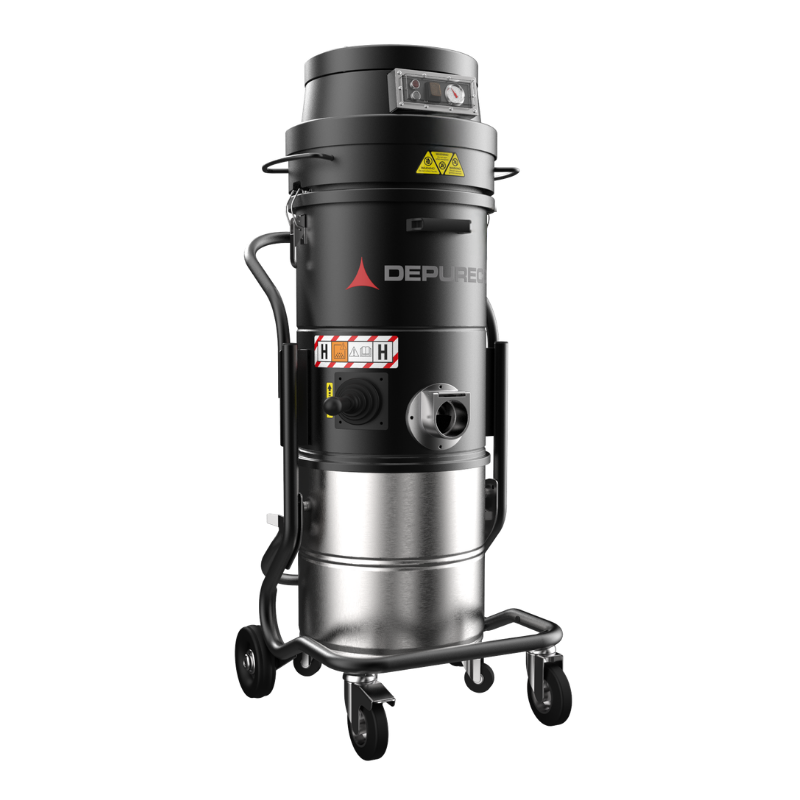

A mobile configuration for qualified C2D2 cleanup where compact size and collection capacity are priorities.

Evaluate when the application benefits from greater primary-filter surface area.
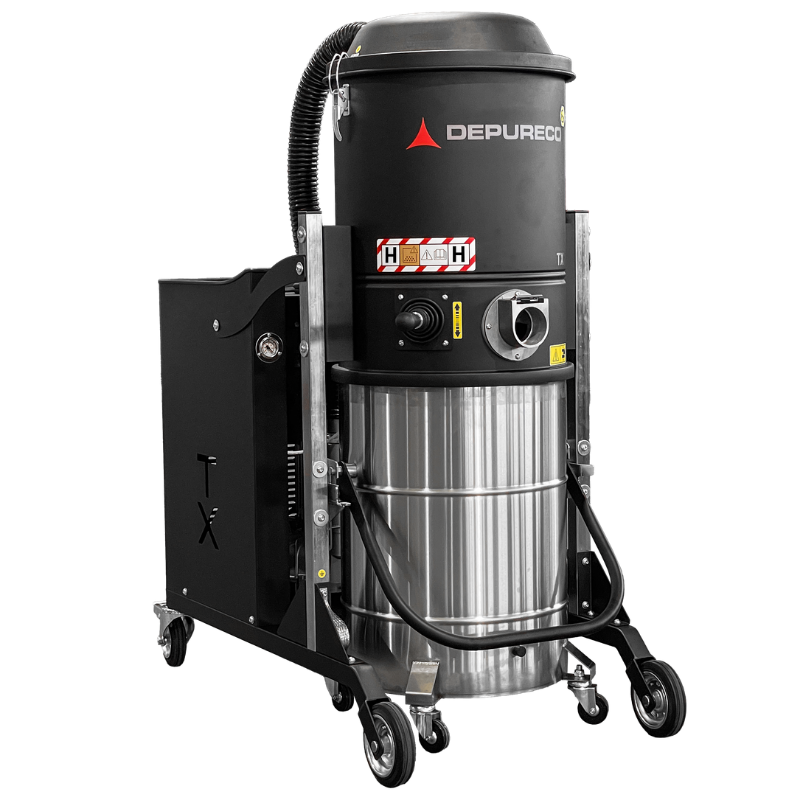
PUMA 10, 15P, 20 and 25 configurations provide increased airflow, vacuum and collection options for larger ordinary-material spills, longer hose runs and extended recovery.
Pair the vacuum with a filtering pre-separator when the application requires greater collection capacity or reduced bulk loading on the primary filter.

Atlas configurations can be evaluated when material volume, collection capacity or cleanup duration exceeds the practical range of smaller mobile units.
Material dimensions, loading rate, hose distance, power, pre-separation and discharge must be reviewed together.
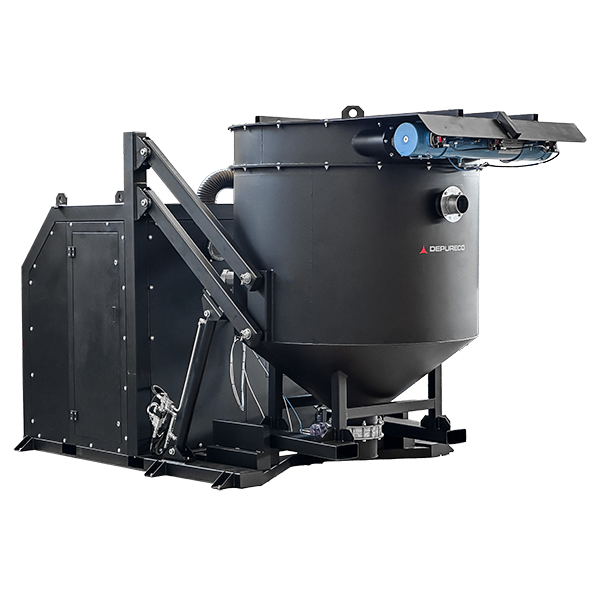
Engineered stationary & central systems can combine vacuum units with:
For applications & processes where repeated cleanup routes, multiple plant levels or long pickup distances make a mobile-only approach inefficient.

The TB UP 3 provides continuous-duty three-phase suction for qualified dry-residue and maintenance applications.
For ash-related applications, confirm temperature, chemistry, abrasiveness, hose construction, accessories and discharge before specifying the unit.
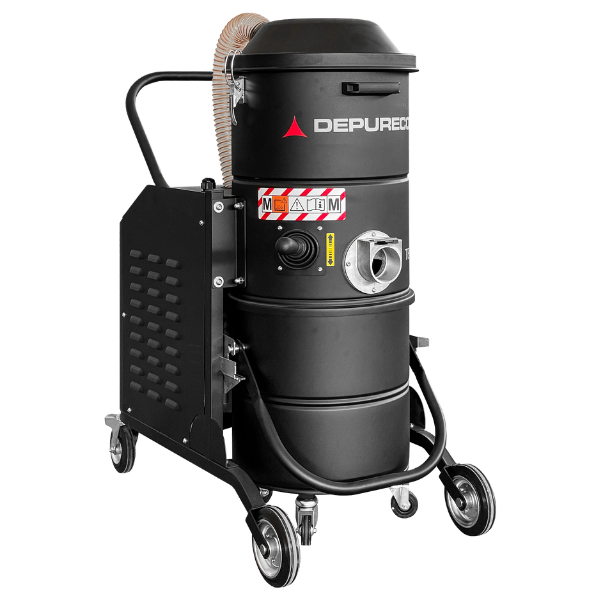
The strongest biomass-plant vacuum solution is rarely one machine trying to do everything. It is the right mix of combustible-dust protection where wood fines are present, central pickup where conveyor cleanup repeats every shift, higher-power recovery where material loading is heavier, and mobile maintenance vacuums where access matters more than scale.
That is where Depureco’s range separates itself: rugged industrial construction, continuous-duty performance, higher-efficiency filtration, and solution paths that scale from mobile maintenance to full central vacuum layouts.
Send Depureco a sample of the wood chips, bark, biomass fines, cooled ash or mixed residue you need to recover.
Our team will test the material using different:
Testing can show whether chips bridge in the hose, fines load the filter rapidly, bulk material requires pre-separation or a different tool improves pickup to support the recommended vacuum configuration and complete quote.
