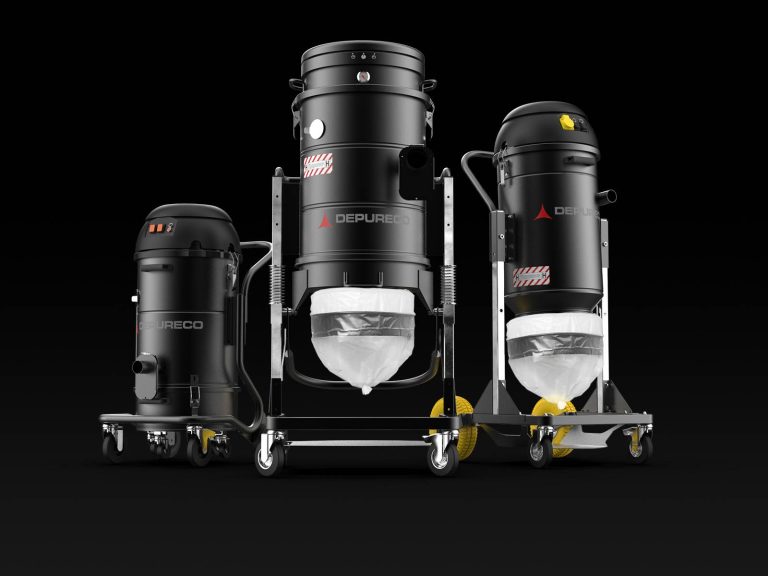
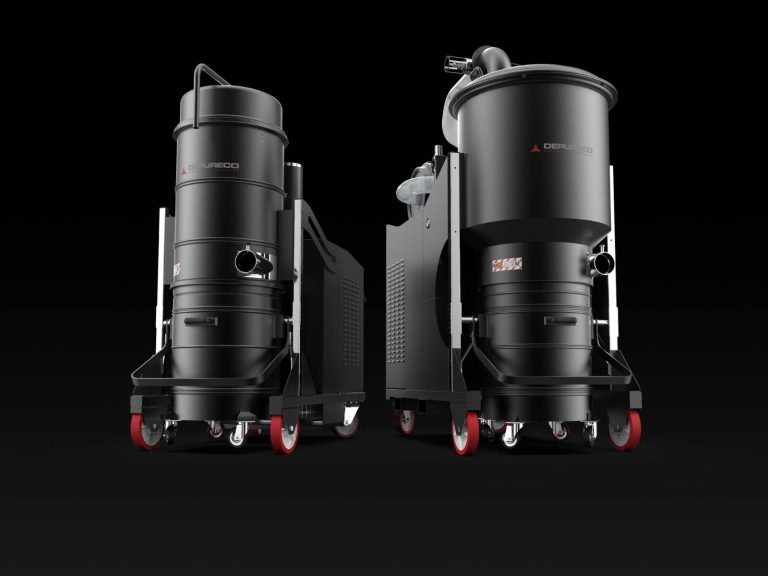
Fine dust and dry powders create a different vacuum problem than ordinary debris. The right setup depends on particle size, material density, filter load, pickup distance, collection volume, and how the dust needs to be emptied or recovered.
Depureco USA helps match fine dust applications to the right vacuum path: HEPA dust extraction, powder recovery, Longopac collection, combustible dust review, high-power vacuum systems, pre-separation, or central vacuum system design.
Fine dust and dry powder recovery depends on the material, the volume, the filter load, and where the cleanup happens. A compact industrial fine dust vacuum may be the right fit for routine production cleanup. A HEPA dust extractor may be required for fine particulate or contained disposal. A central vacuum system may be the better answer for multiple pickup points. A high-power vacuum or pre-separator may be needed when powder volume, density, or hose distance pushes beyond a smaller portable unit.
Use the solution paths below to route the application toward the right Depureco vacuum category without forcing every fine dust problem into the same machine.
HEPA dust extractors for fine dust, silica dust routing, dry particulate cleanup, and contained dust disposal in industrial and manufacturing environments. Use this path for applications that need high-efficiency filtration, HEPA industrial vacuum performance, Longopac collection, cleaner emptying, and rugged dust extraction for fine particulate, concrete dust, process dust, or filter-loading cleanup work.
Explosion-proof industrial vacuums and ORD LOC vacuum options for combustible dust, conductive dust, fine powders, dry particulate, and classified-area review. Use this path when dust recovery involves flour dust, wood dust, plastic dust, metal dust, aluminum dust, carbon dust, graphite powder, or other materials that may require grounding, conductive construction, ignition-source control, or combustible dust vacuum selection.
High-power industrial vacuums for heavy fine dust loading, dense dry particulate, abrasive powder, bulk powder recovery, long hose runs, and demanding manufacturing cleanup. Use this path when compact fine dust vacuums or standard industrial dust extractors cannot keep up with production dust, powder recovery, filter-loading applications, high material volume, or continuous industrial recovery work.
Centralized vacuum systems for fine dust recovery, powder collection, production floor cleanup, plant-wide dust collection, and multiple pickup points across industrial facilities. Use this path when portable industrial dust vacuums are not enough for repeated cleanup routes, long hose runs, packaging lines, machine-side dust recovery, dry powder collection, or high-volume facility housekeeping workflows.
Fine dust and dry powders can reduce airflow fast when the vacuum, filter, or collection method is not matched to the application. Material density, particle size, filter surface area, hose length, and emptying method all affect performance.
Depureco systems can be configured around the way the material is actually collected: mobile vacuums, HEPA dust extractors, Longopac collection, pre-separators, high-power systems, ORD LOC options, and central vacuum layouts.
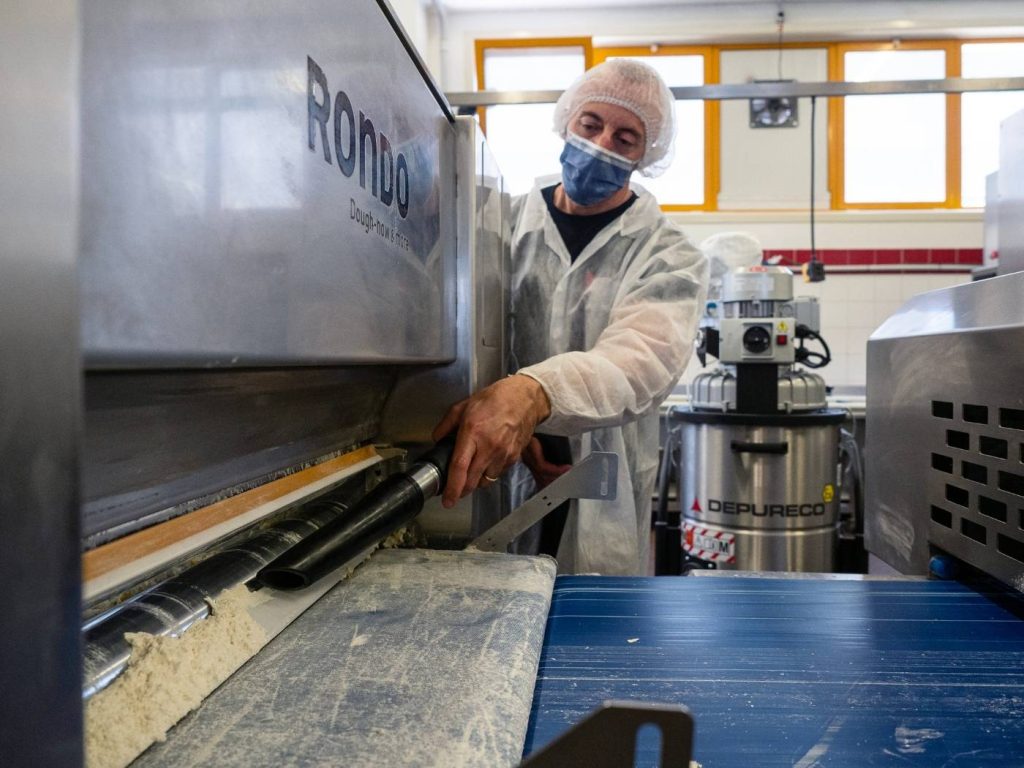
Dense powder, lightweight dust, long hose runs, and machine-side pickup points do not all move the same way. The vacuum should be selected around the material and distance, not just the largest available motor.

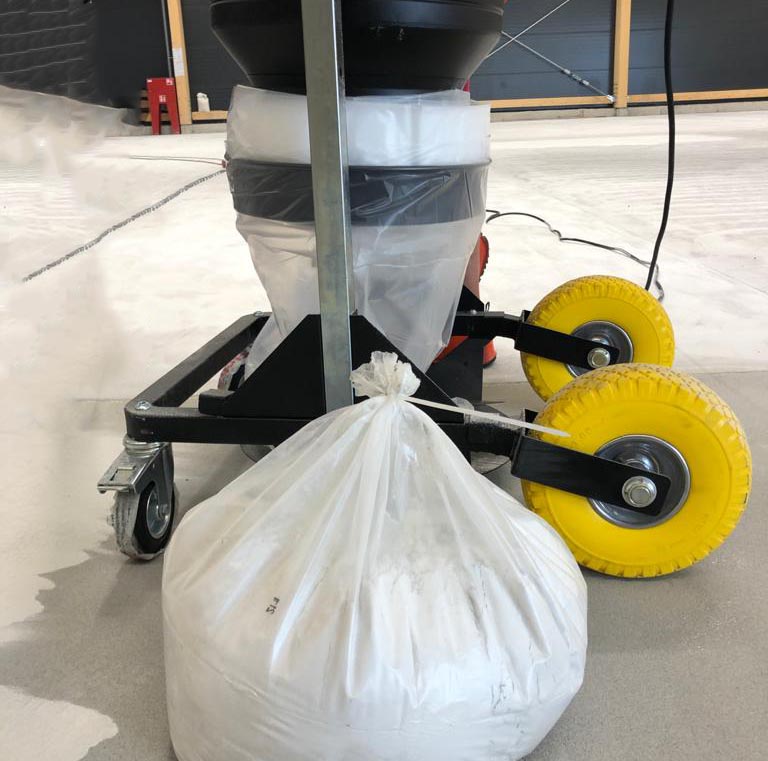

A fine dust vacuum should be selected around the material first: how fine it is, how dense it is, whether it blinds filters, whether it needs cleaner collection, and whether it should be reviewed for combustible or conductive dust risk.
Depureco USA commonly reviews applications like these before recommending the final vacuum, filter, hose, separator, and collection setup.
industrial vacuum for powder handling, industrial dust removal system, vacuum for bulk powder cleanup, fine dust extraction vacuum, industrial vacuum for continuous dust collection
For silica, concrete, mortar, drywall, and surface-prep dust where HEPA filtration, contained collection, and silica-specific vacuum review may be needed.
For toner, pigment dust, powder coating residue, carbon black, graphite, packaging-line dust, and fine process residue that can quickly load filters.
For dense powders, abrasive dust, bulk dry material, long hose runs, and frequent cleanup cycles that may need more power, capacity, or pre-separation.
For bagging areas, filling stations, conveyors, wrappers, transfer points, and machine-side cleanup points where dust recovery needs to fit production flow.
Industrial vacuum for powder handling, industrial dust removal system, vacuum for bulk powder cleanup, fine dust extraction vacuum, high capacity dust vacuum, continuous duty industrial dust vacuum, industrial vacuum for continuous dust collection, vacuum for fine dust without clogging, industrial vacuum without suction loss, powder recovery vacuum, dense powder vacuum, abrasive dust vacuum, industrial vacuum for heavy particulate, fine dust filtration vacuum, and industrial vacuum system selection based on particle size, material density, filter loading, and recovery volume.

When suction drops during fine dust recovery, the issue is often the filter path, not just the motor. The material may be too fine, the filter surface may be too small, the media may be wrong for the dust, or the application may need pre-separation before the vacuum.
Depureco USA can review the material, hose length, pickup point, dust volume, and emptying method to help determine whether the system needs PTFE media, JetClean® filter cleaning, HEPA filtration, Longopac collection, a larger vacuum, or a separator.


The collection method matters as much as the vacuum. Fine dust, dry powder, abrasive material, and bulk debris may each require a different emptying or recovery process.
Depending on the application, Depureco systems can be configured with removable collection bins, Longopac bagging, pre-separators, cyclones, forkliftable containers, or central collection points.


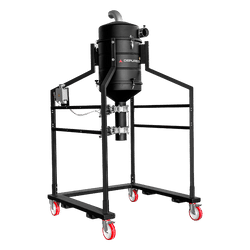
Depureco builds industrial vacuum systems for facilities that need more than a cleanup tool. Fine dust recovery may require the right filter media, filter cleaning system, hose size, pickup tool, collection method, separator, or central layout.
If you are not sure which system fits, send us the material, estimated volume, pickup location, hose distance, and disposal or recovery requirement. Our team can help route the application to the right Depureco vacuum path before quoting.
Fine-dust equipment should not be selected from maximum CFM, horsepower, or the word “HEPA” alone.
The correct configuration can change with the material, particle behavior, exposure risk, pickup method, hose conditions, filter loading, cleaning method, containment objective, operating duty, collection volume, and whether the real need is settled-dust housekeeping, tool-connected extraction, source capture, continuous process recovery, or a centralized system.
You do not need to know the final model before starting the review. The questions below identify the information that changes the answer.
Start with the application, not a model number.
A useful first-pass review should document:
You do not need a laboratory particle-size distribution or final engineering specification before contacting a supplier. Start with what is known.
The answer changes quickly when, for example:
Common specification mistake: starting the RFQ with horsepower, CFM, or the incumbent model before documenting why the current process is failing.
The better starting point is:
What material is being collected, where is it being generated, how much must move, how long must the system work under load, and what must happen to the material after collection?
For an uncertain application, Depureco can review the operating conditions or evaluate customer-supplied material before final configuration.
Start with the material in the form actually generated by the process, not the material name alone.
A vacuum selected for dry concrete fines may require a different filtration, cleaning, containment, and collection strategy than a system handling pharmaceutical powder, graphite, carbon black, powder-coating residue, lead-bearing dust, food ingredients, polymer powder, or additive-manufacturing residue.
Engineering should document, where known:
These inputs affect more than suction power.
A lightweight powder may become airborne easily and migrate through the work area. A dense fine material may create different pickup demands through a restrictive hose path. Abrasive particulate can increase wear. Sticky or hygroscopic material can blind media faster than a free-flowing dry dust. Conductive, combustible, reactive, toxic, or contamination-sensitive material can change the equipment path before horsepower is discussed.
Common specification mistake: Choosing a vacuum because another facility collects a material with the same general name.
The better approach is to define:
The answer depends first on where the material is in the process and what the equipment must do.
A strong fit when:
A strong fit when:
A strong fit when:
Worth evaluating when:
Worth evaluating when:
Worth evaluating when:
A material or area-classification concern can override all of these general routes and require a separate equipment review.
Common specification mistake: assuming that a larger portable vacuum solves an airborne source-capture problem, or that a dust collector eliminates the need for housekeeping recovery.
Many facilities legitimately need more than one architecture.
The better question is:
Where is the dust when control is needed, how often is recovery performed, how many pickup points exist, and what must happen to the material after collection?
Because maximum CFM is only one point on a machine’s performance envelope.
The vacuum has to work against resistance created by the complete suction path, including:
Two machines can publish similar maximum airflow and behave very differently when connected to a long hose, restrictive pickup tool, loaded filter, dense powder stream, or fixed piping network.
Engineering should compare:
Common specification mistake: ranking proposals by the largest CFM number.
A high-airflow machine may perform well through a large open pickup and still be a poor fit for a highly restrictive path. Another application may need a different pressure-flow characteristic rather than a larger free-air number.
The better question is:
What usable pickup performance remains after the actual hose, tool, filter loading, lift, and other resistance are included?
For a replacement project, provide the existing model, material, hose arrangement, pickup rate, cleanup time, and current failure mode rather than asking only for an equal CFM number.Because maximum CFM is only one point on a machine’s performance envelope.
HEPA should be selected because the application, exposure objective, process requirement, facility procedure, or governing requirement calls for it, not because every fine-dust problem automatically needs the same HEPA configuration.
For some regulated materials and tasks, high-efficiency or HEPA-filtered vacuuming can be specifically relevant. In other applications, the main performance problem is sustained powder loading rather than final exhaust filtration.
Engineering should separate two questions:
Compare:
A downstream HEPA filter should not automatically be expected to carry the full incoming powder burden.
Common specification mistake: treating “has HEPA” as proof that two machines are technically equivalent.
One proposal may provide:
The better comparison is:
What reaches the final HEPA stage, how quickly does system resistance rise, and how does the complete filtration architecture maintain usable performance over the duty cycle?
You may need HEPA.
You may instead need a better primary filter, more filter area, more effective cleaning, pre-separation, or a different operating architecture.
Sometimes you need both.They solve different problems.
HEPA H13 and H14
These are high-efficiency filter classes commonly used as downstream or final filtration stages where a high-efficiency particulate barrier is specified.
M-Class Filtration
This is a different classification and should not be treated as another name for HEPA. In many industrial vacuum architectures, an M-Class filter is used as the primary working stage handling the incoming dust burden.
PTFE-Based Media or Treatments
These may be useful in selected applications where dust-release behavior, adhesion, or blinding is part of the problem.
Antistatic Media
This addresses electrostatic behavior at the filter-media level where applicable. It does not, by itself, make the complete vacuum conductive, grounded, explosion proof, or suitable for every combustible-dust application.
Engineering should compare:
Common specification mistake: inserting every desired acronym into an RFQ without defining what each stage is expected to accomplish.
A specification calling for M-Class, HEPA, PTFE, and antistatic filtration may be appropriate in one application and technically confused in another.
The better approach is to assign a function:
Two proposals should not be considered equivalent because both contain the same filter labels somewhere in the specification.
Filter cleaning should be selected around the dust burden and operating pattern, not by assuming that the most automated option is always the best.
A manual shaker can be a strong fit where:
A more active or automated cleaning method becomes worth evaluating where:
Engineering should quantify:
Common specification mistake: Describing a plant as “three shift” and assuming that alone determines the cleaning architecture.
A vacuum used for ten minutes every two hours is different from a system under continuous loaded suction for the full shift.
The better comparison is:
How quickly does resistance rise under the real powder load, how is the filter cleaned, and how much usable performance returns after cleaning?
More automation is not automatically better.
It becomes valuable when the material loading and cost of interruptions justify it.
A pre-separator becomes valuable when the primary vacuum is being asked to handle too much of the incoming solids burden before filtration.
Typical indicators include:
Engineering should quantify:
A cyclone or interception stage may remove part of the incoming material before it reaches the primary vacuum filter.
Common specification mistake: solving every capacity or loading problem by buying a physically larger vacuum.
The real bottleneck may be:
The better lifecycle question is:
What portion of the incoming solids burden can be removed before primary filtration, and what does that change about filter life, emptying labor, uptime, and disposal?
You may not need a larger vacuum.
You may need to stop sending the entire material load directly into its filter.
Collection is part of the process specification, not an afterthought.
The best discharge method depends on:
Practical for many robust industrial solids where direct emptying is acceptable.
Useful where sectional bagging and reduced open-bin transfer fit the fine dry material workflow.
Worth evaluating where release during removal, contamination, or operator interaction with the collected material is a major concern.
Can become appropriate when higher collection volume makes repeated small-bin emptying a labor bottleneck.
May make sense where several pickup stations feed a shared separation and discharge architecture.
Common specification mistake: comparing only the vacuum while ignoring what operators must do with the dust several times per shift.
A low purchase price can become expensive when the collection method creates:
The better question is:
How will the material leave the system safely, repeatably, and economically at the actual collection volume?The material context can change the equipment path completely.
A generic “fine dust vacuum” specification is not enough for every particulate.
The exact task and housekeeping method matter. Some silica-control contexts involve specified dust-collection performance, filter-cleaning requirements, cyclonic pre-separation, or HEPA-filtered vacuuming. Route the application by the actual task rather than assuming that one generic HEPA vacuum solves every silica process.
Containment and emptying behavior become especially important. Where applicable rules require HEPA-equipped vacuuming, the way the vacuum is used and emptied is part of the control strategy, not merely the filter label.
This belongs in an asbestos-specific compliance workflow, not a generic fine-dust recommendation. Applicable work practices can require HEPA-filtered vacuuming equipment and methods that minimize reentry during emptying.
Review the exact material, available testing, hazard analysis, area classification, ignition concerns, conductive path, accessories, and complete equipment configuration. Do not treat “fine dust” and “combustible dust” as interchangeable purchasing terms.
Exact chemistry, alloy, contamination, particle characteristics, conductivity, and reactivity may change the collection method and equipment path.
Containment, operator exposure, filter changeout, cleanability, dedicated-use requirements, and validated procedures may matter more than a generic vacuum category.
One high-efficiency vacuum shared across every material can still create a quality problem if the process requires segregation, dedicated equipment, or controlled cleaning.
Engineering, EHS, and QA should provide, where applicable:
Common specification mistake: assuming one HEPA vacuum is appropriate across all fine powders because the final filter efficiency is high.
The actual risk may come from:
The correct route may be a fine-dust vacuum, silica-specific system, pharmaceutical configuration, combustible-dust system, hazardous-location unit, additive-manufacturing system, or another dedicated process architecture.
Start with the reason the existing machine is being replaced.
Do not assume the incumbent model is the correct technical specification simply because it is already installed.
Document the actual failure mode:
Then normalize the comparison across vendors.
Engineering and procurement should compare:
Common specification mistake: asking for “the closest equivalent” based only on horsepower, maximum CFM, or the incumbent model number.
Two machines can appear similar while differing materially in:
The better request is:
Here is the current model, here is the process, here is what is failing, and here is what success needs to look like.
The correct replacement may not be another machine in the same size class.
It may be a different vacuum source, a pre-separator, a source-capture system, or a centralized architecture.
Procurement should require evidence that the proposed system can perform under the actual application conditions, not only that it meets a list of brochure specifications.
Where practical, define the acceptance basis around:
For a difficult application, engineering may also document:
Lifecycle review should include:
Common specification mistake: awarding the purchase to the lowest machine price when the proposals contain different filters, hoses, tools, collection systems, consumables, or support assumptions.
The better comparison is the complete operating package.
For replacement projects, provide the current manufacturer and model, exact material, hose run, operating schedule, collection volume, and current failure mode.
For uncertain materials or difficult pickup conditions, define a test plan before issuing the purchase order.
The goal should be to solve the process problem rather than reproduce the same legacy specification under a different brand name.Use these references to go deeper on silica dust, combustible dust, HEPA filtration, engineering controls, source capture, material testing, and related Depureco vacuum paths. These links are intended to support the application review process, not replace a facility-specific safety or compliance review.
OSHA reference for respirable crystalline silica, including exposure-control language, HEPA definition, dust collection references, and Table 1 task guidance.
View OSHA Silica StandardOSHA guidance for combustible dust hazards, dust characteristics, housekeeping, hazard communication, dust accumulation, and safe handling considerations.
View OSHA Combustible Dust GuidanceOSHA overview page for combustible dust hazards, applicable standards, enforcement resources, and general prevention references.
View OSHA Combustible Dust TopicNIOSH reference for evaluating exposure-control methods, including engineering controls, administrative controls, and PPE.
View NIOSH Hierarchy of ControlsU.S. Chemical Safety Board investigation page covering combustible dust incidents, hazard communication, engineering controls, housekeeping, and dust explosion prevention recommendations.
View CSB Combustible Dust StudyNFPA standard-development page for combustible dust. Use this as a reference point when dust type, material testing, facility classification, or combustible dust review may apply.
View NFPA 660Depureco solution page for HEPA dust extraction, contained Longopac collection, and fine particulate applications where cleaner disposal is part of the requirement.
View HEPA Dust ExtractorsApplication page for silica, concrete, masonry, drywall, and surface-prep dust where HEPA filtration and silica-specific vacuum review may be needed.
View Silica Dust VacuumsDepureco page for combustible, conductive, and fine-powder applications that should be reviewed before vacuum selection.
View Combustible Dust VacuumsUse this path when fine dust is airborne at the process point and needs source capture before it settles across the work area.
View Dust CollectorsSend material to Depureco Labs when dust behavior, filter loading, hose size, pickup tools, collection method, or vacuum fit needs to be tested before quoting.
Send Material to Depureco LabsUse this path for multi-point fine dust or powder recovery across several pickup locations, production lines, machines, or cleanup zones.
View Central Vacuum System Design