


up to 4.8 HP | 480V 3~

3,800 in2

26 gal
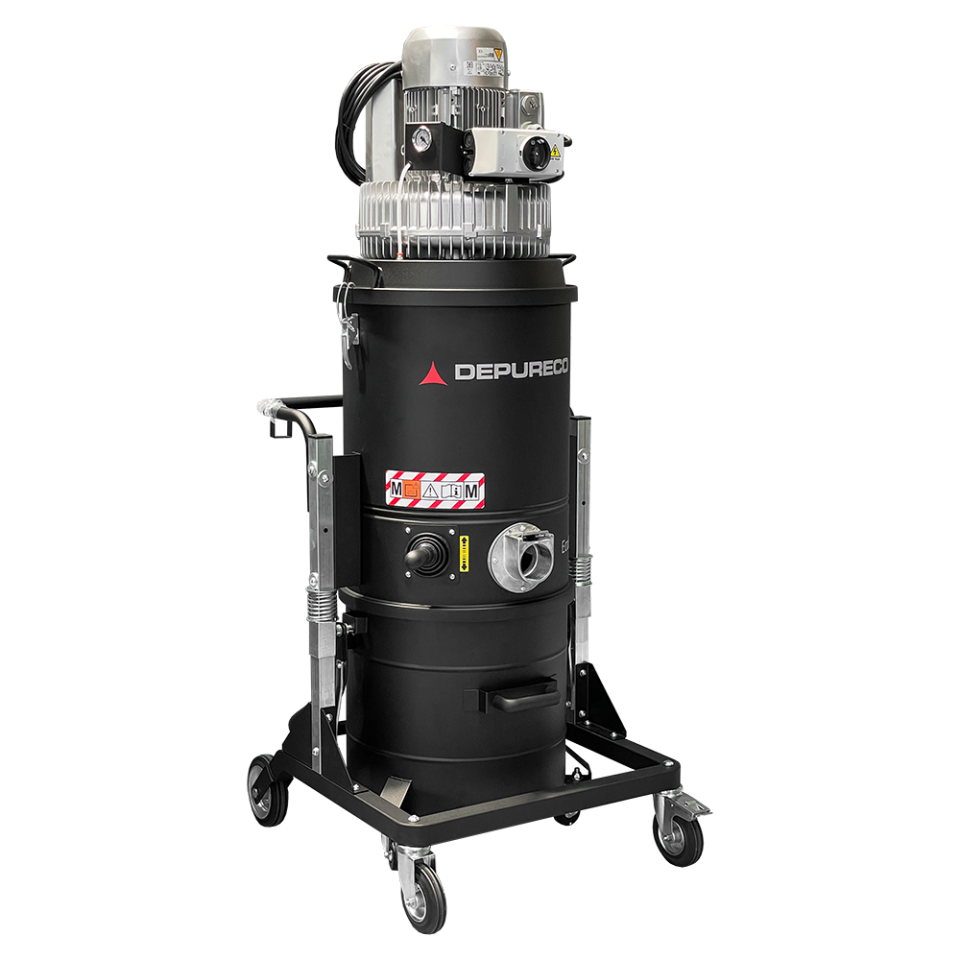
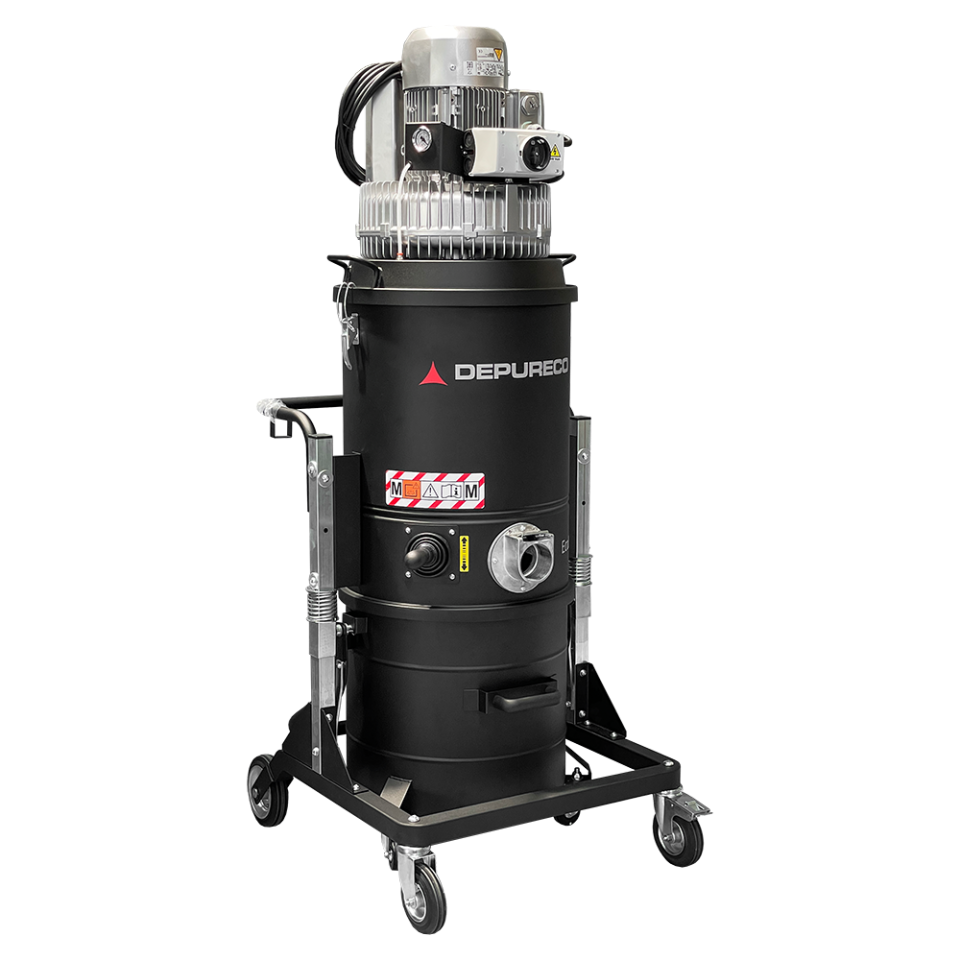
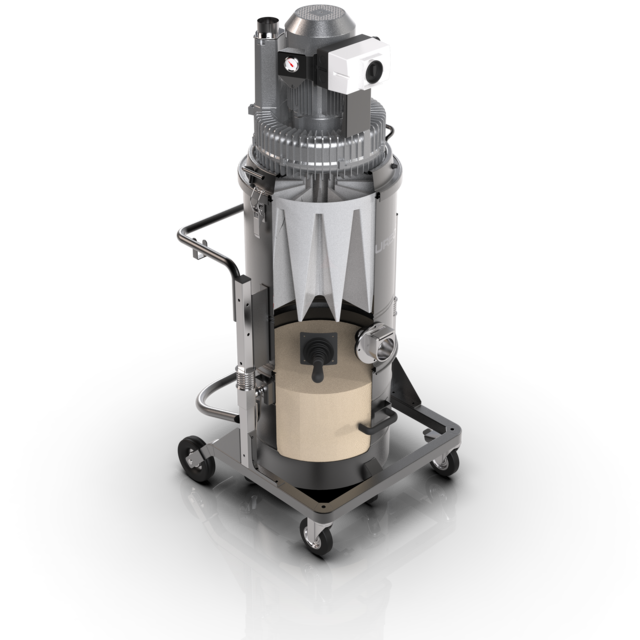
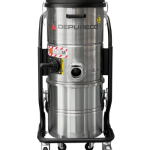
The ECOBULL M is a compact but powerful three-phase industrial vacuum designed for continuous-duty use in manufacturing, maintenance, and production environments. Equipped with a 2.2 HP side channel turbine, it delivers reliable industrial suction with lower maintenance demands than standard motor-driven vacuums, making it a strong fit for operations that need longer run times and dependable day-to-day performance.
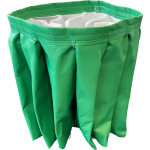
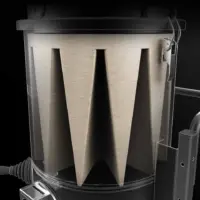
Its filtration chamber houses a large polyester filter with 3,720 in² of filter surface, certified as M Class for 1-micron filtration efficiency. This makes the ECOBULL M well suited for collecting fine dust while maintaining strong airflow in demanding industrial applications. To better match specific materials and working conditions, the unit can also be configured with alternative filters, including Teflon water-repellent filters, Nomex filters for temperatures up to 482°F, and PTFE-treated filters for finer, more adhesive dust. An H14 absolute filter is also available on request for applications that require added downstream filtration.
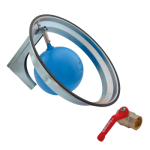
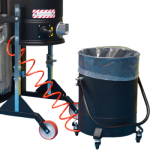
The ECOBULL M is built for practical industrial cleanup as well as filtration performance. Its large detachable 26-gallon collection container is mounted on wheels for easier handling and disposal of recovered material. For operations that prefer easier waste management, the machine can also be used with disposable collection bags. When liquid recovery is required, a floating system can be integrated into the container to improve operational safety during suction.
The result is a versatile industrial vacuum for fine dust, dry debris, and liquid recovery, giving production teams a more durable and lower-maintenance option for continuous industrial cleanup.

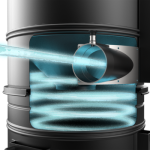
The suction unit of the vacuum utilizes a side channel blower with a direct coupling mechanism connecting the motor and impeller. This design ensures efficient and reliable operation. To prioritize safety, the side channel blower is equipped with a safety valve, enabling continuous work without the need for maintenance while maintaining a safe working environment. Additionally, the blower incorporates a metal silencer to minimize noise levels and provide a quieter working experience.

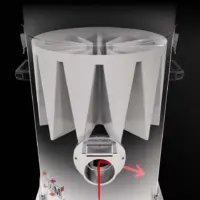
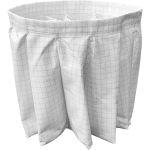
The filtration system is ensured by a polyester filter classified as M Class, which offers reliable performance. The unique star-shaped design of the filter allows for continuous airflow even when it becomes dirty. The filter fabric is specifically classified as M Class according to BIA | EN 60335-2-69 standards. This classification guarantees that particles as small as 1 micron are effectively trapped by the filter, protecting both the blower and the operator in the vicinity of the vacuum cleaner.

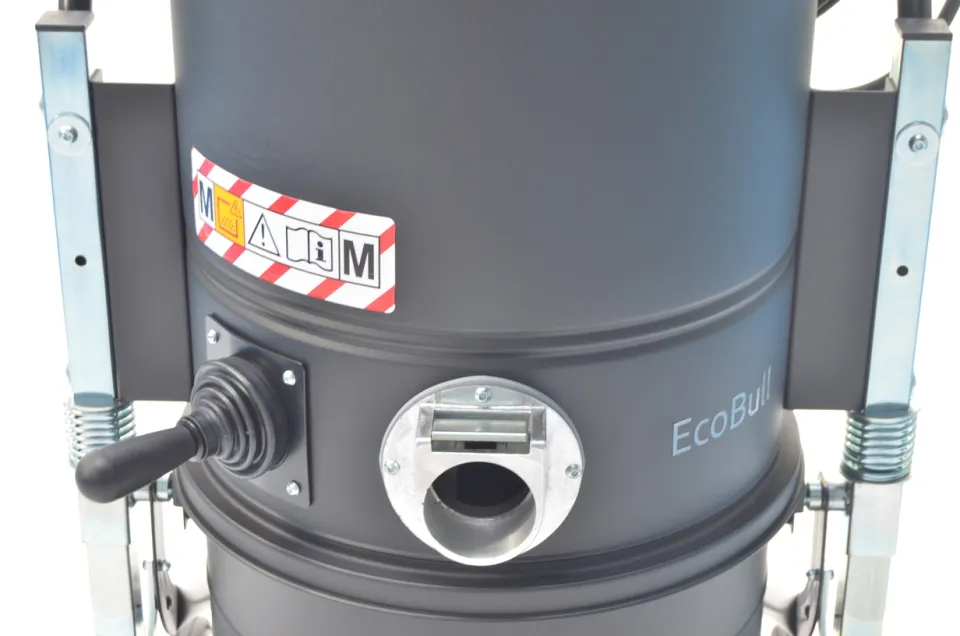
Located on a side of the filter chamber, there is a convenient and ergonomic manual shaker that allows the operator to effortlessly and swiftly clean the filter by removing any accumulated dust and debris from its surface. This intelligent cleaning system enables the operator to continue working without the need to replace or wash the filter, ensuring uninterrupted productivity.

The gathered material is stored within a robust steel container. Positioned at the rear of the vacuum cleaner is a metal handle that facilitates the lowering of the bin. The container is equipped with four industrial wheels, allowing for effortless mobility. Each wheel is securely positioned on a reinforced support to ensure optimal stability during movement, even when the container is fully loaded.
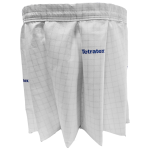
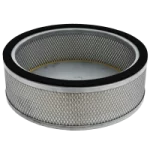
H14 Absolute Filter (EN 1822) Glass fiber
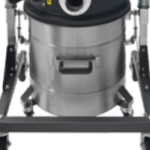
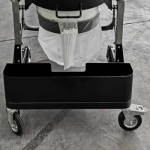
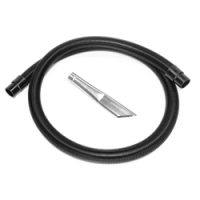
Accessories basket
Get answers about using the ECOBULL for continuous-duty industrial cleanup, fine dust and dry debris recovery, powders, chips and production waste, M Class and HEPA filtration, filter cleaning, liquid pickup, collection and disposal, three-phase vacuum selection, and demanding manufacturing applications.
The ECOBULL is a compact three-phase industrial vacuum designed for continuous-duty cleanup in manufacturing, maintenance, and production environments.
Its 2.2 HP side-channel turbine provides a durable suction source for facilities that need longer operating periods and more consistent day-to-day use than an intermittent-duty portable vacuum is typically intended to provide.
The ECOBULL is well suited for collecting fine dust, powders, granules, chips, shavings, dry production debris, and other recoverable industrial waste from machinery, floors, work areas, overhead surfaces, and general production environments.
A 26-gallon detachable collection container, large M Class primary filter, manual filter-cleaning system, and available filtration and collection options allow the ECOBULL to be configured around different materials and cleanup requirements.
Yes. Continuous-duty industrial cleanup is one of the primary applications of the ECOBULL.
The ECOBULL uses a side-channel turbine designed for dependable industrial operation and longer working periods. This makes it useful when maintenance and production teams need to vacuum repeatedly throughout a shift instead of performing only short, occasional cleanup cycles.
Typical continuous-use applications include production-floor housekeeping, machine-side cleanup, dust and debris recovery, overhead cleaning, maintenance around processing equipment, and repeated cleanup of manufacturing waste.
Continuous-duty capability does not eliminate routine maintenance. Filter loading, material type, collection-bin capacity, hose configuration, and filter-cleaning frequency still affect actual performance during use.
The ECOBULL is suited for recovering a wide range of dry industrial material, including fine dust, powders, granules, production debris, shavings, chips, and other recoverable solids generated during manufacturing and maintenance.
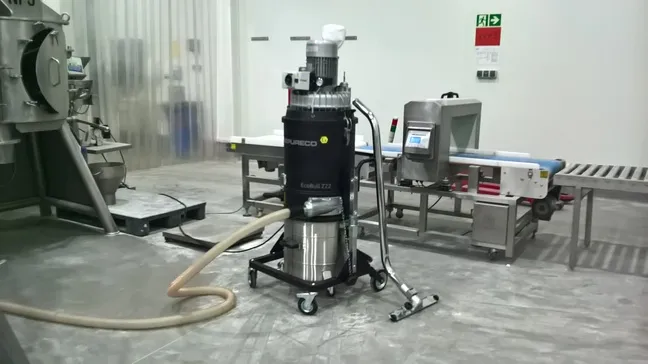
Typical applications can include general plant dust, dry machine debris, packaging and processing residue, metal chips, dry swarf, food-production crumbs and powders, and settled material on floors, equipment, beams, piping, and other facility surfaces.
The correct configuration depends on the collected material. Fine or adhesive dust may require a different filter media than coarse debris, while material with unusual temperature, moisture, electrostatic, abrasive, or hazardous characteristics should be reviewed before the vacuum is selected.
Material density, particle size, hose length, pickup tool, loading rate, and required filtration all affect how well a vacuum performs on a specific application.
The ECOBULL uses a large polyester primary filter with approximately 3,720 in² of filter surface and an M Class classification for fine industrial dust.
The large filter surface helps maintain airflow during demanding cleanup while providing primary filtration for dust and debris entering the vacuum.
An H14 absolute filter is available on request when an application requires an additional high-efficiency downstream filtration stage.
The ECOBULL can also be configured with alternative primary filter media. Available options include Teflon water-repellent filtration, Nomex filtration for elevated-temperature applications, and PTFE-treated filters for finer or more adhesive dust.
The best filter should be selected according to the collected material rather than automatically choosing the highest filtration class.
The ECOBULL uses a manual filter shaker to remove accumulated dust from the surface of the primary filter.
The filter-cleaning control is positioned externally so the operator can shake the filter without opening the filtration chamber. Moving the shaker flexes the filter and helps accumulated dust fall away from the filter surface and into the collection area.
Regular filter cleaning helps maintain airflow as dust accumulates during use and can reduce the need to remove or wash the filter as frequently.
The amount of filter cleaning required depends on the material being collected. Very fine, sticky, damp, or high-volume dust may require more frequent cleaning or a different filtration configuration than coarse, free-flowing debris.
The ECOBULL uses a detachable 26-gallon collection container designed to make recovered material easier to remove from the vacuum and dispose of.
The container is mounted on wheels so it can be lowered, detached from the machine, and moved independently when it needs to be emptied. This is useful for production environments where operators regularly recover dust, chips, powders, or other dry debris throughout a shift.
Disposable collection bags can also be used when the application benefits from bagged material handling instead of directly emptying loose debris from the container.
The best collection method depends on the material, disposal requirements, frequency of emptying, and how much operator contact with the recovered material should be minimized.
Yes, the ECOBULL can be configured for liquid recovery when the application requires it.
A floating system can be integrated into the collection container to help protect the vacuum during liquid pickup by responding when the liquid reaches its operating fill level.
This allows the ECOBULL platform to support applications that involve both industrial dry cleanup and occasional liquid recovery.
However, the ECOBULL should not automatically be treated as a dedicated CNC sump vacuum. Applications primarily involving coolant recovery, cutting oil, large liquid volumes, chip-and-liquid separation, tank cleanout, or powered liquid discharge are generally better evaluated against Depureco’s dedicated OIL and RAM OIL sump-vacuum families.
Fluid chemistry, temperature, flash point, solids content, and disposal requirements should be reviewed before selecting any industrial vacuum for liquid recovery.
The ECOBULL is a strong choice when the application requires three-phase power and longer, continuous-duty operating periods rather than short or intermittent cleanup cycles.
Single-phase industrial vacuums are often easier to deploy where standard electrical service and maximum portability are the priorities. They can be an excellent fit for shorter cleaning cycles, mobile maintenance, and applications that do not require continuous operation.
The ECOBULL’s side-channel turbine is better aligned with manufacturing facilities that perform repeated production cleanup, machine-side housekeeping, overhead dust removal, or other industrial vacuuming throughout the workday.
The decision should not be based on motor horsepower alone. Duty cycle, collected material, hose length, filtration, electrical service, container size, pickup rate, and how frequently the vacuum will operate are all important selection factors.
The ECOBULL can support routine industrial housekeeping in manufacturing plants, production areas, machine shops, processing facilities, warehouses, and other environments where dust and production debris must be removed repeatedly.
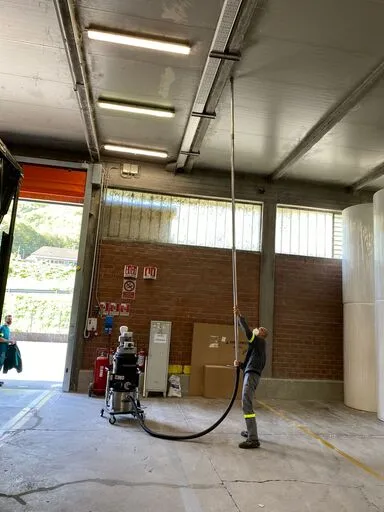
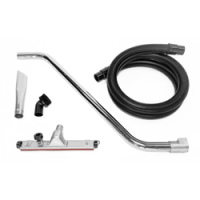
Its mobile design allows operators to clean floors and machinery as well as difficult-to-reach areas using extended hoses and cleaning accessories. The ECOBULL has also been shown in high-level cleaning applications where settled dust is removed from beams, overhead piping, ledges, and other elevated facility surfaces.
Depending on the selected filtration and construction, the ECOBULL can also support applications involving powders, food-production residue, metal chips, dry swarf, granules, shavings, and general production waste.
The material and environment still need to be reviewed when combustible dust, hazardous material, high temperatures, unusual chemicals, or other specialized conditions are present.
The standard ECOBULL may not be the best choice when the application requires a substantially larger collection capacity, much higher material throughput, a dedicated coolant or oil-recovery workflow, specialized source capture, or equipment specifically configured for hazardous material.
Applications involving large liquid volumes, CNC sump cleanout, coolant recycling, or powered liquid discharge may be better matched to a dedicated sump vacuum. Very high-volume bulk material recovery may require a larger three-phase or high-power vacuum, while airborne process dust that must be captured continuously at its source may require an engineered dust collector rather than a mobile vacuum.
The standard ECOBULL should also not automatically be assumed suitable for combustible dust, flammable liquids or vapors, hot or burning material, reactive chemicals, or a hazardous classified location.
Material properties, required operating time, hose distance, collection volume, filtration, electrical service, disposal method, and facility hazards should be reviewed before final equipment selection.