
Portable and source-capture welding fume extractors for fabrication shops, weld stations, and industrial metalworking environments.
Built to help control welding smoke and metal fumes closer to the source in MIG, flux-core, stainless, galvanized, and general fabrication work.
Depureco USA helps industrial buyers compare welding fume extractor options for source capture at fabrication benches, weld stations, repair areas, and production metalworking environments. This page covers portable welding fume extraction, extraction-arm capture, on-torch source capture, and application guidance for MIG, flux-core, stainless steel, galvanized steel, and general welding smoke control.
Industrial welding fume extraction has to match the welding process, station layout, operator movement, material, coating, and production volume. Buyers should compare portable weld fume extractors, mobile extraction arms, direct torch extraction, local exhaust ventilation, and centralized welding fume extraction systems based on where the fume plume starts and how close capture can stay to the arc.
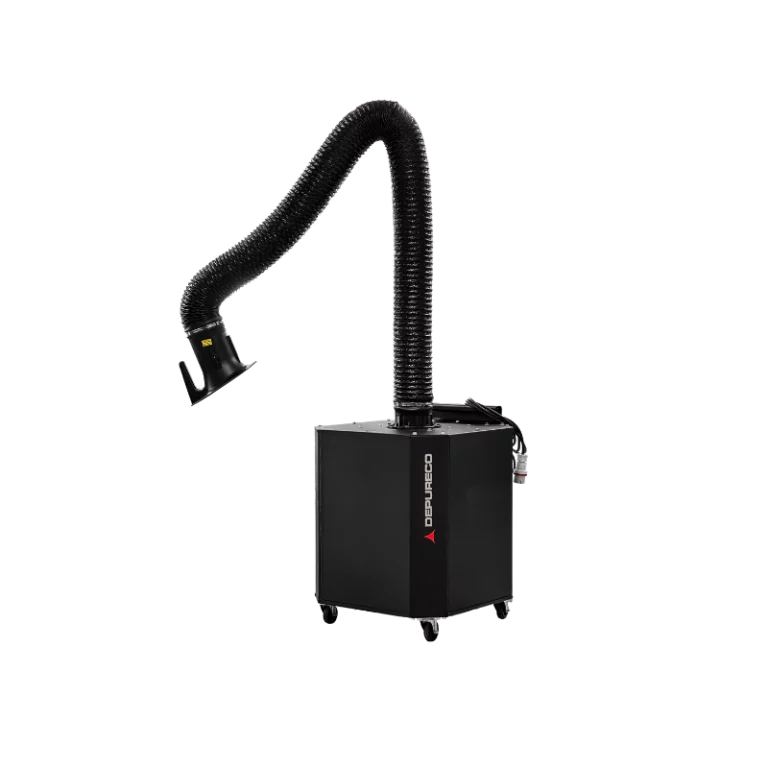
AIR WELD is a portable welding fume extractor designed for fabrication benches, repair work, and stations where extraction needs to move with the job. Its articulated-arm style capture makes it a strong fit for shops that need flexible positioning without a fixed installation.
AIR WELD is the portable welding fume extractor option for shops that need a mobile extraction arm near the work. It is a fit for repair welding, fabrication benches, flexible weld stations, and work cells where a fixed ducted welding fume extraction system is not practical. Buyers comparing portable weld fume extractors, welding smoke extractors, and extraction-arm systems should evaluate hood placement, reach, airflow at the hood, filter class, and how often the job moves.
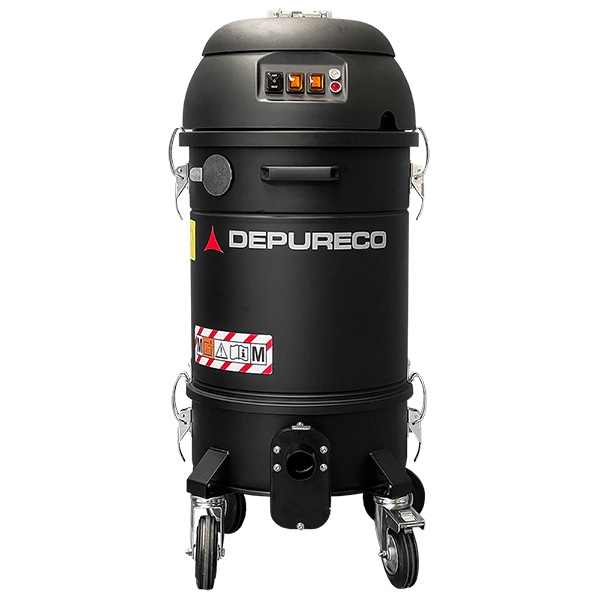
XM TORCH is a source-capture welding fume extractor designed to pull fumes directly from the welding torch at dedicated weld stations. It is well suited for repeat welding work where controlling welding smoke close to the arc is the priority.
XM TORCH supports direct source capture for repeat welding at dedicated weld stations by pulling fumes through the welding torch connection before smoke spreads into the operator area. It is most relevant for buyers searching for on-torch welding fume extraction, MIG fume extraction, fume gun extraction, high-vacuum weld fume control, and compact source-capture systems with filter cleaning and spark protection.
The videos on this page show the practical difference between a portable extraction arm and a torch-mounted source-capture setup. Use AIR WELD videos to evaluate arm positioning and mobile coverage, and use XM TORCH videos to evaluate direct capture at the welding torch for repeat station work.
Different welding environments need different fume-capture methods. This is where portable welding fume extractors, source-capture torch extraction, and future workstation-based solutions each have a role.
Common welding fume extraction applications include fabrication benches, mobile repair welding, fixed weld stations, MIG welding, flux-core welding, stainless steel welding, galvanized steel welding, and higher-fume metalworking jobs. The best extractor depends on where the fume plume starts, whether the operator moves around the work, and whether the station is temporary, dedicated, or part of a larger multi-station system.
In many welding applications, the goal is not just filtration after the fact, but controlling welding smoke before it spreads through the station or into surrounding production space.
Source-focused capture helps keep extraction working where it matters most—at or near the weld zone.
Source capture welding fume extraction targets smoke and metal fumes at or near the arc using a hood, extraction arm, fume gun, or torch-mounted connection. This is different from ambient air filtration, which cleans background air after fumes have already moved through the shop. Buyers comparing source capture and ambient capture should consider breathing-zone control, station layout, welder movement, overhead obstructions, and whether the work can support a fixed hood, mobile arm, or direct torch extraction.
Certain welding applications place more demand on fume extraction than others, especially stainless steel welding, galvanized welding, and higher-fume metal fabrication work.
In those environments, portable welding fume extraction with an arm or direct torch source capture gives shops a more practical way to control welding smoke and metal fumes closer to where they are generated.
Welding fume can contain fine metal particulate and gases that vary by material, coating, filler metal, and process. Stainless steel work may drive searches around hexavalent chromium and nickel exposure, galvanized welding may drive zinc fume concerns, and production welding may require a local exhaust ventilation strategy. Depureco equipment should be selected as part of an exposure-control plan that accounts for air sampling, process type, filter selection, hood placement, maintenance, and applicable OSHA requirements.
Depureco welding fume extractors are built for shops that need welding fume extraction that fits the way the work is actually done.
From portable welding fume extractors for flexible work areas to direct torch source capture for dedicated welding stations, the focus is on application fit, cleaner visibility at the weld zone, and better control of welding smoke without overcomplicating the setup.
When welding fume extraction needs extend beyond a single station, portable unit, or torch-mounted setup, a centralized system may be the better fit.
Visit our welding fumes case study to see how a multi-station metalworking operation used a centralized vacuum system for source-focused fume extraction.
For shops with multiple weld stations, robotic welding cells, fixed production booths, or repeated high-volume welding, a centralized welding fume extraction system may be more appropriate than individual portable units. This page routes single-station buyers to AIR WELD or XM TORCH and routes multi-station buyers to a welding fume case study and centralized vacuum system design support.
Find answers to the most common questions about selecting and maintaining industrial welding fume extractors.
A fume extractor is a filtration unit that captures the airborne particles and gases produced during welding before they reach the welder’s breathing zone. It pulls contaminated air through a filter, traps the hazardous material, and returns clean air to the workspace. The method of capture varies depending on the unit and the application, but the goal is the same across all of them: get the fume out of the air before it becomes a health problem or a compliance issue.
Portable extraction is the better fit when work moves between benches, repair areas, or flexible stations and the shop needs welding fume control without a fixed installation.
Start with station layout, mobility needs, process type, and how close the extraction point needs to stay to the weld zone before comparing deeper product details.
Source capture pulls fume at the arc, through an extraction arm or directly at the torch, before it gets anywhere near the welder. Ambient filtration cleans the shop air but it is always playing catch-up. The exposure already happened. Every unit on this page is source capture. The question is not whether to capture at the source, it is which method works for your setup
Integration is straightforward. Our solutions are designed for minimal disruption:
We offer free layout consultation to ensure a seamless integration with your current workflow.
Absolutely. We provide scalable solutions to match your growth:
Our experts can help you design a phased implementation plan that aligns with your business growth and budget.
Direct torch source capture is a strong fit for dedicated welding stations and repeat work where keeping capture close to the arc is the priority.
For most fabrication benches, repair welding areas, and dedicated weld stations, source capture is the first option to evaluate. Portable welding fume extractors with arms, direct on-torch extraction systems, and centralized source-capture systems each solve a different version of the same problem: keeping welding fumes controlled closer to where they are created.
The best welding fume extraction system depends on how your welding work is done, how often the job moves, and how many stations need fume control.
A portable welding fume extractor is usually the better fit for repair welding, fabrication benches, flexible work areas, and shops that need fume extraction without fixed ductwork. A mobile unit with an extraction arm can move with the job and be positioned near the weld zone when the work area changes.
An on-torch welding fume extractor is a better fit for repeat welding at dedicated stations, especially when the shop wants direct source capture without repositioning an extraction arm throughout the day. This style captures welding fumes at the torch, making it a strong option for production MIG and flux-core welding where the work is consistent.
A centralized welding fume extraction system makes more sense when multiple weld stations, robotic welding cells, or fixed production areas need coordinated extraction from one engineered system. Instead of using separate portable units at each station, a central system can connect multiple capture points into one larger fume extraction setup.
For Depureco USA, that means AIR WELD fits portable arm extraction needs, XM TORCH fits direct on-torch source capture, and larger multi-station welding fume projects should be routed to the centralized welding fume extraction case study.
Depureco USA supports industrial welding fume extractor selection for fabrication shops, metalworking manufacturers, maintenance teams, welding schools, shipyards, equipment builders, and production facilities across the United States. Contact the team for help comparing portable extraction arms, on-torch source capture, filtration choices, airflow needs, and multi-station welding fume extraction options.