In the demanding environment of central industrial vacuum systems, handling combustible dusts requires robust explosion isolation to protect connected upstream equipment.
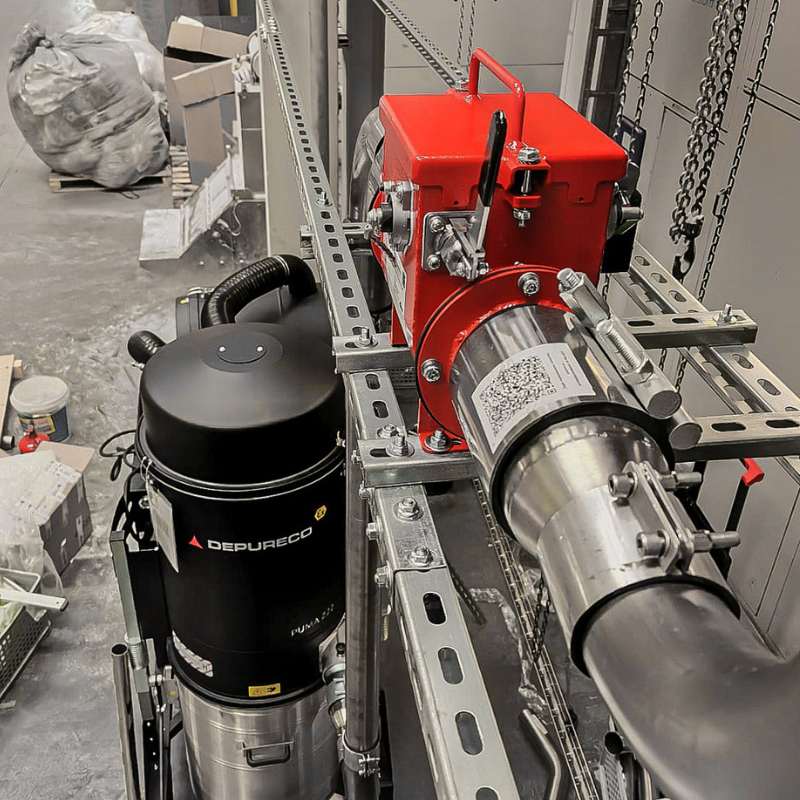
As facilities align with strict safety mandates like the NFPA 660 standard for combustible dusts, ensuring comprehensive system isolation is critical. An Isoflap valve provides a highly effective, low-cost, and reliable passive isolation solution designed to mitigate explosion propagation risks to protected vessels such as dust collectors, cyclones, and process ductwork.

Integrating passive isolation solutions ensures that if an explosion event occurs, the destructive energy is contained, utilizing a proven method to prevent equipment damage and protect personnel.
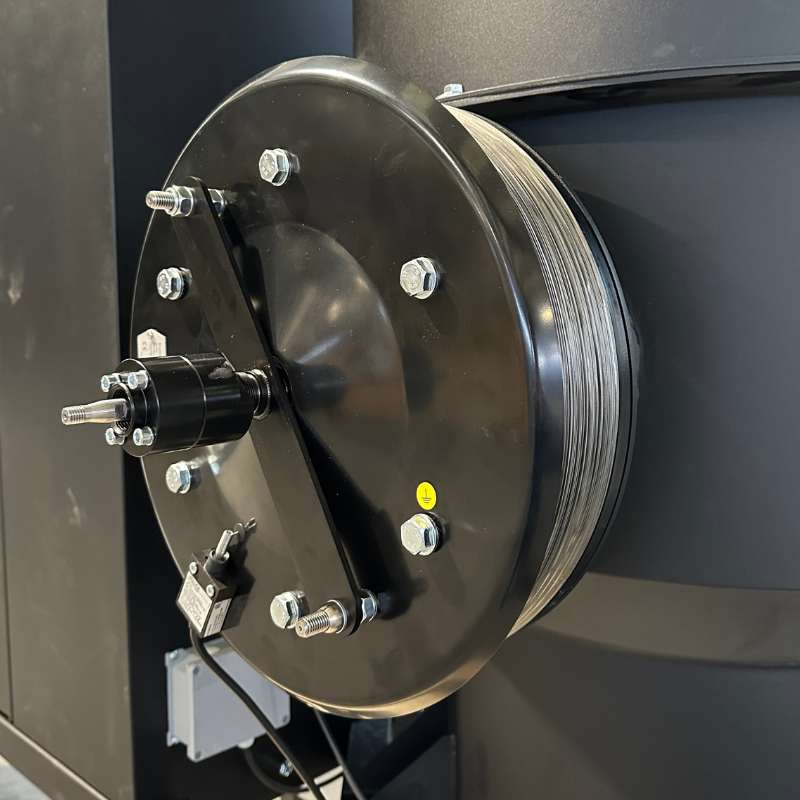
Upgrading to an Isoflap or an advanced Isoflap-M passive isolation valve provides engineering benefits that enhance operational safety while streamlining system maintenance.
Advanced Integrated Monitoring: The Isoflap-M model features continuous dust accumulation and flap position monitoring, ensuring full compliance with stringent safety directives (including OSHA and NFPA 69).
Cylindrical, Leak-Tight Design: Engineered with an internal bearing shaft, the cylindrical housing actively reduces product build-up and maintains optimal, leak-tight airflow.
Exceptional Durability: Available in robust carbon steel or an optional all-stainless-steel body construction. The design is highly corrosion-resistant, as confirmed by rigorous salt spray testing.
Flexible Installation: Engineered for minimal spatial requirements, these valves offer short mounting distances and are tested to allow up to two pipework elbows between the valve and the downstream vessel. They are suitable for both PUSH and PULL applications.

The Isoflap valve is a self-actuating protective device that requires no external triggering sensors to operate. It relies entirely on the physics of an explosion to neutralize the threat through a seamless mechanical response:
Normal Operation: During standard system operation, the natural process airflow holds the internal flap blade open. This aerodynamic design ensures a very low pressure drop and allows for continuous, highly efficient material extraction.
Explosion Event: In the event of a combustible dust explosion, a rapid pressure front precedes the actual flame. This sudden overpressure instantly forces the flap blade closed.
Complete Isolation: Once shut, the pressure locks the blade securely in place. The closed valve acts as an impenetrable mechanical barrier, mitigating the propagation of both the flame and the destructive pressure wave to any interconnected upstream equipment.
Safety solutions are tailored to the exact demands of complex industrial applications. Available for a wide variety of central vacuum network sizes, these passive isolation valves are built to handle extreme environments:
Nominal Diameters: Ranging comprehensively from 4 inches (100 mm) up to 40 inches (1000 mm) to accommodate any ductwork volume.
Pressure Resistance: Specifically engineered to withstand high maximum reduced explosion pressures (Pred), depending on the vessel volume and dust characteristics (safely handling Kst values up to 300 bar m/sec).
Mounting Distances: Highly adaptable minimum mounting distances starting as low as 5.0 feet, with specific engineering allowances for elbows depending on the nominal pipe diameter.
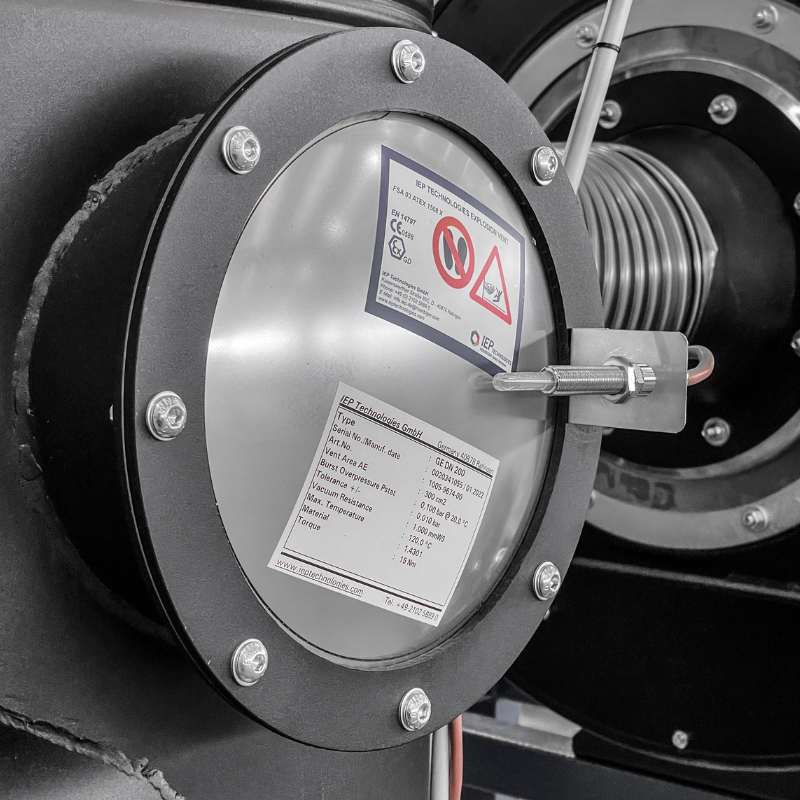
Leaving a facility vulnerable to the devastating consequences of industrial explosions is a risk modern operations cannot afford. Integrating comprehensive safety systems—ranging from flameless vents to advanced isolation valves—forms the ultimate line of defense for personnel and central industrial vacuum infrastructure. Ensuring full compliance with stringent standards, such as NFPA 660, protects not only the equipment but the entire operational environment.
Leave us a few details below and let’s build your new custom solution together.