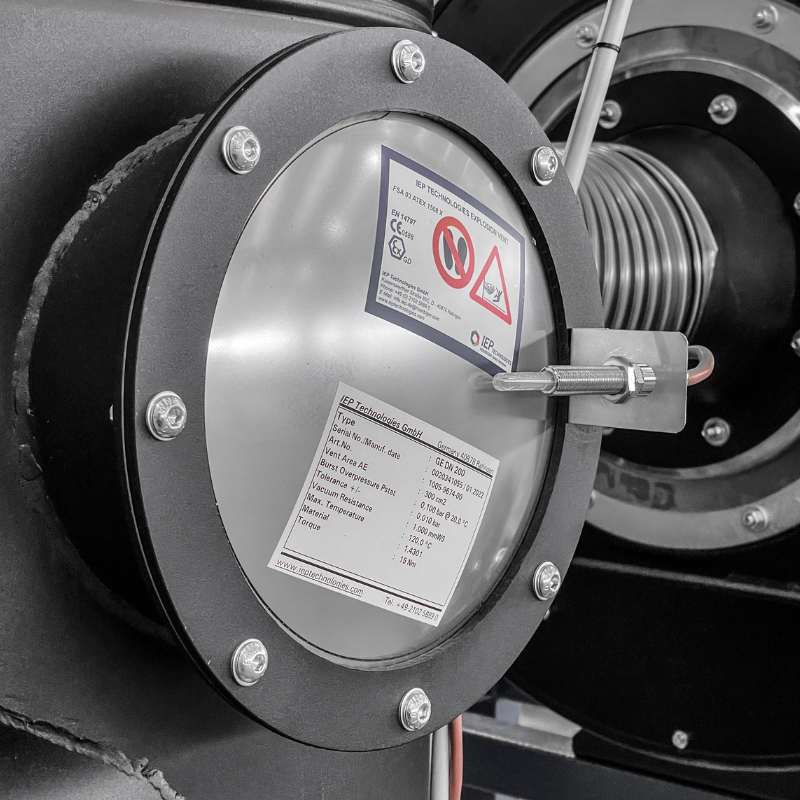
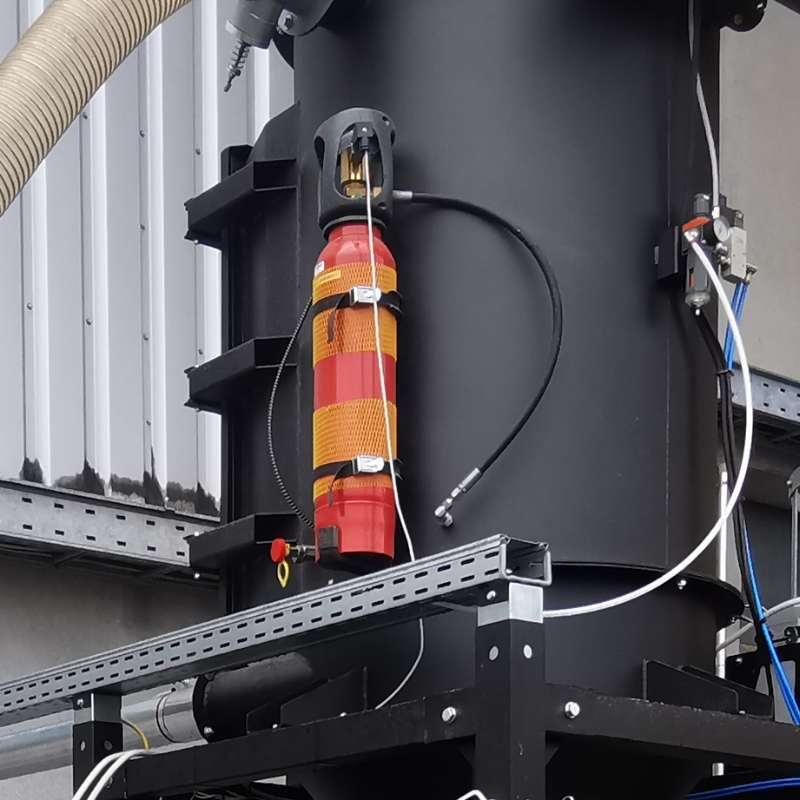
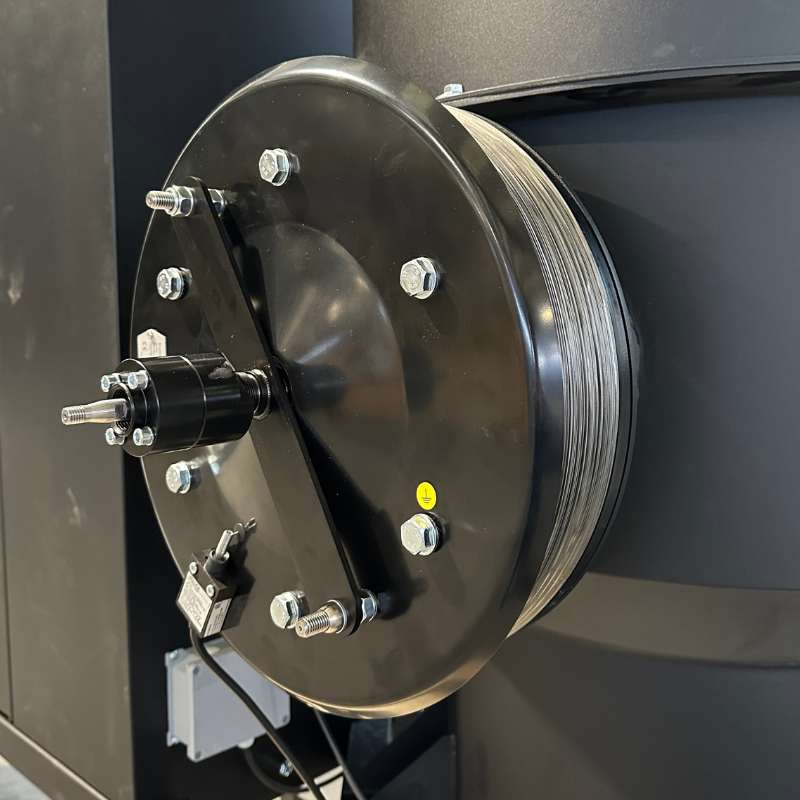
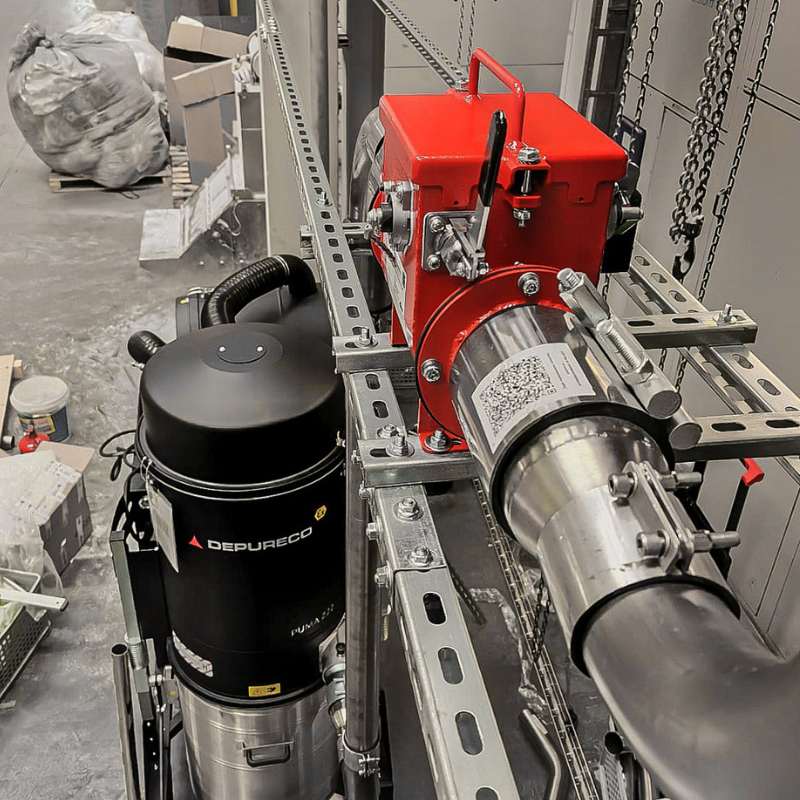
In the demanding environment of central industrial vacuum systems, handling highly combustible dusts, hybrid mixtures, or light metals requires proactive, fast-acting protection. As facilities align with strict safety mandates like the NFPA 660 standard for combustible dusts, active hazard mitigation is often necessary. An active extinguish system, such as the advanced High Rate Discharge Explosion Suppression System, is engineered to detect and neutralize an explosion in its absolute infancy—before destructive pressures can develop.

Integrating a certified explosion suppression system into a vacuum network or filtration unit utilizes a highly reliable method to keep pressure spikes under control, securing vital equipment against catastrophic destruction and protecting facility personnel.
Upgrading to an active extinguish system provides advanced engineering benefits, particularly for indoor applications or toxic environments where passive venting to the outside is not a viable option.
Lightning-Fast Response: Engineered for ultra-quick reaction times to stop an explosion in its initial phase, preventing structural damage and minimizing operational downtime.
Indoor and Toxic Material Safety: Ideal for indoor applications where venting is impossible, as well as for processes handling toxic or environmentally dangerous materials that cannot be safely released into the atmosphere.
Versatile Hazard Protection: Fully capable of suppressing explosions from dust up to the severe St 3 class, light metal dusts, gases, and volatile hybrid mixtures.

Unlike passive venting or isolation valves, an active explosion suppression system intervenes dynamically the exact moment a combustible event begins. The HRD technology neutralizes the threat in a matter of milliseconds through a highly synchronized, three-step process:
Millisecond Detection: Highly sensitive pressure detectors (or specialized optical sensors) constantly monitor internal operating conditions. When an early explosion begins, they detect the pressure spike within milliseconds and transmit a signal to a central control unit.
Instant Activation: A dual or multi-zone control unit evaluates the data instantly. It immediately sends an activation signal to open the quick-acting valves on the pressurized HRD extinguisher containers.
Suppression and Dispersion: The extreme pressure of the fire extinguisher pushes out special telescopic nozzles. This ensures the rapid, highly efficient dispersion of the extinguishing agent throughout the entire protected area, suppressing the fireball and keeping the internal pressure well below the equipment’s structural resistance limits.
Safety solutions are engineered and tailored to the exact requirements of complex industrial applications. Available for a wide variety of central vacuum networks, filters, silos, and cyclones, active explosion suppression systems are built for extreme versatility. To accommodate different vessel volumes, pressurized extinguisher container units are configured in various volumetric capacities to precisely match the specific spatial dimensions and hazards of the protected equipment. These systems utilize highly responsive detection technology, employing high-performance pressure sensors or optical infrared detectors designed to operate reliably even during high-vibration or high-temperature processes. The rapid deployment of the extinguishing agent is managed by a sophisticated central control interface.
Leaving a facility vulnerable to the devastating consequences of industrial explosions is a risk modern operations cannot afford. Integrating comprehensive safety systems—ranging from flameless vents to advanced isolation valves—forms the ultimate line of defense for personnel and central industrial vacuum infrastructure. Ensuring full compliance with stringent standards, such as NFPA 660, protects not only the equipment but the entire operational environment.
Leave us a few details below and let’s build your new custom solution together.