
3,800 in2
26 gal
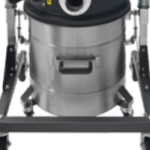
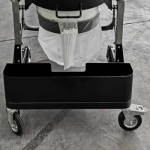
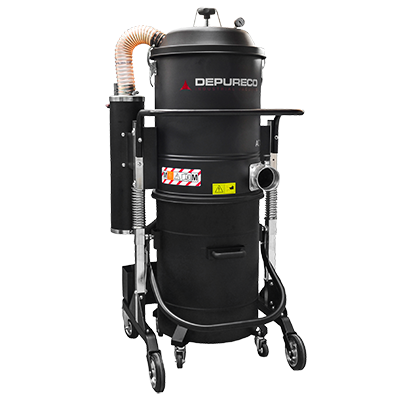
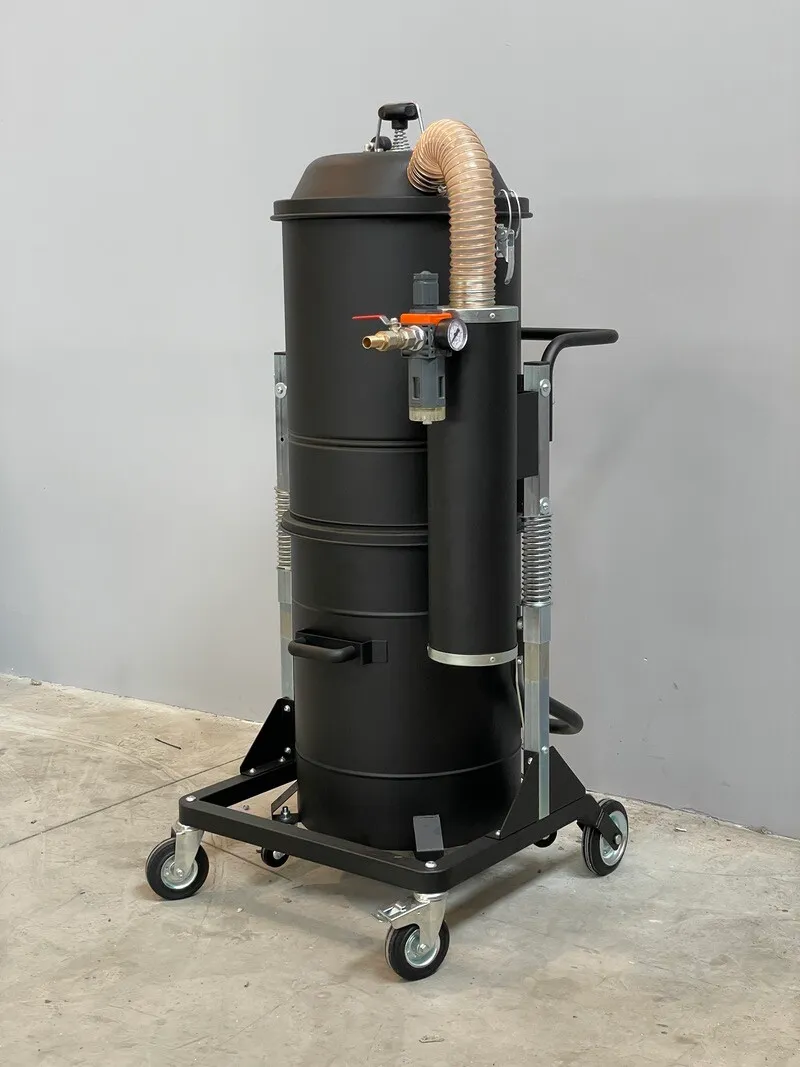
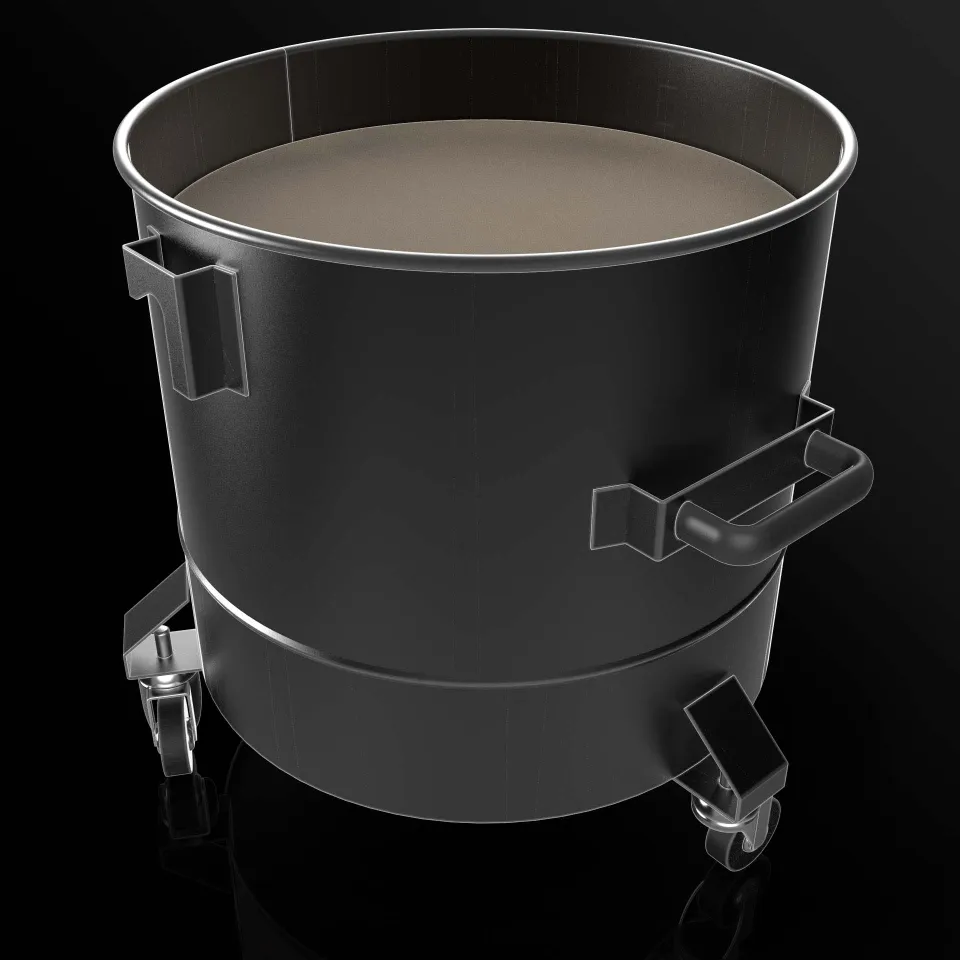
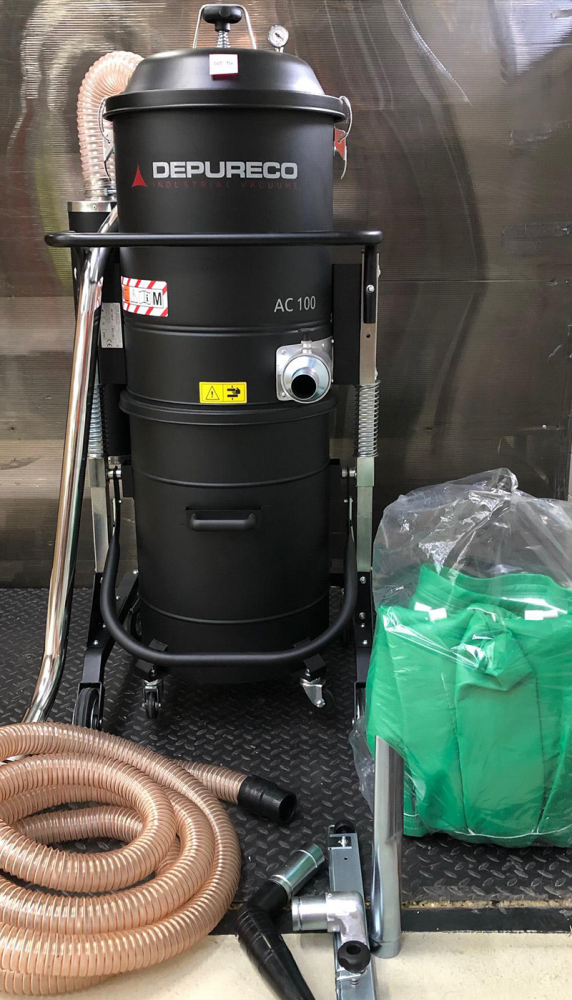
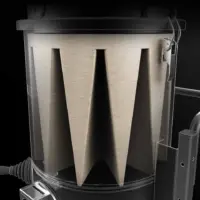
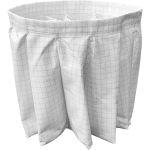
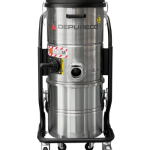
The AC 100, the most powerful industrial vacuum in the pneumatic operated range, is an exceptional AIR vacuum with impressive capabilities thanks to its high-performance Venturi pipe. The AC 100 is designed to handle various conditions, including dust, solids, shavings, liquids, and challenging materials, with the ability to accommodate pipes of considerable length. As a standard feature, this vacuum cleaner is equipped with a 3,800 in² polyester pocket filter that is M Class certified by BIA (Berufsgenossenschaftliches Institut für Arbeitssicherheit) and has a filtration efficiency of 1µ. The filter can be tailored to suit specific applications. Additional options for the AC 100 include anti-static filters to prevent electrostatic charges, NOMEX filters for high-temperature resistance (up to 250°C), Teflon coated filters for wet materials, and PTFE nanotechnology treated filters for the most challenging dust types. The AC 100 vacuum also incorporates a manual filter cleaning system, allowing easy and efficient shaking of the filter using the lever located on the side of the vacuum. To facilitate material collection and disposal, the vacuum is equipped with a detachable container on wheels. The container has 26 gal capacity, both featuring reinforced outer support for the four castor wheels to ensure safe handling even when containing substantial material weight. A tiltable kit for containers is available upon request.

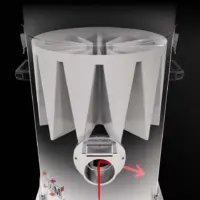
The vacuum cleaner is outfitted with a Venturi pipe, which efficiently generates a powerful vacuum without the need for mechanical or electrical components.

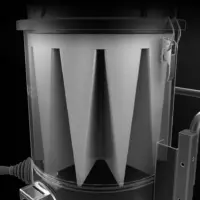
The filtration system relies on an M class polyester filter, ensuring effective filtration performance. The unique star-shaped design allows for continuous airflow through the filter, even when it becomes dirty. Classified as M Class (BIA | EN 60335-2-69), the filter is capable of capturing particles as small as 1 micron, providing protection for both the suction unit and the operator in the vicinity of the vacuum cleaner.
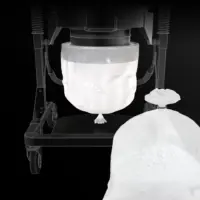
The collected material is stored in a painted container that is equipped with a sturdy metal handle, allowing the bin to be easily detached from the machine. With the convenience of four swiveling wheels, the bin can be effortlessly maneuvered and emptied. Each wheel is reinforced to ensure optimal stability and secure handling.
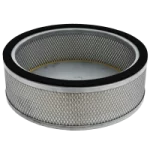

H14 Absolute Filter (EN 1822) Glass fiber


Accessories basket
Get answers about using the AC 100 compressed-air industrial vacuum for dust and solid material recovery, high-vacuum industrial cleanup, Venturi operation, compressed-air requirements, optional wet pickup and filtration, model selection, and applications where electrical vacuum power is unavailable or undesirable.
The AC 100 is a compressed-air industrial vacuum designed for demanding dust and solid material recovery where plant air is available and an electrically powered suction motor is not the preferred power source.
Instead of an electric vacuum motor or three-phase side-channel blower, the AC 100 uses a Venturi tube powered by compressed air to generate suction. The current U.S. configuration provides up to 380 CFM of airflow and 200 inH₂O of maximum vacuum through a 3.5-inch inlet.
This combination makes the AC 100 useful for industrial housekeeping, production debris, powders, granules, shavings, heavier dry solids, machine-side cleanup, and applications involving longer or more restrictive pickup paths.
Its 26-gallon detachable collection bin also provides substantially more capacity than smaller pneumatic vacuums.
The AC 100 is especially worth considering where a facility already has adequate compressed-air capacity or where electrical vacuum power is unavailable, inconvenient, or unsuitable for the process layout.
The standard AC 100 is designed primarily for industrial dust and solids, including production dust, powders, granules, shavings, dry debris, manufacturing waste, and other suitable loose material.
Its combination of 380 CFM airflow, 200 inH₂O vacuum, and a 3.5-inch inlet makes it particularly useful when the application involves heavier material, greater hose resistance, or larger-volume pickup than a smaller pneumatic vacuum can comfortably handle.
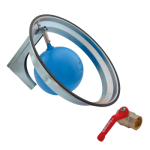
The AC 100 can also be configured for liquid pickup with an optional floating device, but liquid recovery should not be assumed to be part of the standard dry configuration.
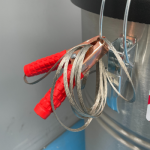
Material characteristics still matter. Fine or sticky dust may require different filter media, elevated-temperature material may require Nomex filtration, and electrostatic material may require antistatic filtration and grounding.
Combustible dust, reactive powders, flammable liquids, hot material, or hazardous classified locations require separate application review and may call for a different AC configuration.
The AC 100 generates vacuum using a Venturi tube rather than an electrically driven vacuum motor.
Compressed air passes through the Venturi system at high velocity, creating a pressure differential that generates suction inside the vacuum. Because suction is produced pneumatically, the machine does not require an electric suction motor to operate.
The current U.S. AC 100 requires approximately 85 CFM of compressed air at 83 psi to reach its published operating performance of up to 380 CFM airflow and 200 inH₂O maximum vacuum.
Before selecting the AC 100, the facility should confirm that its compressed-air system can continuously supply the required volume and pressure at the vacuum’s connection point without adversely affecting other plant equipment.
Compressor capacity, pipe diameter, air-line length, fittings, pressure losses, and simultaneous compressed-air demand elsewhere in the facility can all affect actual vacuum performance.
Choose the MINIAIR 2V when compact size, mobility, and smaller-volume pneumatic cleanup are the priorities. Choose the AC 100 when the application requires substantially more airflow, a larger inlet, and greater collection capacity.
Both models require approximately 85 CFM of compressed air at 83 psi and provide up to 200 inH₂O of maximum vacuum.
The MINIAIR 2V provides up to 147 CFM through a 2.75-inch inlet and uses a 12-gallon collection bin.
The AC 100 increases airflow to 380 CFM, uses a 3.5-inch inlet, and doubles collection capacity to 26 gallons.
The AC 100 is therefore better suited to larger material volumes and applications where greater airflow is useful, while the MINIAIR 2V is the more compact pneumatic platform.
The final choice should still consider material density, particle size, hose length, pickup rate, collection volume, available plant-air capacity, and required portability.
The regular AC 100 may not be the right choice when the facility cannot continuously supply approximately 85 CFM of compressed air at 83 psi, when an electric industrial vacuum would operate more efficiently for the available utilities, or when a smaller pneumatic vacuum can handle the required material volume.
It should also not automatically be used in a hazardous classified location simply because it is powered by compressed air.
Depureco offers separate AC 100 Z2-22 and AC 100 Z20/21 configurations with specific ATEX markings, antistatic filtration, grounding, stainless construction, and other hazard-related features. Those products are distinct from the standard AC 100.
Applications involving combustible dust, reactive powders, flammable liquids or vapors, hot material, or classified areas should therefore begin with the material hazard and area classification rather than assuming that eliminating an electric vacuum motor makes the standard machine intrinsically safe.
For final selection, confirm the material, dry or wet condition, pickup volume, hose diameter and length, compressed-air supply, collection requirements, filtration, disposal method, and any applicable process or facility hazards.