
Recover cement dust before it becomes a safety, maintenance, and uptime problem.
Cement plant dust control is not just a housekeeping issue. Cement production, conveying, packing, silo loading, and bulk transfer can create fine cement powder, concrete dust, product spills, and heavy debris that collect around conveyors, bucket elevator pits, machinery, floors, structural surfaces, trucks, and loading zones.
Utilizing industrial vacuum systems in cement plants can lead to substantial reductions in:
- Minimizing product spillage and material wastage
- Streamlining plant maintenance, reducing time and costs
- Enhancing worker safety by mitigating health risks and preventing accidents
- Mitigating unforeseen production disruptions and inefficiencies.
Where Cement Dust Builds Up Inside a Plant
Target the areas where dust buildup creates the most downtime.
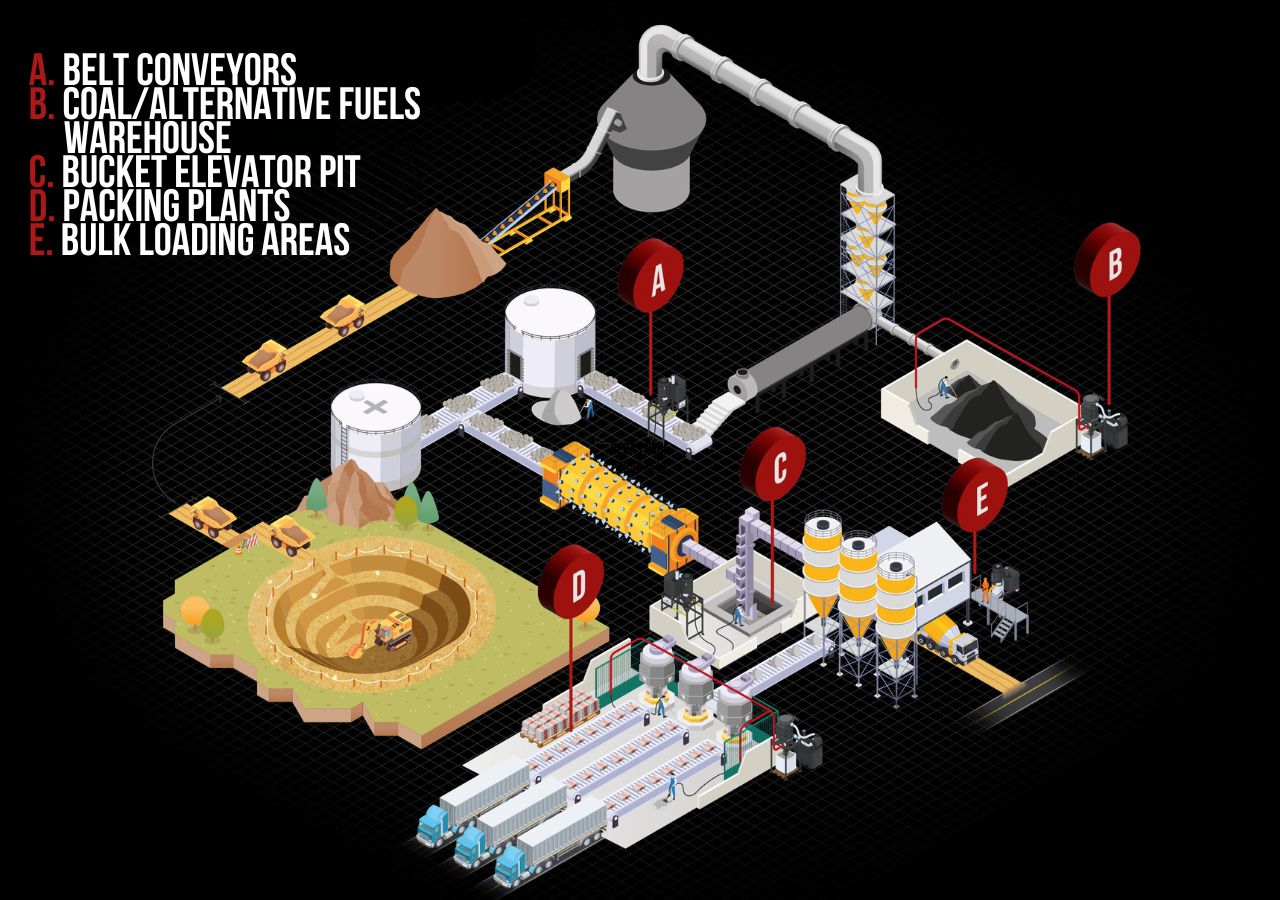
Cement dust and powder do not collect in one clean, convenient location. They migrate through the plant, settle on equipment, and build up around transfer points. Vacuum system design should start with the areas creating the most cleanup labor, maintenance risk, and production disruption.
- Conveyor belts and transfer points: recover spilled cement powder before it collects around rollers, bearings, walkways, and support structures.
- Bucket elevator pits: remove built-up material from hard-to-clean pits where dust and debris can interfere with material flow and maintenance access.
- Silos and bulk loading zones: clean powder residue around truck loading, rail loading, discharge points, and loading platforms.
- Packing plants and Rotopack machinery: recover dispersed product around bagging, packaging, palletizing, and material transfer areas.
- Coal and alternative fuel storage areas: support housekeeping where combustible dust, fuel dust, and ignition-source control require a hazard-aware cleanup process.
- Floors, beams, machinery, and elevated surfaces: remove dust accumulation before it becomes a recurring cleanup burden or airborne exposure concern.
To tackle these challenges, it’s essential to concentrate on precise cleaning of critical areas susceptible to dust buildup in cement plants. With the adoption of effective vacuum solutions, you can successfully address these concerns and streamline the production process.
Conveyor Belt Dust Cleanup in Cement Plants
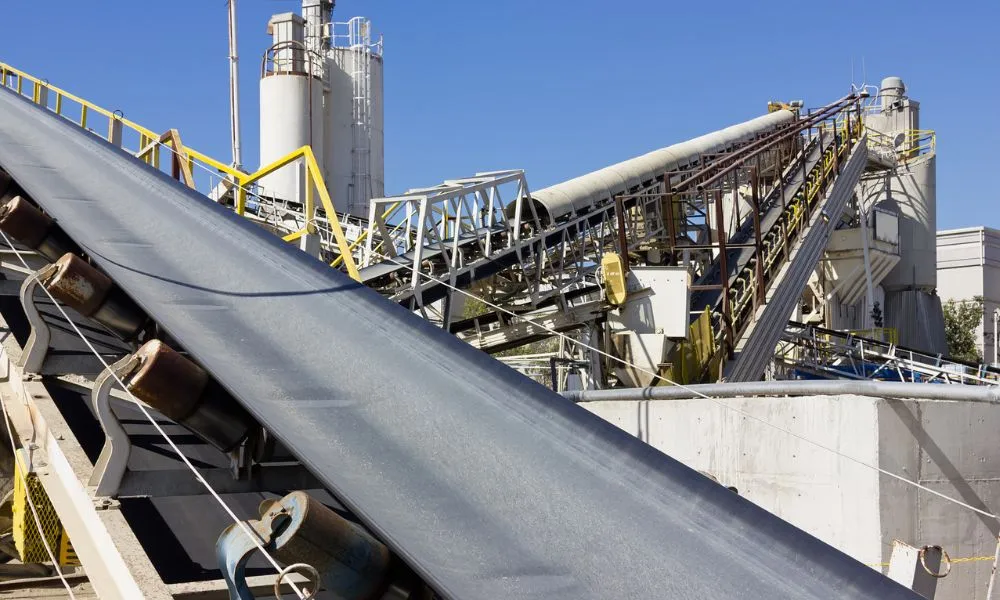
Conveyor belts are prone to gathering dispersed material, resulting in roughly 1% of conveyed material accumulating beneath the belts. Consistent cleaning of conveyor belts is essential to avoid material buildup on rollers and bearings, which could result in equipment malfunctions and operational stoppages. By investing in advanced vacuum systems, you can uphold plant efficiency and minimize expensive disruptions.
Bucket Elevator Pit Cleaning with Industrial Vacuums
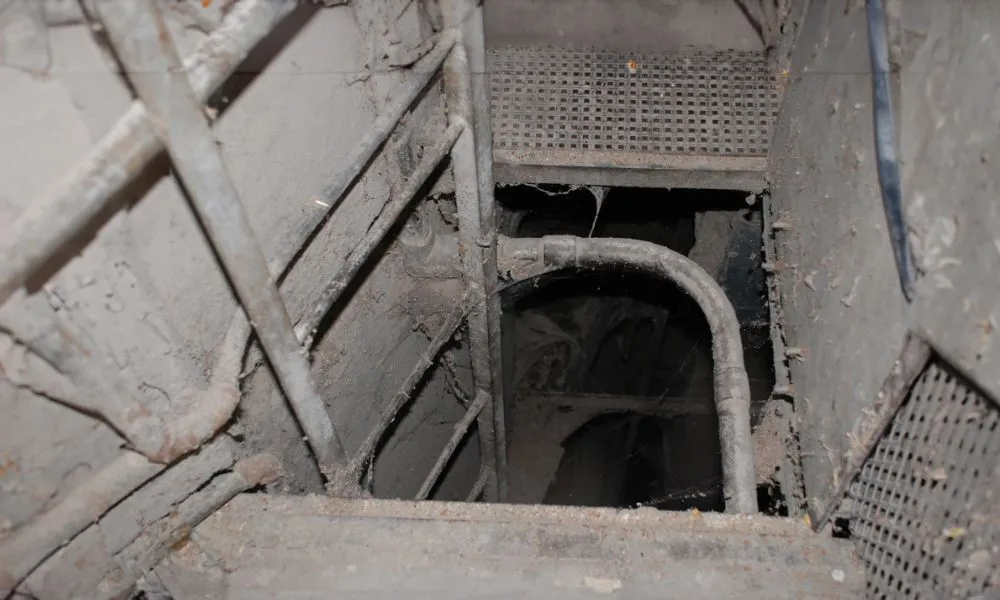
Failing to conduct routine cleaning of bucket elevator pits can lead to the buildup of waste materials, causing blockages in the system and potentially slowing down or interrupting production. Additionally, the presence of waste materials in these pits heightens the risk of fire or explosion due to the accumulation of combustible dust. Implementing effective vacuum cleaning procedures is crucial for preserving the safety and efficiency of material transport systems, thereby reducing potential hazards.
Coal and Alternative Fuel Dust Cleanup in Cement Plants
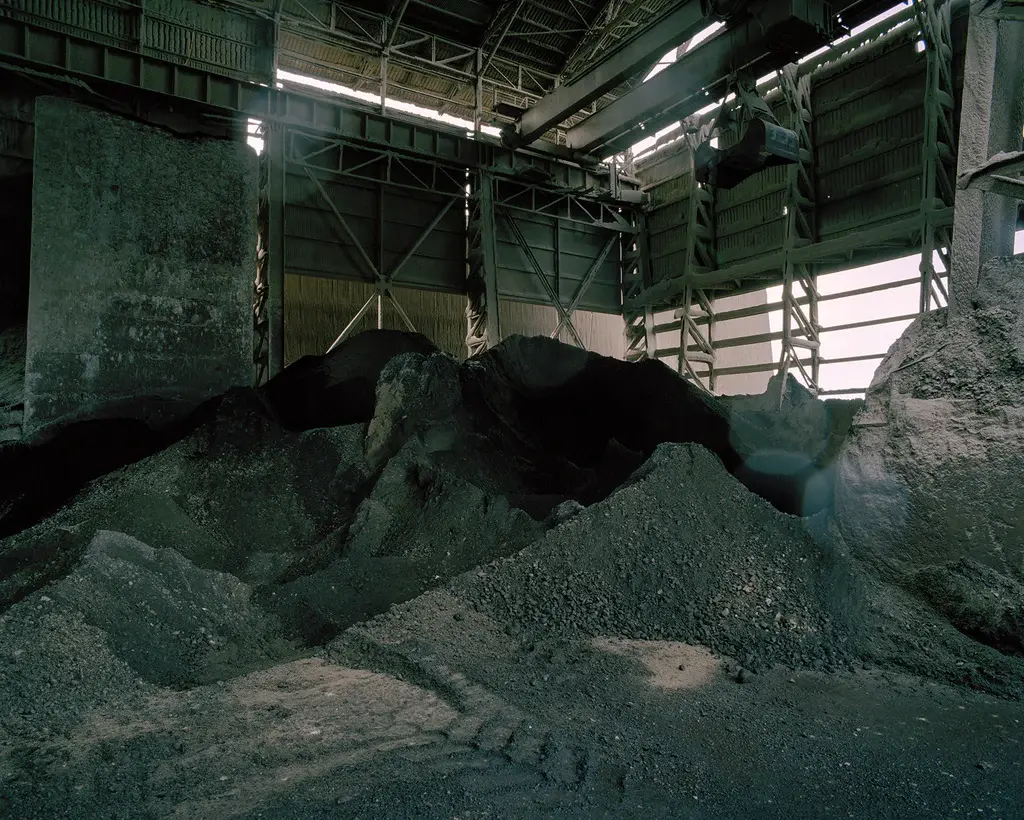
Warehouses that store coal or alternative fuels for use in rotary kilns present a substantial safety risk due to the potential for explosions. Neglecting regular cleaning in these spaces allows combustible dust to gather on surfaces and in corners. Any kind of disturbance, such as handling coal or the presence of ignition sources, can result in fires or explosions. The adoption of powerful vacuum systems guarantees comprehensive cleaning, thereby reducing the likelihood of hazardous incidents.
Cement Packing Plant Dust Recovery and Cleanup
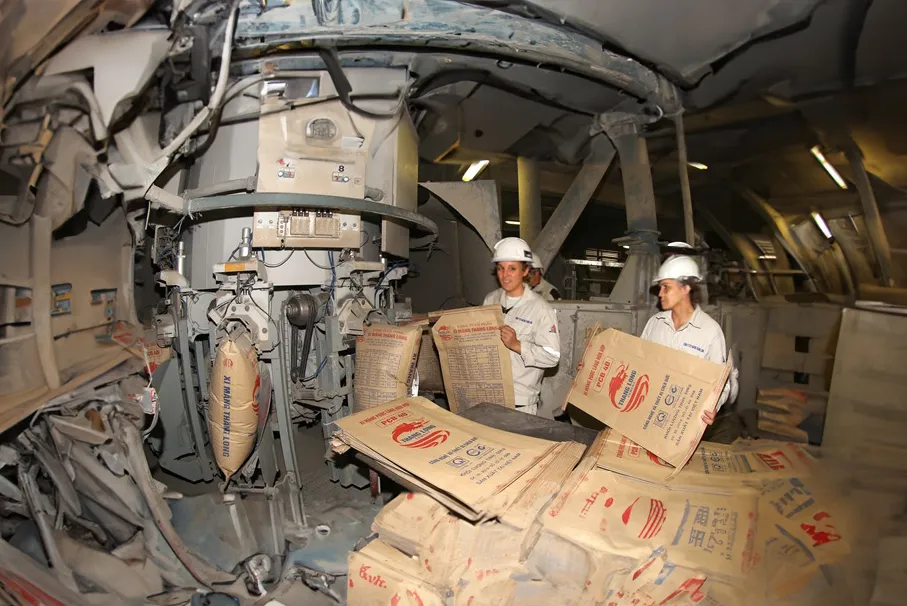
Consistent cleaning of the packing department and Rotopack machinery is essential for recovering dispersed product, minimizing waste, and preventing economic losses. Moreover, tidy and well-kept packing spaces play a role in environmental conservation and guarantee a secure workplace. Employing effective vacuum solutions allows you to attain peak cleanliness, safety, and productivity within the packing facility.
Silo, Truck, and Bulk Loading Dust Cleanup
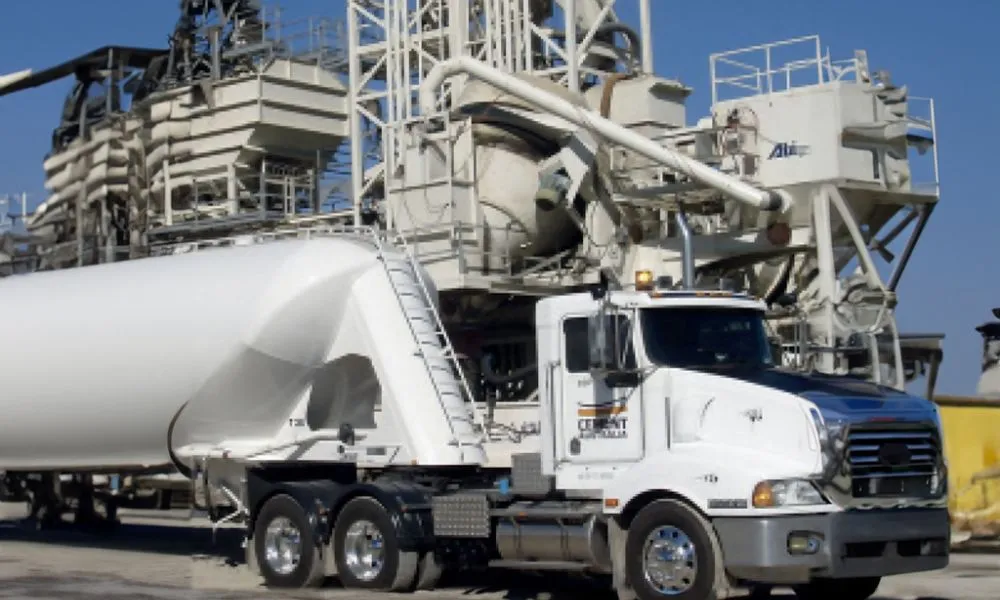
Ensuring trucks are promptly cleaned after being loaded from silos and before departing the cement plant is imperative for adhering to traffic and safety regulations. Thoroughly removing product residue not only guarantees regulatory adherence but also elevates overall safety measures. Incorporating dependable vacuum systems facilitates a more efficient cleaning process, enhancing operational compliance.
Choosing the Right Industrial Vacuum System for Cement Plants
Mobile cleanup, central vacuum, dust collection, and pre-separation each solve a different problem.
The best cement plant dust control system depends on where the dust is generated, how much material is being recovered, how often cleanup is required, and whether the goal is source capture, housekeeping, bulk recovery, or continuous multi-point cleaning.
Centralized Vacuum Systems for Cement Plants
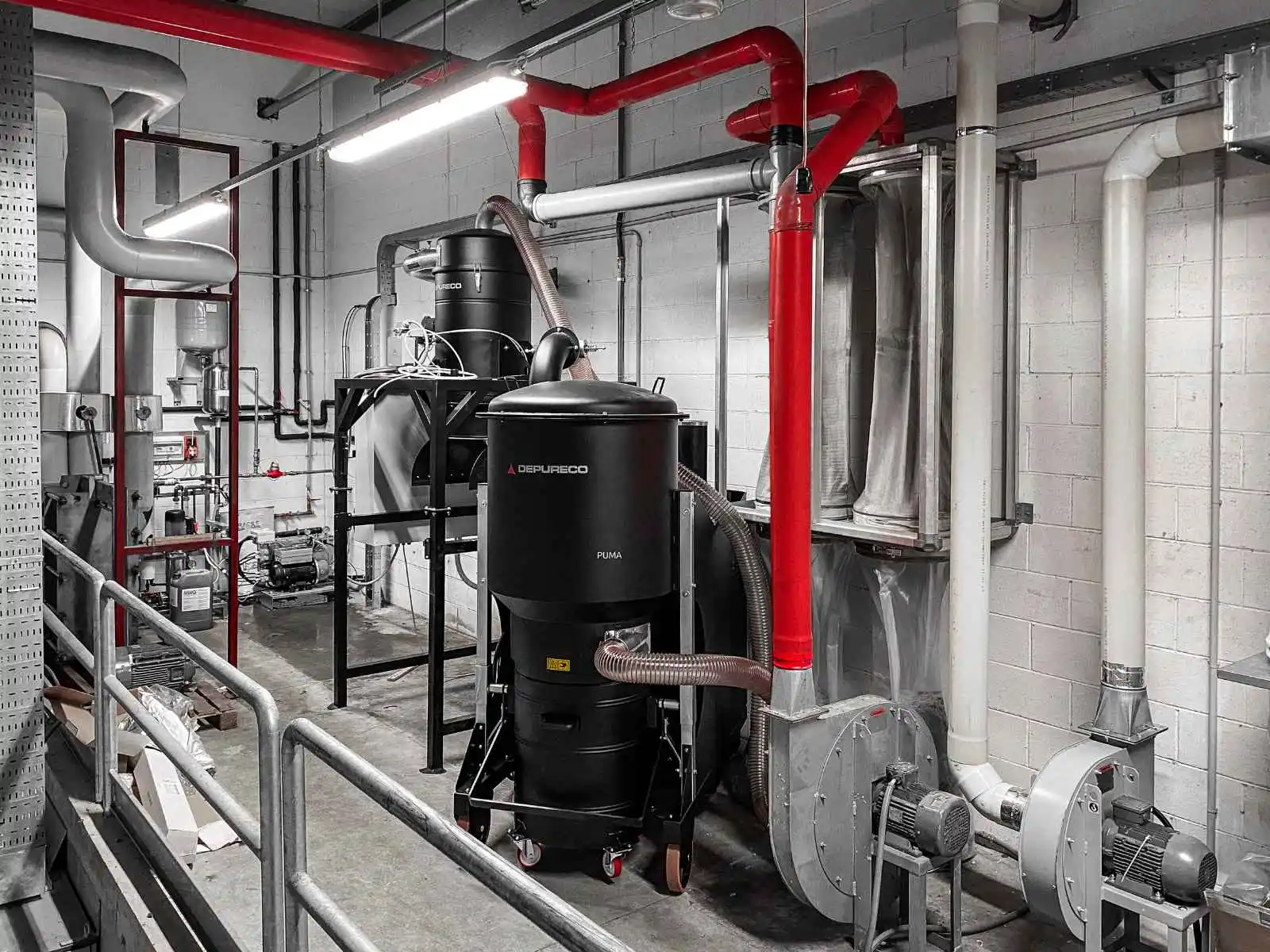
A centralized vacuum system is often the best fit when a cement plant needs fixed suction points across conveyors, pits, packing lines, loading zones, and multiple production areas. Instead of moving a vacuum around the facility, operators connect hoses to strategically placed pickup points tied into a central vacuum unit, filtration system, and collection/discharge setup.
Mobile Heavy-Duty Industrial Vacuums
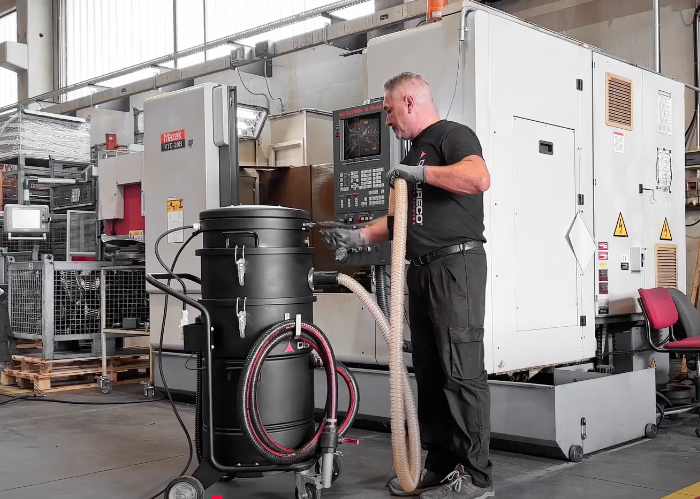
Heavy-duty three-phase industrial vacuums are a strong option for localized cleanup, maintenance work, shutdown cleaning, and areas where a portable system needs to recover cement dust, concrete dust, powder spills, and heavy debris from floors, equipment, and production areas.
Cyclone Pre-Separators for High Dust Loads
Cement powder and concrete dust can load filters quickly. A cyclone pre-separator or interceptor can capture bulk material before it reaches the main vacuum filter, helping protect filtration, maintain airflow, and reduce maintenance during high-volume dust recovery.
Dust Collectors vs. Industrial Vacuums
Industrial dust collectors are typically used for source capture or process dust control, while industrial vacuums are used for settled dust, spills, housekeeping, material recovery, and cleanup around equipment. Many cement plants need both: dust collectors for airborne process control and vacuum systems for the dust and powder that settles throughout the facility.
Explosion-Proof and Hazard-Aware Configurations
Some cement plant areas may involve coal dust, alternative fuels, combustible dust, or classified-area concerns. In those applications, vacuum selection should be based on the facility’s hazard assessment. Depureco USA can help compare explosion-proof industrial vacuums, antistatic configurations, grounded accessories, and filtration options for the cleanup environment.
Choosing the Right Industrial Vacuum System for Cement Plants
We offer a selection of solutions, featuring both mobile and stationary electric setups boasting substantial collection capacities and top-notch filters. These systems place a premium on safeguarding workers’ health, guaranteeing a tidy and secure work environment.
Reach out to us today to discover our state-of-the-art vacuum systems and transform the operations of your cement plant.