

2,500 in²
12 gal
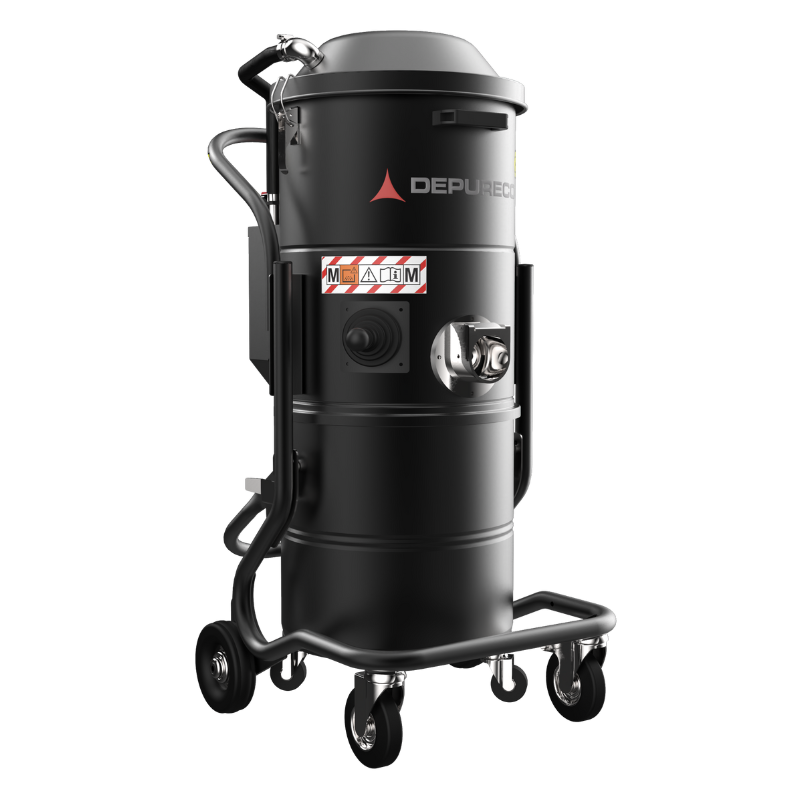
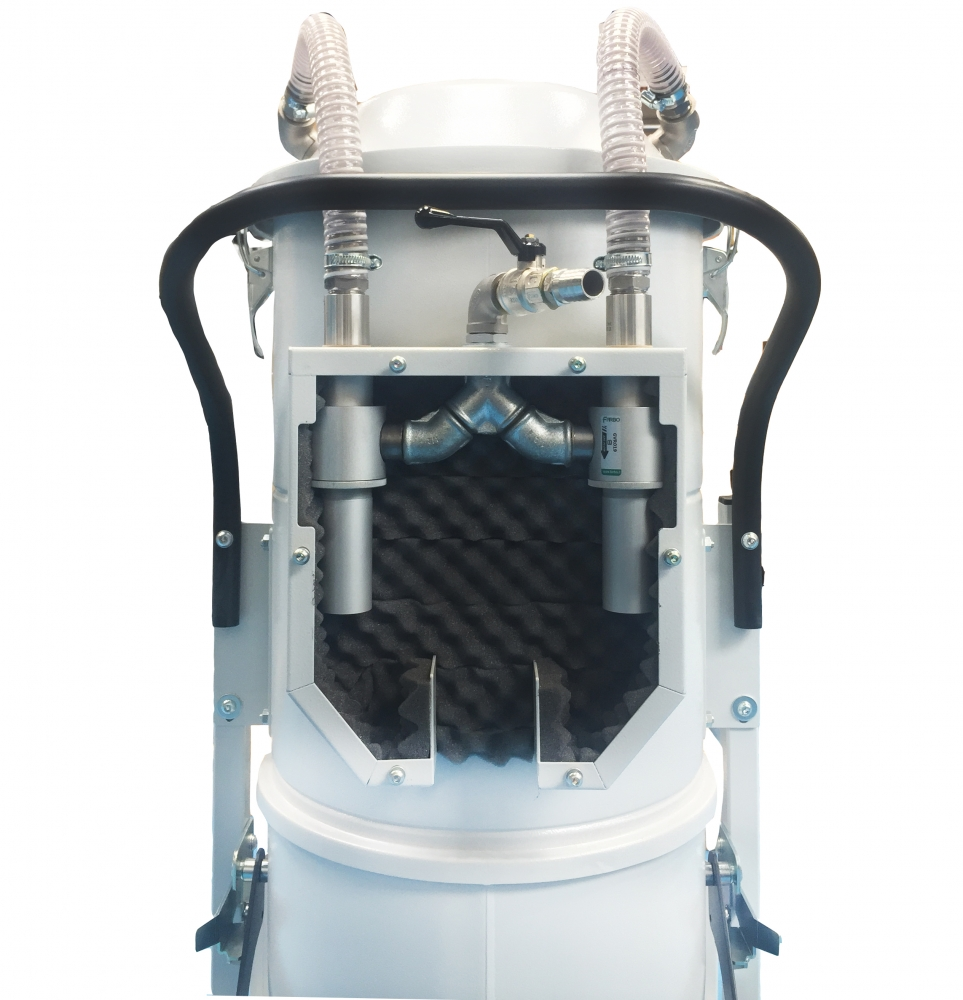
The Miniair is a versatile and powerful industrial vacuum designed for various industrial applications that require the use of compressed air. This vacuum cleaner is equipped with two parallel ejectors, ensuring maximum performance. Each ejector can be adjusted to optimize airflow or vacuum strength according to the specific application. Depureco’s Miniair vacuum features a robust polyester filter in M Class with a filtration efficiency of 1µ, effectively capturing even fine dust particles. Depending on the application, alternative filters such as Teflon water-repellent filters, Nomex 250°C resistant filters, filters with PTFE treatment for more challenging dust types, and binding properties are also available. The Miniair industrial vacuum is equipped with a spacious 12 gal detachable container, enabling easy emptying of the vacuumed materials. Disposable collection bags can also be used for added convenience. For safe liquid vacuuming, a floating system can be installed in the container.

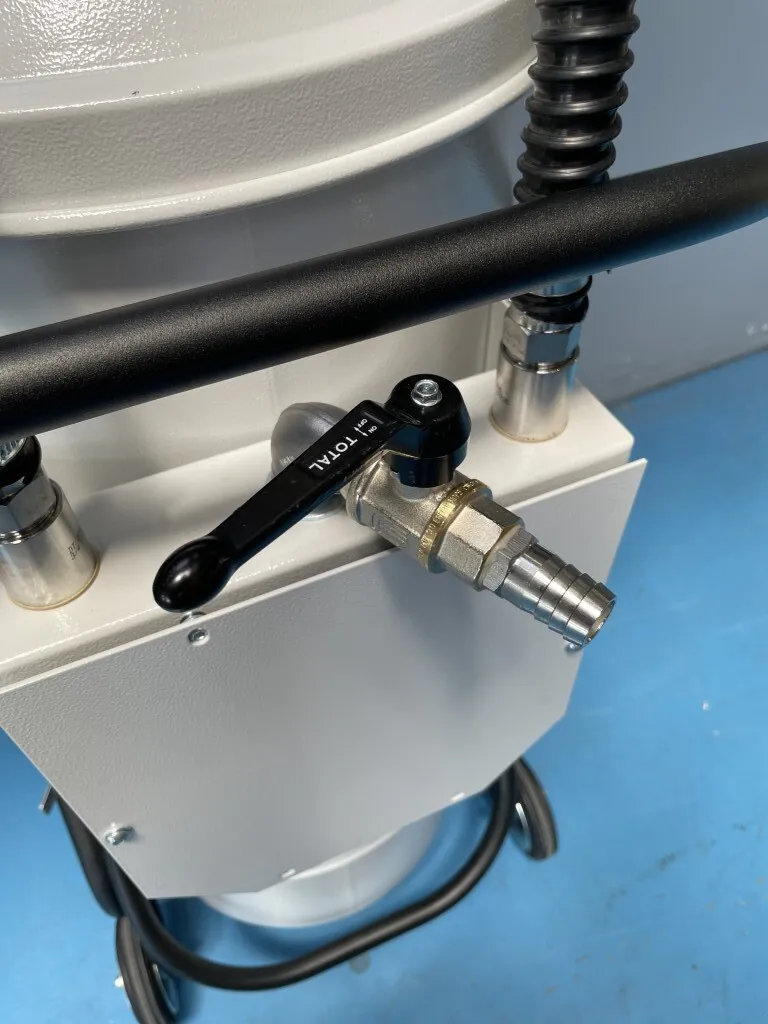
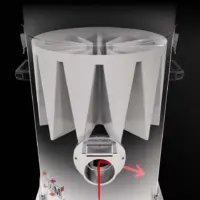
The vacuum cleaner features two ejectors that create a powerful suction inside the chamber, allowing for effective vacuuming operations without the need for mechanical components.

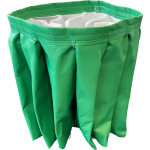
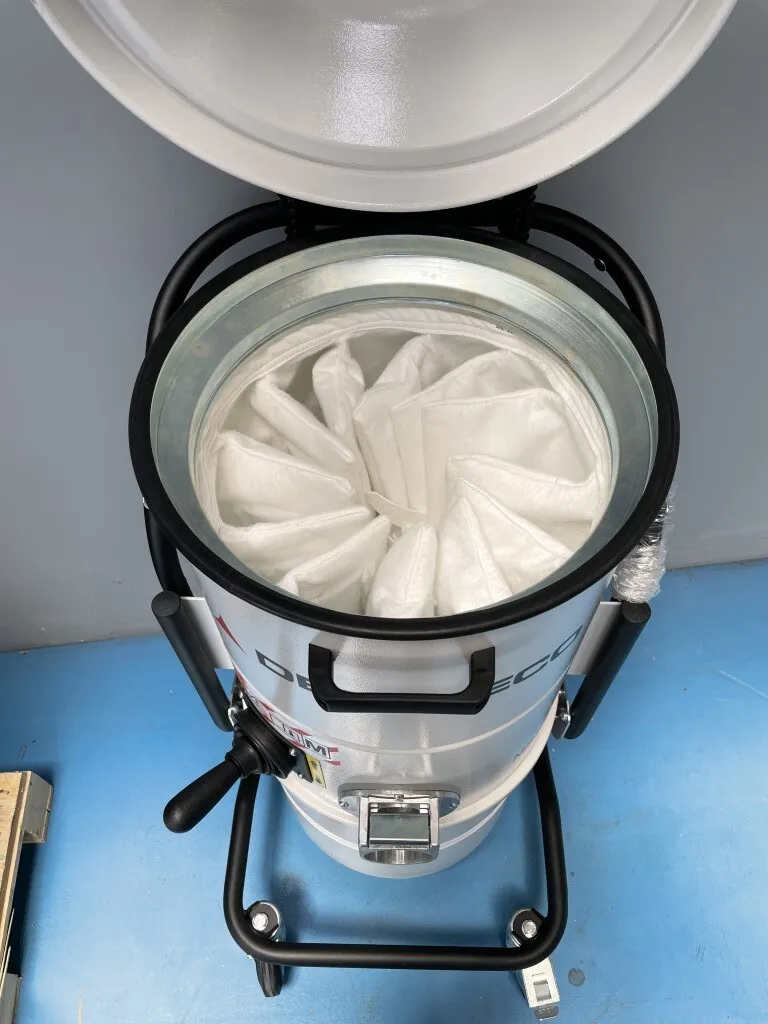
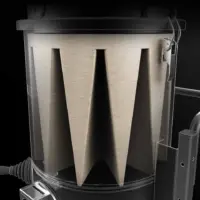
Filtration is ensured by a polyester filter classified as M Class, providing reliable performance. The unique star shape of the filter allows continuous airflow, even when it becomes dirty. The fabric's M Class classification (BIA | EN 60335-2-69) means that particles as small as 1 micron are effectively captured, safeguarding the suction unit and protecting the operator using the vacuum cleaner.

Located on the side of the filter chamber, there is an ergonomic manual shaker that allows the operator to effortlessly and rapidly clean the filter by removing dust and debris from its surface. This intelligent cleaning system enables the operator to continue working without the need to replace or wash the filter.
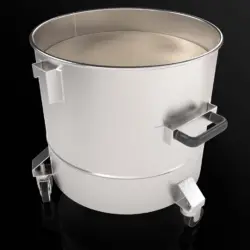
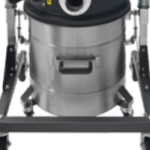
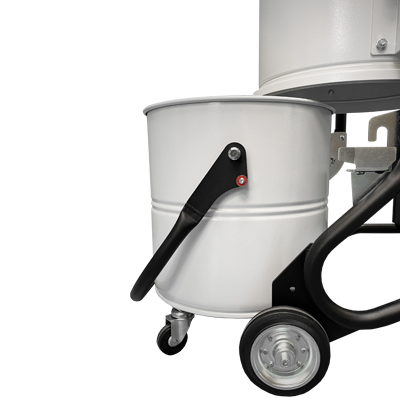
The collected material is stored in a painted container that features a metal handle, allowing the bin to be detached from the machine. With the convenience of four swiveling wheels, the bin can be effortlessly moved and emptied.
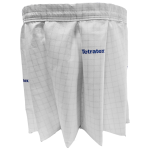
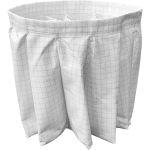
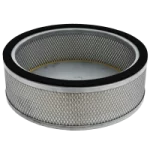

H14 Absolute Filter (EN 1822) Glass fiber
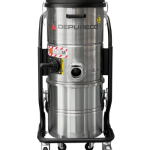


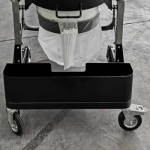
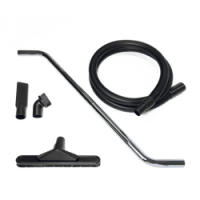
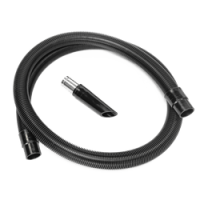
Accessories basket
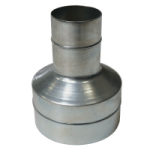


Get answers about using the MINIAIR 2V compressed-air industrial vacuum for portable dust and solid recovery, Venturi-powered suction, plant-air requirements, optional wet pickup, filtration, pneumatic vacuum selection, and applications where electrical vacuum power is unavailable or undesirable.
The MINIAIR 2V is a compact pneumatic industrial vacuum designed for portable recovery of dust and solids where compressed air is available and an electrically powered suction motor is not the preferred power source.
Instead of using an electric motor or three-phase blower, the MINIAIR 2V uses two Venturi ejectors powered by plant air to generate suction. The current U.S. configuration provides up to 147 CFM of airflow and 200 inH₂O of maximum vacuum.
Its 12-gallon collection bin and compact chassis make it useful for machine-side cleanup, production maintenance, powders, dry debris, shavings, granules, and other smaller-volume industrial recovery jobs.
The MINIAIR 2V is particularly useful when portability is important, electrical service is inconvenient at the cleanup point, or the facility already has sufficient compressed-air capacity to support pneumatic equipment.
The standard MINIAIR 2V is designed primarily for industrial dust and solids, including production dust, powders, granules, shavings, dry debris, and other suitable loose material generated during manufacturing and maintenance.
Its high vacuum pressure makes it useful for compact machine-side cleanup and applications where the pickup path creates more resistance than a basic low-vacuum cleaning system.
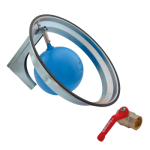
The MINIAIR 2V can also be configured for liquid pickup with an optional collection bin equipped with a floating device. Wet pickup should therefore be treated as an available configuration rather than a standard feature of the base dry model.
Filter and construction options can also be selected according to the material. Antistatic, Teflon-treated, PTFE, PTFE-antistatic, and Nomex filter media are available for applications involving different dust behavior, adhesion, temperature, or electrostatic characteristics.
Combustible dust, reactive powders, flammable liquids or vapors, hot material, and hazardous classified areas require separate application review.
The MINIAIR 2V generates suction with two Venturi ejectors rather than an electrically driven vacuum motor.
Compressed air passes through the ejectors at high velocity and creates a pressure differential inside the vacuum. That pressure differential generates suction through the hose and inlet.
The current U.S. MINIAIR 2V requires approximately 85 CFM of compressed air at 83 psi to achieve its published performance of up to 147 CFM airflow and 200 inH₂O maximum vacuum.
Before selecting the vacuum, the facility should confirm that its compressed-air system can continuously provide the required volume and pressure at the actual connection point.
Compressor capacity, pipe diameter, hose or airline length, fittings, regulators, pressure losses, and other equipment using plant air at the same time can all affect real-world performance.
Choose the MINIAIR 2V when compact size, lower collection volume, and portability are the priorities. Choose the AC 100 when the application requires substantially more vacuum airflow, a larger inlet, and greater collection capacity.
Both pneumatic vacuums require approximately 85 CFM of compressed air at 83 psi and provide up to 200 inH₂O of maximum vacuum.
The MINIAIR 2V provides up to 147 CFM through a 2.75-inch inlet and uses a 12-gallon collection bin.
The AC 100 increases airflow to 380 CFM, uses a 3.5-inch inlet, and provides a 26-gallon collection bin.
Because their maximum vacuum pressure is the same, the main selection differences are airflow, inlet size, material volume, machine size, and portability rather than simply choosing the model with more suction pressure.
The regular MINIAIR 2V may not be the best choice when the facility cannot continuously supply approximately 85 CFM of compressed air at 83 psi, when material volumes exceed what a 12-gallon portable vacuum can handle efficiently, or when substantially greater airflow is required.
In those cases, the larger AC 100 may be a better pneumatic option.
The standard MINIAIR 2V should also not automatically be considered suitable for a hazardous classified location simply because it operates from compressed air.
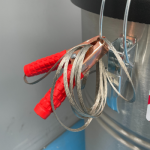
Depureco offers a separate MINIAIR 2V Z2-22 configuration with ATEX markings, AISI 304 stainless-steel collection, antistatic Class M filtration, grounding, and other hazard-related construction features.
Combustible dust, reactive material, flammable liquids or vapors, or classified environments should therefore be evaluated from the actual material and area classification rather than assuming a pneumatic power source makes the regular vacuum intrinsically safe.
For final selection, confirm the material, pickup volume, dry or wet condition, hose length, plant-air supply, filtration requirements, collection method, and any applicable process or facility hazards.