



Portable industrial vacuums make sense when cleanup is occasional, localized, or constantly changing. But as a facility grows, moving vacuum equipment from one production area to another can become part of the cleanup problem itself.
An industrial central vacuum system may be worth considering when the same areas require cleaning every shift, multiple operators need suction access, material volumes are increasing, or production has expanded beyond what portable equipment can efficiently support.
The decision is not based on building size alone. Facility layout, pickup points, simultaneous users, conveying distance, material characteristics, filtration, duty cycle, and discharge requirements all affect whether centralization makes sense and how to engineer the system.
Determining when cleanup should remain mobile and when it should become part of the facility’s infrastructure is an important thing to take into consideration when making purchasing decisions regarding central vacuum systems.
5 Signs Your Facility May Be Ready to Centralize
A centralized system is not automatically better than portable equipment. The question is whether cleanup has become repetitive enough that fixed suction points and shared infrastructure would make the operation more efficient.
Your facility may be ready to consider an industrial central vacuum system if several of these conditions apply:
- The same areas require cleanup every shift. Repeated routes around machines, production lines, mezzanines, or processing areas are strong candidates for permanent suction drops.
- Multiple operators need vacuum access. Instead of moving equipment between departments, a central system can provide strategically located pickup points throughout the facility.
- Moving vacuums and hoses is consuming labor. If setup, transportation, power connections, and equipment movement are becoming part of the cleanup workload, fixed infrastructure may simplify the process.
- Material volume is increasing. Frequent filter servicing, container emptying, or moving collected material can signal that the collection and discharge strategy needs to scale with production.
- Cleanup is becoming part of the production process. When vacuuming is required throughout every shift rather than only during occasional maintenance, it may make sense to treat suction as facility infrastructure.
Simple rule: If your cleanup locations are predictable but the amount of labor, material, or equipment movement keeps increasing, it may be time to evaluate centralization.
These signs help determine whether a centralized approach is worth considering. They do not determine system size. That depends on the material, piping layout, number of simultaneous users, filtration requirements, conveying distance, duty cycle, and collection method.
Mobile Vacuuming Still Makes Sense When...
- Cleanup locations frequently change
- Only one area normally needs suction
- Material volumes remain manageable
- Vacuum movement adds little downtime
- Cleanup is occasional rather than continuous
Consider Centralizing When...
- The same areas are cleaned every shift
- Multiple operators need suction access
- Equipment movement is adding labor
- Collection volumes continue to increase
- Cleanup has become part of production workflow
How Industrial Central Vacuum Systems Scale
A centralized vacuum system is not scaled by facility square footage or motor horsepower alone. The system has to be matched to how the facility actually cleans, what material is being moved, and how far that material must travel.
Six factors usually drive the design:
- Coverage: How many production areas, machines, floors, or cleanup zones need vacuum access?
- Simultaneous users: How many suction points may be operating at the same time? A system serving one operator has different airflow requirements than one serving several departments at once.
- Piping distance and elevation: Longer horizontal runs, vertical lifts, bends, hose lengths, and pipe diameter all affect system performance.
- Material: Fine dust, powders, metal chips, abrasive debris, combustible dust, and other materials behave differently inside a piping network and may require different system configurations.
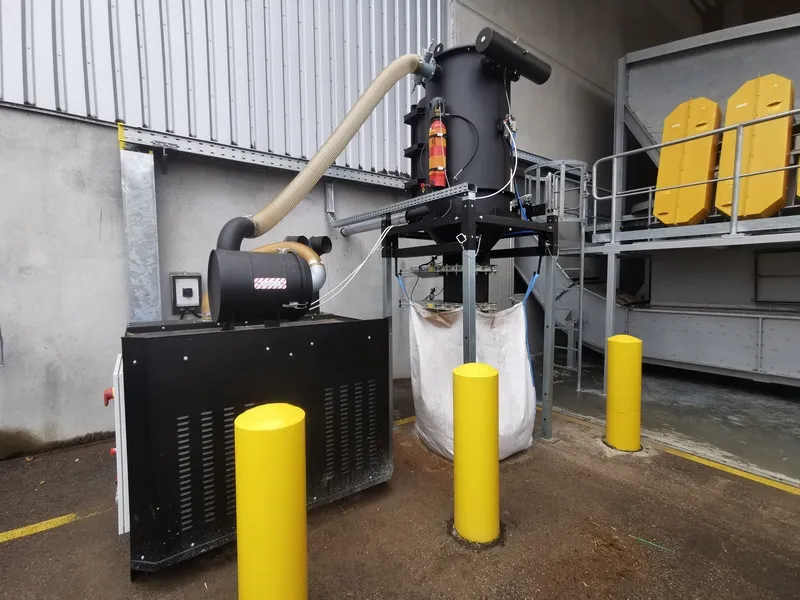
- Filtration and separation: Higher material loads may benefit from cyclonic pre-separation, larger filtration capacity, automatic filter cleaning, or specialized containment before material reaches the main vacuum unit.
- Collection and discharge: The system must also account for where the recovered material goes, whether that is a bin, drum, hopper, bulk container, or another process.
This is why two facilities of similar size can require very different systems.
For a detailed engineering review, Depureco’s Central Vacuum System Design & Engineering process evaluates the facility layout, pickup points, material, conveying distance, filtration requirements, simultaneous use, and collection strategy together.
Recommended path: Start with the cleanup workflow and material. Let the system design follow from those requirements rather than selecting a vacuum unit first.
Coverage
Number of machines, work areas, floors, and cleanup zones requiring suction access.
Simultaneous Users
How many operators or suction drops may need to run at the same time.
Piping Distance
Horizontal runs, vertical lifts, bends, hose length, and pipe configuration.
Material
Dust, powder, chips, abrasive debris, and other materials require different transport strategies.
Filtration & Separation
Filter capacity, pre-separation, filter cleaning, and containment must match the application.
Collection & Discharge
Collected material may discharge into bins, drums, hoppers, bulk containers, or process equipment.
FAQs
A centralized system may be worth evaluating when cleanup repeatedly occurs in the same production areas, multiple operators need vacuum access, material volumes are increasing, or moving portable vacuums between work areas is adding unnecessary labor.
Not always. Portable industrial vacuums remain a strong option when cleanup locations change frequently or only one area needs suction at a time. Centralized systems become more attractive when cleanup routes are predictable and multiple areas require regular access to suction.
System sizing depends on the material being collected, number of pickup points, simultaneous users, piping distance and elevation, hose requirements, filtration, material volume, duty cycle, and discharge method. Facility size or motor horsepower alone does not determine the correct system.
Potential expansion can be considered during the initial system design. Future pickup points, production areas, or equipment should be discussed during the engineering stage so the piping network and vacuum source can be evaluated with future requirements in mind.
No. A centralized industrial vacuum system is commonly used for housekeeping, material recovery, and cleanup through fixed suction points. A dust collection system is generally designed for continuous source capture of airborne dust generated by a process or machine. Some facilities may require both.
Centralized systems can be engineered for certain combustible, conductive, toxic, or otherwise hazardous materials, but final suitability depends on the material, hazard profile, facility classification, piping, filtration, static-control strategy, collection method, and complete system configuration. The application should be reviewed before equipment is selected.
What Depureco Needs to Size the System
You do not need to determine horsepower, airflow, or pipe diameter before contacting Depureco. Those decisions should come after the application and facility requirements are understood.
To begin evaluating a system, it helps to know:
- What material will be collected
- Where the pickup points will be located
- How many operators may use the system simultaneously
- Approximate horizontal and vertical piping distances
- Expected material volume and cleanup frequency
- Filtration or containment requirements
- How the collected material should be discharged
- Available power and utilities
- Any combustible, conductive, toxic, or hazardous material concerns
A floor plan, facility drawing, or marked-up production layout can make the initial review even more useful.
Compliance-aware note: Final suitability depends on the material, application, facility requirements, hazard profile, and complete system configuration. HEPA filtration, conductive components, bonding and grounding, or combustible-dust configurations should be evaluated as part of the full system rather than treated as standalone compliance solutions.
If portable equipment is becoming harder to manage as your cleanup operation expands, Depureco can help determine whether a centralized vacuum system is the right next step.
Ready to Review Your Facility?
Send Depureco the basics of your cleanup operation and facility layout. We can use that information to begin evaluating the right centralized vacuum system architecture for your application.
