



Chemical and pharmaceutical processing can generate everything from fine APIs and excipients to pigments, carbon black, chemical additives, tablet dust, and other difficult powders. The right cleanup approach depends on much more than suction power.
Before selecting an industrial vacuum, facilities should understand the material being collected, how it behaves, where it is generated, how it must be contained or disposed of, and whether exposure, static electricity, combustibility, or cross-contamination create additional requirements.
An industrial vacuum can support safer housekeeping, controlled powder recovery, and repeatable cleaning procedures, but no single vacuum, filter, or accessory makes an entire process compliant on its own. Final equipment suitability depends on the material, process, facility requirements, and complete system configuration.
This guide covers the practical questions chemical and pharmaceutical processors should answer before choosing a vacuum or dust-collection solution.
Five Best Practices for Chemical & Pharmaceutical Dust and Powder Cleanup
Safe, effective cleanup starts with understanding the material and process, not simply choosing the vacuum with the highest suction or finest filter.
1. Start With the Material and Its Hazards
Before selecting cleanup equipment, identify exactly what is being collected. Review the material SDS and confirm whether the powder is toxic, combustible, conductive, reactive, corrosive, or otherwise hazardous.
Particle size, moisture, quantity, and disposal requirements can also change the appropriate vacuum configuration.
Simple rule: Do not select the vacuum until you understand the material.
2. Identify Where the Material Is Generated
Dust that has already settled on equipment or floors may require a different solution than powder continuously released from a mixer, tablet press, filling machine, or transfer point.
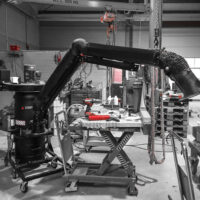
Where practical, collecting material close to the point of generation can help reduce migration throughout the work area. Depending on the process, this may mean a mobile industrial vacuum, machine-integrated vacuum, dust collector, or centralized system.
3. Match Filtration and Containment to the Application
HEPA filtration can be important for very fine or hazardous particulate, but HEPA alone does not determine whether a system is appropriate.
Facilities should also consider primary filter performance, filter loading, cleaning method, containment during collection, and how material is discharged or disposed of.
For applications involving difficult fine powders, review Depureco’s industrial vacuums for fine dust and powder.
4. Account for Combustibility and Static Electricity
Some pharmaceutical, nutraceutical, and chemical powders can present combustible-dust or static-related hazards.
If the material may be combustible, the application should be evaluated for factors such as area classification, grounding and bonding requirements, conductive accessories, and the appropriate equipment configuration before cleanup begins.
Compliance-aware note: An antistatic filter, conductive hose, or HEPA filter alone does not make a vacuum suitable for every combustible-dust application.
5. Make Vacuuming Part of a Repeatable Cleaning Procedure
In pharmaceutical processing especially, cleanup should support a documented and repeatable procedure.
That means considering how the vacuum itself is emptied, cleaned, and maintained, not just how well it picks up material. Filters, hoses, tools, collection containers, and discharge systems should all be inspected and maintained as part of the facility’s cleaning program.
The goal is not simply to remove visible dust. It is to create a controlled, repeatable cleanup process that supports safer housekeeping, contamination control, and production consistency.
Match the Vacuum to the Material and Process
There is no single “pharmaceutical vacuum” or “chemical vacuum” that is right for every process. The correct approach depends on what is being collected, where it is generated, how often it must be removed, and what hazards or containment requirements apply.
A few common starting points:
- Fine pharmaceutical powders: prioritize filtration, containment, cleanability, and controlled disposal.
- Combustible chemical or pharmaceutical powders: evaluate the material hazard, area classification, static-control requirements, and complete vacuum configuration.
- Dust generated continuously at a machine: consider collection at or near the source rather than relying only on housekeeping after dust settles.
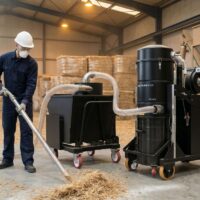
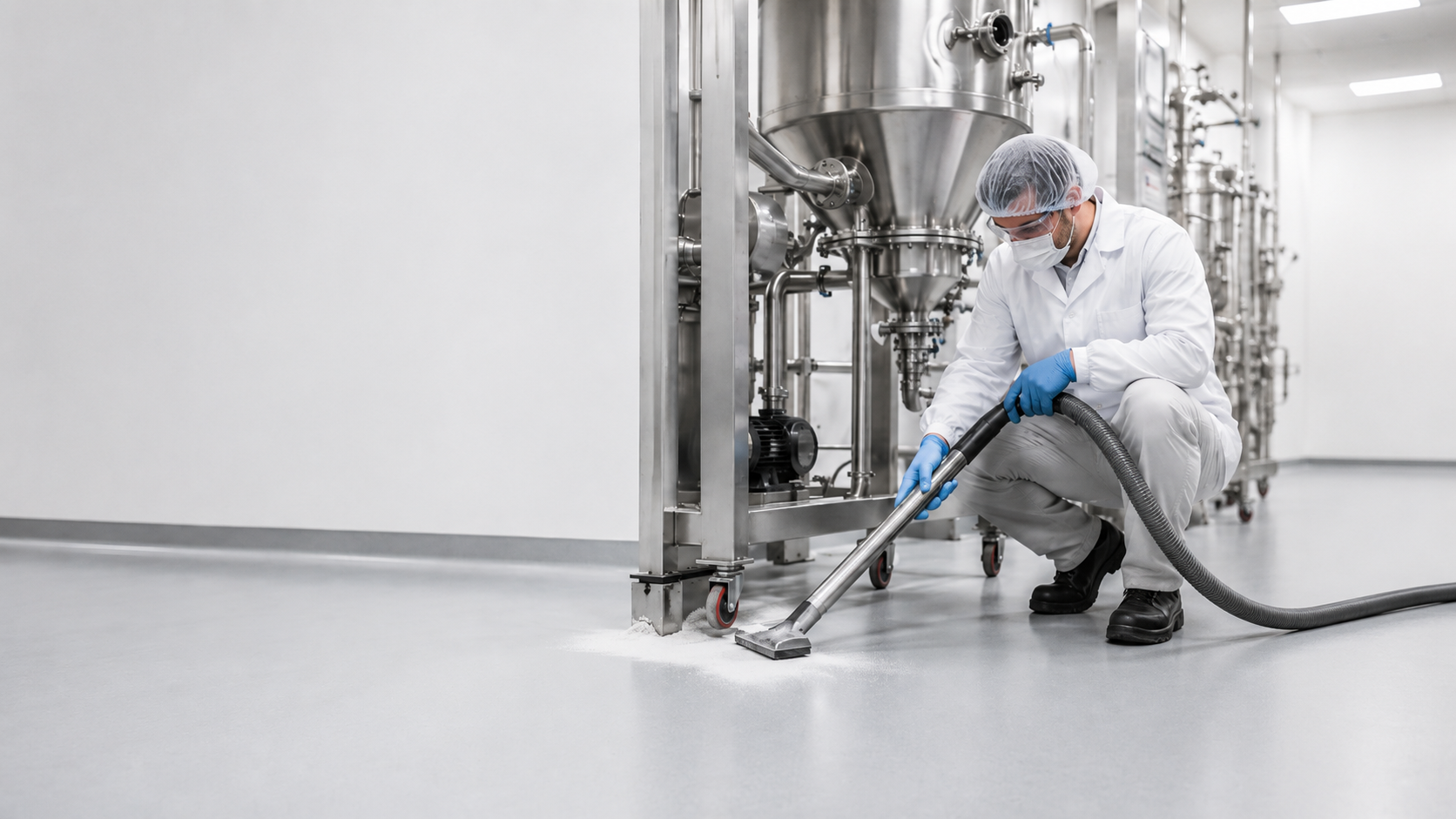
- Routine floor and equipment cleanup: a mobile industrial vacuum may provide the flexibility maintenance and sanitation teams need.
- Multiple cleanup points throughout a facility: a centralized vacuum system may be worth evaluating.
Recommended path: Match the collection method to the process first, then select the filtration, containment, construction, and accessories required for the material.
A useful distinction is:
Settled material → industrial vacuum
Dust generated at the process → source capture or dust collection
Dedicated machine pickup → machine-integrated vacuum
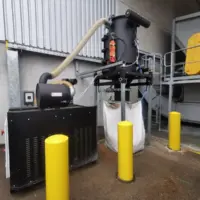
Multiple facility-wide pickup points → centralized vacuum system
For fine powders and difficult particulates, Depureco’s fine-dust industrial vacuum solutions provide a starting point for comparing filtration and collection approaches.
Important compatibility note: Final equipment suitability should be confirmed using the material, SDS, dry or wet condition, particle characteristics, temperature, collection method, hazard profile, facility requirements, and complete system configuration.
Add Your Heading Text Here
Industrial vacuuming should support the facility’s broader cleaning, containment, and exposure-control strategy. The exact role changes depending on whether the operation is pharmaceutical or chemical processing.
Pharmaceutical Processing
In pharmaceutical production, vacuum selection often centers on fine-powder containment, repeatable cleaning, cross-contamination control, and cleanable construction.
Common applications include:
- Tablet press and capsule filling cleanup
- API and excipient powder recovery
- Blender and mixer cleanup
- Production changeovers
- Machine-side dust collection
- General housekeeping around processing equipment
Depending on the application, facilities may need to evaluate stainless-steel construction, HEPA filtration, contained discharge, or compact machine-integrated vacuum systems.
Depureco’s SWAN pharmaceutical industrial vacuum is one example designed specifically for pharmaceutical and fine-powder applications, with available filtration and stainless-steel configurations based on the process.
Chemical Processing
Chemical processing requires even greater emphasis on the specific material and hazard profile.
Pigments, carbon black, additives, powders, and chemical residues can differ significantly in combustibility, conductivity, toxicity, corrosiveness, and physical behavior. Equipment should therefore be selected only after the material and process conditions are understood.
Applications involving combustible or ignition-sensitive powders may require a combustible-dust vacuum configuration, conductive components, bonding and grounding, or equipment matched to the facility’s hazardous-area classification.
Common mistake: Choosing equipment based only on the industry name. Two chemical or pharmaceutical facilities may require completely different vacuum configurations even when performing similar processes.
The Best Starting Point Is the Application
Before requesting a quote, define:
- The exact material being collected
- SDS and known hazards
- Dry, wet, or mixed condition
- Particle size and approximate quantity
- Where the material is generated
- Cleanup frequency and duty cycle
- Recovery or disposal requirements
- Required containment or filtration
- Combustible-dust concerns
- Area classification, if applicable
Providing this information allows the vacuum, filtration, accessories, and collection method to be matched to the real application rather than a generic industry category.
Compliance-aware note: Industrial vacuum equipment can support safer housekeeping and controlled cleanup procedures, but final suitability depends on the material, application, facility requirements, and complete system configuration.
Pharmaceutical Processing
- Fine-powder containment
- Cross-contamination control
- Repeatable cleaning procedures
- HEPA filtration when required
- Cleanable or stainless-steel configurations
- Contained powder discharge
Chemical Processing
- Exact material and SDS review
- Combustibility and conductivity
- Static-control requirements
- Chemical compatibility
- Hazardous-area classification
- Application-specific configuration
Frequently Asked Questions
Does using a HEPA industrial vacuum make a pharmaceutical facility GMP compliant?
No. HEPA filtration can support fine-particle control, but a vacuum or filter alone does not make a facility GMP compliant.
Pharmaceutical facilities must consider the complete cleaning procedure, equipment design, contamination-control strategy, maintenance practices, and process requirements. HEPA filtration should be selected when the application calls for it—not treated as a universal compliance solution.
Do all pharmaceutical or chemical powders require an explosion-proof vacuum?
No. Equipment requirements depend on the specific material, its combustible or reactive properties, the process, and the facility's area classification.
If a powder may be combustible or ignition-sensitive, review the SDS and available hazard data before selecting equipment. The application may require conductive components, bonding and grounding, or a combustible-dust vacuum configuration.
What information should I provide when choosing a vacuum for chemical or pharmaceutical powder?
Start with the exact material and application. Useful information includes:
- Material name and SDS
- Dry, wet, or mixed condition
- Particle size and approximate quantity
- Process generating the material
- Cleanup frequency
- Required filtration or containment
- Recovery or disposal method
- Combustible-dust concerns
- Area classification, if known
- Available power or compressed air
Need Help Selecting the Right Vacuum for Your Process?
Chemical and pharmaceutical applications can vary significantly based on the material, process, filtration requirements, containment needs, and hazard profile.
Tell Depureco USA what you are collecting, where it is generated, and how it needs to be handled. Our team can help you narrow down the appropriate vacuum, filtration, accessories, and collection method for your application.
Before reaching out, have your material SDS available when possible. Information about particle size, quantity, dry or wet condition, combustible-dust concerns, area classification, and required containment will help us evaluate the application more accurately.
Always confirm final equipment suitability for the specific material, process, facility requirements, and complete system configuration.
Need Help Selecting the Right Vacuum for Your Process?
Tell Depureco USA what material you are collecting, where it is generated, and how it needs to be handled. We can help narrow down the appropriate vacuum, filtration, accessories, and collection method for your application.
Have your material SDS available when possible. Particle size, quantity, dry or wet condition, combustible-dust concerns, area classification, and containment requirements can all affect final equipment selection.
Get an Application Recommendation