


34 gal
The WD AIR is a compressed air industrial vacuum for liquids, wet debris, and light sludge recovery. Instead of using electric suction components, WD AIR runs on compressed air through a Venturi-powered dual ejector system, making it a practical option for facilities that already have house air available or prefer a non-electric vacuum setup for wet cleanup.
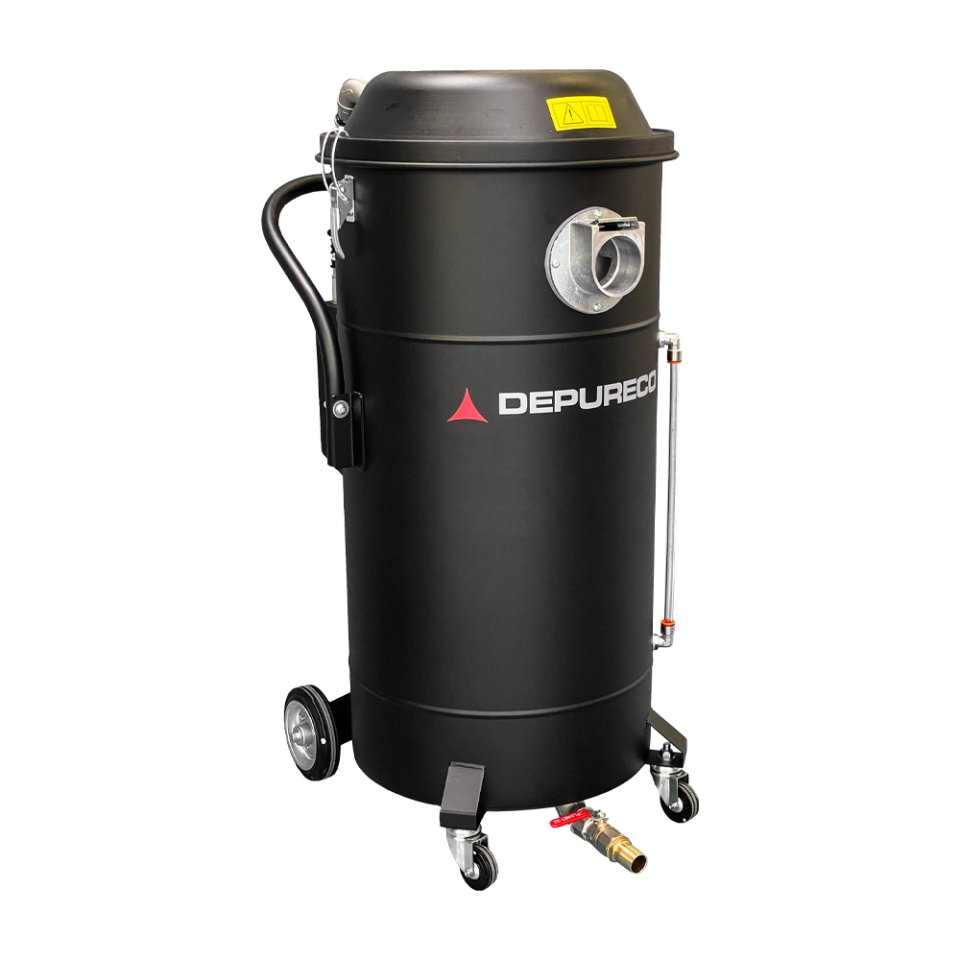
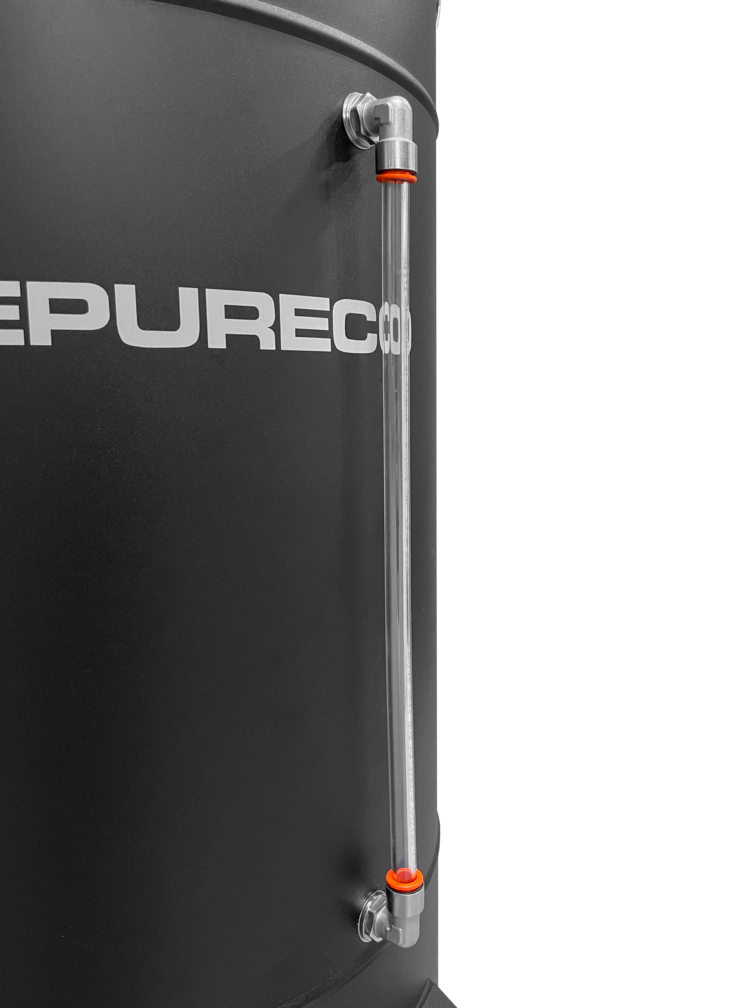
Two adjustable ejectors let operators tune performance toward more airflow or more vacuum, depending on the application. The 34-gallon tank, front level tube, bottom drain, and gravity discharge valve make liquid recovery easier to monitor and empty, while bag filtration helps separate solids from recovered liquids.
WD AIR is a strong fit for industrial spill cleanup, wet maintenance work, liquid recovery, light sludge pickup, tank cleaning, machine-side cleanup, and facilities handling mixed liquids with debris.

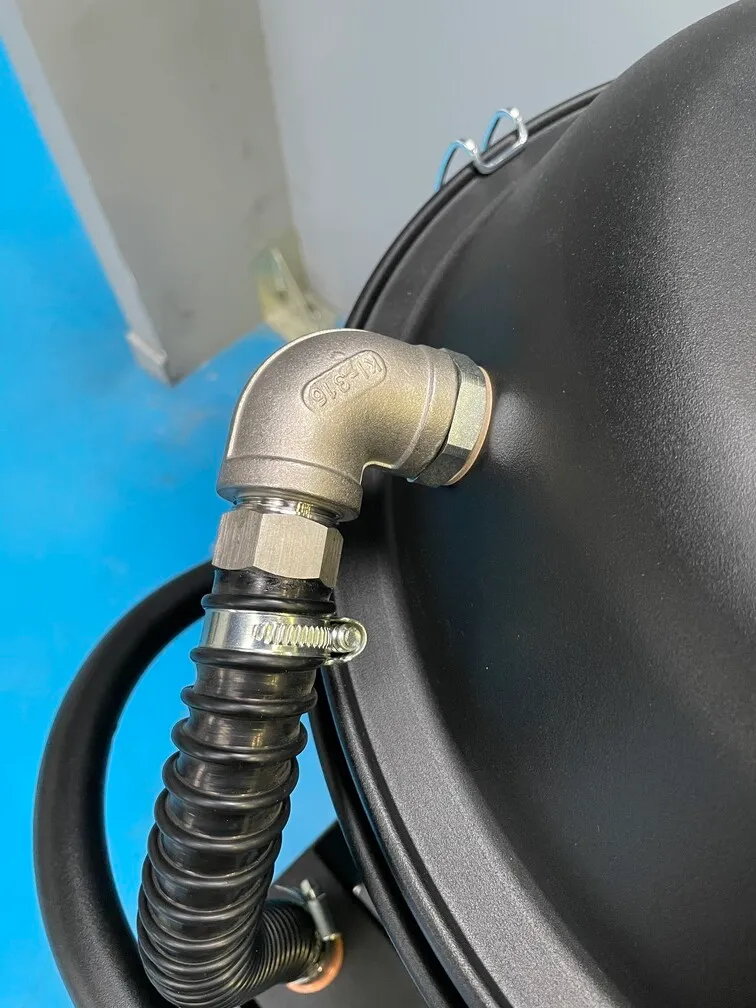
WD AIR uses facility compressed air to generate vacuum through a Venturi-powered suction system. With no electric suction motor, the unit is a practical choice for wet maintenance work, liquid recovery, and facilities where compressed air is already available at the point of use.

Filtration is assured by a polyester filter of M class, featuring a unique star shape that allows for continuous airflow even when the filter becomes dirty. The filter fabric is classified as M Class (BIA | EN 60335-2-69), providing protection to both the suction unit and the operator by effectively trapping particles up to 1 micron in size.

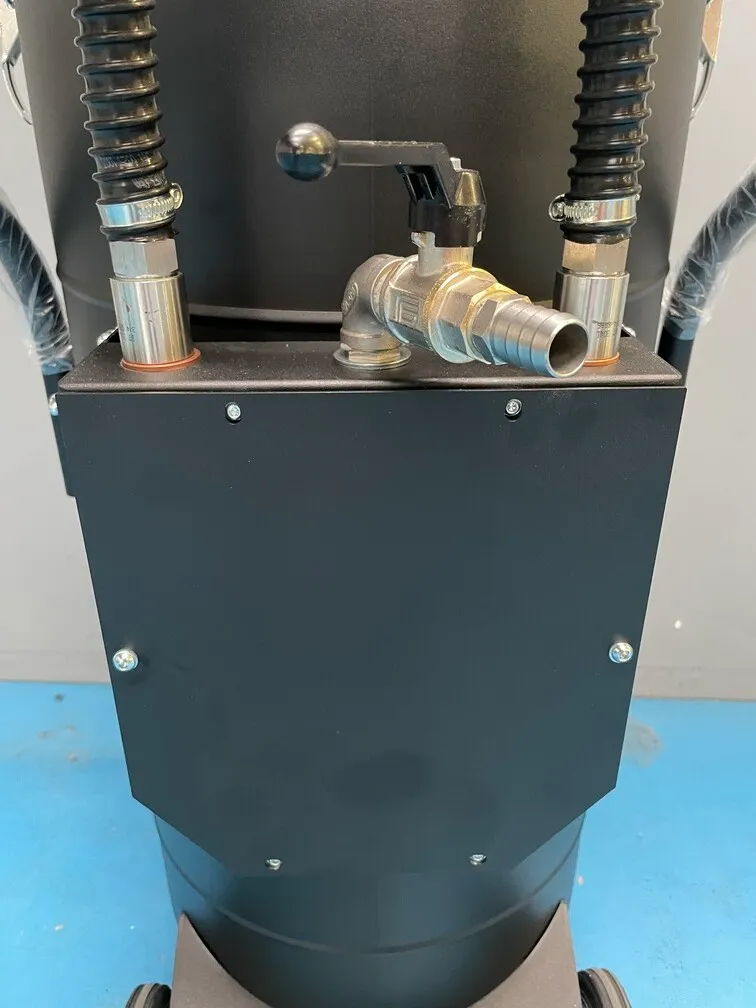
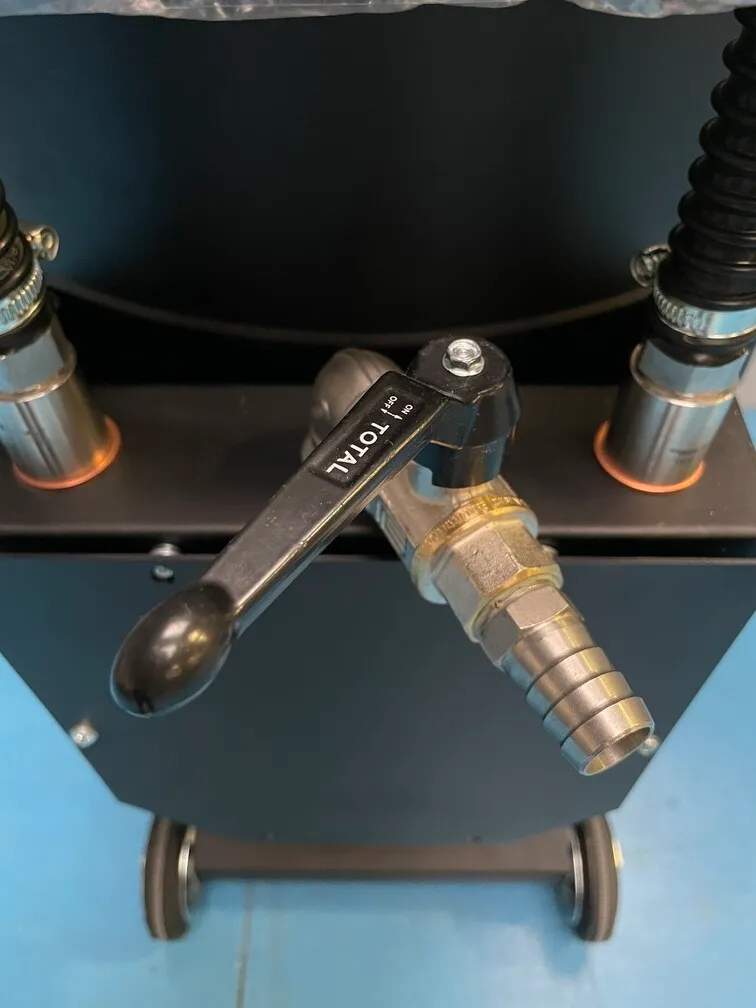
The discharge process occurs effortlessly through gravity. Positioned at the base of the machine, a valve is installed to facilitate the convenient release of the liquids and particles accumulated within the bin.

The material is collected inside a large coated steel container that is easy to move thanks to the 4 sturdy wheels.
Get answers about using the WD AIR for industrial liquid recovery, wet debris and light sludge pickup, compressed-air requirements, liquid and solid separation, pneumatic vacuum performance, and choosing between air-powered and electric liquid-recovery vacuums.
The WD AIR is a pneumatic industrial vacuum designed primarily for recovering liquids, wet debris, and light sludge in facilities where compressed air is available.
Instead of an electric suction motor, the WD AIR uses two Venturi ejectors powered by plant air to generate suction. The current U.S. configuration provides up to 147 CFM of airflow and 200 inH2O of maximum vacuum through a 2.75-inch inlet.
Its 34-gallon collection tank makes it useful for industrial spill cleanup, tank cleaning, machine-side wet maintenance, wastewater pickup, process-liquid recovery, and other applications where liquid may contain suspended or settled debris.
The WD AIR is especially useful when electrical power is unavailable or inconvenient at the cleanup point, or when a facility already has sufficient compressed-air capacity and prefers a pneumatic vacuum for wet recovery.
Yes. The WD AIR is designed for wet industrial recovery where liquids may contain suspended or settled solid debris.
Recovered material enters the 34-gallon collection tank, where a solids bag helps retain debris while a separate liquid filter provides approximately 150 µm filtration. An included floating device helps protect the vacuum system as the liquid level rises.
This makes the WD AIR useful for applications such as spill cleanup, machine and tank cleaning, process-water recovery, wet maintenance, and light sludge pickup where liquid and solid contamination are present together.
The filtration system should be viewed as separation for industrial recovery rather than complete liquid purification. Applications requiring fine filtration, chemical conditioning, oil separation, or process-fluid reuse may require additional treatment equipment.
Material compatibility should also be confirmed before recovering corrosive, hot, reactive, flammable, or otherwise hazardous liquids.
The WD AIR generates suction with two Venturi ejectors instead of an electrically driven vacuum motor.
Compressed air passes through the ejectors at high velocity, creating a pressure differential that generates suction through the vacuum hose and inlet.
The current U.S. WD AIR requires approximately 85 CFM of compressed air at 83 psi to achieve its published performance of up to 147 CFM airflow and 200 inH2O maximum vacuum.
Before selecting the WD AIR, the facility should confirm that its compressed-air system can continuously provide the required air volume and pressure at the actual point of use.
Compressor capacity, plant-air piping, hose diameter and length, regulators, fittings, pressure losses, and other equipment using compressed air at the same time can all affect real-world vacuum performance.
Choose the WD AIR when compressed-air operation is preferred and gravity discharge is suitable for the recovered liquid. Choose the WD 132 P when electric operation and powered liquid discharge are more important.
Both models provide approximately 34 gallons of liquid collection capacity and are designed for industrial wet recovery.
The WD AIR uses two Venturi ejectors powered by approximately 85 CFM of plant air at 83 psi. It provides up to 147 CFM airflow and 200 inH2O maximum vacuum.
The WD 132 P uses two electric by-pass motors, operates on 115 V / 60 Hz power, provides up to 226 CFM and 94 inH2O, and includes a submerged discharge pump rated at approximately 60 gallons per minute.
The better choice therefore depends on available utilities, required suction characteristics, how the recovered liquid needs to be discharged, portability, and the volume and type of material being recovered.
The WD AIR may not be the best choice when the facility cannot continuously supply approximately 85 CFM of compressed air at 83 psi, when powered liquid discharge is required, or when the application involves substantially larger liquid volumes than a 34-gallon mobile tank can handle efficiently.
If recovered liquid needs to be transferred quickly into another container or returned to a process, an electric liquid vacuum with an integrated discharge pump, such as the WD 132 P, or a higher-capacity pump-equipped liquid-recovery system may be a better fit.
The standard WD AIR should also not automatically be assumed suitable for flammable liquids, combustible or reactive material, hazardous vapors, corrosive chemicals, hot fluids, or hazardous classified locations simply because it does not use an electric suction motor.
Final equipment selection should consider the liquid chemistry, temperature, flash point where applicable, solids content, sludge concentration, required pickup rate, hose length, discharge method, compressed-air supply, collection capacity, and operating environment.