
Search
Grounded Housekeeping | ATEX Cleanup | HEPA Fine Dust Recovery | Engineered Central Systems

Combustible Dust Vacuums

Find the right combustible dust vacuum, dust extractor, or central recovery system for the material, the risk level, and the way cleanup has to happen inside the facility.

From ordinary-location housekeeping and hazardous-area recovery to conductive metal dust inertization and plant-wide collection, this page helps you compare the main Depureco product paths in one place.

A facility dealing with combustible dust does not just need “an explosion proof vacuum.” It may need an NFPA-oriented housekeeping vacuum, an ATEX-certified machine for classified areas, an air-powered intrinsically safe unit, a HEPA dust extractor for fine particulate, or a centralized system sized for multiple operators and long pipe runs. Depureco USA helps narrow the right fit by hazard level, material behavior, and recovery method.

Ordinary Location Combustible Dust Vacuums
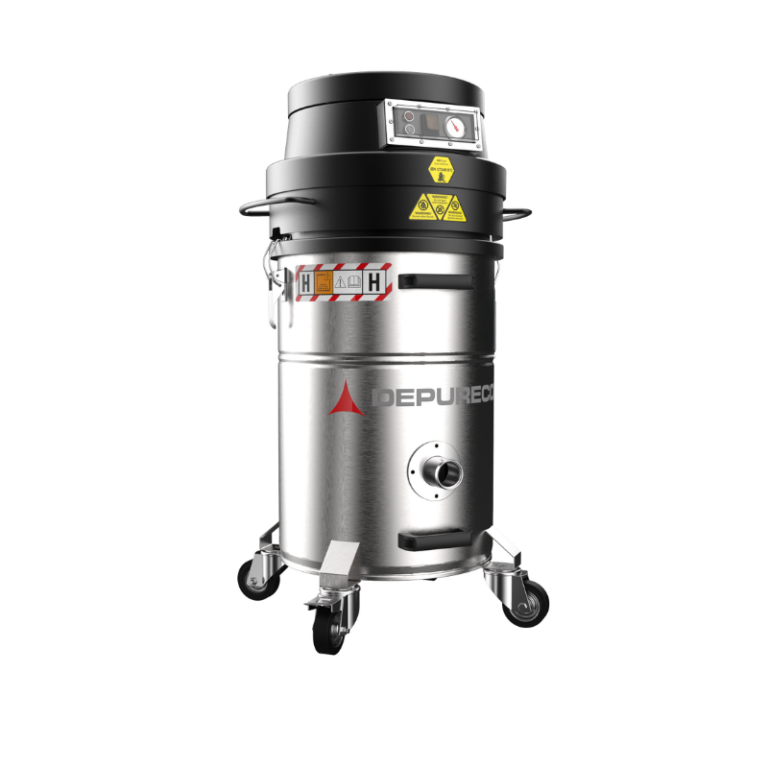
Ordinary location combustible dust vacuums are used for industrial housekeeping and production cleanup in non-classified areas where combustible dust may still be present. These systems are commonly used for plant cleanup, machine-area dust removal, floor and overhead housekeeping, and recovery of fine powders, nuisance dust, and light production debris where grounded construction and anti-static filtration are important. Searchers may use terms such as combustible dust vacuum, anti static vacuum, grounded industrial vacuum, NFPA housekeeping vacuum, industrial dust vacuum, dust vacuum cleaner, vacuum for powder cleanup, vacuum for plant housekeeping, and ordinary location combustible dust vacuum. These units are often selected for manufacturing, food processing, plastics, powder handling, general industrial cleanup, and other environments that require safer dust recovery without stepping into a classified hazardous location product path.
BL PRO ORDLOC

BL PRO ORDLOC

Compact ordinary-location unit for fast cleanup of fine combustible dust in tighter work areas.
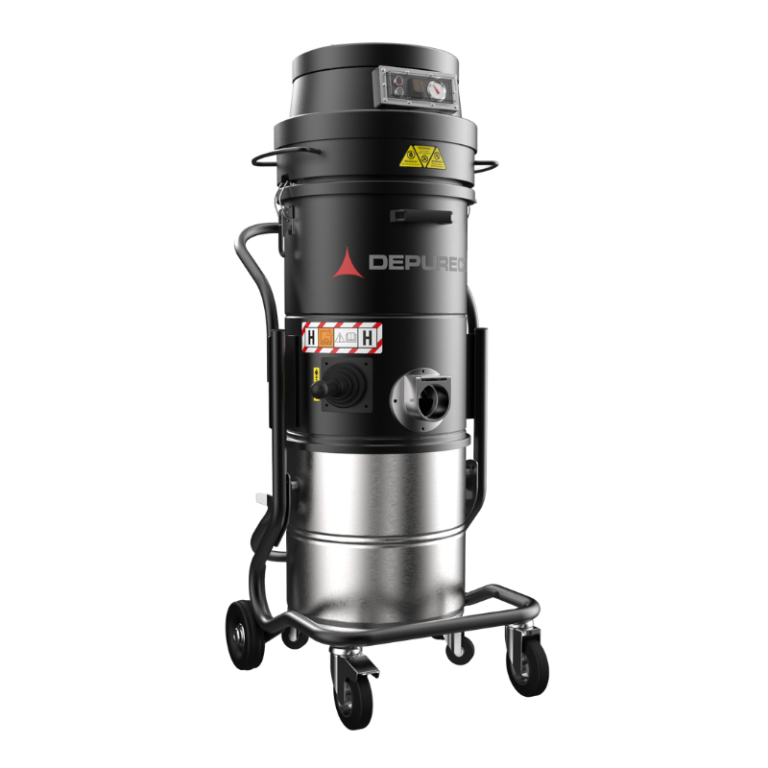
Safety: Ordinary location
Type: Compact brushless vac
Best For: Fine dust cleanup
BL 45 ORD LOC

BL 45 ORDLOC

Compact all-around ordinary-location vacuum for recurring combustible dust cleanup where footprint matters.

Safety: Ordinary locatio
Type: Brushless vac + shaker​
Best For: Routine housekeeping
BL 45 jc ord loc

BL 45 JC ORDLOC

Compact ordinary-location vacuum with more filter surface and easier cleaning for finer dust loads.

Safety: Ordinary locatio
Type: Brushless vac + JetClean
Best For: Finer dust loads
bl am

BL AM ORDLOC

Compact platform for higher-risk fine powders where metal-dust recovery or inert-ready design matters.
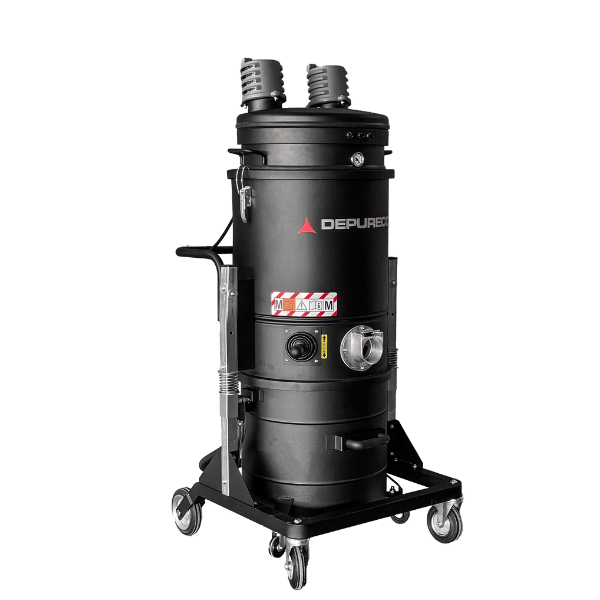
Safety: Ordinary locatio
Type: Compact powder vac
Best For: Fine metal dust
M100 NFPA

M100 ORDLOC

High-power ordinary-location vacuum for plants that need stronger pickup and more capacity in a mobile unit.
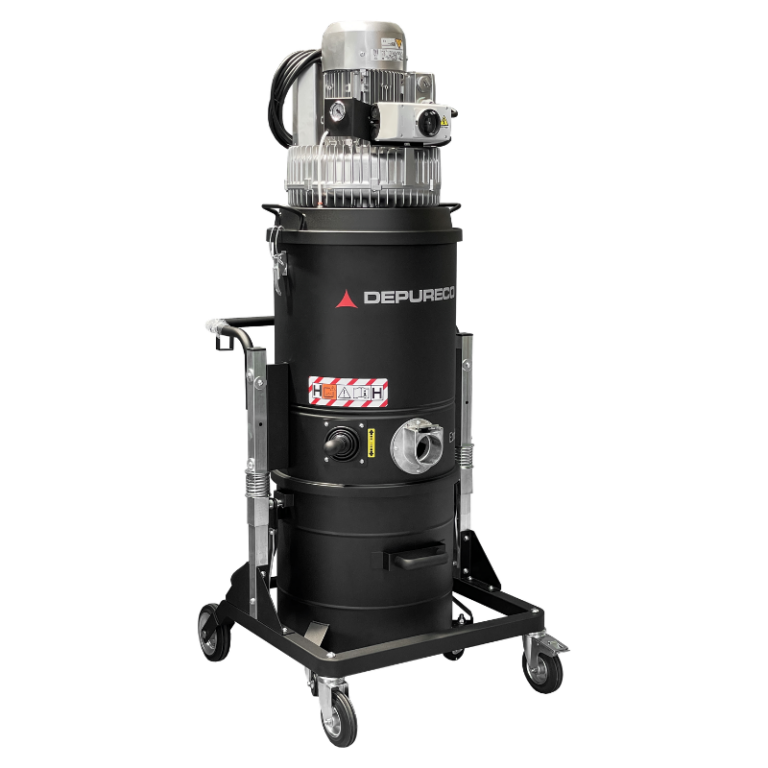
Safety: Ordinary locatio
Type: 3-motor mobile vac
Best For: Heavier cleanup
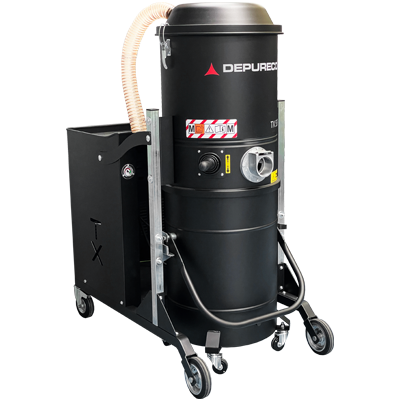
ECOBULL T ORD LOC reduced

ECOBULL ORDLOC

Continuous-duty three-phase vacuum for ordinary-location recovery of dust, chips, and heavier production debris.
Safety: Ordinary locatio
Type: 3-phase blower vac
Best For: Continuous duty

TX 400 ORDLOC

Higher-output three-phase vacuum for ordinary-location recovery where airflow, runtime, and material volume step up.

Safety: Ordinary locatio
Type: High-output 3-phase
Best For: Larger cleanup zones

TX 750 ORDLOC

Heavy-duty ordinary-location unit for the largest mobile recovery jobs in dust, chips, and production waste.

Safety: Ordinary locatio
Type: Heavy-duty 3-phase
Best For: High-volume pickup

Class II Division 2 Combustible Dust Vacuums

Class II Division 2 combustible dust vacuums are designed for hazardous dust environments where the area classification requires properly rated equipment. These systems are used when combustible dust may be present under abnormal conditions and ordinary location vacuums are not the correct fit. Searchers may use terms such as Class II Division 2 vacuum, Class II Div 2 vacuum, hazardous location vacuum, combustible dust vacuum, explosion proof vacuum, anti static industrial vacuum, industrial vacuum for classified areas, and rated vacuum for combustible dust. Common applications include powder handling, dust cleanup around processing equipment, production housekeeping in classified areas, and industrial cleanup where regulatory, insurance, or facility standards require a properly specified recovery system.
ecobull haz loc

ECOBULL C2 D2

Three-phase Class II Division 2 platform for continuous combustible dust recovery where a rated industrial vacuum is required.

Safety: Class II Div 2
Type: 3-phase recovery vac
Best For: Rated plant cleanup
TX HAZ LOC

TX 400 C2 D2

Rated high-output platform for classified dust environments that need stronger airflow and more sustained pickup.

Safety: Class II Div 2
Type: Mid-size 3-phase vac
Best For: Heavier dust loads

TX 750 C2 D2

Highest-output Class II Division 2 mobile platform for demanding combustible dust recovery in larger industrial spaces.

Safety: Class II Div 2
Type: Heavy-duty 3-phase
Best For: Larger rated areas

Intrinsically Safe Air-Powered Vacuums
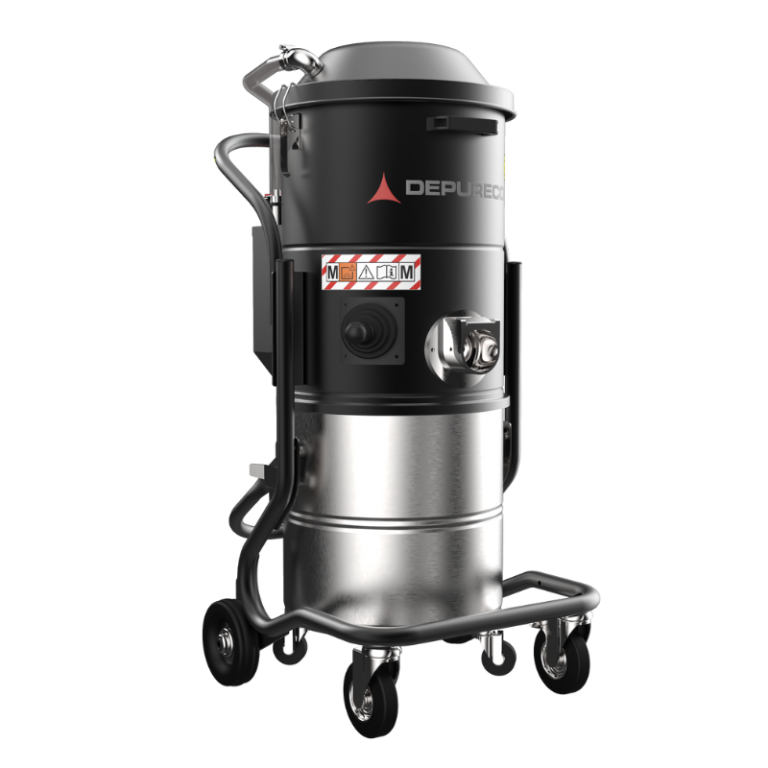
Intrinsically safe air-powered vacuums are used in dust recovery applications where compressed air is preferred and eliminating an electric motor at the point of use is part of the safety strategy. These pneumatic vacuums are often selected for hazardous dust cleanup, sensitive processing areas, and industrial applications where spark-free or non-electric operation is important. Searchers may use terms such as intrinsically safe vacuum, air powered vacuum, compressed air vacuum, pneumatic industrial vacuum, intrinsically safe air vacuum, explosion proof air vacuum, anti static pneumatic vacuum, and combustible dust air powered vacuum. Typical use cases include combustible dust cleanup, fine powder recovery, hazardous material housekeeping, and plant environments where compressed air infrastructure supports vacuum operation.

Mini Air Z2 Z22

Compact compressed-air vacuum for the most ignition-sensitive dust areas where removing electrical components is the priority.
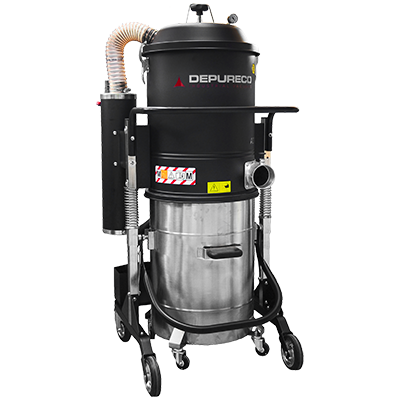
Safety: Intrinsically safe
Type: Compact air vac
Best For: Spark-free cleanup

AC Z2 Z22

High-performance air-operated vacuum for hazardous dust recovery where continuous pneumatic operation makes the most sense.

Safety: Intrinsically safe
Type: High-output air vac
Best For: Longer duty cycles

Industrial Dust Collectors for Combustible Dust

Industrial dust collectors for combustible dust are used for source capture and continuous airborne dust extraction where airflow and capture velocity matter more than mobile vacuum recovery alone. These systems are commonly connected to machinery, process points, workstations, and production lines to control fine suspended dust before it settles throughout the facility. Searchers may use terms such as industrial dust collector, combustible dust collector, dust collector for combustible dust, airborne dust extraction, source capture dust collector, industrial dust extraction system, powder dust collector, and fine dust collection system. Common applications include cutting, sanding, blending, transfer points, packaging, trimming, filling, and machine-connected dust extraction in manufacturing, woodworking, plastics, chemicals, and powder handling operations.
DF 22 ORD LOC

DF 22 ORDLOC

110V Single Phase

Ordinary-location dust collector for flexible source capture where single-phase power is preferred or easier to deploy.

Safety: Ordinary location
Type: Single-phase collector
Best For: Flexible source capture
DF 22 ORD LOC

DF 22 ORDLOC

460V 3 Phase

Compact high-airflow dust collector for ordinary-location source capture at machines, workstations, and localized dust points.

Safety: Ordinary location
Type: 3-phase collector
Best For: Local dust capture

DF 40 ORDLOC

460V 3 Phase

Higher-airflow dust collector for suspended dust and machine-connected extraction where capture velocity matters.

Safety: Ordinary location
Type: High-airflow collector
Best For: Airborne dust control

Inertization Systems for Conductive Metal Dust

Inertization systems for conductive metal dust are used in applications involving reactive or high-risk powders where standard combustible dust recovery is not the right path. These systems are often used for aluminum dust, titanium powder, magnesium dust, additive manufacturing powder, conductive metal fines, and other reactive metal particulate that require a more controlled recovery method. Searchers may use terms such as metal dust vacuum, conductive dust vacuum, aluminum dust vacuum, titanium powder vacuum, magnesium dust vacuum, inertization vacuum, inert metal dust recovery, additive manufacturing powder vacuum, and explosion proof vacuum for metal powder. These systems are selected when the material behavior, ignition risk, and handling method require an inert-focused design rather than a standard housekeeping or hazardous-location vacuum alone.
bl am

BL AM ORDLOC

Compact inertization-oriented unit for smaller quantities of reactive or conductive metal powder.

Safety: Inert metal dust
Type: Compact inert vac
Best For: Reactive powders
ecobull haz loc

ECOBULL AM ORDLOC

Larger inert-ready platform for facilities handling more volume, longer runs, or heavier metal-powder cleanup demands.

Safety: Inert metal dust
Type: 3-phase inert vac
Best For: Larger powder loads

Inert Separator

Add-on separation stage that adds an active safety layer when collecting highly reactive or explosive powders.

Safety: Inert metal dust
Type: Separator add-on
Best For: Reactive powders
NFPA 660 / 69 Alignment | Multi-Point Recovery | Engineered System Design

Central Vacuum & Dust Collection Systems

When a Mobile Vacuum Is Not Enough

For larger facilities and higher dust loads, central vacuum systems provide a controlled, plant-wide solution for combustible dust recovery.

Designed around airflow demand, pipe layout, and simultaneous operator use, these systems support NFPA 660 housekeeping requirements and can integrate explosion protection features such as isolation, venting, or suppression when required.

Central vacuum systems for combustible dust are engineered solutions used when portable vacuums are no longer sufficient for facility-wide cleaning, material conveyance, or multi-operator use. These systems are designed to align with NFPA 660 housekeeping requirements and may incorporate NFPA 69 explosion prevention and protection strategies depending on the application.

A complete industrial central vacuum system typically includes a suction unit, filtration system, discharge method, and pipe network, all sized based on airflow (CFM), vacuum level (inH2O), pipe length, number of operators, and material characteristics. These systems are commonly used for combustible dust, fine powders, metal dust, bulk material recovery, and continuous industrial cleaning.

Explosion protection options may include passive systems such as explosion venting, flameless venting, and isolation valves, or active systems such as explosion suppression depending on the facility design and hazard analysis. Additional components like cyclone separators, interceptors, and automatic discharge systems can be integrated to handle high material volumes and maintain continuous operation.

Searchers may use terms such as central vacuum system, industrial central vacuum, combustible dust collection system, NFPA compliant vacuum system, plant vacuum system, centralized dust collection, multi-point vacuum system, and engineered dust recovery system. These systems are typically selected when applications require long-distance conveyance, multiple operators, continuous cleaning, or integration with production processes.

CVS 150 central vacuum unit with DV AIR 800 filter separator installed for peat dust recovery

Key Safety Features Across the Range

Grounding • Filtration • Containment • Safer Emptying

We configure bonding and grounding strategy, conductive components, and antistatic filtration as a baseline, with multi-stage filtration and sealed containment where required.

HEPA H14 and ATEX / explosion-proof options can be integrated based on the material, process, and area classification.

Bonding & Grounding

Antistatic Filters

Optional HEPA H14

Sealed Collection Paths

Safer Unloading Options

Intrinsically Safe Operation

Fine, combustible, or hazardous dust requires correct system specification—not just a vacuum.

Common Combustible Dust Materials

Metal Dust • Food Powders • Wood Dust • Plastics • Chemical Powders
Combustible dust is not one material or one industry. The right fit depends on how the material behaves during pickup, filtration, containment, and discharge for
Industrial central vacuum systems are used to recover a wide range of materials including fine dust, combustible dust, powders, bulk solids, abrasive media, metal chips, swarf, sludge, coolant, and cutting oil. These systems are commonly applied in manufacturing, metalworking, food processing, chemical processing, and industrial production environments where continuous material recovery is required. Searchers may use terms such as industrial vacuum for dust, powder recovery vacuum, metal chip vacuum, coolant recovery vacuum, swarf vacuum system, industrial material conveyance vacuum, and central vacuum system for bulk material. System performance depends on selecting the correct separation method, filtration system, and discharge configuration to match the material characteristics and production process.

Which Product Path Fits the Hazard?

Ordinary Location • Class II Div 2 • Intrinsically Safe • Inert • Dust Collectors • CVS

The right system starts with the hazard level and the application—not just suction.

Some facilities need an ordinary-location housekeeping vacuum with grounded, anti-static construction. Others need Class II Division 2 equipment, compressed-air intrinsically safe operation, inertization for conductive metal dust, a dust collector for continuous source capture, or a central vacuum system for plant-wide recovery and NFPA-aligned system design.

This page is organized around six main product paths for combustible dust recovery: ordinary location vacuums for grounded housekeeping in non-classified areas, Class II Division 2 vacuums for hazardous dust environments, intrinsically safe air-powered vacuums for pneumatic operation, inertization systems for conductive or reactive metal dust, dust collectors for continuous airborne dust extraction, and central vacuum systems for larger engineered facility-wide recovery. Buyers may search for terms such as combustible dust vacuum, Class II Division 2 vacuum, intrinsically safe vacuum, air powered combustible dust vacuum, inert metal dust vacuum, industrial dust collector for combustible dust, or central vacuum system for combustible dust. These categories help match the vacuum or dust collection path to the material, area classification, and recovery method instead of forcing different hazard levels into the same product group.
Lorem ipsum dolor sit amet, consectetur adipiscing elit. Ut elit tellus, luctus nec ullamcorper mattis, pulvinar dapibus leo.
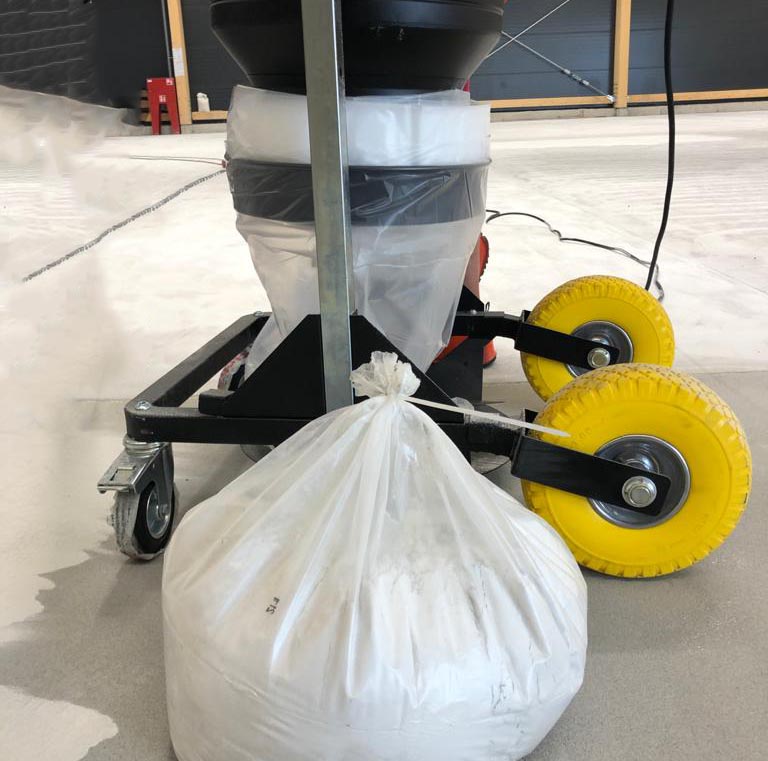
Close-up of a Depureco vacuum with a Longopac® endless bag; tied-off section and filled dust bag on the floor beside yellow wheels.

Typical Industries & Use Cases

Metalworking • Food Processing • Chemicals • Additive Manufacturing • Wood & More

Combustible dust problems do not all look the same.

One application may be routine housekeeping around powder handling. Another may involve recovering aluminum fines, resin powder, powder coating dust, food ingredients, or additive-manufacturing particulate. Others need airborne dust capture at the source or central recovery across multiple work areas.

Combustible dust vacuum and dust collection systems are commonly used in metalworking, aluminum machining, powder coating, chemical processing, plastics manufacturing, food processing, dairy powder handling, woodworking, additive manufacturing, powder metallurgy, packaging, surface preparation, and other industrial operations where fine particulate must be recovered safely. Buyers may search for phrases such as powder coating vacuum, aluminum dust vacuum, metal powder vacuum, resin powder vacuum, plastic dust vacuum, food powder vacuum, dairy powder vacuum, additive manufacturing powder recovery vacuum, depowdering vacuum, or industrial dust collector for manufacturing dust. Common use cases include housekeeping cleanup, spill recovery, source capture, machine-area cleanup, changeovers, process dust recovery, powder transfer support, and facility-wide combustible dust cleaning.

Features That Actually Change the Fit

Grounding • Antistatic Filtration • HEPA H14 • Pneumatic Power • Filter Cleaning

The right combustible dust system is usually decided by a handful of real specification points.

Those include grounding and bonding strategy, conductive components, filter hazard class, optional HEPA H14, collection and discharge method, power source, and whether the application calls for a portable unit, a dust collector, or a centralized recovery system.

Important product-selection features for combustible dust vacuum systems include bonded and grounded construction, conductive hoses and tools, anti-static filters, M class filtration, HEPA H14 secondary filtration, sealed collection, safe discharge methods, pneumatic or electric power source, automatic or manual filter cleaning, and the correct collection system for the material being handled. Buyers may search for terms such as anti static vacuum, grounded industrial vacuum, HEPA H14 industrial vacuum, air powered combustible dust vacuum, explosion proof vacuum with HEPA, dust collector with automatic cleaning, conductive vacuum hose, and central vacuum system with filtration separator. These features matter because they affect ignition-risk control, operator protection, filter loading, material containment, discharge convenience, and whether the system fits routine housekeeping, hazardous-area cleanup, fine dust extraction, or high-volume recovery.
ATEX-rated extraction arm connected to a Depureco dust collector over a bakery workbench; large “ATEX” text visible.

Build the Right Combustible Dust System

50+ Years • In-House Manufacturing • 100% Functional Testing • U.S. Inventory
Depureco USA helps facilities compare combustible dust vacuums, explosion proof industrial vacuums, HEPA dust extractors, air-powered pneumatic vacuums, and centralized dust recovery systems based on the actual application. Whether the need involves combustible dust housekeeping, classified-area cleanup, conductive metal dust, fine powder recovery, or plant-wide dust collection, the right system depends on the material, the work area, and the recovery method. Searchers may be looking for combustible dust vacuum systems in stock, industrial vacuum solutions for combustible dust, explosion proof vacuum supplier, industrial HEPA vacuum systems, powder cleanup vacuum, dust collector systems, and engineered central vacuum solutions. This page is intended to help narrow the right fit before requesting a quote or speaking with product support.

Depureco is not just supplying a vacuum category—it is supplying a specification path.

With more than 50 years in industrial vacuum solutions, in-house manufacturing, complete functional testing on every vacuum, and broad product coverage across grounded ordinary-location units, Class II Div 2 options, air-powered systems, dust collectors, inertization setups, and central systems, the advantage is not one machine. It is the ability to match the application correctly.

Depureco USA combines a broad combustible dust product range with engineering support, in-house manufacturing experience, and product testing that helps buyers move beyond generic vacuum selection. The lineup spans ordinary location vacuums, Class II Division 2 configurations, intrinsically safe air-powered models, dust collectors, inertization solutions, and central vacuum systems. Buyers researching industrial vacuum manufacturers, explosion proof vacuum suppliers, combustible dust vacuum systems, ATEX vacuum solutions, or engineered dust recovery systems often want more than a product list. They want confidence that the manufacturer understands area classification, filtration, containment, and real industrial applications. This page is designed to support that decision path.

Contact Us

Request a free quote