



4.6–12 HP | 480 V 3~

5,900 in²

26 gal
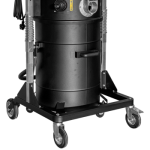
The TX C2D2 Class II Div 2 vacuum range is built for heavy-duty combustible-dust housekeeping where the facility’s documented area classification requires suitable Class II, Division 2 equipment. Available configurations cover demanding dry-dust and powder recovery applications with 480 V / 60 Hz three-phase power and industrial side-channel blower performance.
The range includes the TX 400P C2D2 and TX 750 C2D2. Depending on model, maximum airflow ranges from 247 to 390 CFM, vacuum reaches 108 to 130 inH₂O, and installed power ranges from 4.6 to 12 HP. This allows the TX C2D2 platform to be matched more closely to pickup demand, material loading, hose configuration, and operating requirements instead of treating every classified-location cleanup task as the same application.
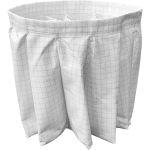
Collected dry material is separated through a large Class M star-filter system with manual filter cleaning. A 5,900 in² primary filter surface supports fine-dust recovery, while optional secondary filtration can be specified where the application requires an additional filtration stage. Filter media and secondary-filter configuration should be confirmed for the selected model.
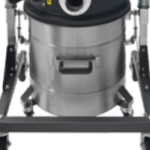
A 26-gal detachable collection bin supports routine material removal and emptying. Optional inlet, cyclone, containment, bagging, and discharge configurations should be selected only where they match the material, cleanup method, and quoted machine configuration.

The 480 V / 60 Hz TX C2D2 range uses industrial side-channel blower configurations sized to the model, delivering 247–390 CFM maximum airflow and 108–130 inH₂O vacuum for demanding dry-dust recovery.

A large Class M star filter provides 5,900 in² of primary filter surface for fine dry-dust recovery. Manual filter cleaning helps remove accumulated dust from the filter surface, while optional secondary filtration can be specified where required.

The unit is certified for use in hazardous (classified) locations, ensuring compliance with recognized safety standards for industrial equipment. Its conformity has been verified in accordance with UL 121201 and CSA C22.2 No. 213, confirming suitability for Class I and II, Division 2 and Class III, Divisions 1 and 2 environments. Final selection should match the facility’s documented area classification, material properties, exact equipment marking, and required hose, tool, grounding, and conductive-accessory configurations.

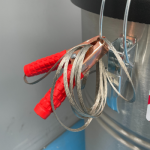
The unit is completely grounded to ensure maximum safety during operation, especially when handling fine or potentially reactive dust. All components are designed to prevent the buildup of electrostatic charges, significantly reducing the risk of sparks or discharge. This continuous grounding system protects both the operator and the surrounding environment, contributing to a safer and more controlled cleaning process.

Get answers to common questions about TX C2D2 Class II Division 2 vacuum selection, combustible-dust applications, model differences, filtration, grounding, collection options, hazardous-location requirements, and configuring the right TX C2D2 system for your facility.
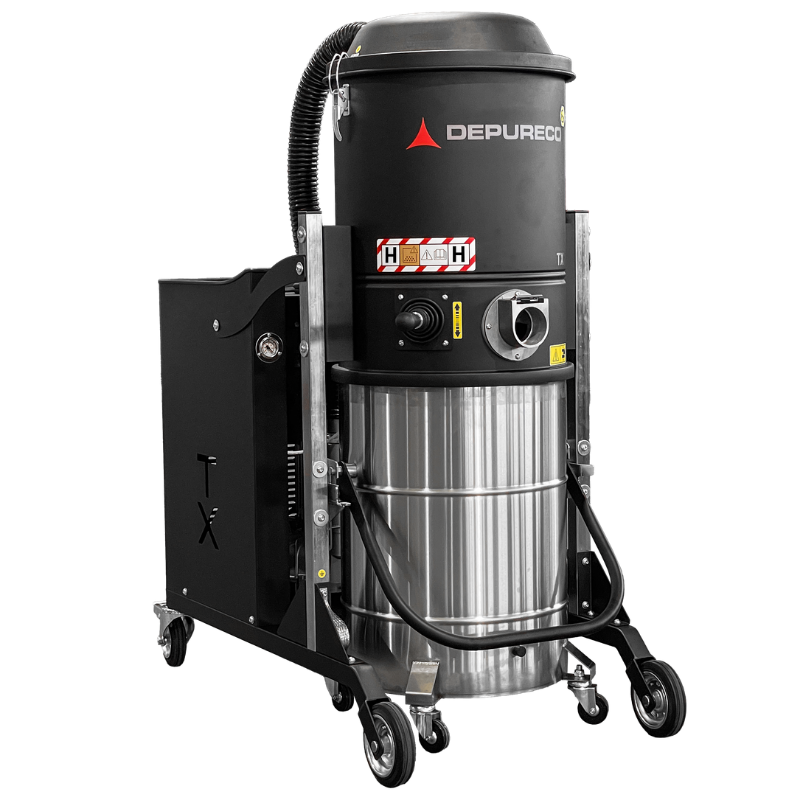
The TX C2D2 is a 480 V / 60 Hz three-phase industrial vacuum range designed for qualified dry combustible-dust housekeeping and dry powder recovery where a facility’s documented hazardous-area classification requires suitable Class II, Division 2 equipment.
The range includes the TX 400P C2D2 and TX 750 C2D2. Both use industrial side-channel blowers, antistatic Class M filtration, grounded construction, a 2.75-inch inlet, and a detachable 26-gallon collection bin.
TX C2D2 selection should be based on the actual material, dust characteristics, documented area classification, equipment marking, pickup requirements, and required hose and accessory configuration. A material being described as “combustible dust” does not by itself establish that a specific vacuum configuration is suitable.
The TX 400P C2D2 and TX 750 C2D2 share the same basic Class II Division 2 product platform, but the TX 750 provides substantially greater airflow, vacuum and installed power for more demanding recovery requirements.
The TX 400P C2D2 delivers up to 247 CFM, 108 inH₂O vacuum and 4.6 HP. It weighs approximately 287 lb and operates at about 74 dB(A).
The TX 750 C2D2 increases performance to 390 CFM, 130 inH₂O and 12 HP. It weighs approximately 419 lb and operates at about 79 dB(A).
Both configurations use 480 V / 60 Hz three-phase power, a 2.75-inch inlet, side-channel blower technology, Class M filtration and a 26-gallon detachable collection bin.
The TX C2D2 is a hazardous-location vacuum platform with documented Class II Division 2 suitability. It is intended for applications where the facility has classified the pickup area and the complete vacuum configuration must match that hazardous-location requirement.
Depureco uses ORD LOC for selected combustible-dust vacuum configurations intended for documented ordinary or unclassified locations. ORD LOC is not another name for Class II Division 2, and an ordinary-location combustible-dust vacuum should not be treated as a substitute for properly marked equipment when the pickup area is classified.
In either case, vacuum selection still depends on the material, dust characteristics, equipment configuration, conductive path, filtration and conditions of use.
Buyers often search for the TX C2D2 using terms such as “explosion proof vacuum” or “hazardous location vacuum,” but equipment selection should be based on its actual certification and marking rather than using “explosion proof” as a generic label.
The TX C2D2 product documentation identifies the unit as HazLoc certified, with conformity verified in accordance with UL 121201 and CSA C22.2 No. 213. The current product documentation states suitability for Class I and Class II, Division 2 and Class III, Divisions 1 and 2 environments.
For a combustible-dust application, the facility should confirm that the exact class, division, material or dust group, temperature limitations and complete equipment configuration match its documented hazardous-location requirements.
Class II hazardous locations involve combustible dust. A Class II Division 2 location generally describes an area where combustible dust is not normally suspended in the air at an ignitable concentration during normal operation, but hazardous conditions may occur because of abnormal operation, infrequent malfunction or hazardous dust accumulation.
That classification affects which electrical equipment and complete vacuum configuration may be used in the area.
A Class II Division 2 vacuum should therefore be selected from the complete unit’s documented certification and marking. “C2D2” does not mean that every combustible dust, dust group or process condition is automatically covered.
The facility’s qualified safety, electrical or engineering team should provide the documented area classification before the vacuum is selected.
The TX C2D2 is positioned for qualified dry combustible dust, fine powders and dry production debris in applications where the complete vacuum configuration matches the material and classified location.
Current product routing includes materials such as fine dust, combustible dust, food powders and pharmaceutical powders, while the product application data includes combustible-dust housekeeping and qualified dry powder recovery.
The important qualifier is qualified. Material name alone is not enough to determine suitability. Particle size, conductivity, explosibility, reactivity, toxicity, moisture, ignition characteristics and the facility’s area classification can all change the required equipment configuration.
For an unfamiliar material, provide Depureco with the SDS, available dust-test data and the facility’s documented area classification before selecting the unit.
The TX C2D2 can support qualified combustible-dust housekeeping, dry powder spill recovery, machine-side cleanup and production-floor cleanup in facilities that require appropriate hazardous-location equipment.
Current product routing identifies potential markets including food production, agricultural processing, pharmaceutical manufacturing, additive manufacturing, woodworking, foundries, semiconductor and electronics manufacturing, and shot-blasting or sandblasting operations.
Industry name alone does not establish suitability. For example, two food plants or two additive-manufacturing facilities may have different materials, dust characteristics and area classifications.
The application should be matched to the specific process, material, pickup location and facility hazard review.
The current TX C2D2 product configuration is positioned for dry combustible dust, fine powders and dry production debris. It should not automatically be treated as a wet-and-dry vacuum or as a vacuum for coolant, oil or liquid recovery.
The TX C2D2 product data does not identify liquid filtration or liquid capacity as part of the standard configuration.
If the process involves liquids, wet sludge, coolant, oil, mixed wet/dry material or a flammable liquid, the application should be reviewed separately so the correct Depureco vacuum family and hazardous-location requirements can be selected.
The TX C2D2 uses a star-style Class M primary filter made from antistatic polyester, with a manual filter-shaker system for removing accumulated dust from the filter surface.
The current specification identifies the filter as IFA/BGIA M-PES Class M and describes M-Class filtration down to approximately 1 micron. The product family publishes up to 5,900 in² of primary filter surface, depending on the selected model or configuration.
Additional secondary filtration may be specified where the application requires another filtration stage. The exact primary media, secondary filtration and any HEPA requirement should be confirmed for the selected model and material.
The TX C2D2 is designed around a grounded and antistatic collection path. The unit is completely grounded, and its primary filter uses antistatic polyester with conductive properties intended to reduce electrostatic-charge buildup.
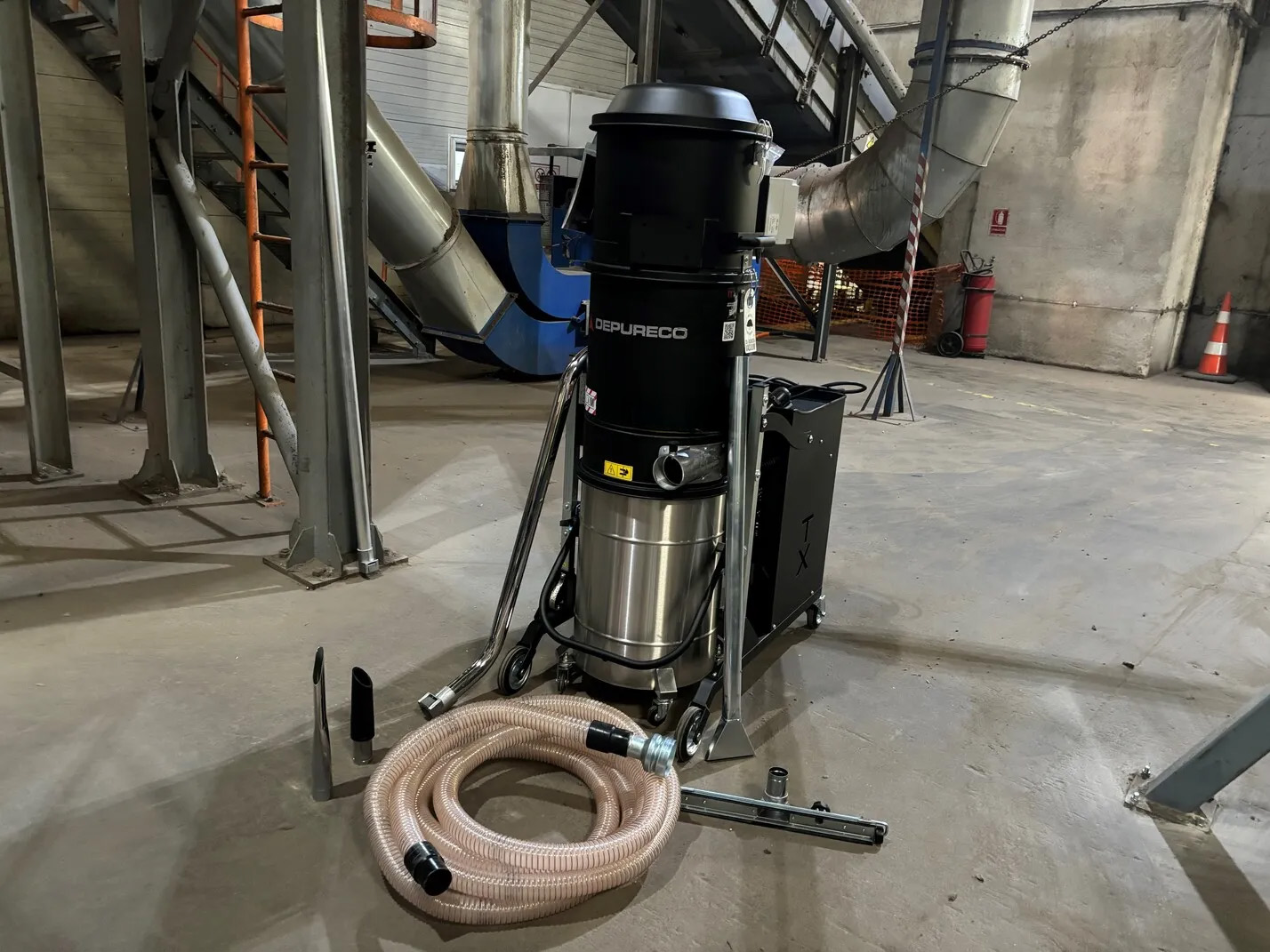
The machine itself is only one part of the pickup system. For combustible-dust and hazardous-location applications, the hose, cuffs, tools, adapters and other accessories must also be reviewed for the required conductive or static-dissipative configuration.
A grounded vacuum connected to an inappropriate nonconductive pickup assembly should not be assumed to provide the same controlled conductive path.
Always confirm the complete accessory configuration for the intended material and classified location.
The standard TX C2D2 platform uses a detachable 26-gallon collection bin for routine dry-material recovery and emptying.
Where the process requires a different disposal workflow, the product data also identifies optional Longopac / endless-bag contained collection. Depending on the quoted machine, other inlet, cyclone, containment, bagging or discharge configurations may also be available.
The collection method should be chosen around the material, dust exposure concerns, disposal procedure, production workflow and facility requirements rather than capacity alone.
To select the correct TX C2D2 model and configuration, start with the material and the facility’s documented hazardous-location classification, then size the vacuum around the actual cleanup process.
Useful application information includes:
For the TX C2D2 family, those inputs also help determine whether the 247 CFM TX 400P or 390 CFM TX 750 is the more appropriate performance platform.
The vacuum should be the result of the facility hazard and application review, not a substitute for that review.