SP – 3C – 14,000
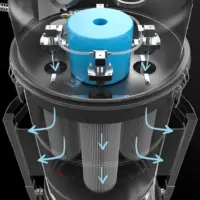
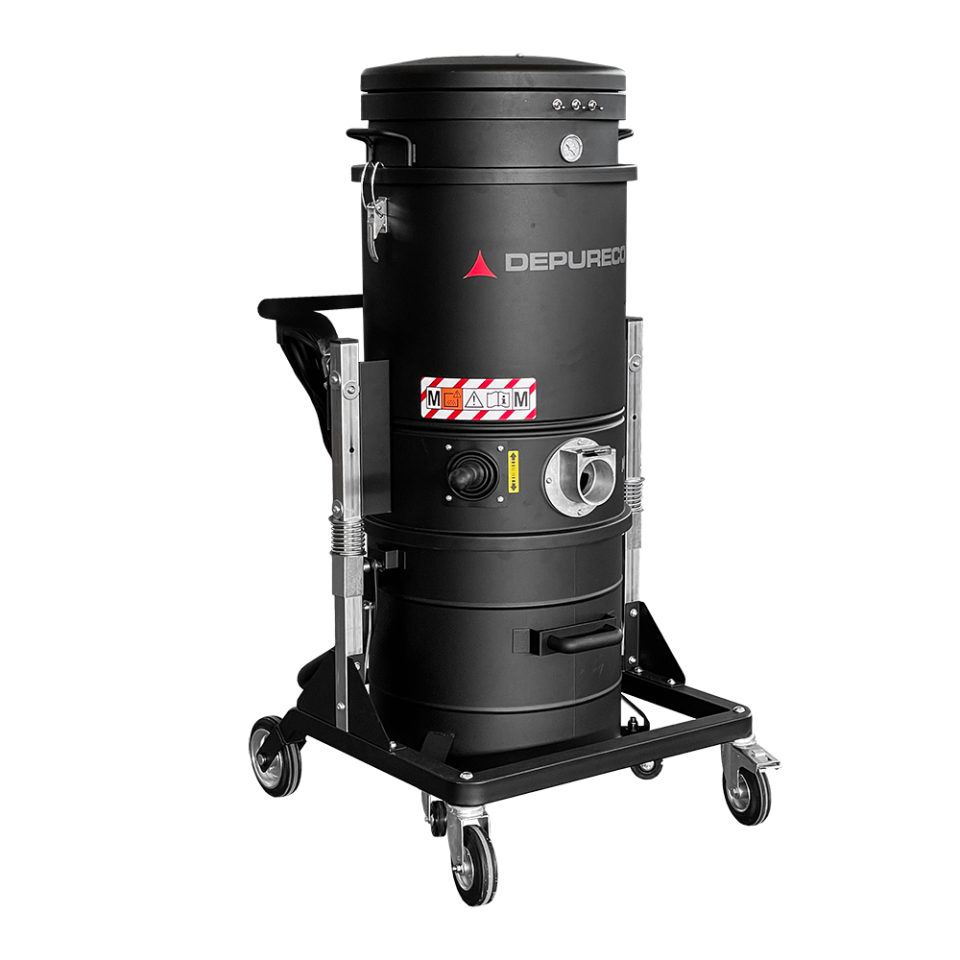
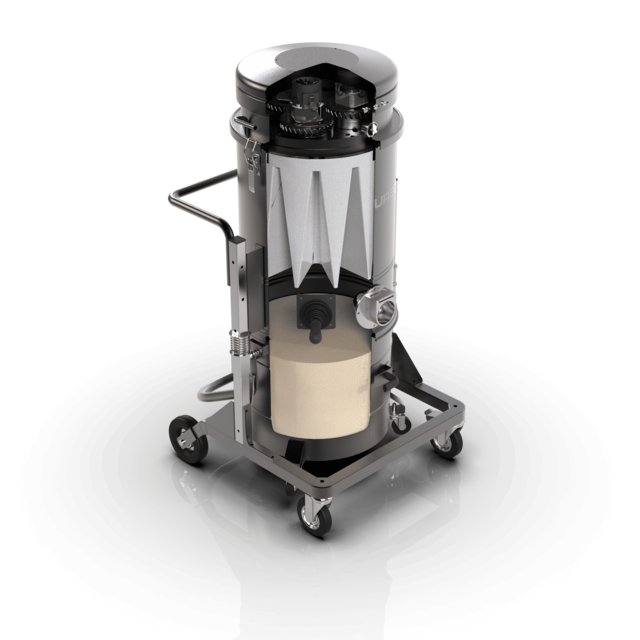
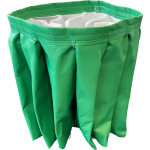
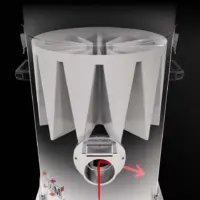
Automatic reverse jet cleaning system. Antistatic M class filter (EN-60335-2-69), 3x Polyester filter cartridges, 14,000 in² filter surface.

2.4 kW | 3.3 HP

3,800 in²

26 gal
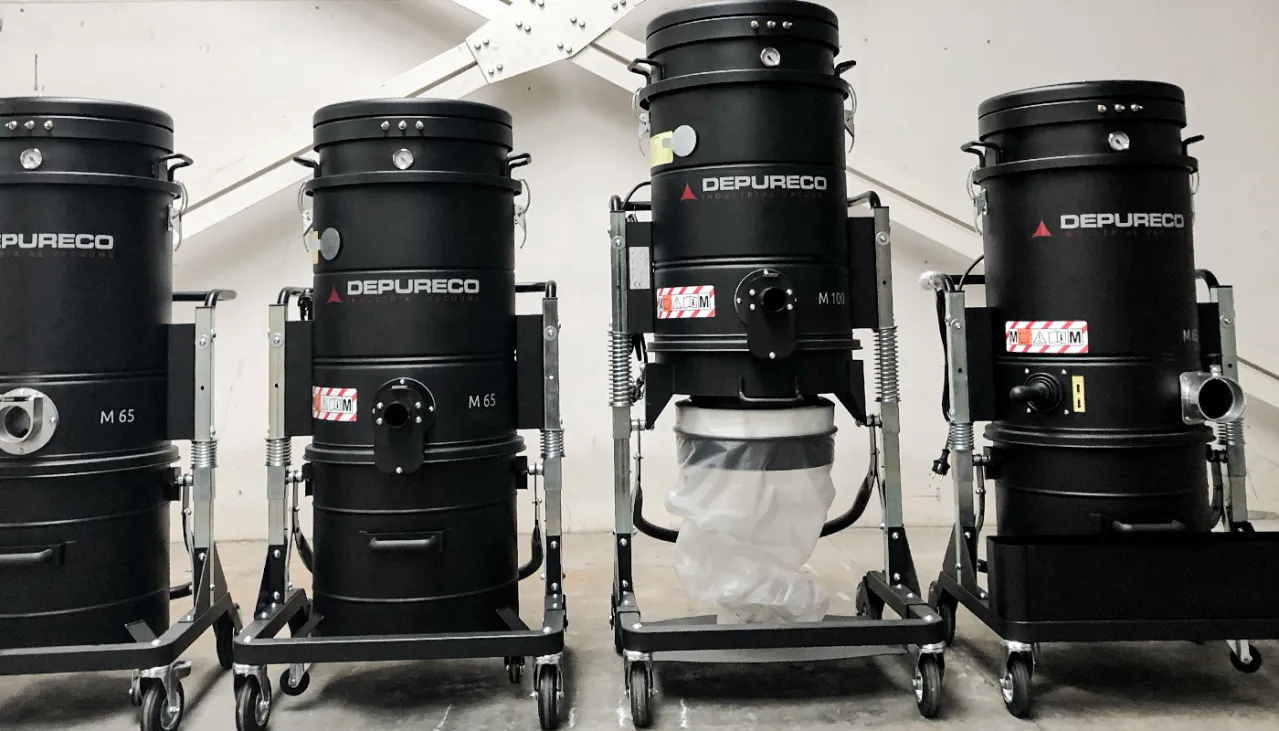
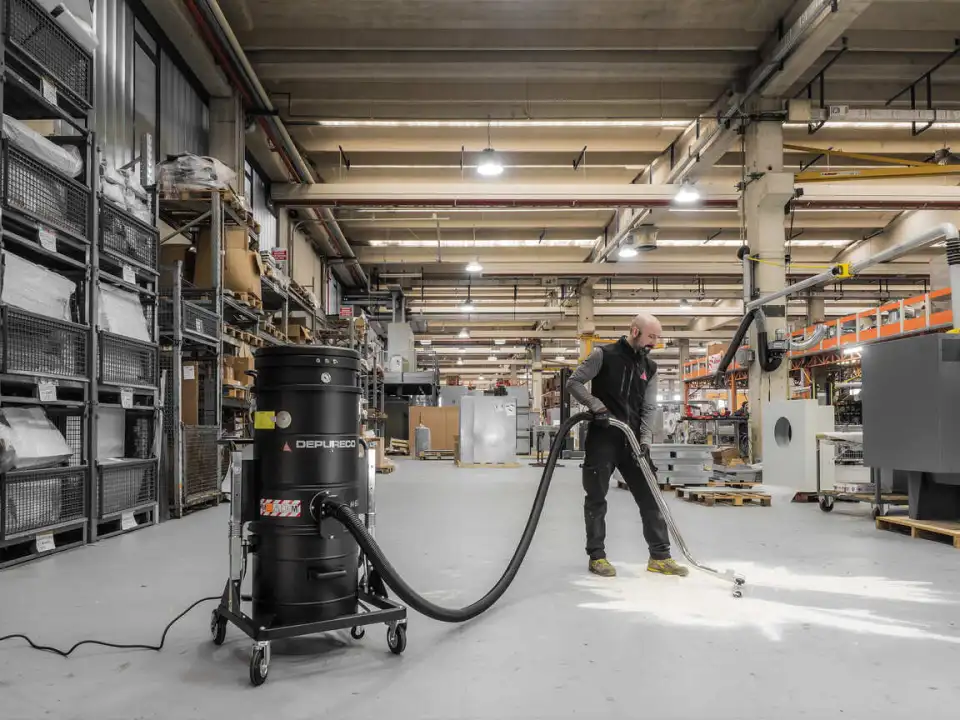
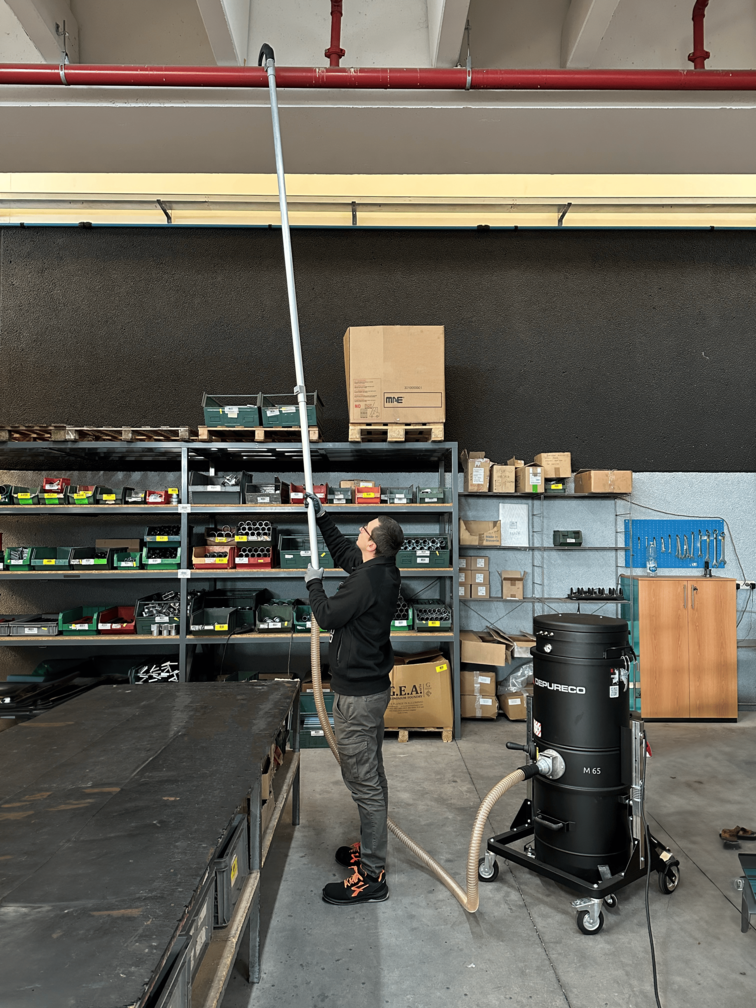
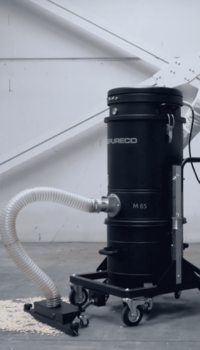
The M100 is Depureco’s flagship single-phase industrial vacuum, built for operations that need strong suction, large material capacity, and reliable performance across a wide range of industrial cleanup tasks. Powered by 3 By-Pass motors, the M100 delivers 3.3 HP and is designed to recover dust, shavings, liquids, and other production debris, even when working through hoses and piping extended over several meters.
At the heart of the machine is a polyester pocket filter with 1-micron filtration efficiency, certified as M Class by BIA, making the M100 a strong fit for demanding dust collection and general industrial housekeeping. The filtration system can also be configured for more specialized applications. Antistatic filters help reduce electrostatic buildup, NOMEX filters are suited for materials up to 482°F, Teflon-coated filters perform better in wetter conditions, and PTFE-treated media improves capture of finer, more difficult dust.
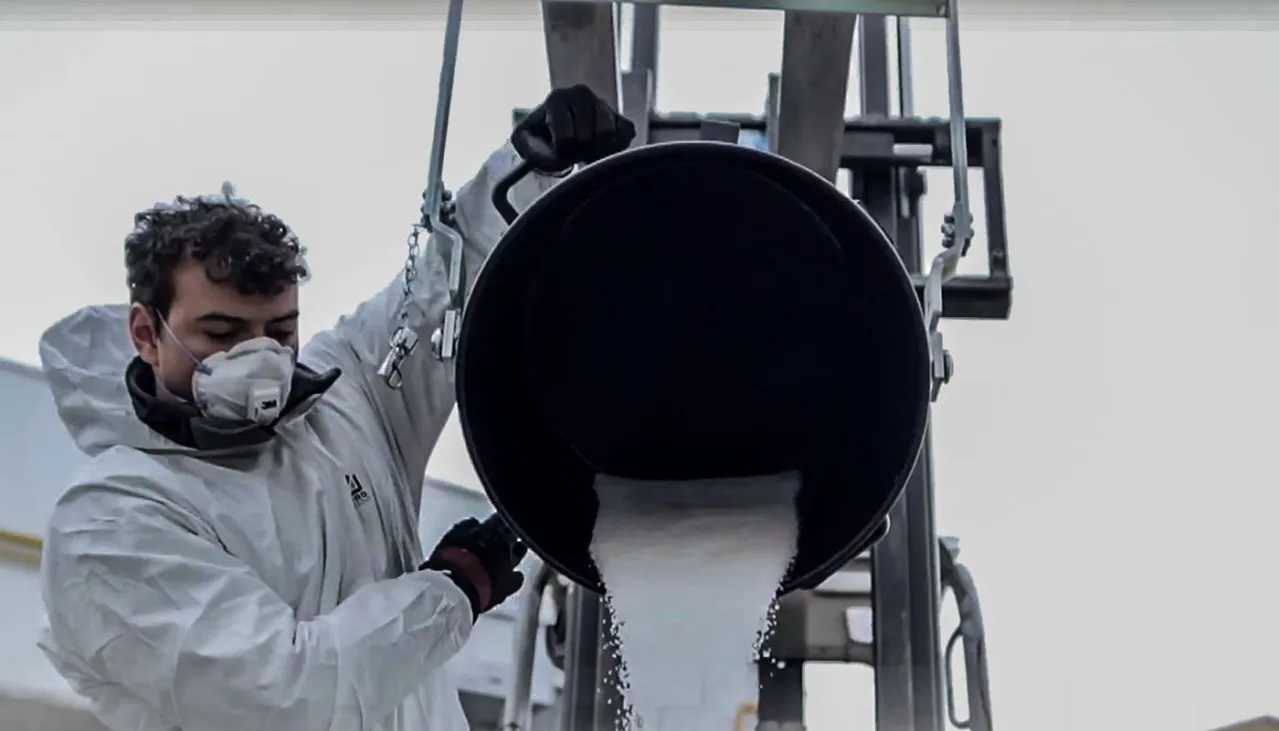
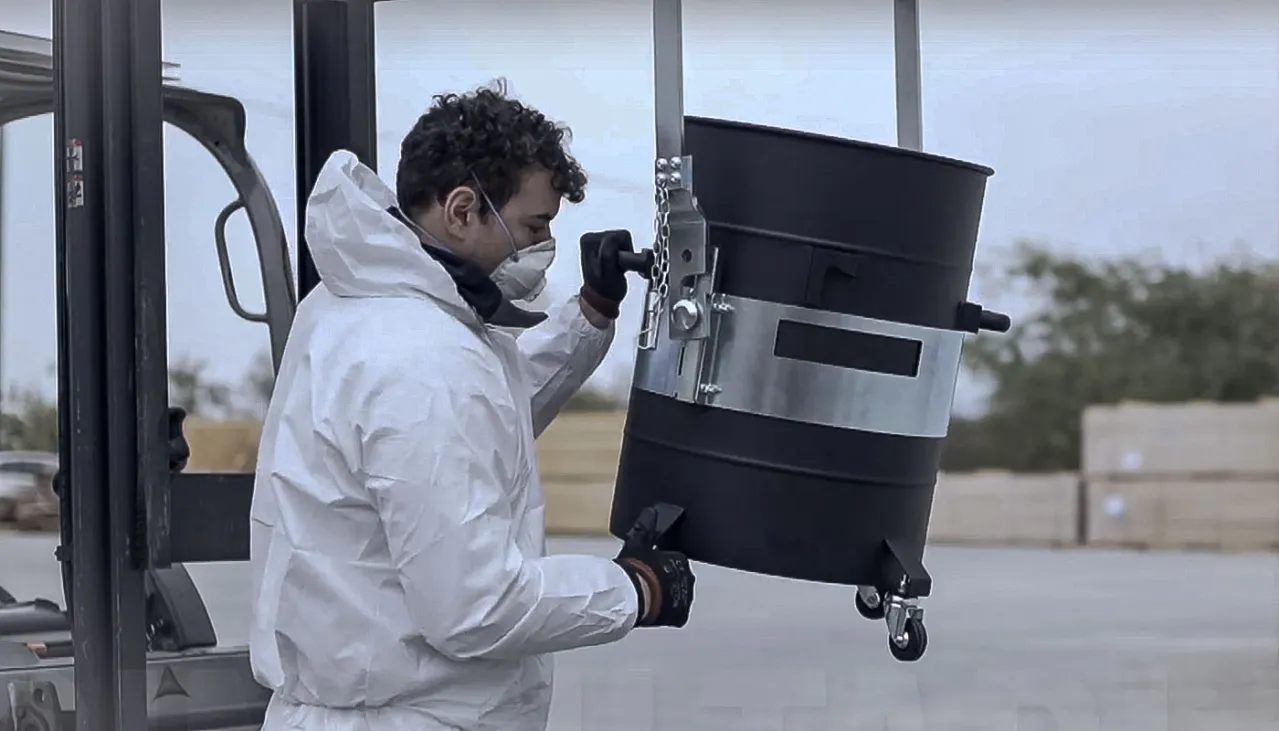
To help maintain suction during use, the M100 features a manual filter cleaning system operated by a side-mounted lever, allowing the filter to be shaken quickly and effectively without complicated servicing. The machine also includes a detachable 100-liter collection container on wheels, making material disposal easier and safer for the operator. The container is supported by four castor wheels for more stable handling even when loaded with heavier material.
For applications that require easier dumping, a tiltable kit for the container is available on request. For users who prefer a more contained disposal method, the M100 LP version is available with a direct bagging system.
The result is a versatile industrial vacuum for dust, liquids, and shavings that fits manufacturing plants, maintenance departments, machine shops, and production environments that need more than a light-duty cleanup machine.

Three by-pass motors create the vacuum, and each motor can be controlled separately using an individual switch, allowing the operator to adjust the suction power. The motors are enclosed in a robust housing that contains a sound-absorbing sponge to ensure a quiet operation.

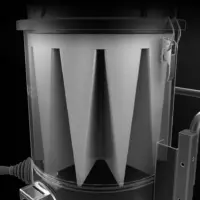
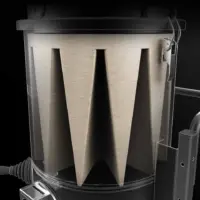
An M class polyester filter ensures effective filtration. Its unique star-shaped design allows air to pass through even when the filter is dirty. The filter fabric is classified as M Class according to BIA | EN 60335-2-69 standards. This classification means that the filter can capture particles up to 1 micron in size, providing protection for both the motors and the operator using the vacuum cleaner.

On one side of the filter chamber there is an ergonomic manual shaker through which the operator can easily and quickly clean the filter, removing any dust and debris from its surface. Thanks to this smart cleaning system the operator can carry on working without needing to change or wash the filter.

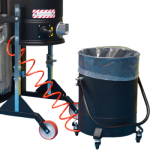
The debris is accumulated within a painted container that is equipped with a metal handle, allowing for easy detachment from the machine. The container is supported by four swiveling wheels, enabling effortless mobility and emptying. Each wheel is reinforced to ensure optimal stability when handling the bin.
Automatic reverse jet cleaning system. Antistatic M class filter (EN-60335-2-69), 3x Polyester filter cartridges, 14,000 in² filter surface.
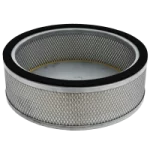
H14 Absolute Filter (EN 1822) Glass fiber
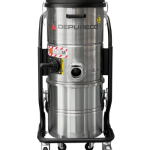
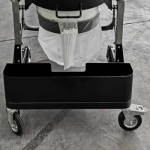
Accessories basket
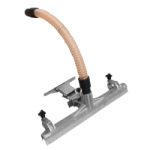
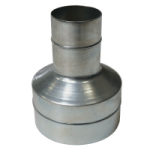
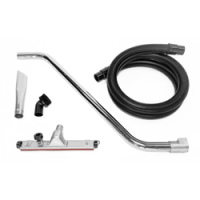
Get answers about using the M100 for high-airflow single-phase industrial cleanup, dust and dry debris recovery, metal chips and shavings, wet pickup, M Class and HEPA filtration, suction performance, model comparison, and choosing between portable single-phase and continuous-duty three-phase industrial vacuums.
The M100 is a high-capacity single-phase industrial vacuum designed for portable, intermittent and frequent batch cleanup in manufacturing, maintenance, machine-shop, and production environments.
Three independently controlled by-pass motors provide 3.3 HP, up to 326 CFM of airflow, and 98 inH₂O of maximum vacuum. A 26-gallon detachable collection bin gives the M100 substantially more material capacity than smaller portable industrial vacuums while still operating from 120 V single-phase power.
Typical applications include production-floor housekeeping, machine-side cleanup, dust and debris recovery, dry chips and shavings, equipment cleaning, powders and suitable dry solids, and general plant maintenance. The M100 platform can also be configured for liquid recovery when wet pickup is required.
The M100 is a strong fit when an operation needs more airflow and collection capacity than a compact vacuum but does not require the continuous-duty side-channel blower used on three-phase models such as the ECOBULL or TX.
The M100 is designed to recover a broad range of suitable industrial dusts and solids, including production dust, powders, granules, dry debris, shavings, chips, trim scraps, and other loose material generated during manufacturing and maintenance.
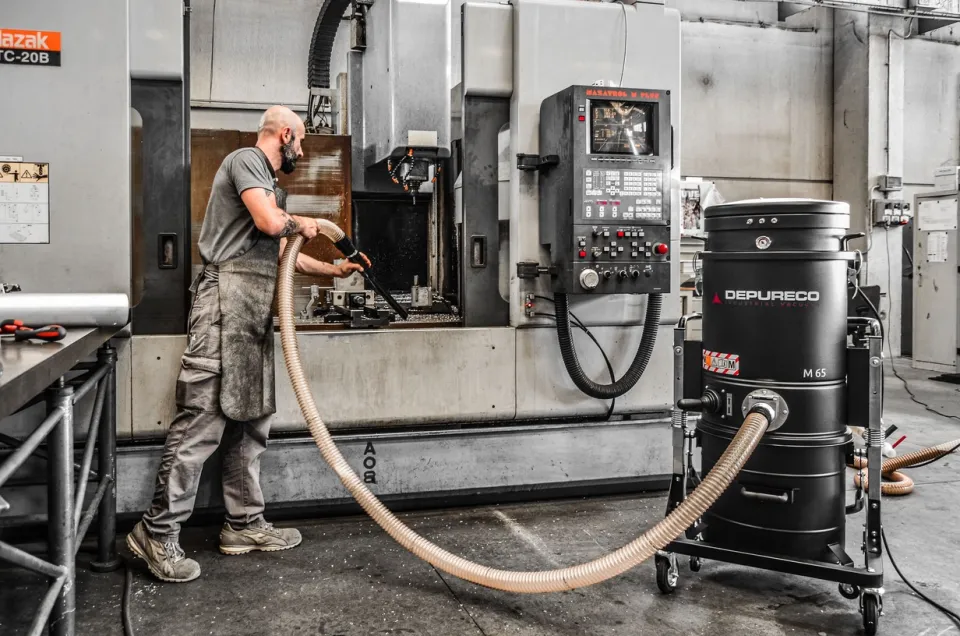
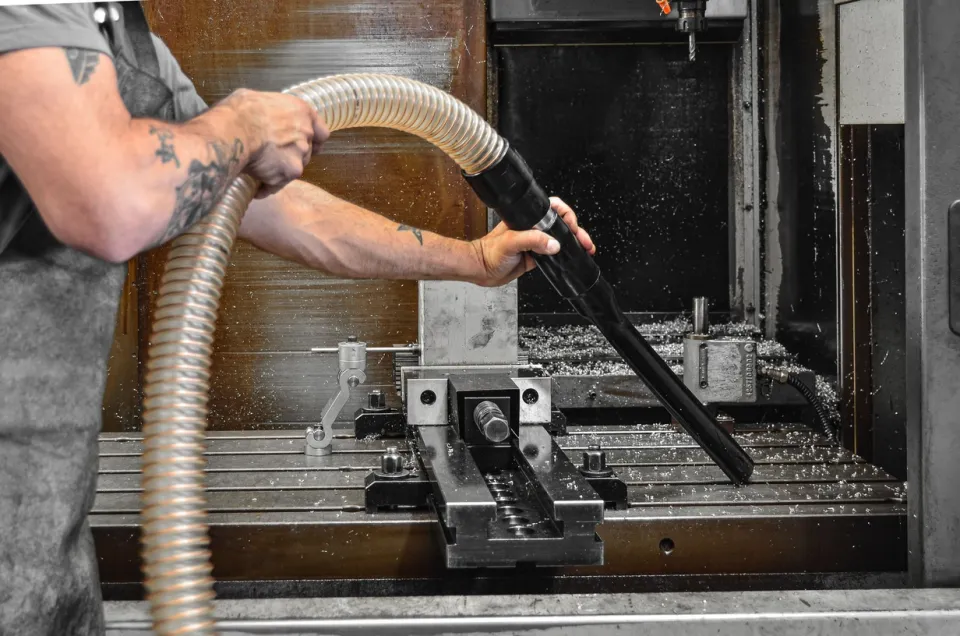
In machine shops and metalworking environments, the M100 can be used for portable batch recovery of dry metal chips, machining debris, and suitable swarf. M100-family testing has also demonstrated recovery of mixed machining chips, stringy swarf, small metal pieces, and dense abrasive media when the hose, tool, and inlet configuration are matched to the material.
The correct setup depends on material behavior. Fine or adhesive powders may benefit from PTFE or Teflon-treated filtration, electrostatic material may require antistatic components and grounding, and higher-temperature dry material may require temperature-appropriate filtration.
Long, heavily tangled swarf, very dense bulk material, sticky dust, liquids, combustible dust, hot material, or unknown hazardous substances should be reviewed before the vacuum and accessories are selected.
The two ratings describe different parts of the M100’s pickup performance.
The M100’s maximum airflow of 326 CFM represents the volume of air the vacuum can move. Airflow is important for carrying loose dust, chips, shavings, powders, and other debris through the hose.
Its maximum vacuum rating of 98 inH₂O describes suction pressure, or the machine’s ability to pull against resistance. Vacuum pressure becomes increasingly important when the material is heavier, the hose run is longer, vertical lift is involved, or tools and filters add resistance to the collection path.
The M100 uses three independently controlled by-pass motors. Operators can switch the motors individually instead of having only one fixed suction setting.
Neither CFM nor vacuum pressure should be evaluated by itself. Hose diameter and length, vertical lift, elbows, reducers, pickup tools, filter loading, material density, particle shape, and the rate at which material enters the hose all affect actual performance.
The standard M100 uses a polyester star filter with approximately 3,800 in² of filter surface and an IFA/BGIA M-PES Class M classification under EN 60335-2-69. A manual filter shaker is standard for removing accumulated dust from the primary filter.
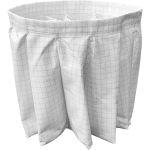
For applications that require an additional high-efficiency downstream filtration stage, an H14 secondary absolute filter is available with approximately 4,400 in² of fiberglass filter surface.
Alternative M100 primary-filter options include antistatic Class M, Teflon-treated MTF, Nomex, PTFE, and PTFE antistatic media. Filter selection should be based on the actual material, including particle size, dust adhesion, moisture, temperature, and electrostatic behavior.
For applications with heavier filter loading, an optional SP automatic reverse-jet system is also available. It uses three antistatic polyester cartridges and approximately 14,000 in² of filter surface.
HEPA, antistatic filtration, and grounding perform different functions. Adding HEPA or an antistatic filter does not by itself make a standard M100 suitable for combustible dust or a hazardous classified location.
Yes. The M100 platform can be configured for wet and dry industrial cleanup when liquid recovery is part of the application.
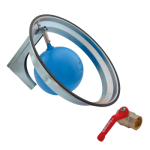
The standard U.S. M100 is specified primarily for dusts and solids. For liquid pickup, an optional FLT configuration is available with a collection bin inlet and floating device. The floating device helps protect the vacuum by stopping suction when liquid reaches the intended fill level.
Wet/dry hose, floor-tool, and accessory kits are also available for general industrial spills, machine-side cleanup, and applications that involve both suitable liquids and dry debris.
The M100 should not be confused with the M100 OIL. If the main job is cleaning CNC sumps, recovering coolant or cutting oil, separating liquid from metal chips and swarf, or draining recovered fluid through a dedicated liquid-handling system, the M100 OIL is designed specifically for that workflow.
Liquid chemistry, temperature, flash point, solids content, collection volume, and disposal method should be reviewed before specifying the M100 for wet pickup.
Choose the MINIBULL when compact size, maneuverability, and smaller-volume cleanup are the priorities. Choose the M100 when the application requires more airflow, more collection capacity, or a larger single-phase platform for demanding batch cleanup.
The MINIBULL uses two by-pass motors and delivers up to 226 CFM and 94 inH₂O with a 12-gallon collection bin.
The M100 uses three independently controlled by-pass motors and increases performance to 326 CFM and 98 inH₂O while increasing collection capacity to 26 gallons.
Both are mobile single-phase industrial vacuums intended for portable cleanup. The MINIBULL is better suited to tighter work areas and smaller debris volumes. The M100 is the stronger choice when operators are recovering more material, want fewer bin-emptying cycles, require greater airflow, or need to work through a more demanding hose and accessory setup.
If the application requires extended or continuous-duty suction rather than portable batch cleanup, a three-phase side-channel-blower model should also be evaluated.
Choose the M100 when portability, 120 V single-phase power, high airflow, and intermittent or frequent batch cleanup are the main requirements. Move to an ECOBULL or another three-phase industrial vacuum when longer operating cycles and continuous-duty suction become more important.
The M100 generates suction with three independently controlled by-pass motors. This makes it a versatile mobile platform for production-floor cleanup, machine-side maintenance, dry chips, dust, debris, and other recurring cleanup jobs where the vacuum is used in batches.
The ECOBULL uses a three-phase side-channel blower designed for continuous-duty industrial operation. That makes it better aligned with applications where the vacuum must operate for longer periods, carry heavier daily workloads, or remain available for production-duty cleanup throughout the workday.
The decision should not be based on horsepower or CFM alone. Material density, hose diameter and length, filter loading, collection capacity, pickup rate, electrical service, and required operating time all affect proper model selection.
The M100 may not be the right choice when the application requires continuous-duty suction, substantially higher material throughput, specialized liquid handling, fixed source capture, centralized collection, or equipment designed for a specific dust or process hazard.
A three-phase model such as the ECOBULL or TX should be evaluated when longer operating cycles or continuous-duty use are required. A dedicated M100 OIL or RAM OIL model is better suited when the main job is CNC sump cleaning, coolant or cutting-oil recovery, liquid-and-chip separation, or high-volume liquid handling.
If airborne dust must be captured continuously where it is generated, an engineered dust collector may be more appropriate than a mobile housekeeping vacuum. Multiple permanent pickup points may instead justify a centralized vacuum system.
A standard M100 should also not automatically be used for combustible dust, hazardous classified locations, flammable liquids or vapors, reactive chemicals, hot or burning material, or unknown hazardous substances. Those conditions can change the required vacuum construction, filtration, grounding, certification, accessories, and collection method.
To size the application correctly, identify the material, particle or chip size, bulk density, dry or wet condition, approximate volume per cleanup, pickup rate, cleaning frequency, expected run time, hose diameter and length, vertical lift, available electrical service, filtration requirements, collection and disposal method, and any applicable material or facility hazards.