


2x Venturi Pipes

12 gal
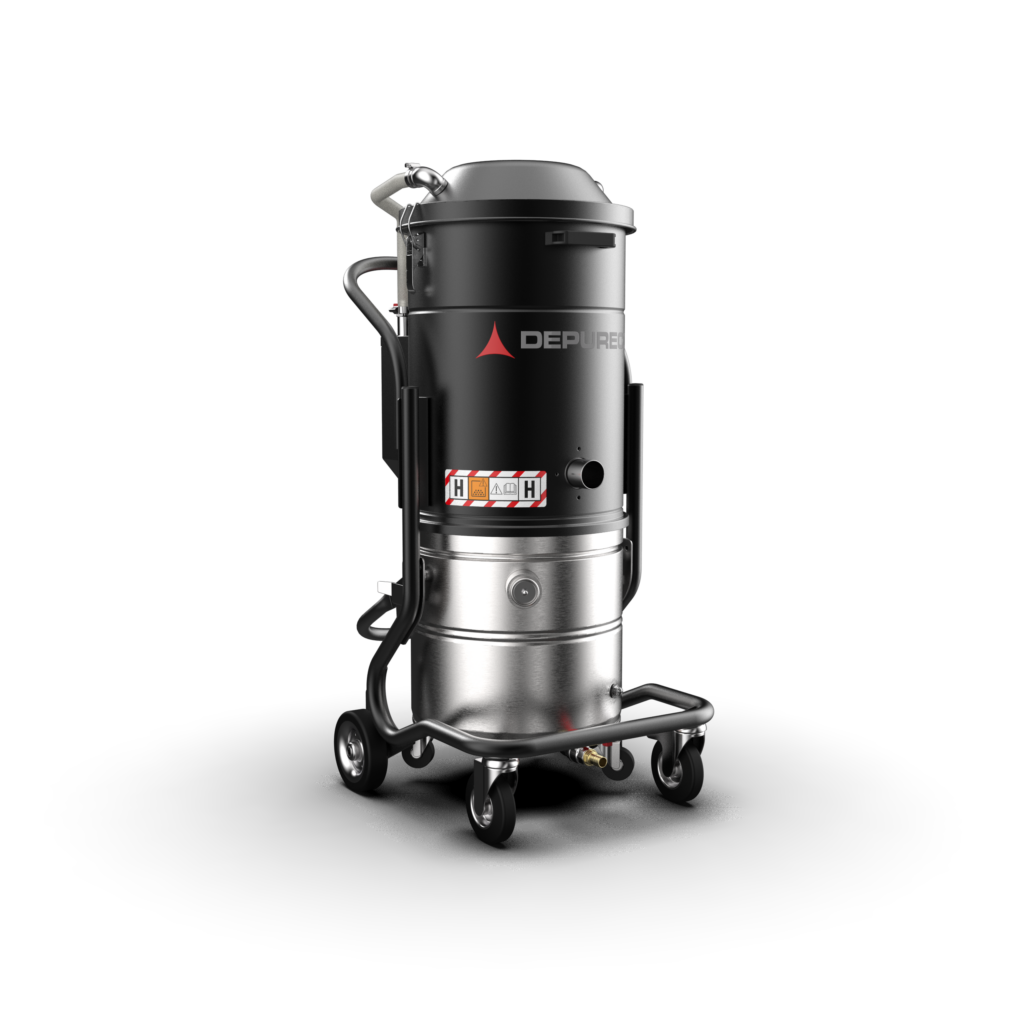
The MINI AIR AM is a compact, air-powered intrinsically safe industrial vacuum engineered for demanding applications where controlled material recovery and safe handling are critical. Powered by dual Venturi tubes and requiring 85 PSI compressed air, it delivers up to 200 inH₂O of vacuum and 80 CFM of airflow without relying on an electric vacuum motor. Its compact, highly transportable design makes it well suited for use directly at the work area while maintaining strong suction performance. MINI AIR AM
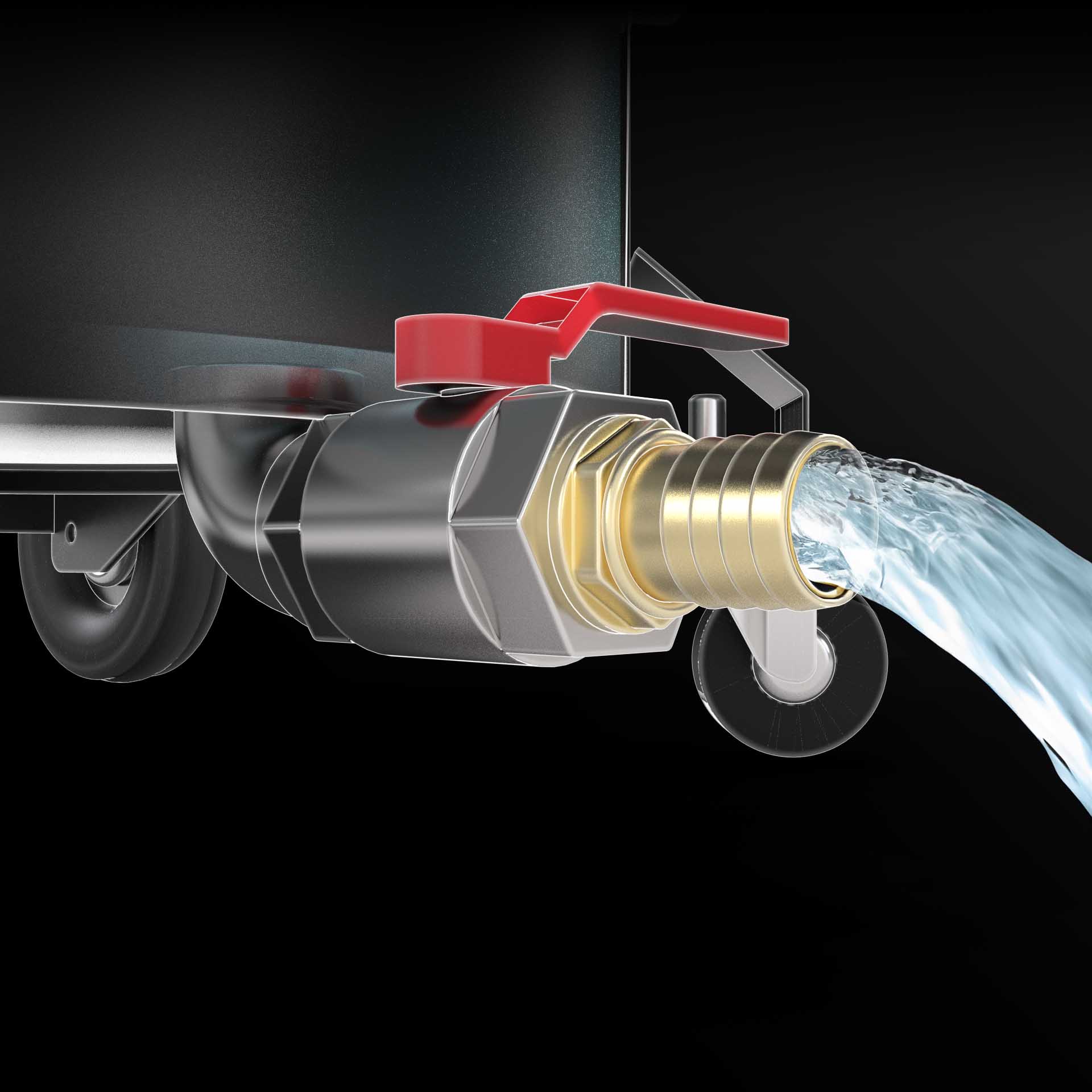
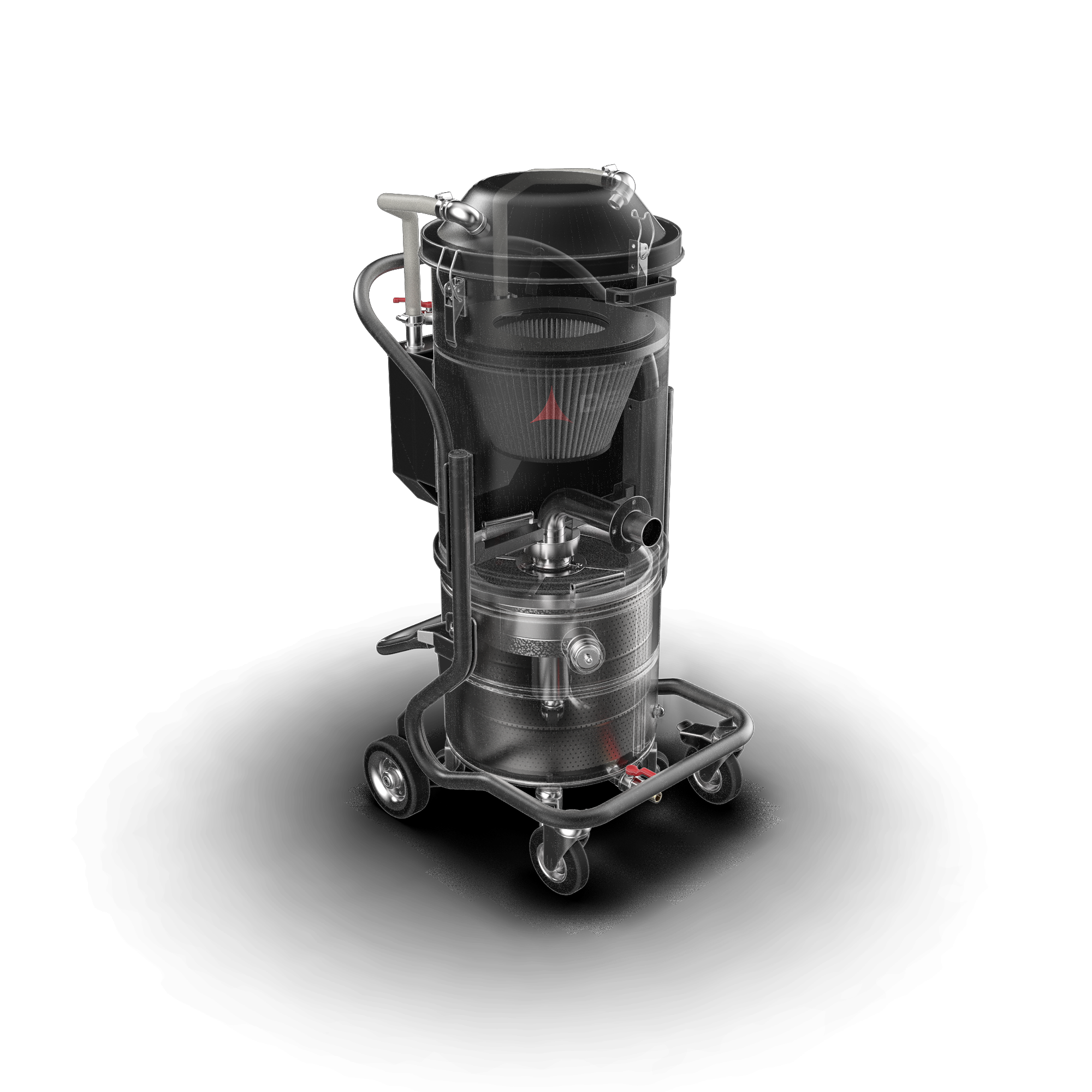
The MINI AIR AM combines a 12-gallon AISI 304 stainless-steel collection bin with an H13-class antistatic polyester cartridge filter, while all components are grounded to help control static buildup. An integrated immersion system uses an immersion nozzle, metal grid basket, nylon filter, and inert liquid, while a dedicated hydrogen vent valve safely releases hydrogen generated during metal oxidation. Additional features include a 2-inch inlet with deflector, patented quick-release suction inlet, maximum liquid-level indicator, and drain valve for easier operation and maintenance. MINI AIR AM
This design gives facilities a portable, compressed-air-powered vacuum solution for collecting and managing materials that require an intrinsically safe recovery process, while combining HEPA filtration, grounded construction, stainless-steel containment, and liquid-immersion functionality in one compact system.

The MINI AIR AM uses two Venturi tubes to generate vacuum using compressed air instead of an electric motor. Supplied with 85 PSI, the dual-Venturi system produces up to 200 inH₂O of vacuum and 80 CFM of airflow, giving the unit strong suction performance while maintaining a fully pneumatic design. This makes the system well suited to applications where minimizing electrical ignition sources is important.

The MINI AIR AM features a 12-gallon AISI 304 stainless-steel collection bin designed for durable material recovery in demanding industrial environments. Its stainless-steel construction supports easier cleaning and corrosion resistance, while the integrated maximum liquid-level indicator and drain valve help simplify liquid handling and emptying.
Learn how the MINI AIR AM pneumatic industrial vacuum is used for reactive and fine metal powder collection, what compressed-air requirements it has, how its immersion system works, and how it compares with other Depureco air-powered vacuum models. These FAQs also cover HEPA filtration, intrinsically safe operation, application fit, and important material and hazardous-location considerations.
The MINI AIR AM is designed for specialized industrial collection applications involving fine or reactive metal powders where an immersion-based collection process is required. It is particularly suited to additive manufacturing, depowdering, metal-powder recovery, and similar processes when the material and application have been properly qualified.
Collected material is directed into an inert liquid through the vacuum’s immersion system. The MINI AIR AM also incorporates a metal grid basket, nylon filter, hydrogen vent valve, grounded components, and a 12-gallon AISI 304 stainless-steel collection bin.
No electric vacuum motor is used to generate suction on the MINI AIR AM. Instead, the vacuum is powered pneumatically using two Venturi tubes supplied with compressed air.
This makes the MINI AIR AM useful for applications where a pneumatic vacuum is preferred and an electric suction motor is undesirable at the collection point. The facility must provide a suitable compressed-air supply capable of maintaining the MINI AIR AM’s required 85 PSI operating pressure.
The MINI AIR AM requires a compressed-air supply at 85 PSI to operate its two Venturi tubes. At the specified operating pressure, the vacuum provides up to 200 inH₂O of maximum vacuum and 80 CFM of maximum suction airflow.
The 80 CFM specification refers to the vacuum’s suction airflow, not the amount of compressed air consumed by the Venturi system. The MINI AIR AM specification sheet does not state compressor air consumption in CFM or SCFM, so compressor capacity should be confirmed for the installation based on available pressure, airflow demand, duty cycle, hose configuration, and other equipment sharing the compressed-air system.
The MINI AIR AM provides up to 200 inH₂O of maximum vacuum and up to 80 CFM of maximum suction airflow through a 2-inch inlet.
This combination gives the compact pneumatic vacuum strong lifting capability while maintaining controlled airflow for specialized metal-powder collection and immersion applications. Actual suction performance at the pickup point can vary based on hose diameter, hose length, tooling, restrictions, compressed-air supply, and the characteristics of the material being collected.
The MINI AIR AM is described in its product specification as an intrinsically safe pneumatic vacuum, and all components are grounded. Its compressed-air Venturi design also eliminates the electric vacuum motor normally used to generate suction.
However, the supplied MINI AIR AM documentation does not identify a specific U.S. ORD LOC, Class/Division, Zone, ATEX, or IECEx certification. For that reason, the MINI AIR AM should not be represented as universally “explosion-proof certified” for every hazardous location.
Applications involving combustible dust, reactive metal powder, or classified areas should be reviewed based on the specific material, process, facility area classification, and applicable compliance requirements before selecting the vacuum.
The MINI AIR AM is specifically configured for specialized metal-powder collection using an inert-liquid immersion system. Its collection chamber includes an immersion nozzle, metal grid basket, nylon filter, grounded components, and a hydrogen vent valve designed to release hydrogen that may be generated during metal oxidation.
That makes the MINI AIR AM relevant to applications involving fine or reactive metal powders, including additive-manufacturing and depowdering processes. Material compatibility still needs to be evaluated for each application because different metal powders can have different reactivity characteristics, and the appropriate immersion liquid and collection procedure should be confirmed for the specific material and process.
The MINI AIR AM uses an immersion-based collection system designed for specialized metal-powder applications. Material enters through the 2-inch suction inlet and is directed through an immersion nozzle into an inert liquid inside the stainless-steel collection chamber.
Inside the chamber, a metal grid basket and nylon filter help manage the collected material, while the maximum liquid-level indicator and drain valve help control the liquid level and emptying process. The system also includes a hydrogen vent valve designed to safely release hydrogen that may be generated during metal oxidation.
The immersion process is part of the MINI AIR AM’s material-handling strategy and should be configured for the specific powder, inert liquid, and application being handled.
The MINI AIR AM uses a cartridge-style HEPA H13 primary filter made from antistatic polyester. The supplied specification identifies the filter as HEPA 13 Class under EN 60335-2-69.
The antistatic filter works alongside the MINI AIR AM’s grounded components and immersion-based collection system as part of the vacuum’s overall material-control design. Filter suitability should still be evaluated for the specific metal powder, process, and facility requirements.
The MINI AIR AM is the specialized pneumatic model for metal-powder applications that require an inert-liquid immersion collection process. It combines two Venturi tubes with a 12-gallon AISI 304 stainless-steel chamber, HEPA H13 antistatic cartridge filtration, an immersion nozzle, metal grid basket, nylon filter, and hydrogen vent valve.
The MINI AIR 2V is better suited to conventional dry pneumatic vacuuming. It uses compressed-air ejectors with an M-Class star filter, manual filter-cleaning system, detachable collection bin, and optional H14 filtration.
The MINIAIR Z2-22 is also an intrinsically safe compressed-air vacuum, but it is configured for dry collection using antistatic filtration rather than the MINI AIR AM’s inert-liquid immersion system.
For applications focused primarily on recovering liquids, wet debris, or light sludge, the WD AIR is the more appropriate pneumatic model because it is specifically designed as a compressed-air liquid recovery vacuum.
The best model therefore depends on what is being collected and how the material needs to be handled: specialized metal-powder immersion with the MINI AIR AM, dry pneumatic collection with the MINI AIR 2V or MINIAIR Z2-22, or bulk liquid and wet-debris recovery with the WD AIR.
Not in the same way as a conventional wet-and-dry industrial vacuum. The MINI AIR AM uses liquid as part of its inert-liquid immersion process for specialized metal-powder collection; the liquid is part of the material-handling method rather than simply serving as a tank for general spill or bulk-liquid recovery.
For applications focused primarily on recovering liquids, wet debris, or light sludge, a dedicated pneumatic liquid-recovery model such as the WD AIR is a better fit. The MINI AIR AM should be selected when the immersion process itself is required for the material and application.