- (737) 320-9102

2.4 kW | 3.3 HP

52 gal
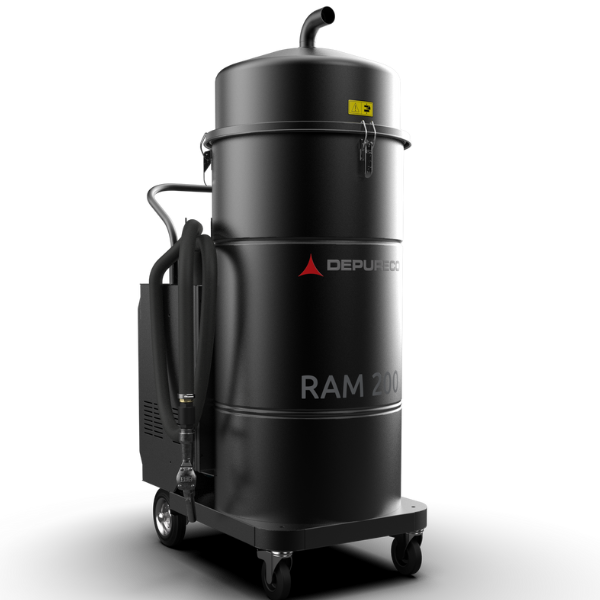
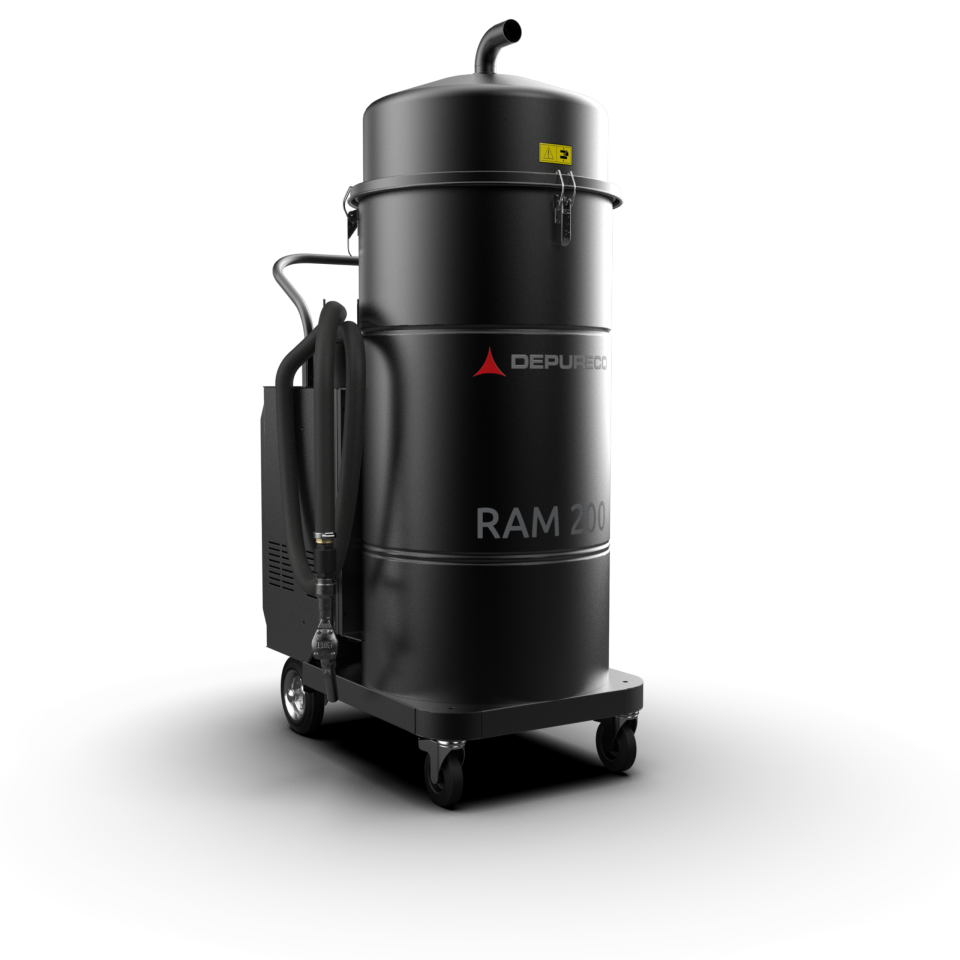
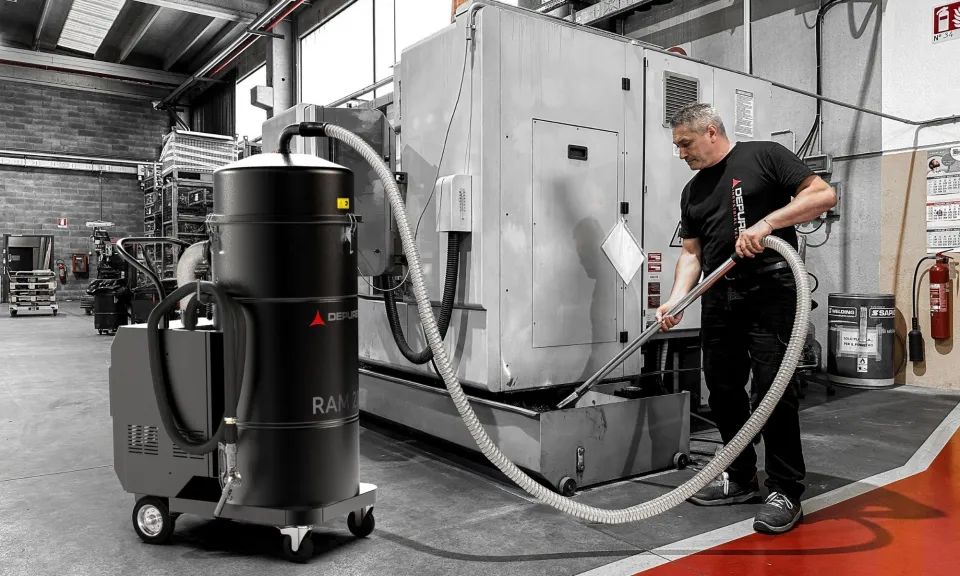
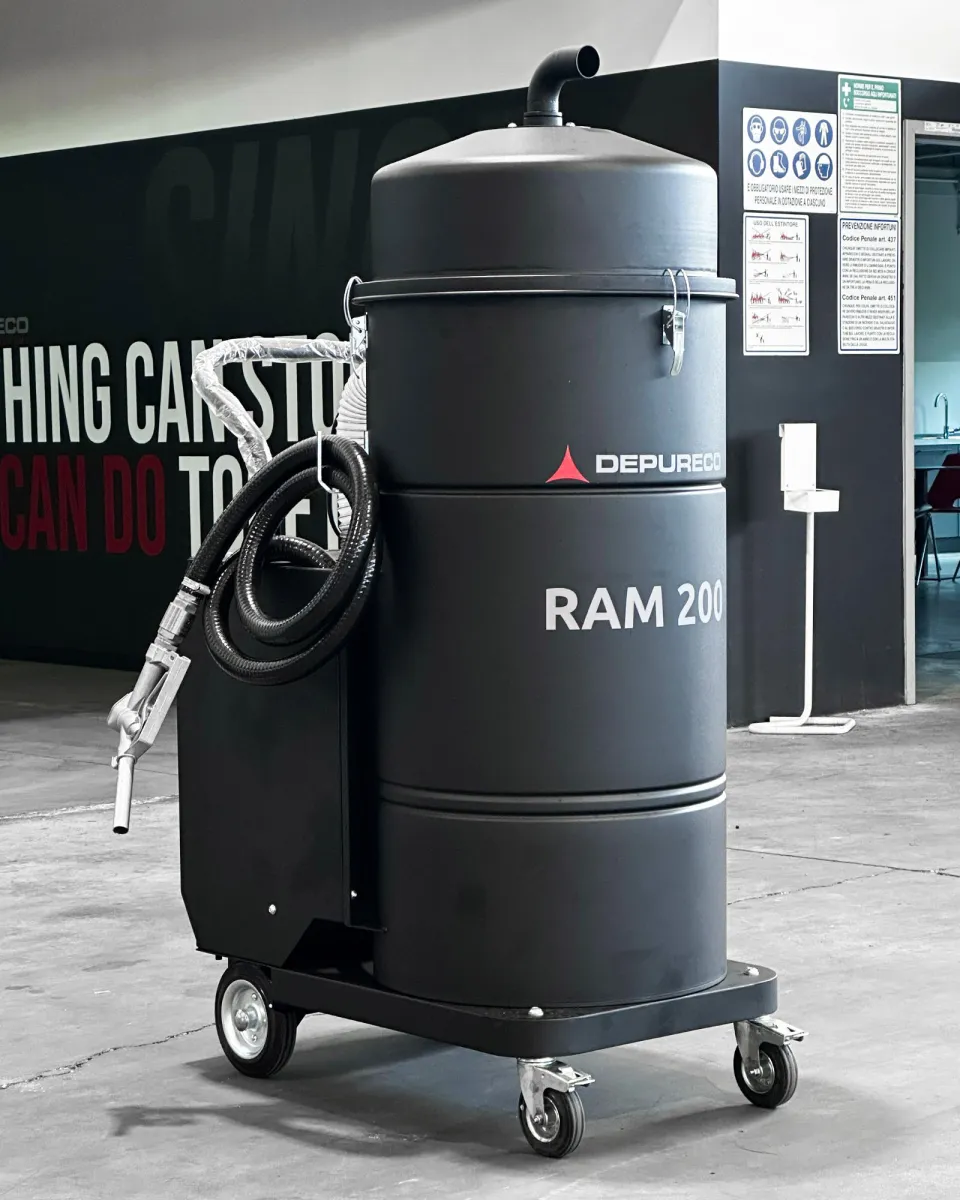
The RAM OIL 200 MP CNC sump vacuum is built for machine shops that need to remove coolant, cutting oil, chips, swarf, fines and light sludge from CNC tanks without breaking the job into separate vacuuming and liquid-transfer steps.
Three single-phase bypass motors deliver up to 336 CFM and 98 inH₂O through a 2-inch rotating inlet. Recovered material enters the separation chamber, where the grid basket captures bulk chips and swarf before the liquid passes into the 53-gallon collection tank. Available 100- and 150-micron polypropylene liquid filters can provide an additional filtration stage for smaller particles.
An onboard external pump automatically discharges the recovered liquid and allows the machine to vacuum and pump out simultaneously. Filtered coolant can be transferred into a drum or returned to the machine when its condition, concentration and facility procedures permit.
The RAM OIL 200 MP is a strong fit for recurring sump maintenance on CNC mills, machining centers, lathes and other machine tools where manual scooping, separate transfer pumps and undersized wet vacuums add unnecessary labor and downtime.
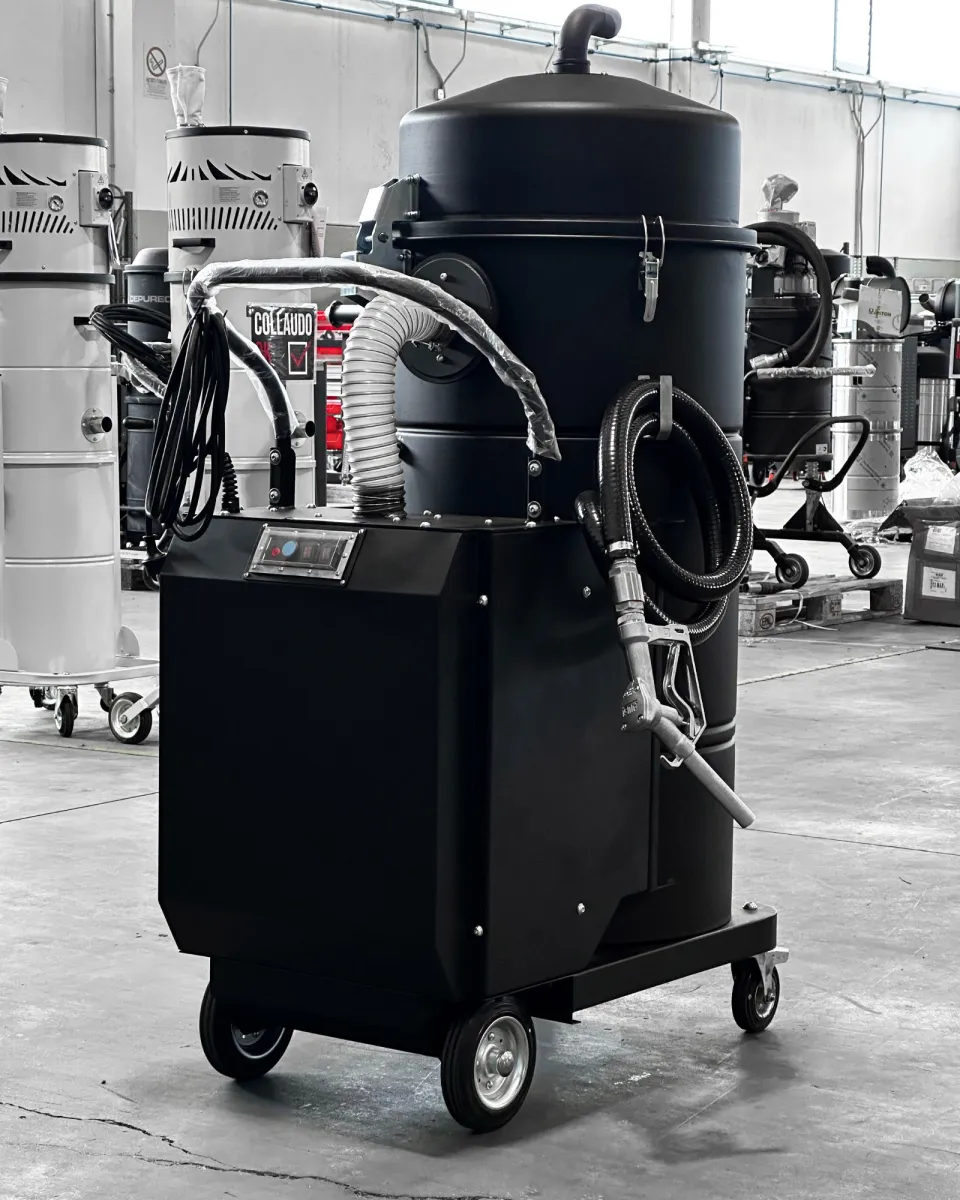
An included oil-mist-resistant cartridge protects the vacuum motors, while the floating level sensor, hinged lid, accessory basket, hose storage and mobile painted-steel chassis make the unit easier to use across a busy machine shop.

Three single-phase by-pass motors provide up to 336 CFM and 98 inH₂O for recurring CNC sump-cleaning cycles. Sequential startup helps reduce inrush current, while the sound-lined motor housing keeps the rated noise level at 72 dB(A).

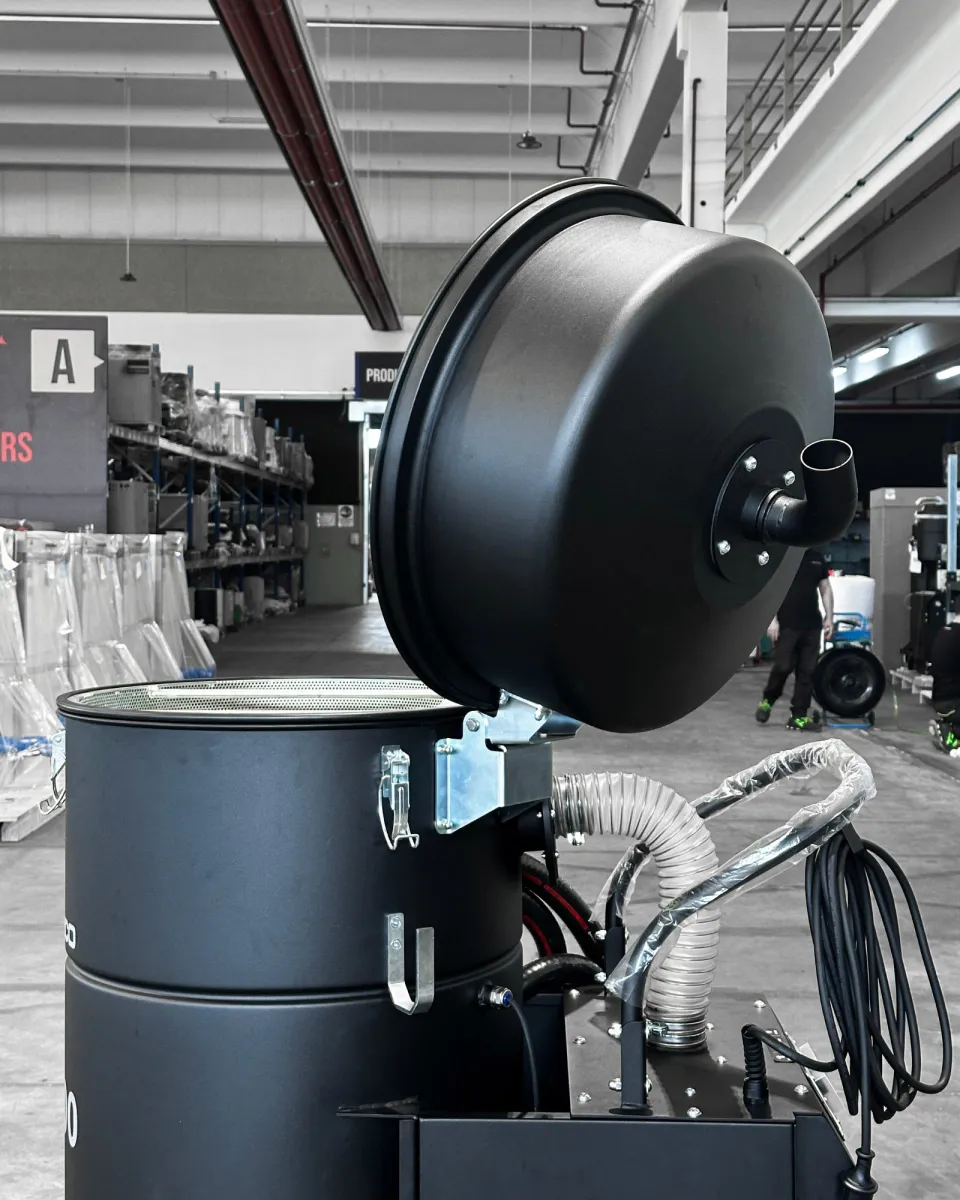
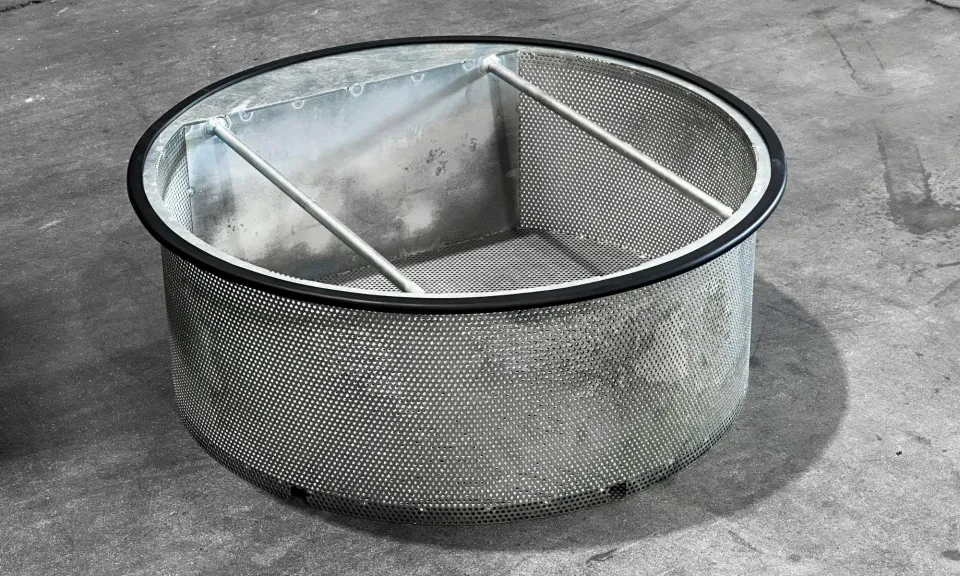
A removable perforated grid basket & PPL filter with a 150µ efficiency, which enables the separation of even the tiniest solid particles, captures metal chips and swarf before the recovered liquid reaches the main tank. The basket provides approximately 9.25 gallons of rated solids capacity and can be lifted out for material disposal or recycling. The filters are designed to be easily washed and reused.

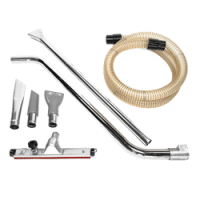
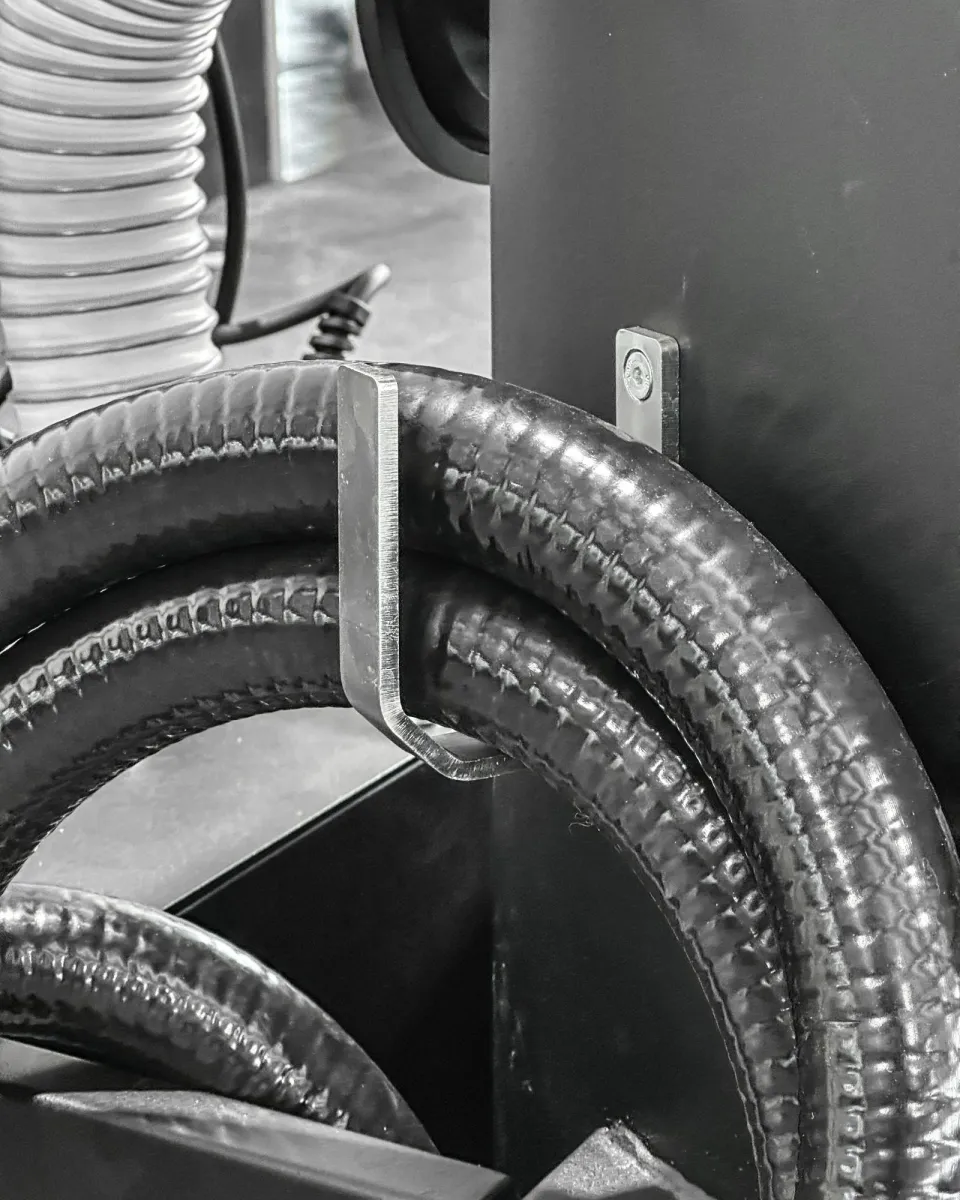
The 360° rotating inlet lets the hose follow the operator around the machine with less twisting. Hose hooks, an accessory basket and the mobile painted-steel chassis keep the vacuum ready for repeated maintenance work.

An in-tank submersible electric pump enables fast discharge of the recovered, filtered liquid. The built-in check valve lets you vacuum and pump out simultaneously—no need to stop the machine. This eliminates a separate transfer step and helps keep tank-cleaning work moving.
Get answers about using the RAM OIL 200 MP for CNC sump cleaning, coolant and cutting-oil recovery, metal chip and swarf separation, powered liquid discharge, simultaneous vacuum-and-pump-out operation, coolant reuse, and choosing the right sump vacuum for higher-volume machine-tool maintenance.
The RAM OIL 200 MP is a high-capacity mobile sump vacuum designed for recurring CNC tank cleaning, coolant and cutting-oil recovery, metal chip and swarf separation, and powered liquid discharge.
Three single-phase by-pass motors deliver up to 336 CFM of airflow and 98 inH₂O of vacuum through a 2-inch rotating inlet. The machine provides a 53-gallon liquid collection tank and a removable grid basket for separating bulk chips and swarf before recovered liquid reaches the main tank.
The RAM OIL 200 MP is particularly useful for larger CNC mills, lathes, machining centers, and other machine tools where sump cleanout involves enough coolant and debris that smaller gravity-discharge vacuums require frequent stopping, draining, or additional transfer equipment.
Its onboard pump allows recovered liquid to be discharged while the vacuum continues operating, reducing the number of separate steps required during routine machine maintenance.
Yes. Mixed liquid-and-solid recovery is one of the primary jobs of the RAM OIL 200 MP.
During CNC sump cleanout, the vacuum can recover coolant or cutting oil together with metal chips, swarf, shavings, fines, and compatible light sludge instead of requiring the liquid and solids to be removed as separate maintenance steps.
Bulk chips and swarf are intercepted before the recovered liquid enters the main tank. This makes the RAM OIL 200 MP useful for machine sumps where settled solids, machining debris, and coolant must all be removed during the same cleaning cycle.
Actual pickup performance depends on the liquid viscosity, amount of sludge, chip geometry, solids concentration, hose diameter and length, tank depth, and accessory being used. Long bird-nested swarf, unusually dense sludge, highly viscous fluids, or unfamiliar process liquids should be reviewed before the final equipment and accessory setup is selected.
The RAM OIL 200 MP separates material in stages as the contents of the CNC sump are recovered.
Bulk metal chips, swarf, and shavings are captured in a removable perforated grid basket before the recovered liquid enters the main collection tank. The basket can then be lifted out so the separated solids can be emptied for recycling or disposal independently from the liquid.
For applications that need additional liquid filtration, washable polypropylene filter bags are available in 100 µm and 150 µm efficiencies. These provide another filtration stage for smaller suspended particles after the larger chips and swarf have been separated.
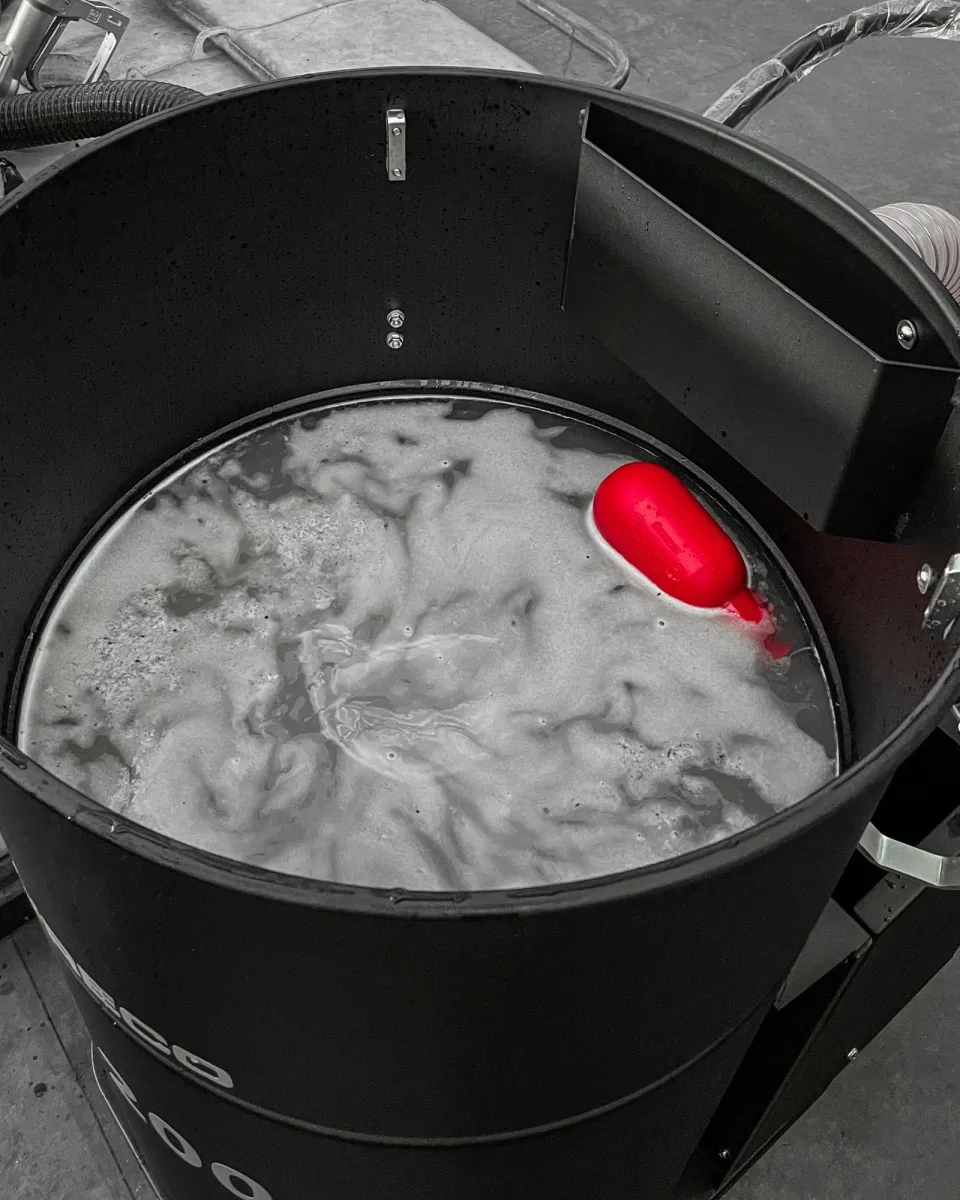
An oil-mist-resistant cartridge provides additional protection for the vacuum motors, while a floating level sensor monitors the liquid level in the main tank.
This system is designed for sump cleaning and bulk coolant recovery. The optional liquid filtration should not be treated as equivalent to a complete coolant-conditioning system such as a centrifuge, coalescer, tramp-oil separator, or fine process-filtration system.
Yes. Simultaneous vacuuming and powered liquid discharge is one of the defining advantages of the RAM OIL 200 MP.
An onboard pump discharges recovered liquid from the collection tank while the vacuum continues pulling coolant, chips, and swarf from the CNC sump. A check-valve arrangement allows these two functions to operate together instead of requiring the operator to stop vacuuming every time recovered liquid needs to be transferred.
This can shorten larger sump-cleaning jobs because the machine does not have to be filled, stopped, gravity-drained, and restarted repeatedly.
Recovered liquid can be pumped into an appropriate drum, holding tank, treatment system, or back toward the machine when the coolant condition and facility procedures allow reuse.
The receiving location, discharge hose setup, fluid condition, and required transfer path should still be reviewed for the application.
Potentially, yes. The RAM OIL 200 MP can separate bulk chips and swarf from recovered coolant and can add 100 µm or 150 µm liquid filtration before the fluid is discharged.
That can make recovered coolant suitable for evaluation and possible return to the machine instead of automatically treating all collected fluid as waste.
However, the RAM OIL 200 MP is a recovery and separation system, not a complete coolant-conditioning system. Before recovered coolant is returned to service, the shop should confirm that its concentration, contamination level, tramp-oil content, chemistry, bacteria, fine-particle load, and other process requirements remain acceptable for the machine and machining operation.
Coolant requiring finer particulate removal, continuous tramp-oil separation, coalescing, centrifuging, concentration correction, or other conditioning may need additional treatment equipment.
The decision to reuse recovered coolant should therefore be based on fluid condition and facility procedures, not simply on the fact that the coolant has passed through the sump vacuum.
Choose the M100 OIL when the application involves routine machine-side sump cleaning and its smaller tank and gravity-discharge workflow are sufficient. Choose the RAM OIL 200 MP when larger coolant volumes and powered liquid transfer make the cleaning process more efficient.
The M100 OIL provides a 26-gallon liquid capacity and uses gravity discharge after material recovery.
The RAM OIL 200 MP increases liquid capacity to 53 gallons and adds powered pump-out that allows recovered coolant to be discharged while the vacuum continues operating. That makes it better suited to larger CNC tanks, repeated high-volume cleanouts, and shops that want to reduce the separate transfer steps associated with gravity discharge.
Both models separate chips and swarf from recovered liquid, so the main buying decision is not simply whether the application contains coolant and metal chips. Tank size, liquid volume, cleaning frequency, required discharge method, solids loading, hose setup, and maintenance workflow determine which platform is the better fit.
The RAM OIL 200 MP may not be the best choice when the sump is small enough that its 53-gallon capacity and powered discharge add unnecessary size and complexity, or when the application requires substantially more liquid capacity than the RAM 200 provides.
Smaller CNC tanks and routine lower-volume maintenance may be better served by an M70 OIL, M100 OIL, M130 OIL P, or another compact sump-vacuum configuration. Larger tanks, multiple-machine maintenance routes, or greater recovered-fluid volumes may justify a RAM OIL 280 MP or another higher-capacity system.
The RAM OIL 200 MP should also not automatically be assumed suitable for every industrial liquid. Flammable liquids or vapors, hot fluids, reactive chemicals, highly viscous liquids, unknown process mixtures, or hazardous classified locations can require different equipment or additional application review.
The machine is also designed for periodic CNC sump and tank maintenance rather than continuous process filtration. If the real requirement is continuous coolant conditioning, permanent filtration, centralized chip transport, or automated fluid management, a different system architecture may be more appropriate.
For final selection, review the fluid type, temperature and flash point, tank capacity, quantity of coolant removed per cycle, chip and swarf geometry, sludge concentration, hose length, lift, required pump-out path, cleaning frequency, available electrical service, and how recovered fluid and solids will be handled.