




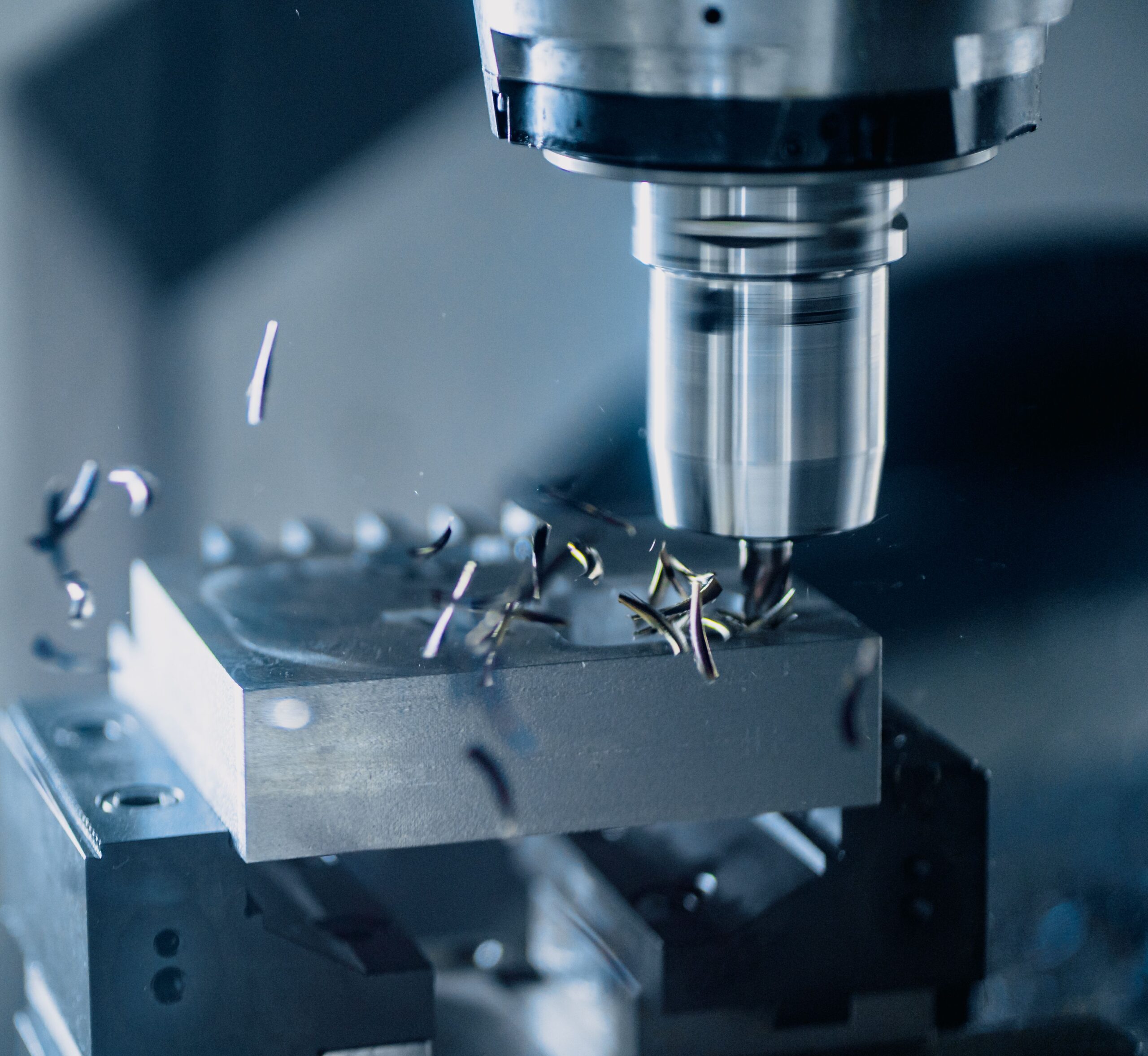
Premature tool wear, unexpected runout, or a sudden change in surface finish can make the spindle an obvious suspect. But before assuming the spindle itself is failing, it is worth checking something much simpler: where chips, swarf, fines, and coolant residue are accumulating inside the machine.
Contamination at the spindle and toolholder interface can interfere with proper seating, while poor chip evacuation can cause chips to be recut instead of carried away from the cutting zone. Elsewhere in the machine, accumulated chips, sludge and contaminated coolant can turn routine maintenance into longer periods of downtime.
Better debris removal will not repair a damaged spindle or correct improper tooling, alignment, lubrication or machining parameters. It can, however, remove a preventable source of contamination and help create cleaner operating conditions for the spindle, tooling, and surrounding CNC process.
The first step is determining where the debris is accumulating and what type of material you are actually trying to remove.
When Debris Starts Affecting More Than Housekeeping
Metal chips and swarf are not only a housekeeping issue. Where debris accumulates inside a CNC machine can influence tooling conditions, maintenance requirements, and the consistency of the machining process.
Spindle and Toolholder Interface
Small chips, fines, or residue on the spindle taper or toolholder mating surfaces can interfere with proper seating. Even minor contamination at this interface can contribute to runout, inconsistent finishes, and unnecessary wear. Keeping these surfaces clean should be part of routine inspection when spindle or tooling problems appear.
Cutting Zone
Chips that are not carried away effectively can remain near the tool and workpiece. When those chips are cut again, the tool is exposed to additional impact and abrasion that can contribute to premature cutting-edge wear. Debris removal does not replace proper chip evacuation, coolant delivery, tooling, or machining parameters, but it helps keep accumulated material from becoming another variable in the process.
Sump and Machine Interior
Wet chips, fines, sludge, and coolant residue often settle in the machine bed and sump. As that material builds up, routine CNC maintenance becomes more labor-intensive, and contaminated fluid may continue circulating through the system.
Simple rule: Identify whether the problem is at the spindle interface, in the cutting zone, or in the sump before deciding how the debris should be removed.
Spindle & Toolholder
Chips, fines, and residue can contaminate mating surfaces and interfere with proper toolholder seating.
Contamination → Runout & Wear ConcernsCutting Zone
Chips left around the tool and workpiece may be recut, adding unnecessary impact and abrasion at the cutting edge.
Poor Chip Removal → Recutting → Tool WearSump & Machine Interior
Wet chips, fines, sludge, and coolant residue can accumulate and make routine machine maintenance slower and more difficult.
Buildup → More Cleanup & MaintenanceTroubleshoot the Debris Path Before Blaming the Spindle
When tool life drops, runout appears, or machining quality changes, debris should be treated as one troubleshooting variable, not the automatic diagnosis.
Start by looking at where chips, swarf, fines, coolant residue, or sludge are accumulating. Changes in runout or surface finish may justify inspecting the spindle taper and toolholder mating surfaces, while premature cutting-edge wear may point toward chip evacuation problems and repeated chip recutting. Heavy buildup in the machine bed or sump suggests a separate maintenance and material-recovery issue.
The goal is to identify whether better debris removal can eliminate a preventable source of contamination before moving deeper into spindle diagnostics.
Important: If cleaning and debris removal do not resolve the problem, continue normal spindle, toolholder, alignment, lubrication, coolant, balance, tooling, and machining-process diagnostics according to the machine manufacturer’s procedures.
Unexpected Runout or Finish Changes
Premature Cutting-Edge Wear
Repeated Chip Buildup
Dirty Coolant or Packed Sump
Match the Cleanup Method to the Debris
Once the debris source is identified, the next step is choosing a cleanup method that matches the material. Dry machining chips, coolant-filled sumps, and fine airborne dust create very different collection requirements.
Dry Chips and Swarf
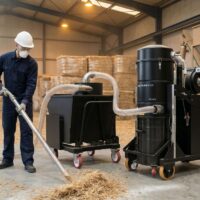
Loose metal chips, shavings, and swarf around the machine bed or enclosure are typically better suited to a dedicated metal chip and swarf vacuum. Hose diameter, chip geometry, pickup distance, and material volume all affect the final configuration.
Coolant, Wet Chips, and Sludge
When chips are mixed with coolant, cutting oil, fines, or settled sludge, a CNC sump vacuum provides a more appropriate recovery path. These applications may require liquid recovery, solids separation, and a practical method for discharging the recovered material.
Fine Dust and Airborne Particulate
Grinding, finishing, and other dry processes can generate fine particulate that behaves very differently from coarse machining chips. When the objective is continuous capture near the point of generation, a dust collector may be more appropriate than relying on periodic machine cleanup alone.
Important compatibility note: Fine, combustible, reactive, conductive, or otherwise hazardous metal dust requires application-specific equipment selection. Do not assume that a vacuum suitable for ordinary machining chips is suitable for every metal dust or powder.
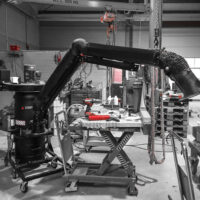
Chips & Swarf
Best suited for loose metal chips, shavings, turnings, and dry swarf collected from machine beds, enclosures, and surrounding work areas.
Explore Metal Chip Vacuums →Coolant, Chips & Sludge
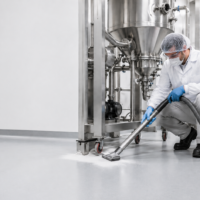
Best suited for CNC sumps containing coolant, cutting oil, wet chips, fines, swarf, and settled sludge.
Explore CNC Sump Vacuums →Dust at the Source
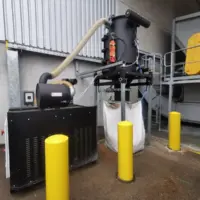
Best suited for processes such as dry grinding or finishing where fine particulate should be captured close to where it is generated.
Explore Dust Collectors →FAQs
Metal chips and fine debris can contribute to contamination-related problems if they reach the spindle taper or toolholder mating surfaces. That contamination can interfere with proper seating and should be inspected when troubleshooting runout, finish changes, or unusual tool wear. Debris is only one possible cause, so persistent problems still require normal spindle and tooling diagnostics.
Yes. Chips that remain in the cutting zone can be recut, exposing the cutting edge to additional impact and abrasion. Chip evacuation should be evaluated alongside tooling, coolant delivery, feeds and speeds, and other machining parameters.
For primarily dry metal chips and swarf, a dedicated metal chip vacuum is typically the better starting point. When coolant, cutting oil, wet chips, fines, and sludge are mixed together, a CNC sump vacuum is generally the more appropriate recovery path.
A dust collector is generally better suited to continuous source capture when processes such as dry grinding or finishing generate fine airborne particulate. Periodic vacuum cleanup and source capture solve different problems, so the correct approach depends on how and where the debris is generated.
Keep Debris From Becoming Another Machining Variable
Chips, swarf, coolant, and fine machining residue are only part of the CNC troubleshooting equation, but they are also some of the most preventable variables.
A consistent debris-removal routine can help keep spindle and toolholder interfaces cleaner, reduce accumulated material around the cutting area, and simplify sump and machine maintenance. The right solution depends on what your machine produces and whether the material is dry, wet, fine, coarse, or mixed with coolant.
If your current cleanup method is struggling to keep up, Depureco can help evaluate the material, machine, collection volume, and maintenance process to determine the appropriate recovery method.
Need help matching a vacuum to your CNC application? Request an application review based on the debris your machines actually produce.
Need Help With Your CNC Cleanup Process?
Tell us what your machine is producing, how the material is being collected, and where chips, swarf, coolant, or fines are accumulating. Depureco can help identify the appropriate cleanup and recovery path for the application.
