

Industrial Vacuums for Packaging & Converting Lines
Collect packaging trim, off-cuts, machine dust and production scrap at the point of generation. From single-machine scrap recovery to compact OEM extraction and engineered central systems, Depureco helps match the collection method to the material and the process.
Start With the Waste Stream
Different packaging processes call for different extraction approaches. Short paper punches, free-moving film off-cuts, adhesive label matrix and continuous slitter edge trim should not automatically be assigned the same vacuum system.

Short Trim & Off-Cuts
Localized recovery of suitable paper, film, carton cuttings and short pieces.

Machine Dust & Fine Debris
Compact fixed or OEM pickup close to the generating machine.

Continuous Ribbon & Matrix
Application-specific evaluation for tension, adhesion, conveying and discharge.

Light & Flying Material
Capture behavior, filter loading, pre-separation and pick-up location matter.


Packaging Trim, Off-Cuts & Scrap Collection
Paper converting, bag-making, pouching, carton finishing and die-cutting equipment generate recurring production scrap. Local collection can keep compatible dry cuttings near the machine rather than dispersed across production areas.
AS and AS 300–400 are the primary product paths to review for suitable lightweight trims and higher scrap loads. Material form, generation rate, inlet geometry and discharge requirements should be verified before selection.

Use localized collection for compatible, discrete off-cuts, punched scrap and loose production trims. A collection trial is especially helpful for thin film and fluffy lightweight pieces.
Compact Industrial Vacuums for Packaging Equipment
Packaging Scrap Collection Vacuums
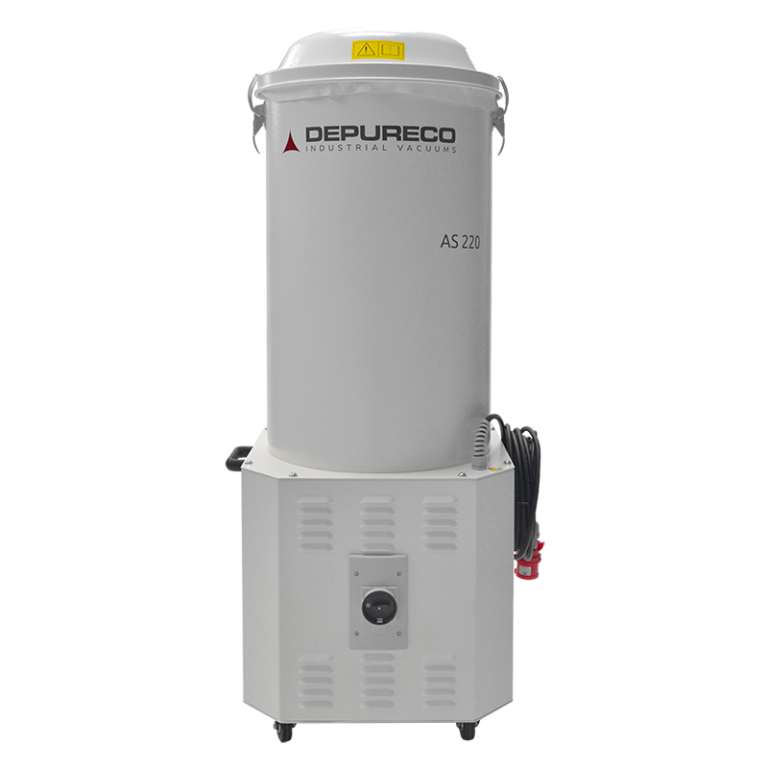
AS SCRAP COLLECTION INDUSTRIAL VACUUM
The AS is a scrap collection industrial vacuum built for OEM and packaging applications that generate continuous lightweight process waste. It helps keep equipment cleaner and reduce downtime caused by trim or scrap buildup.
Trim Extractor Vacuum
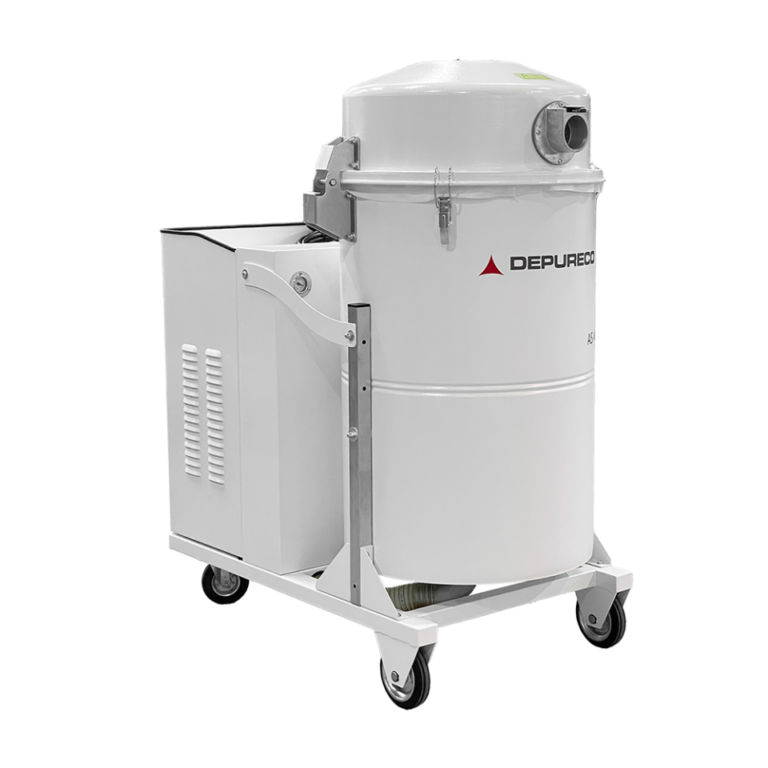
AS 300-400
Continuous-duty trim extractor for paper, plastic, packaging trims and lightweight production scrap.
Packaging Processes We Support
Start with the production process, material and waste form. Capture strategy must account for line speed, available machine space, scrap dimensions, static buildup, adhesive behavior and production duty cycle.
Label Converting & Matrix Waste
Kiss-cutting, die-cut labels and adhesive matrix removal require special evaluation. Continuous sticky webs often require a dedicated stripping, winding or conveying system.
Slitter & Rewinder Edge Trim
Short film or paper off-cuts may suit vacuum extraction. Continuous edge ribbons need engineered tension control, chopping or a specialized trim-removal solution.
Flow-Wrap, Flow-Pack & Pouching
Packaging machine vacuum extraction can collect compatible dry scraps and local machine debris without obstructing film paths or process equipment.
Paperboard & Die-Cutting
Paper bag, carton, digital cutting and print-finishing operations produce punches, chads, paper cuts and trim with very different handling requirements.
OEM Packaging Equipment
BF, BF JC, UPF and UPF C offer compact machine-side extraction paths for defined dry particulate and compatible small debris.
Thermoforming & Film Converting
Trim, cuttings and generated fines may require separate methods. Regrind handling and continuous ribbon conveying are not interchangeable with conventional vacuum collection.
Compact OEM & Machine-Side Vacuum Systems
For equipment with constrained footprint and defined pickup points, compact stationary and on-board configurations can support localized recovery directly at the machine. BF JC, BF, UPF and UPF C are important options when the application calls for machine-side dust or compatible small dry debris.
Selection should be based on airflow at the pickup point, static pressure losses, filtration, maintenance access, installation orientation and duty cycle—not just nominal motor power.

Designed Around Machine Integration
Discuss the process connection, available envelope, machine controls, run time, service access and waste discharge with the OEM or plant engineer.
Compact Industrial Vacuums for Packaging Equipment
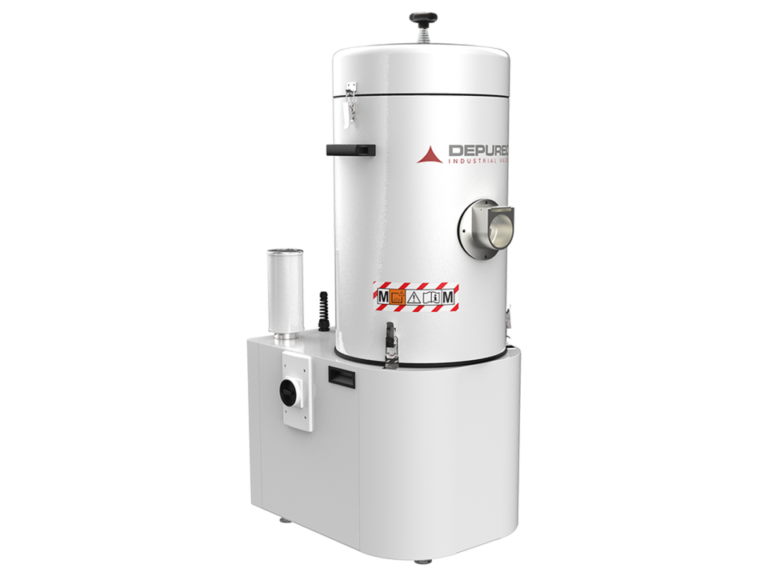
BF STATIONARY INDUSTRIAL VACUUM
The BF is a stationary oem industrial vacuum designed for machine integration, compact installation, and cleaner process recovery in OEM, food, pharma, or packaging applications.
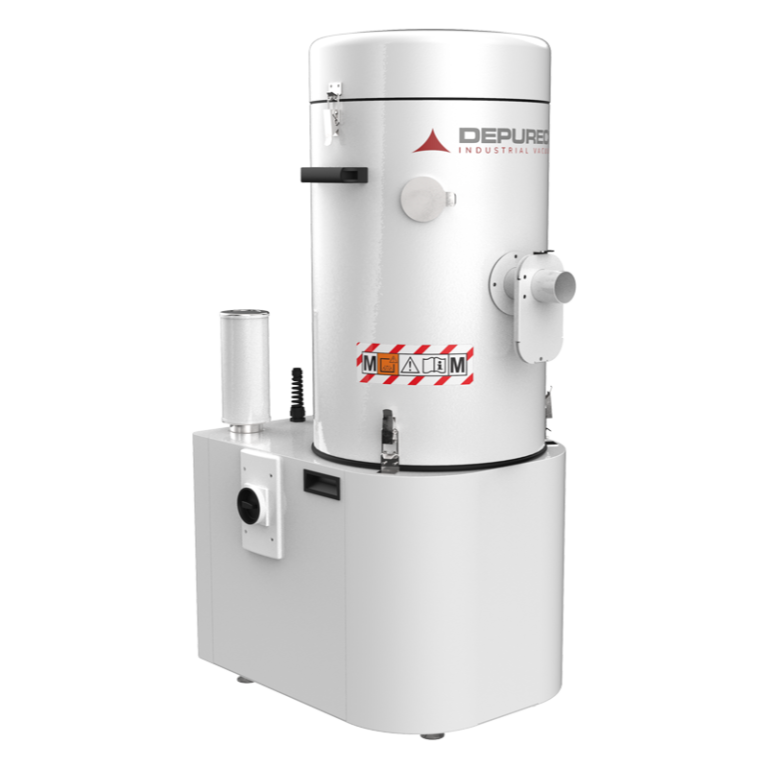
BF JC ON-BOARD INSTALLATION VACUUM
The BF JC is a on-board installation vacuum designed for machine integration, compact installation, and cleaner process recovery in OEM, food, pharma, or packaging applications.
COMPACT MACHINE-SIDE VACUUM
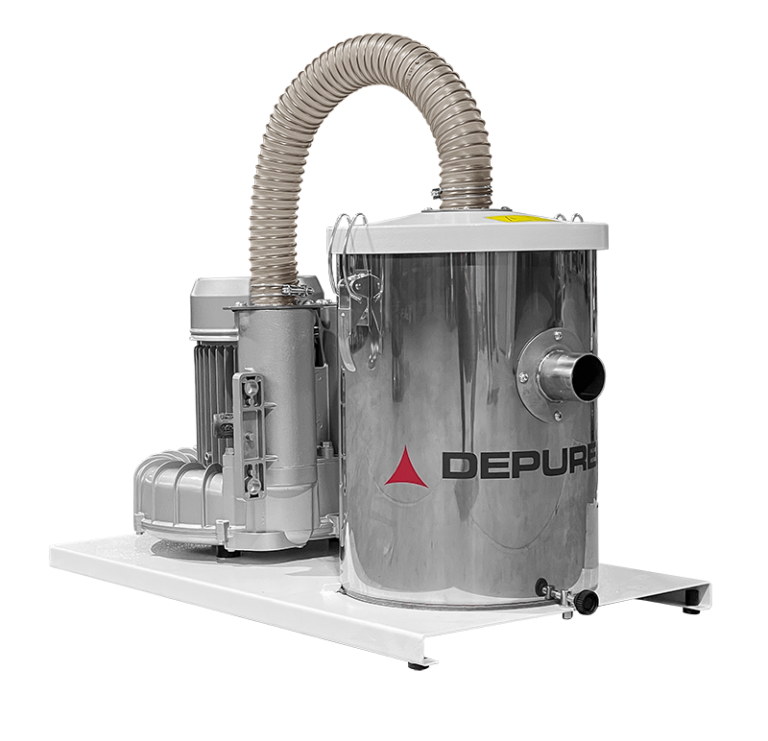
UPF C
Compact stationary vacuum with side-channel blower, M-Class antistatic polyester star filter, deflector inlet, and 5-gallon stainless bin for machine-side fine dust and dry material pickup.
STATIONARY MACHINE-SIDE VACUUM
UPF
Ultra-compact stationary industrial vacuum for machine-side dust, powder, and process debris recovery with a side-channel blower, M-Class polyester filter, and 5-gallon stainless bin.
Centralized Vacuum Systems for Packaging Lines
Multiple production lines, distributed pickup points or difficult waste discharge may justify centralized vacuum engineering. A useful design starts with the actual pickup locations and materials, then evaluates simultaneous use, pipe routing, air requirements, pre-separation and waste-bin or Big-Bag handling.
For long continuous webs, adhesive matrix or high-speed endless edge trim, a dedicated process waste handling system may be required rather than a standard vacuum network.
Typical engineering inputs
Number of pickup points and concurrent users; material type and scrap form; scrap production rate; hose and pipe routing; power availability; static-control requirements; filtration; separator and discharge design.
Fine Dust, Static & Facility Safety Considerations
Paper dust, polymer fines, coatings and other packaging-process residues must be screened based on their actual characteristics. Material and facility conditions determine filtration, grounding, static management, containment and any hazardous-location or combustible-dust equipment requirements.
No vacuum model should be presented as universally explosion-proof, UL-certified or suitable for combustible dust without verification of that exact configuration and applicable listing or documentation. Refer high-risk materials and classified areas for a documented engineering review.
Verify the Material
Dust versus scraps, moisture, adhesion, bulk density, combustible properties and filter loading.
Verify the Installation
Electrical supply, grounding, air handling, area classification, interfaces and access.
Verify the System
Pickup velocity, pressure loss, collection capacity, filtration and waste discharge.
Applications Across Packaging & Converting
Depureco works with a variety of manufacturing environments where paper, plastic, textile or mixed dry production debris needs to be collected at defined points.
Flexible Packaging
Film and laminate converting, pouching, bag-making, flow-wrap and film-processing cells.
Paper & Corrugated
Paper converting, carton finishing, print finishing, digital cutting and die-cutting.
Labels & Print
Label finishing, inspection, die-cutting and carefully screened matrix waste applications.
Food Packaging Equipment
Dry machine-side scrap collection on packaging equipment, subject to process and hygiene requirements.
Nonwovens & Technical Textiles
Fibers, short trim and converting debris; continuous filament streams require specialized evaluation.
OEM & Automated Lines
Fixed pickup points, machine integration and engineered material-recovery connections.
Explore Related Material & Process Solutions
Material behavior, capture placement and separator selection.
Vacuum selection for cut debris, chads and process particulates.
Protect filtration and manage bulky or high-loading waste streams.
Related Articles, Guides & Case Studies
Explore a published engineered-material case study and technical guides relevant to qualifying packaging-line vacuum systems. These links point to existing Depureco USA content.
See an engineered textile-filament collection system with pre-separation for demanding continuous fibers.
Compare filter media and selection factors for packaging-process dust and machine debris.
Review dust-layer, classification and industrial vacuum selection considerations when packaging dust presents a hazard.
Frequently Asked Questions
The answer depends on material, piece size, scrap production rate and pickup geometry. AS-series scrap collection models can be considered for suitable lightweight dry cuttings, while compact BF/UPF units serve other machine-side collection needs. Test the actual material before final selection.
Yes, where the machine provides a suitable pickup location and the collection system has the required airflow, filtration, power and service access. OEM integration should be reviewed against actual process and duty-cycle requirements.
Not automatically. Adhesive matrix and continuous film or paper ribbons may require controlled stripping, winding, chopping or dedicated trim conveying. These applications should be evaluated separately from short off-cuts.
Consider engineered centralized collection when multiple production machines or fixed collection points share a recovery and discharge requirement. Pipe losses, simultaneous demand, material behavior and waste discharge determine feasibility.
Identify the material and dust properties, facility classification and applicable safety requirements, then review the proposed equipment configuration and documented certifications before specifying a solution.
Find the Right Vacuum Solution for Your Packaging Line
Tell us the machine, material, trim shape and estimated production rate. We can help determine whether local scrap collection, compact OEM extraction or a centralized engineered solution is the right next step.
Before launch: replace the contact CTA with the confirmed live HubSpot or Elementor application-review form target. This template does not embed a non-working form.