


Cleaning a CNC sump costs more than the maintenance time on the work order. Each cleanout can involve draining coolant, removing chips and swarf, clearing settled sludge, transferring fluid, and keeping the machine out of production until the job is finished.
A dedicated CNC sump vacuum can streamline that process by recovering coolant and solids through a more efficient workflow. For shops servicing multiple machines throughout the year, the return can come from three main areas: lower maintenance labor, less machine downtime, and reduced coolant waste.
The actual ROI depends on the shop. Cleanout frequency, labor rate, machine downtime value, coolant cost, material load, and how much recovered fluid remains suitable for reuse all influence the final payback.
Where Sump Vacuum ROI Comes From
The value of a CNC sump vacuum isn’t tied to a single savings category. The return usually comes from improving several parts of the maintenance process at once.
1. Reduce Maintenance Labor
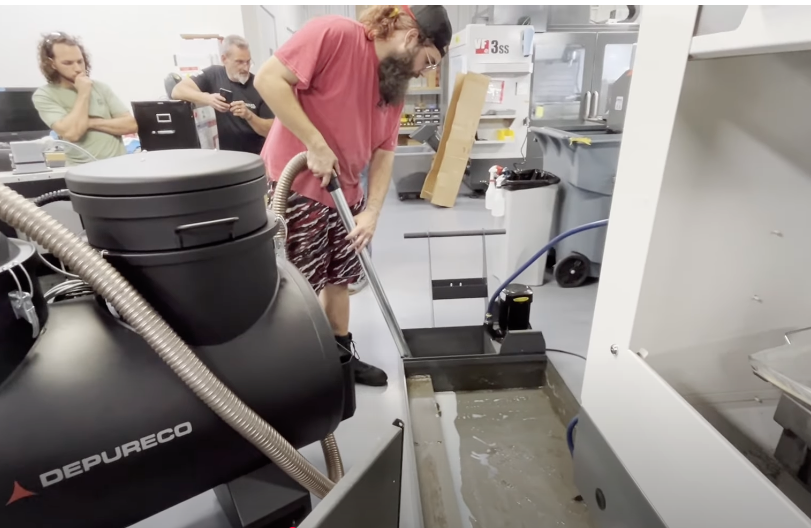
Manual sump cleaning can require several separate steps: pumping out coolant, scooping chips, removing swarf and sludge, transferring liquid, and cleaning the tank before refilling it.
A dedicated sump vacuum combines more of that work into one recovery process. The more machines a maintenance team services each year, the more those saved labor hours can add up.
2. Reduce Machine Downtime
A CNC machine that is being cleaned is not producing parts. For high-utilization machining centers, reducing the time required for routine sump maintenance can have value beyond the maintenance department itself.
The relevant question is not only, “How much labor does this save?” It is also, “How much production time can we return to the machine?”
3. Recover More Usable Coolant
Coolant removed during a sump cleanout does not always need to become waste. A sump vacuum designed to separate liquid from chips and swarf can help recover fluid for evaluation before it is discarded.
If the coolant remains within the shop’s acceptable condition and coolant-management requirements, returning usable fluid to service can reduce unnecessary replacement and disposal.
Simple rule: The strongest sump vacuum ROI usually comes from combining labor savings, recovered machine time, and reduced coolant waste rather than looking at any one factor by itself.
Maintenance Labor
Reduce the number of manual steps and labor hours required to drain, clean, separate, and transfer sump material.
Machine Uptime
Shorter maintenance windows can return CNC equipment to production sooner and reduce the cost of scheduled downtime.
Coolant & Waste
Separate recovered liquid from chips and swarf so usable coolant can be evaluated before unnecessary replacement or disposal.
How to Calculate CNC Sump Vacuum ROI
A useful ROI calculation should compare the cost of the current sump-cleaning process against the value created by a more efficient recovery workflow.
A simple way to frame it is:
Annual Net Value = Labor Savings + Recovered Machine Time + Coolant Savings + Waste Savings − Annual Operating Costs
From there:
Payback Period = Equipment Investment ÷ Annual Net Value
The most important part is using your shop’s actual numbers. A facility cleaning ten machines several times per year may see a very different return than a shop servicing one machine occasionally.
Useful inputs include:
- Number of CNC machines
- Sump cleanouts per machine each year
- Labor hours required per cleanout
- Number of employees involved
- Loaded hourly labor rate
- Estimated value of machine downtime
- Gallons of coolant recovered
- Coolant replacement cost
- Disposal or waste-handling cost
- Expected vacuum maintenance and operating costs
Rather than relying on a generic savings percentage, use these variables to calculate the potential return for your own machining operation.
Calculate your CNC sump-cleaning ROI using Depureco’s existing ROI calculator.
Calculate the Value of a Faster Sump-Cleaning Process
Use your shop's actual cleanout frequency, labor rates, machine downtime, coolant recovery, and waste costs rather than relying on a generic savings estimate.
Calculate Your Sump-Cleaning ROIWhat Changes the Payback From Shop to Shop
There is no single payback period that applies to every CNC operation. The strongest returns usually appear where sump cleaning is frequent, labor-intensive, and tied to expensive production equipment.
A few variables have the biggest impact:
- Machine count: More CNC machines can multiply the annual cost of repetitive sump maintenance.
- Cleanout frequency: A sump cleaned monthly creates a very different annual labor burden than one cleaned only a few times per year.
- Labor requirements: Cleanouts that require multiple employees or several manual steps increase the potential value of a faster process.
- Machine downtime: The higher the production value of a machine, the more important it becomes to shorten scheduled maintenance windows.
- Coolant volume and cost: Recovering usable coolant can have more financial impact in operations using larger sump volumes or higher-cost fluids.
- Chip, swarf, and sludge load: Heavy solids accumulation can make manual cleanout more time-consuming and may influence which sump vacuum configuration is appropriate.
- Discharge method: Gravity discharge, reverse-flow discharge, and powered pump-out systems can create different maintenance workflows depending on where recovered liquid needs to go.
Best for: Shops with multiple CNC machines, recurring sump maintenance, significant coolant volumes, and maintenance teams spending substantial time draining, scooping, transferring, and cleaning.
Important application note: Tank size alone does not determine the right sump vacuum. Coolant type, chip geometry, sludge load, solids-to-liquid ratio, hose distance, discharge requirements, and available power should also be considered before selecting equipment.
Machine Count & Frequency
More machines and more frequent sump cleanouts increase the number of maintenance hours affected each year.
Labor & Downtime
Longer cleanouts, multiple employees, and high-value machine time can make maintenance efficiency more financially significant.
Coolant Volume & Cost
Higher fluid volumes and replacement costs can increase the value of recovering coolant that remains suitable for reuse.
Chips, Swarf & Sludge
The amount and type of solids in the sump affect cleanout difficulty and the equipment configuration required.
Selection Is Application-Specific
Confirm sump capacity, coolant type, chip geometry, sludge level, hose distance, discharge method, and available power before selecting a sump vacuum.
When a Dedicated Sump Vacuum Makes Sense
A dedicated sump vacuum usually makes the strongest financial case when sump cleaning is a recurring maintenance task rather than an occasional cleanup.
It may be worth evaluating when your shop:
- Services multiple CNC machines throughout the year
- Regularly removes coolant, chips, swarf, or settled sludge
- Uses more than one employee for sump cleanouts
- Loses valuable production time during maintenance
- Transfers coolant through several manual steps
- Discards fluid that may still be suitable for reuse
- Needs a faster, more repeatable sump-cleaning process
The goal is not simply to replace a wet vacuum. It is to improve the complete recovery workflow by reducing manual handling, separating solids from liquid, and moving recovered coolant where it needs to go.
For machining operations with recurring sump maintenance, even modest improvements per cleanout can become more meaningful when multiplied across machines and cleanouts throughout the year.
Explore Depureco CNC sump vacuums to compare solutions for coolant, chips, swarf, and sludge recovery.
A Dedicated Sump Vacuum May Make Sense If You:
- Clean multiple CNC sumps each year
- Recover coolant mixed with chips or swarf
- Spend significant labor time on cleanouts
- Lose production time during sump maintenance
- Handle sludge or settled metal fines
- Want a more repeatable recovery workflow
FAQs
A dedicated sump vacuum can combine coolant recovery, chip and swarf separation, sludge removal, and fluid transfer into a more efficient process. This can reduce the number of manual steps required during recurring sump cleanouts.
It can help shorten the maintenance process when compared with a workflow that requires separate pumping, scooping, scraping, and fluid-transfer steps. Actual downtime reduction depends on the machine, sump condition, material load, and current cleaning process.
Potentially. Separating chips, swarf, and solids from recovered liquid does not by itself determine whether coolant should be returned to service. Fluid condition, concentration, contamination, chemistry, and the shop's coolant-management procedures should be evaluated before reuse.
Combine the annual value of labor saved, machine downtime reduced, reusable coolant recovered, and waste-handling costs avoided. Subtract expected operating costs and compare the result with the equipment investment. For a shop-specific estimate, use the CNC Sump Vacuum ROI Calculator.
The potential return generally becomes stronger when a shop has multiple CNC machines, frequent sump cleanouts, significant maintenance labor, valuable machine uptime, larger coolant volumes, or recurring chip, swarf, and sludge accumulation.
Put Your Sump-Cleaning Costs Into Perspective
The right sump vacuum should match the way your shop actually maintains its machines. Sump capacity, coolant type, chip and swarf load, sludge level, discharge method, hose distance, and available power can all affect the best configuration.
If recurring sump cleanouts are consuming maintenance hours, production time, or usable coolant, start by calculating the cost of your current process. Then compare that with a sump vacuum sized for your application.
Use the CNC Sump Vacuum ROI Calculator to estimate your shop-specific return, or request help selecting a sump vacuum for your CNC operation.
Ready to Evaluate Your Sump-Cleaning ROI?
Calculate the cost of your current process, then talk with Depureco about a sump vacuum configuration matched to your coolant, chips, sludge, tank size, and discharge requirements.
