SP – 4C – 18,600
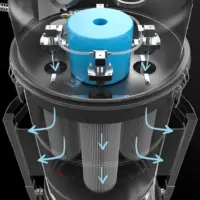
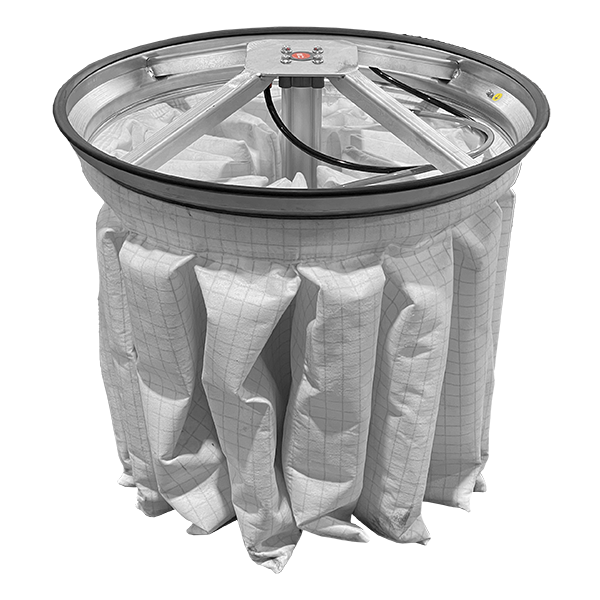
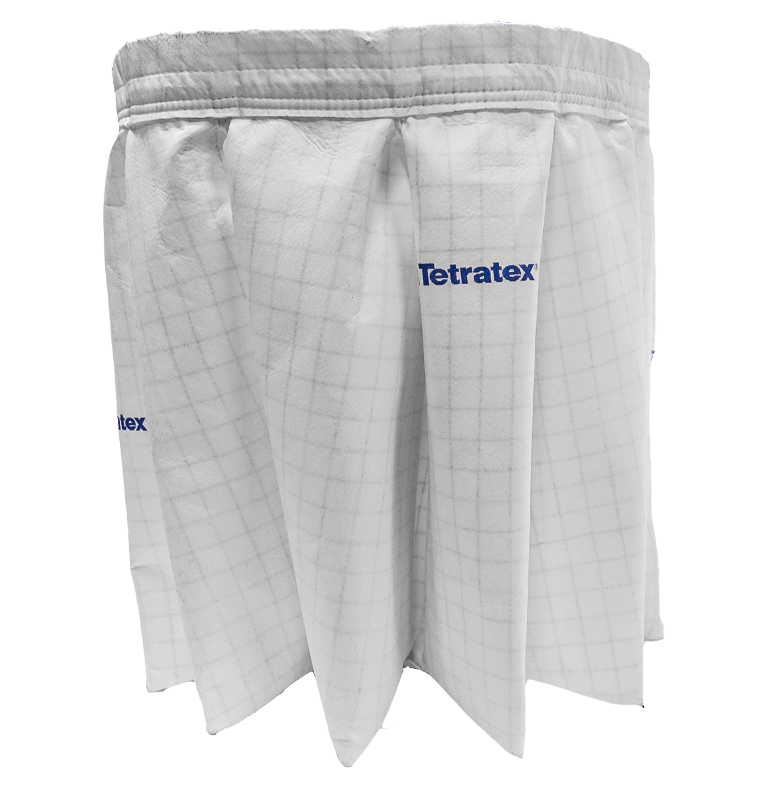
Automatic reverse jet cleaning system. Antistatic M class filter (EN-60335-2-69), 4x Polyester filter cartridges, 18,600 in² filter surface.

6.2 HP | 480V 3~

7,000 in²

17 gal
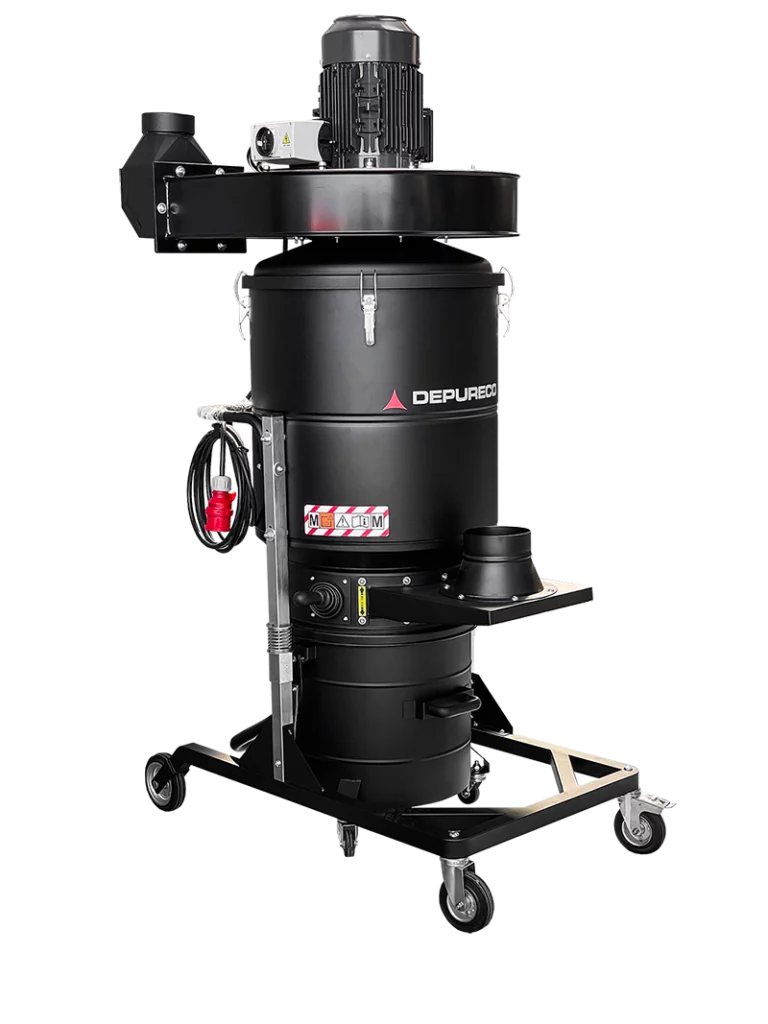
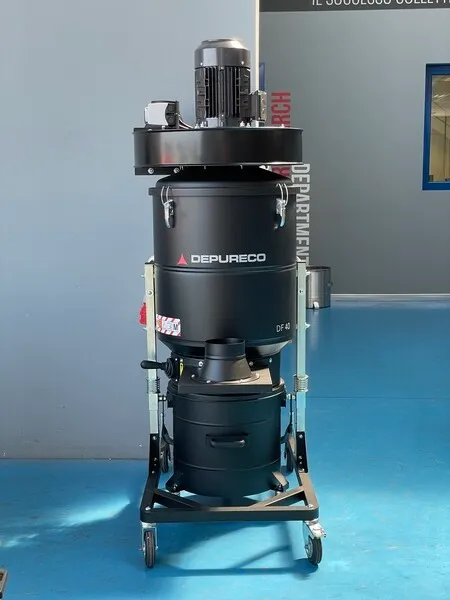
The DF 40 High Airflow Dust Collector is a mobile industrial dust collector designed for suspended dust removal, source capture, and machine-connected dust extraction. It is a strong fit for production areas where airborne dust, light powders, trimming dust, cutting dust, or process particulate needs to be captured close to the source.
Unlike high-vacuum industrial vacuums built for dense material recovery through smaller hoses, the DF 40 is built around high airflow. Its fan-driven suction unit moves up to 1,589 CFM, making it better suited for larger inlets, extraction hoods, machine connections, and localized dust capture points where moving air volume is the priority.
The DF 40 uses a 6.2 HP three-phase fan with 480V | 60Hz power. Depending on the inlet configuration, the machine provides airflow options of 882, 1,236, or 1,589 CFM with corresponding inlet sizes of 6, 7.5, or 8 inches. This gives facilities flexibility when connecting the dust collector to cutting machines, process equipment, extraction arms, hoods, or ducted capture points.
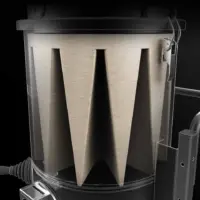
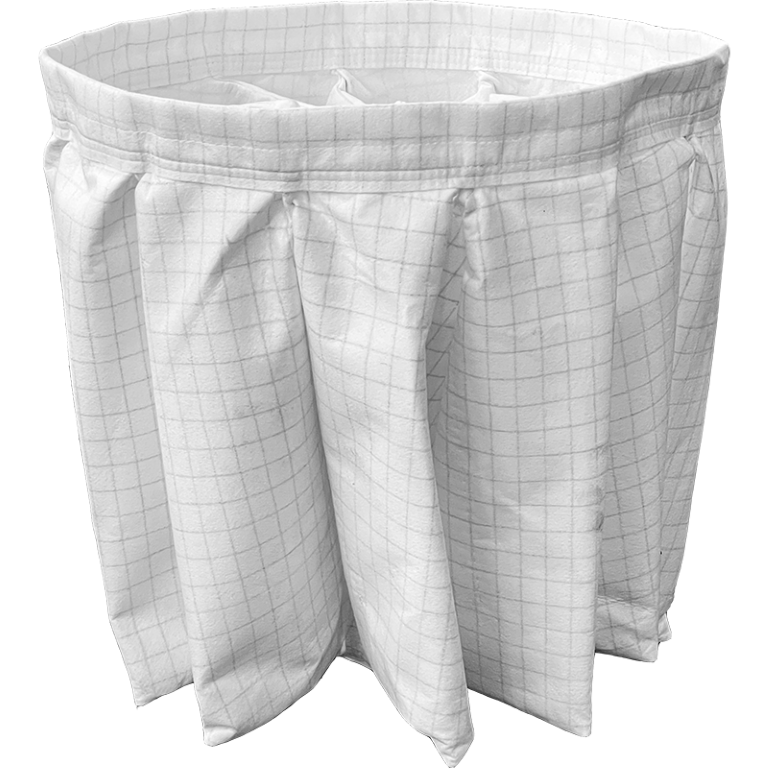
Filtration is handled by a polyester M-Class star filter with 7,000 in² of filter surface area. The star-filter layout helps preserve airflow as dust builds on the filter surface. Standard cleaning is handled by a manual shaker system, while optional automatic cleaning systems can be configured for applications with heavier dust loading or more frequent operation.
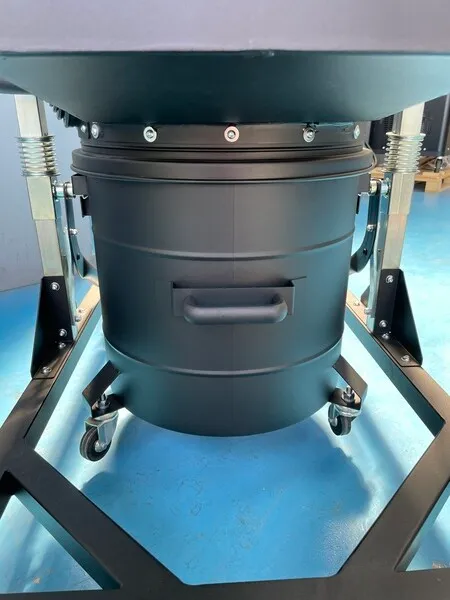
Collected dust drops into a removable 17-gallon collection bin. The bin is mounted on swiveling wheels for easier removal, movement, and emptying during routine dust collection maintenance. Optional filter media and system configurations are available for more specialized dust, powder, and compliance-driven applications.

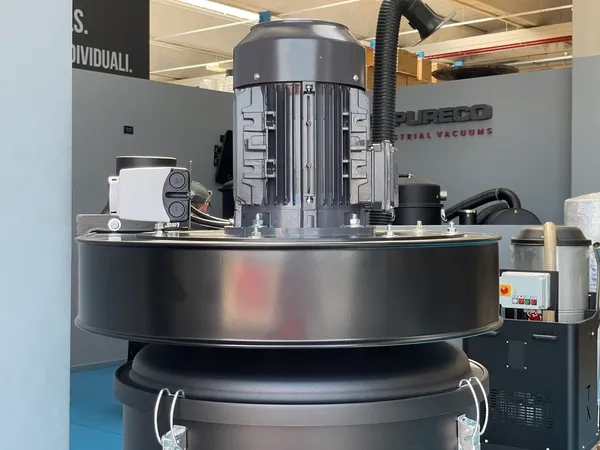
The DF 40 uses a dedicated electric fan to generate the high airflow needed for suspended dust capture, source capture, and machine-connected extraction. This makes it a better fit for larger inlets, hoods, arms, and ducted capture points where airflow volume matters more than high vacuum.

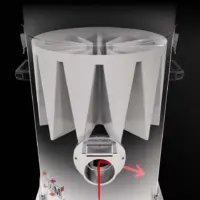
The DF 40 uses a polyester M-Class star filter with 7,000 in² of filter surface area. The star-filter shape helps air continue moving through the filter as dust builds on the surface, supporting steady airflow during dry dust collection.

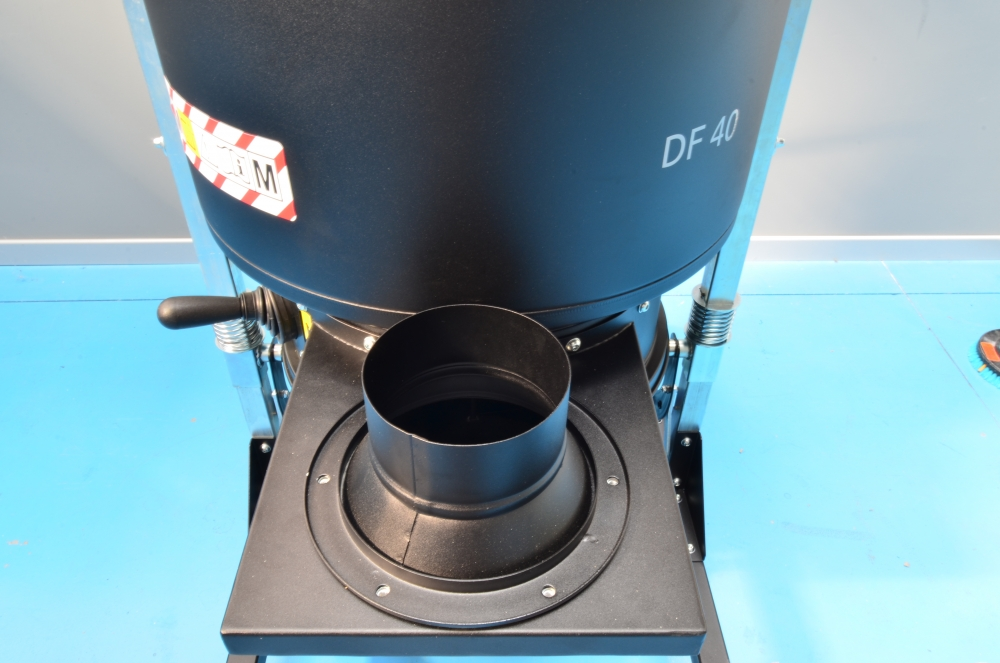
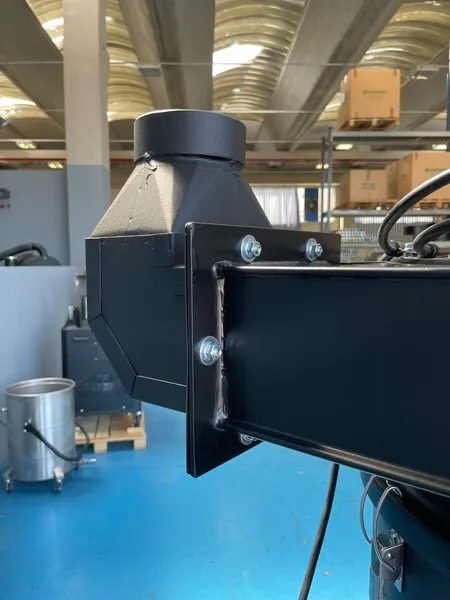
The inlet deflector helps direct collected dust and particulate toward the bin while reducing direct impact on the filter. The DF 40 can be configured with 6-inch, 7.5-inch, or 8-inch inlet options depending on the required airflow and machine connection.

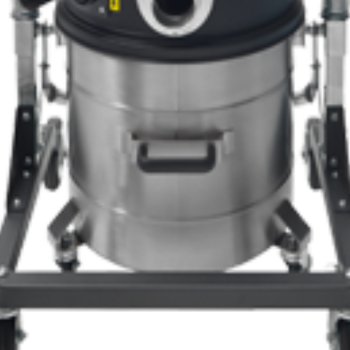
Collected dust drops into a 17-gallon painted steel collection bin. The bin is built with a sturdy handle and swiveling wheels so operators can detach, move, and empty collected material during routine maintenance.
Automatic reverse jet cleaning system. Antistatic M class filter (EN-60335-2-69), 4x Polyester filter cartridges, 18,600 in² filter surface.
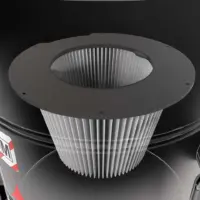
H13 Absolute conical Filter (EN 1822)
Get answers about using the DF 40 for airborne dust source capture, machine-connected extraction, cutting and trimming dust, light powders and process particulate, airflow and inlet sizing, M-Class filtration, filter cleaning, mobile dust collection, and choosing between industrial dust collectors and high-vacuum industrial vacuums.
The DF 40 is a mobile high-airflow industrial dust collector designed to capture airborne dust and process particulate close to where it is generated.
Unlike a high-vacuum industrial vacuum used to recover settled or dense material through smaller hoses, the DF 40 uses a fan-driven suction system that prioritizes moving a larger volume of air through hoods, machine connections, extraction points, and larger duct openings.
Depending on the inlet configuration, the DF 40 provides up to 1,589 CFM of airflow. This makes it well suited to localized source capture around cutting, trimming, sanding, machining, powder handling, packaging, woodworking, and other production processes that release light airborne dust.
The unit is mobile, allowing the same collector to be positioned near different machines or production areas when a permanently installed dust-collection system is not required.
The main difference is how the equipment moves air and what it is intended to collect.
The DF 40 is a high-airflow dust collector. It is designed to move large volumes of air through larger openings so airborne dust can be captured before it spreads away from a cutting process, machine enclosure, hood, extraction arm, or other dust-generating point.
A high-vacuum industrial vacuum is designed differently. It uses greater vacuum pressure through smaller hoses to recover material that has already settled, including piles of dust, chips, grit, swarf, granules, and heavier production debris.
For example, the DF 40 may be connected to a hood above a dusty process to capture suspended particulate as it is generated. An industrial vacuum would be the better tool for cleaning accumulated material from the machine, floor, ledges, or surrounding work area afterward.
Some facilities need both systems: source capture for airborne dust and industrial vacuuming for settled housekeeping material.
The DF 40 can be configured around three inlet sizes, and each corresponds to a different airflow and vacuum-pressure balance.
With the 6-inch inlet, the current DF 40 specification lists up to 882 CFM and 14.6 inH₂O.
The 7.5-inch inlet increases airflow to 1,236 CFM while maximum vacuum is approximately 13.4 inH₂O.
The 8-inch inlet provides the highest airflow at up to 1,589 CFM with approximately 10.6 inH₂O of maximum vacuum.
The correct configuration depends on the machine opening, hood or enclosure design, duct size, capture distance, dust-generation rate, required capture velocity, and pressure losses through the connected system.
The largest inlet is therefore not automatically the best choice. The source-capture point and duct system should be sized together with the collector so the required airflow reaches the dust-generating process.
The DF 40 is suited to dry airborne particulate and light process dust generated during industrial production.
Typical applications can include cutting dust, trimming dust, sanding and finishing dust, woodworking particulate, packaging dust, light powders, plastic and composite dust, machining fines, and other dry particulate that becomes suspended near a production process.
The collector can be connected to machine outlets, capture hoods, enclosures, extraction points, or localized ductwork so dust is pulled away before it disperses throughout the surrounding work area.
The correct setup depends on how the material is generated. Particle size, dust concentration, moisture, abrasiveness, temperature, process airflow, hood geometry, and whether the dust is combustible or hazardous can all change the required collector configuration.
The DF 40 should not be selected simply because a material is called “dust.” The process and the behavior of that dust in the air need to be considered together.
The standard DF 40 uses a polyester star filter with approximately 7,000 in² of filter surface and an M Class classification under EN 60335-2-69.
Standard filter cleaning is handled by a manual shaker. The operator mechanically moves the star filter so accumulated dust can release from the filter surface and fall toward the collection bin.
For applications with heavier dust loading or more frequent operation, an optional SP automatic reverse-jet cleaning system is available. The SP configuration uses four antistatic polyester M-Class cartridges with approximately 18,600 in² of total filter surface and cleans them using reverse-jet pulses.
The current regular DF 40 page also lists an optional H13 absolute filter as well as Nomex, PTFE, antistatic PTFE, and antistatic primary-filter media.
Filter media and cleaning method should be selected around the dust properties and loading rate rather than automatically specifying the largest filtration package.
Choose between the DF 22 and DF 40 based primarily on the amount of airflow required at the source-capture point.
The DF 075 / DF 22 family is the more compact dust-collection platform and covers approximately 176 to 824 CFM. It is a strong fit for localized machine extraction and smaller airborne-dust capture points.
The DF 40 steps up to a 6.2 HP fan and provides up to 1,589 CFM through larger 6, 7.5, or 8-inch inlet configurations. This makes it better suited to larger capture openings, extraction hoods, machine connections, or processes that require substantially more air volume.
The DF 40 should not be selected solely because it is the larger machine. If the smaller DF platform can provide the required airflow and capture velocity at the process, it may be the more practical solution.
Final selection should consider the dust source, capture opening, hood geometry, required airflow, inlet and duct size, system resistance, operating schedule, and available electrical service.
Choose the DF 40 when the application needs high-airflow source capture but the collector still needs to be repositioned between machines, work areas, or localized production processes.
The DF 40 combines a mobile chassis, removable collection bin, and large machine-connection options, making it well suited to facilities that need flexible source capture without installing a permanent dust collector at every process.
Choose a DF FIX configuration when the extraction point is permanent, the collector will remain installed near a specific machine or process, or the system requires a more fixed duct-connected arrangement.
DF FIX also becomes more relevant when the application requires higher airflow, larger collection capacity, and automatic filter cleaning as part of a permanent production setup.
If the facility has many pickup points, extensive piping, or several simultaneous users, the next step may be a centralized dust-collection or vacuum system rather than either mobile DF 40 or a single DF FIX unit.
The standard DF 40 should not automatically be treated as a combustible-dust or hazardous-location dust collector.
Dust can be combustible even when the collection point is located in an ordinary, non-classified area. Other applications may involve a documented hazardous-classified location or material properties that require different electrical construction, grounding, filter media, isolation, explosion protection, or collection methods.
Depureco maintains separate combustible-dust and application-specific dust-collector paths, including a DF 40 ORD LOC configuration for suitable ordinary-location combustible-dust source-capture applications.
If the process involves combustible, conductive, reactive, or otherwise hazardous dust, equipment selection should begin with the material, available SDS and dust-test information, process conditions, Dust Hazard Analysis where applicable, and the facility’s documented area classification.
H13 filtration, M-Class filtration, antistatic filter media, or grounding should not be treated as substitutes for selecting the correct complete dust-collection system for the hazard.