
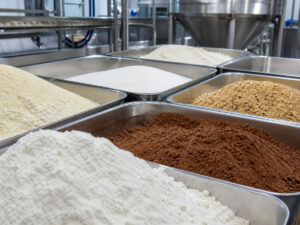

Industrial vacuum cleaners for the food industry must handle more than routine floor cleaning. Flour, sugar, cocoa, starch, spices, allergens, crumbs, liquids, hot oven residue and packaging scrap all behave differently. The wrong vacuum can clog, spread fine dust, slow sanitation or fail to match the production process.
Depureco USA supplies mobile, continuous-duty, HEPA-option, wet/dry, OEM, combustible-dust and centralized vacuum solutions configured around the material, cleaning point, production schedule and facility requirements.
A food plant should not start with “explosion-proof” as a universal answer.
It should start with the exact material, process, pickup location and cleaning method.
Food-production residue may be fine, coarse, wet, sticky, hot, allergenic, combustible or mixed with packaging scrap. These conditions affect filtration, grounding, construction, collection capacity, filter cleaning, disposal and whether the application needs a mobile vacuum, dust collector, machine-integrated unit or central system.
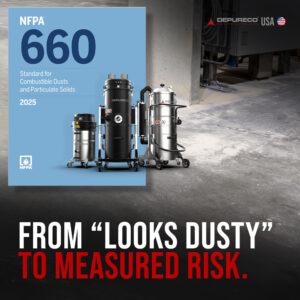
When combustible dust is involved, the recommendation must also consider the material data, Dust Hazard Analysis, location classification and model-specific documentation.
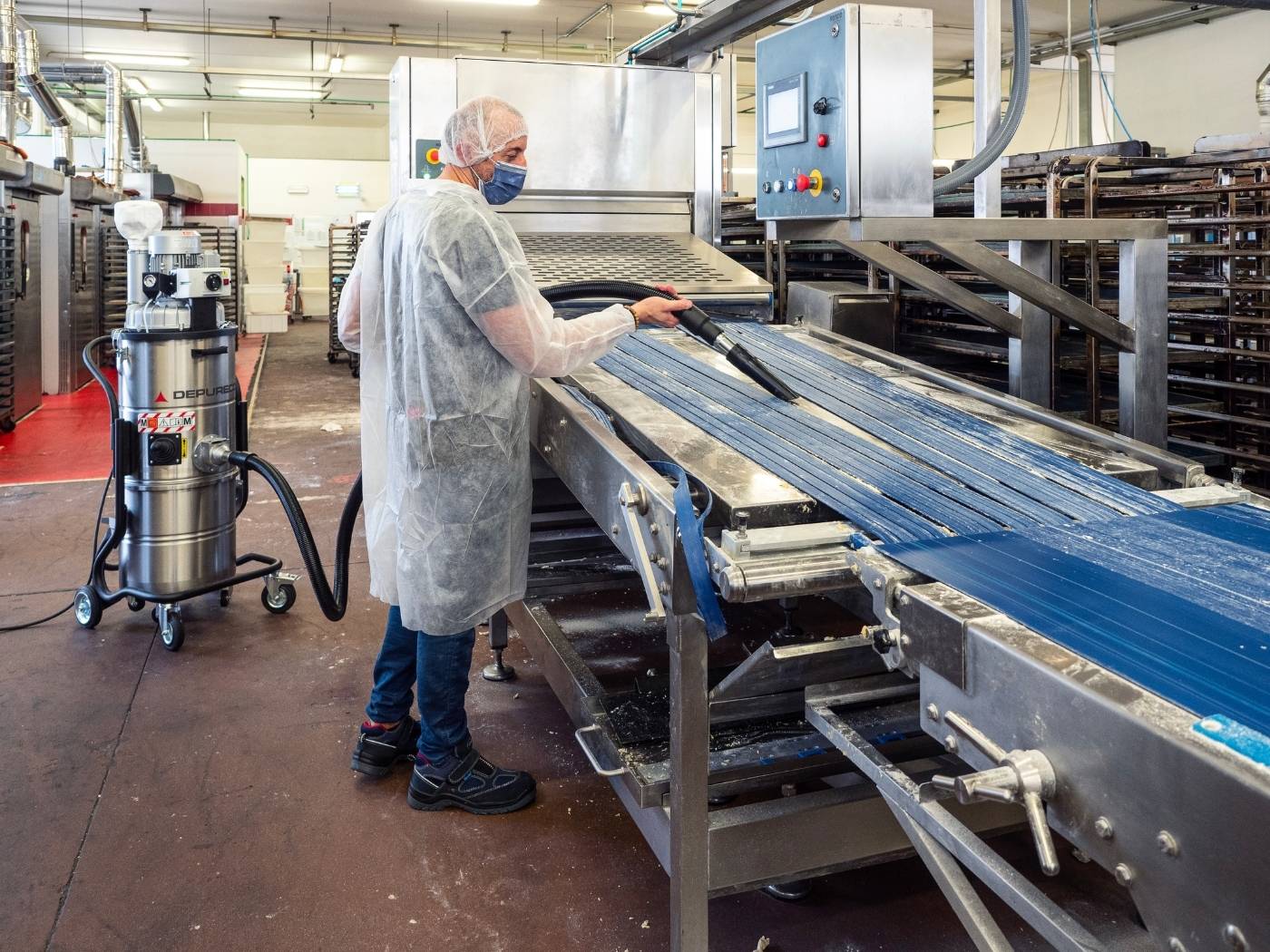
Clean crumbs, burnt flour and baked residue from ovens, conveyors, trays, racks and hard-to-reach production areas.

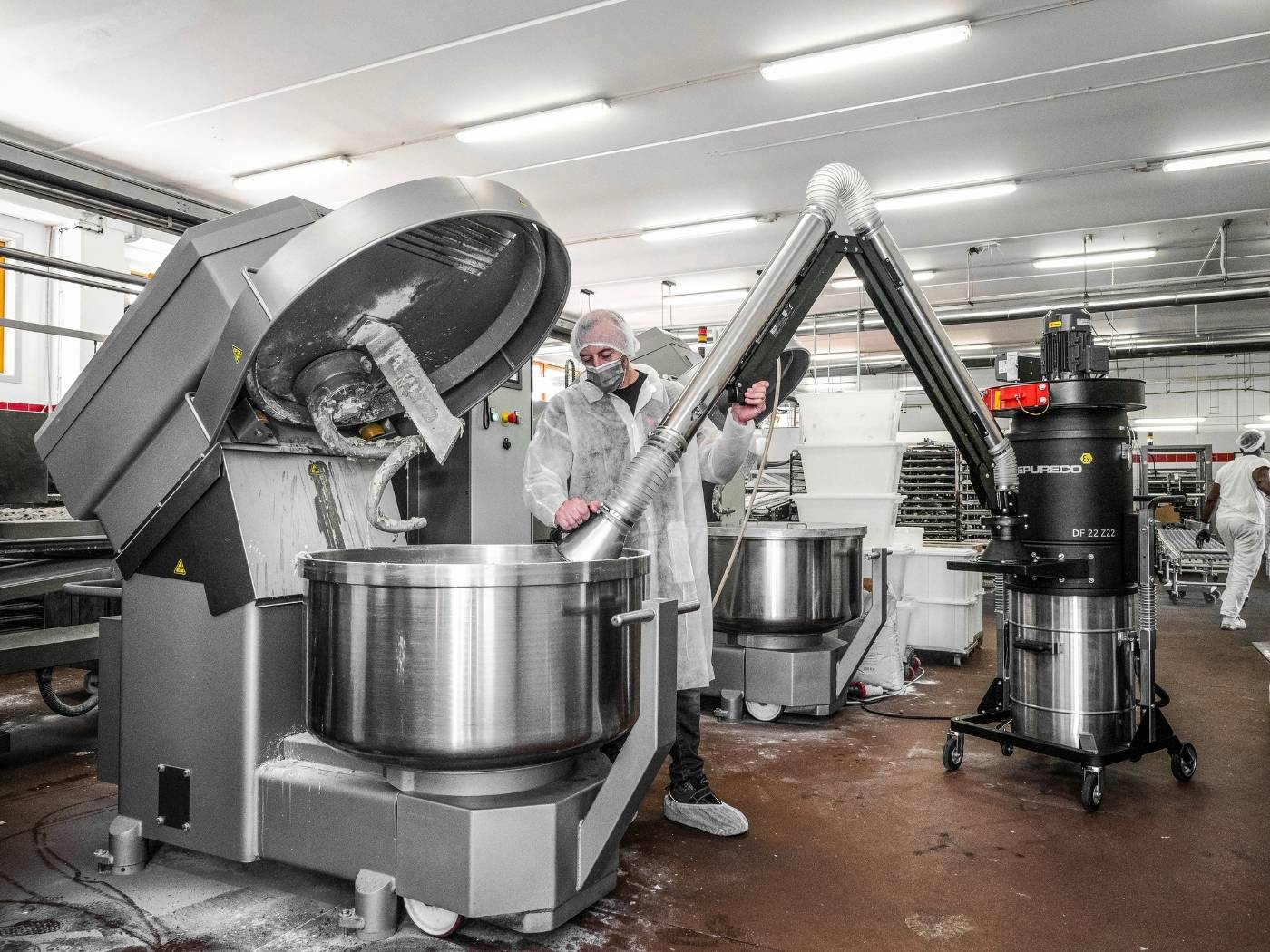
Flour, sugar, starch, cocoa, spices, protein powders, grains, crumbs and other dry ingredients can accumulate around receiving stations, mixers, sifters, conveyors, production equipment and packaging lines.
Sweeping and compressed-air blowdown can redistribute fine material across equipment and surrounding production areas. General-purpose shop and janitorial vacuums may also clog quickly, lose suction or lack the filtration, construction and collection options required for repeated industrial use.
Flour, sugar, starch, cocoa, protein powder, grain dust and other fine organic materials may present a combustible-dust hazard under the right conditions. Ingredient name alone, however, does not determine which vacuum or configuration is appropriate.
Selection should begin with the material and SDS, available dust-test data, the facility’s Dust Hazard Analysis, the cleanup location and whether that location is ordinary or classified.
Depending on the application, important requirements may include:

Depureco DF, DF FIX and AF dust collector families can be configured around localized or centralized process-dust collection requirements.
An industrial vacuum and a dust collector solve different parts of the problem. A mobile or central vacuum removes settled material, spills and production debris. A dust collector is designed to capture airborne or process-generated dust near the point where it is released.
Food-production source-capture applications may include:
A successful source-capture system must consider the hood or extraction point, required airflow, static pressure, ducting, filtration, filter cleaning, discharge method and the material’s combustible-dust characteristics.
Between-run oven cleaning can hide significant production downtime. Crumbs, burnt flour, cornmeal, seeds, toppings and baked residue collect inside ovens, beneath belts and around trays, racks and surrounding production equipment.
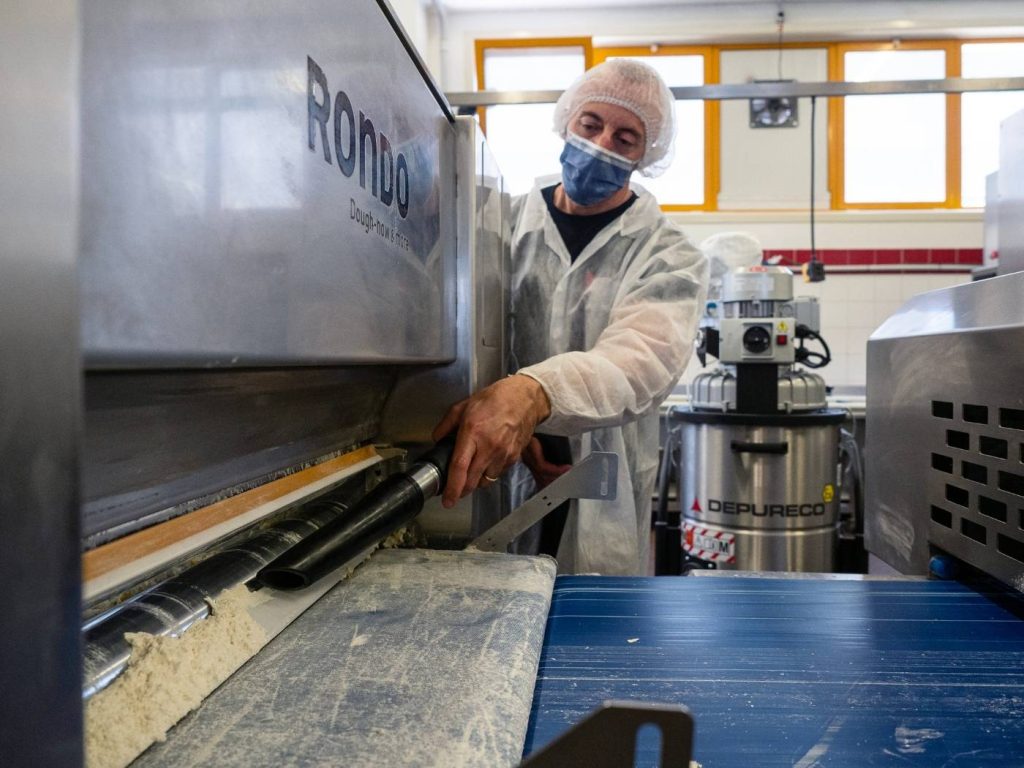
The XM 20 OVEN is a compact mobile vacuum designed for hot, dry bakery residue. It uses a Nomex M-Class filter and includes a high-temperature oven-cleaning accessory kit for reaching deeper into industrial ovens and difficult cleaning points.
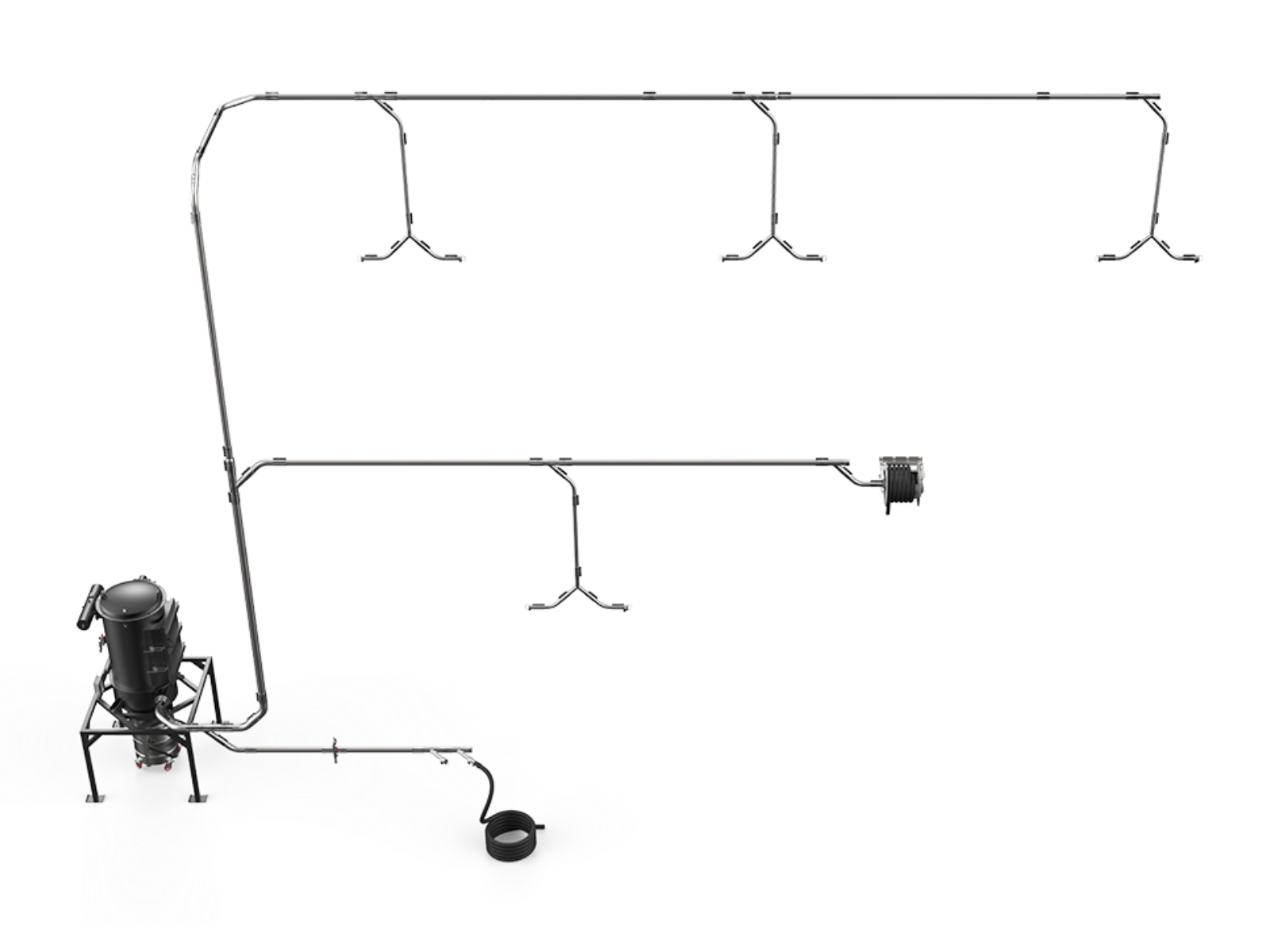
Large bakeries with multiple ovens or automated cleaning requirements may benefit from an engineered central vacuum system with fixed piping, dedicated vacuum arms or multiple pickup points.
Always confirm the actual pickup temperature, material composition, oven type, cleaning access and frequency before selecting the configuration.

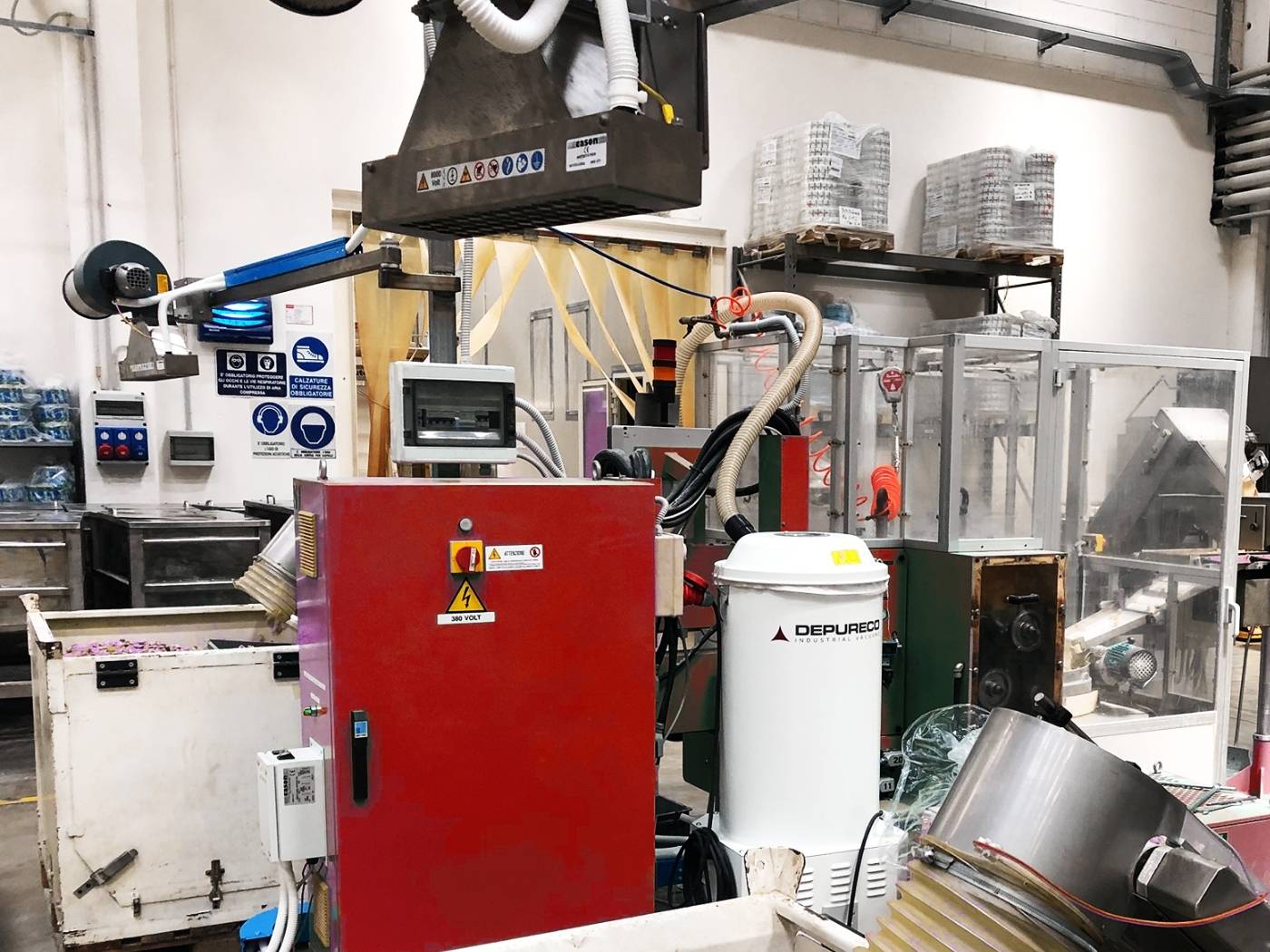
Film trim, labels, paper, cardboard, lightweight plastic and loose product residue can accumulate around sealers, cutters, conveyors, cartoners and inspection equipment. When this material is removed manually, operators lose production time and recurring buildup can interfere with sensors or moving components.
Compact on-board and OEM vacuum systems can collect material directly from the machine or production line. Configurations can include continuous-duty operation, remote start, compact mounting, reusable collection bags, collection containers or integration with a larger centralized system.

When several operators, production lines or floors need frequent cleanup, moving portable vacuums throughout the facility can create unnecessary hose travel, equipment traffic, container handling and inconsistent housekeeping.
A central vacuum system places suction points where operators need them and moves collected material through fixed piping to a remote separator, filter unit, hopper, bin or discharge point.


Tell us what your facility produces, what material needs to be collected and where the cleanup problem occurs. Depureco USA can compare mobile, wet/dry, HEPA-option, high-temperature, OEM, combustible-dust and centralized solutions around the actual application.
For more difficult materials, you can also send us a sample. Our team can test the material with suitable vacuum and accessory configurations and provide video of the results.
Begin with the material data, facility DHA and location classification. Grounding, conductive accessories, filtration, collection method and the model’s documented configuration must be reviewed together.
A dust collector captures airborne or process-generated dust near its source. An industrial vacuum removes settled dust, spills and accumulated debris. Many food plants need both.
Dedicated tools, suitable filtration and an application-matched collection method can support a facility’s documented allergen-cleaning procedure. The vacuum itself does not validate the process or guarantee prevention of allergen cross-contact.
The XM 20 OVEN is designed for hot, dry crumbs, burnt flour and baked residue using a Nomex filter and high-temperature accessory kit. The actual material temperature and application should be confirmed before use.
Send the material or SDS, particle size, wet/dry condition, temperature, volume, frequency, pickup location, area classification, available utilities and preferred disposal or recovery method.