




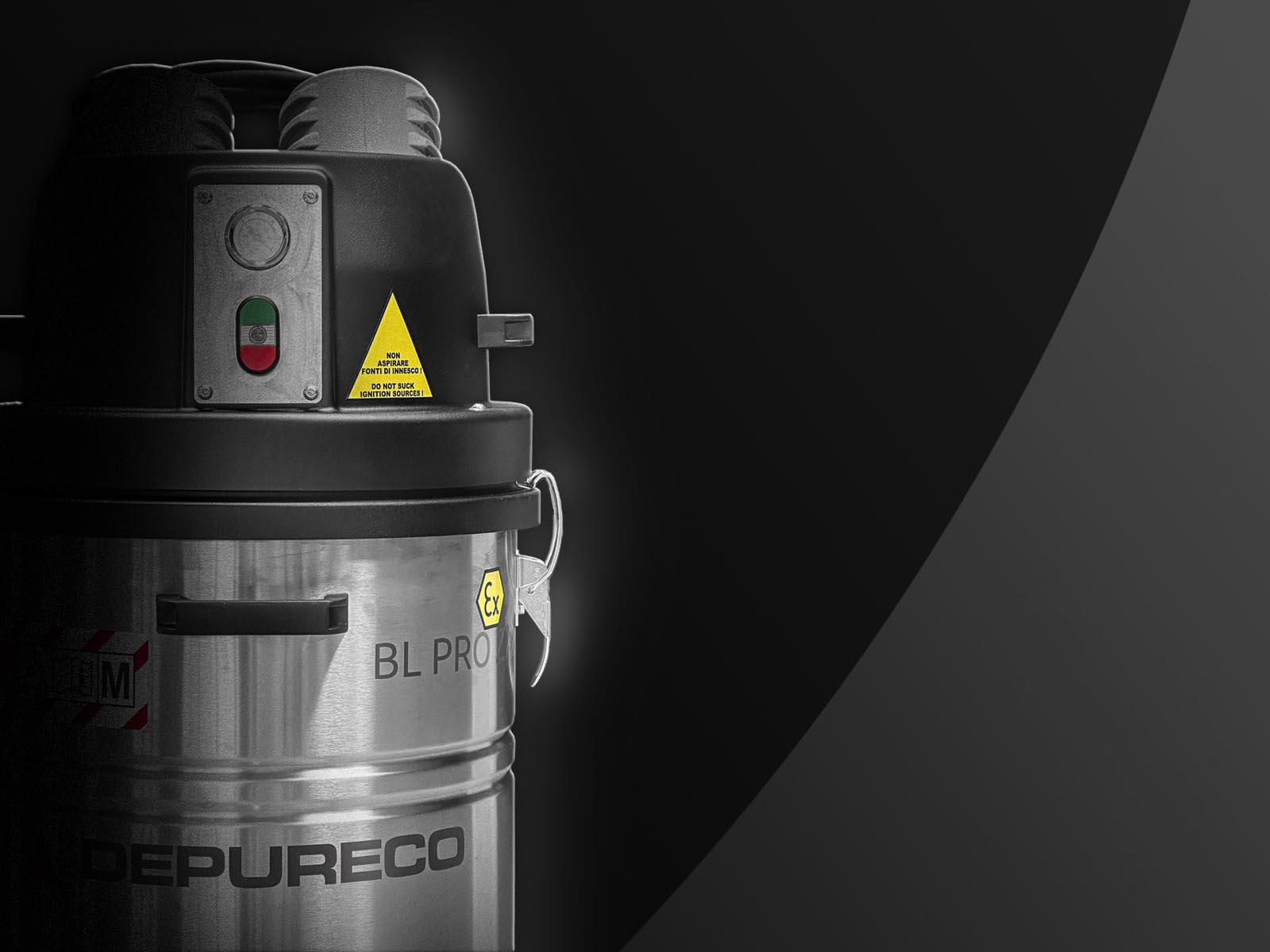
Requesting an explosion-proof, combustible-dust, or ORD LOC vacuum quote requires more than naming the dust.
The correct equipment path depends on the exact material, the process that creates it, where the vacuum will operate, available power, filtration, accessories, disposal method, and expected duty.
A complete application brief helps Depureco USA evaluate those variables before recommending a vacuum, dust collector, pneumatic unit, centralized system or specialized collection configuration.
Compliance-aware note: A vacuum, filter, or accessory does not make an entire facility compliant on its own. Final suitability depends on the material, application, documented location requirements, facility procedures, and complete system configuration.
The Eight Details That Determine the Quote
Before selecting a vacuum model, gather eight categories of application information:
Material and process
Area classification
Material condition
Cleanup objective
Electrical power or compressed-air availability
Filtration and containment requirements
Hose and accessory requirements
Material volume, duty cycle and disposal method
These details determine whether the application belongs with an ordinary-location combustible-dust vacuum, model-specific hazardous-location equipment, an air-powered vacuum, a dust collector, a centralized vacuum system or an engineering-reviewed specialized collection method.
Simple rule:
Do not begin with a model number. Begin with the material, operating location, and cleanup task.
Material & Process
Exact material, process, particle form, SDS and available dust-test data.
Operating Area
Ordinary location, documented classified location or status not yet determined.
Material Condition
Dry, wet, oily, sticky, abrasive, hot, conductive, toxic or reactive.
Cleanup Objective
Housekeeping, source capture, recovery, process transfer or centralized cleanup.
Power & Utilities
Voltage and phase or compressed-air pressure, available CFM and line size.
Filtration & Containment
Primary filtration, filter cleaning, final HEPA and disposal requirements.
Hose & Accessories
Hose diameter, total run, tools, cuffs, machine connections and conductive continuity.
Volume & Duty
Daily volume, runtime, operator count, capacity, recovery and disposal method.
Identify the Exact Material and Process
“Metal powder,” “food dust,” or “chemical powder” is not enough information to select an industrial vacuum.
Start with the exact material and explain how the dust, powder, or debris is generated.
Information to provide
- Exact material or product name
- Alloy, ingredient, resin, chemical or compound
- Process that creates the dust or debris
- Safety Data Sheet
- Dust-testing results, when available
- Approximate particle size
- Powder, fiber, flake, chip or mixed physical form
- Additives, coatings, oils or other contamination
- Whether the material will be disposed of or recovered for reuse
The same material can require different collection equipment depending on its physical form and producing process.
Fine aluminum powder, oily aluminum grinding residue, and coarse aluminum chips are all aluminum, but they represent different collection applications. The correct vacuum configuration may change based on particle size, moisture, temperature, reactivity, filter loading, and disposal requirements.
Best information to attach
A short process video, close-up material photo and Safety Data Sheet often communicate more than a general material description.
When available, also attach dust-test data, a sample analysis or a written description of the process step where the material is generated.
Common mistake:
Requesting “an explosion-proof vacuum for metal dust” without identifying the alloy, particle form, producing process or operating location.
Confirm before ordering:
If the material’s combustibility, conductivity, reactivity or toxicity is unknown, additional material testing or a facility-level hazard review may be needed before equipment can be selected.
For broader material-based selection, review the Depureco USA material-selection guide.
Send the material facts, not only the material category.
The most useful submission includes the exact material, producing process, physical form, Safety Data Sheet, available dust-test data, photos or video, and whether the collected material will be disposed of or recovered.
Confirm Where the Vacuum Will Operate
A combustible material does not, by itself, determine the equipment required at every point in the facility.
The quote should clearly identify where the vacuum will operate and whether that location has already been classified.
Identify the pickup location as:
- An ordinary or non-classified location
- A documented hazardous classified location
- Inside or directly connected to process equipment
- Near a bag dump, mixer, transfer point or filling station
- Inside a production enclosure or isolated room
- Outdoors
- Not yet classified
If the area is documented as hazardous
Provide the exact classification or equipment marking required by the facility’s qualified EHS, electrical or engineering team.
Useful supporting documents may include:
- Area-classification drawing
- Written classification determination
- Class, Division and Group
- Zone and material group
- Required NRTL marking
- Authority Having Jurisdiction comments
- Relevant Dust Hazard Analysis excerpt
- Existing equipment documentation for the same area
The vacuum and complete accessory configuration must be reviewed against the documented operating location. A material name or general statement such as “combustible dust area” is not enough to confirm equipment suitability.
If the area is ordinary or non-classified
State that clearly, but continue the material and application review.
An ordinary location can still involve combustible, toxic, conductive, abrasive, or contamination-sensitive dust that requires specialized filtration, grounding, accessories, or containment.
What ORD LOC means on this page
ORD LOC is Depureco terminology for selected vacuum configurations intended for ordinary or non-classified industrial locations.
ORD LOC should not be treated as:
- An OSHA classification
- An NFPA certification
- An NEC classification
- An NRTL certification
- An ATEX classification
- A substitute for the facility’s area-classification process
Important:
Do not guess the area classification from the material name, the process, or a competitor’s existing vacuum.
Provide the facility’s documented classification or mark the location as not yet determined.
For applications with documented hazardous-location requirements, review Depureco explosion-proof industrial vacuums.
Ordinary or Non-Classified Location
Confirm the material, producing process, filtration, conductive path, accessories, disposal method and expected duty. Ordinary-location status does not remove the need for material-specific equipment selection.
Documented Hazardous Location
Provide the exact Class, Division, Group, Zone or other required marking. The complete vacuum, filters, accessories and electrical or pneumatic configuration must be reviewed against the documented area.
Classification Not Yet Determined
Do not guess. Submit the available material and process information, then coordinate the location determination with qualified facility personnel before final equipment selection.
Describe the Material Condition
A material may be described as “dry dust,” but that does not mean the collection application is simple.
Tell the supplier whether the material is:
- Dry
- Damp
- Wet
- Oily
- Sticky
- Hygroscopic
- Abrasive
- Conductive
- Combustible
- Toxic
- Corrosive
- Hot
- Reactive
- Mixed with chips, fibers or liquids
Why Material Condition Matters
The material’s condition can affect:
- Filter media
- Filter-cleaning method
- Tank and container construction
- Hose material
- Pre-separation requirements
- Liquid-protection features
- Corrosion resistance
- Disposal or recovery method
- Maximum acceptable pickup temperature
- Whether an engineering review is required
Hot Material
Provide the estimated material temperature at the point of pickup, not only the temperature of the machine, oven or production process.
Hot crumbs, cooled ash-like residue, grinding debris and oven material may require different hoses, filters, seals and collection containers.
Also explain whether the material can continue generating heat after it enters the collection container.
Wet or Oily Material
Provide:
- Liquid type
- Approximate solids-to-liquid ratio
- Material temperature
- Whether the liquid is combustible or has a known flash point
- Whether the liquid will be recovered, reused or disposed of
- Whether the solids settle, float, clump or remain suspended
A wet or oily collection application should not be treated as a standard dry-dust application with a different hose.
Sticky or Hygroscopic Material
Powders that absorb moisture, cake on surfaces or adhere to filter media may require a different filter-cleaning method, filter geometry or pre-separation approach.
Explain whether the material hardens after collection or becomes more difficult to remove over time.
Abrasive Material
Mineral fines, ceramic dust, glass particles and other abrasive materials can increase wear on hoses, bends, inlets, filters and collection containers.
Provide the approximate particle size, density and daily volume so wear-sensitive components can be reviewed.
Reactive Material
Aluminum, magnesium, titanium, battery materials and other reactive powders must not be assigned a universal wet or dry collection method from a generic checklist.
The exact chemistry, particle size, producing process, contaminants and disposal procedure must be evaluated before a collection method is selected.
Confirm Before Ordering:
Final suitability depends on the exact material, physical condition, temperature, liquid content, hazard profile, collection method and complete system configuration.
Define the Cleanup Objective
The correct equipment path depends on whether the material is airborne, settled on surfaces, contained inside process equipment, or distributed across multiple areas.
A portable industrial vacuum, dust collector, and centralized vacuum system solve different problems. The quote should clearly explain the cleanup objective before a product category is selected.
Settled-dust housekeeping
Use this path when dust, powder, or debris has already accumulated on:
- Floors
- Machines
- Ledges
- Structural surfaces
- Workbenches
- Equipment exteriors
- Containers
- Maintenance areas
A mobile industrial vacuum or centralized housekeeping system may be appropriate, subject to the material, operating location, filtration, and disposal review.
Also explain whether operators are cleaning an occasional spill, performing scheduled end-of-shift housekeeping, or collecting material continuously throughout production.
Airborne source capture
Use this path when dust is being generated into the air at:
- A grinder
- Sander
- Cutter
- Mixer
- Bag dump
- Filling machine
- Transfer point
- Workstation
- Process enclosure
A dust collector is designed to capture airborne material at or near the source before it spreads through the surrounding facility.
An industrial vacuum is generally used for settled dust, spills, and material recovery after the material has landed. Many facilities need both source capture and a separate housekeeping system.
Review Depureco industrial dust collectors.
Material recovery or process transfer
Explain whether the collected material must be:
- Reused
- Segregated by alloy, ingredient or batch
- Returned to the production process
- Protected from cross-contamination
- Collected into a drum or production container
- Transferred into another process stage
- Weighed or documented before disposal
- Kept separate from general housekeeping debris
Recovery requirements may change the collection container, contact materials, filtration, pre-separation, and discharge method.
Multi-point or plant-wide housekeeping
A centralized system may be the better path when the facility has:
- Multiple operators
- Fixed pickup points
- Long transport distances
- Several production floors
- Repeated cleanup throughout the shift
- Large daily collection volume
- Limited room for mobile equipment
- A need to keep production aisles clear
A central system review should include the facility layout, number of simultaneous users, piping distances, vertical lift, material volume, separation method, and final discharge point.
Review Depureco centralized vacuum systems.
Common mistake:
Treating a dust collector, portable vacuum, and centralized vacuum system as interchangeable because each one “collects dust.”
Recommended path:
Define where the material is located, when it must be captured, how many people will use the equipment, and what must happen to the collected material.
Settled-Dust Housekeeping
Floors, machines, ledges, work surfaces, spills and production residue collected after the material has settled. A portable or centralized industrial vacuum may fit this objective.
Review housekeeping vacuum pathsAirborne Source Capture
Dust generated at a machine, grinder, mixer, bag dump, transfer point or workstation. A dust collector captures material before it spreads and settles through the facility.
Review industrial dust collectorsPlant-Wide Housekeeping
Multiple operators, fixed pickup points, long runs and repeated cleanup throughout the shift. A centralized system may reduce mobile-equipment movement and standardize housekeeping.
Review centralized vacuum systemsConfirm Power and Utility Availability
The available utility can narrow the equipment options, but it should not be the only reason a vacuum is selected.
An electric vacuum requires the correct voltage, phase, circuit capacity, and documented suitability for the operating location. An air-powered vacuum requires enough compressed-air pressure and flow at the actual point of use.
Electric-vacuum information to provide
Include:
- Available voltage
- Single-phase or three-phase power
- Frequency
- Receptacle or connection type
- Available circuit capacity
- Required power-cord length
- Expected runtime
- Intermittent or continuous operation
- Documented equipment requirements for the operating location
Do not assume a nearby electrical outlet has the correct voltage, phase or circuit capacity for the proposed vacuum.
For three-phase or permanently installed equipment, also explain whether the facility requires a disconnect, starter, control panel, interlock or other electrical integration.
Air-powered-vacuum information to provide
Include:
- Air pressure at the point of use
- Available compressed-air CFM
- Air-line inner diameter
- Hose or pipe length from the main header
- Fitting and connection size
- Compressor capacity
- Number of other air-consuming devices on the same system
- Expected vacuum runtime
- Whether the vacuum will operate continuously or intermittently
The compressor’s nameplate capacity does not always represent the airflow available where the vacuum will be connected.
Pressure loss, undersized air lines, long hose runs, restrictive fittings, and simultaneous plant demand can reduce the performance available at the machine.
Measure plant air under realistic operating conditions
When possible, confirm pressure and available airflow while normal production equipment is operating.
A pneumatic vacuum may perform differently during peak plant demand than it does when tested during a shutdown or low-load period.
Pneumatic operation and hazardous-location applications
An air-powered vacuum uses compressed air instead of an electric drive motor. That may make pneumatic equipment useful for certain industrial environments, but air-powered operation should not automatically be treated as hazardous-location approval or intrinsic safety.
The exact model, documentation, complete accessory package, material, and operating location must still be reviewed.
Review Depureco air-powered industrial vacuums.
Centralized-system utility information
A centralized vacuum review may require additional information, including:
- Available three-phase power
- Desired motor location
- Indoor or outdoor installation
- Distance between the power unit and collection points
- Number of simultaneous users
- Control-panel requirements
- Automatic start and stop requirements
- Integration with production equipment
- Future expansion plans
Common mistake:
Selecting an air-powered vacuum because compressed air is present without confirming available CFM, line size, or operating cost.
Recommended path:
Choose the power source that supports the material, operating location, required performance, duty cycle, and facility infrastructure—not simply the utility that appears easiest to access.
| Equipment Path | Information to Provide | Common Missing Detail | Confirm Before Selection |
|---|---|---|---|
| Electric Vacuum | Voltage, phase, frequency, circuit capacity, receptacle or connection type, cord length and expected runtime | Whether the available outlet and circuit can support the proposed machine under normal operating conditions | Confirm: Electrical requirements and documented suitability for the operating location |
| Air-Powered Vacuum | Pressure at the connection point, available CFM, line diameter, fitting size, compressor capacity and runtime | Available airflow while other plant equipment is consuming compressed air | Confirm: Point-of-use pressure, airflow demand, line losses and exact model suitability |
| Centralized System | Available power, motor location, facility layout, piping distance, vertical lift, simultaneous users and control requirements | How many operators or pickup points will use the system at the same time | Confirm: Full-system load, controls, installation environment and future expansion |
Specify Filtration and Containment
“HEPA” is not a complete industrial vacuum specification.
A quote should explain how the material will be separated, filtered, contained, and removed from the vacuum. Each stage affects performance, maintenance, and the potential for collected dust to be released back into the work area.
Primary filtration
Provide the available information about:
- Dust type
- Approximate particle size
- Material density
- Expected loading rate
- Dry, damp, oily or sticky condition
- Abrasiveness
- Conductivity
- Toxicity or exposure concerns
- Required filter-cleaning method
- Expected operating time between cleaning cycles
The primary filter must be evaluated for the material and expected duty—not only its nominal filtration rating.
A fine powder that releases easily from filter media may behave differently from a sticky or hygroscopic powder that cakes onto the filter surface.
Filter-cleaning method
The filter-cleaning method can affect:
- Sustained suction performance
- Operator involvement
- Production interruptions
- Filter service life
- Dust release during maintenance
- Suitability for continuous or repeated operation
Depending on the model, filter cleaning may be manual, mechanical, reverse-pulse, or another model-specific method.
Explain whether the process can stop for filter cleaning and whether operators can safely perform that procedure in the intended work area.
Antistatic filtration
Antistatic filter media may be one part of a static-control configuration.
It does not, by itself, establish that the complete vacuum is suitable for a combustible-dust or documented hazardous-location application.
The full system may also require review of:
- Vacuum construction
- Inlet connection
- Hose
- Cuffs
- Wand
- Pickup tools
- Grounding or bonding provisions
- Collection container
- Disposal method
Final-stage HEPA filtration
Final-stage HEPA filtration may be required or preferred for:
- Toxic fine dust
- Lead-bearing particulate
- Silica-containing dust
- Graphite or battery powder
- Pharmaceutical or nutraceutical powder
- Contamination-sensitive production areas
- Applications requiring additional control of fine exhaust particulate
HEPA filtration addresses fine-particle control. It does not establish hazardous-location approval or replace appropriate primary filtration, conductive accessories, grounding, equipment construction, or facility procedures.
Review:
Contained disposal
The quote should explain how the material will be removed from the vacuum after collection.
Possible methods include:
- Open detachable bin
- Disposable collection bag
- Continuous bagging system
- Sealed liner
- Drum
- Pre-separator
- Reusable production container
- Specialized collection vessel
Common mistake:
Specifying the filter but not explaining how operators will empty the machine.
The disposal stage may be the point where collected dust is released back into the work area. Filter selection and material discharge should therefore be reviewed as one handling process.
Confirm before ordering:
Final filtration and containment requirements should be confirmed based on material, particle size, toxicity, wet or dry conditions, expected loading, filter-cleaning method, collection container, and operator changeout procedure.
Pre-Separation
Removes coarse, heavy or high-volume material before it reaches the vacuum’s primary filter.
Primary Filtration
Selected for the particle size, loading rate, release characteristics, physical condition and material hazard profile.
Filter Cleaning
Helps manage filter loading through a manual, mechanical, reverse-pulse or other model-specific cleaning method.
Final-Stage HEPA
Provides an additional fine-particle filtration stage when required by the material, process or exposure-control plan.
Contained Disposal
Defines how operators remove, recover or dispose of collected material without unnecessarily releasing it.
Size the Hose and Complete Accessory Package
/A vacuum can be correctly selected at the motor and filter but poorly configured at the hose, connection, or pickup tool.
The quote should describe the complete path from the vacuum inlet to the point where the material is collected.
Hose information to provide
Include:
- Required hose diameter
- Total hose length
- Horizontal travel distance
- Vertical lift
- Number of bends
- Largest particle, chip or piece
- Material bulk density, when known
- Pickup from a floor, machine, overhead surface or container
- Required wand, floor tool, brush, crevice tool or machine connection
- Operator reach and ergonomic requirements
Why hose diameter matters
Hose diameter affects material transport, airflow, velocity, blockage risk and operator handling.
A smaller hose may be easier to maneuver for fine housekeeping work but can restrict larger particles, chips or high-volume material.
A larger hose may improve the movement of bulky or lightweight material, but it can also change transport velocity and require a different vacuum configuration.
The correct diameter depends on the vacuum, material, pickup method and total run—not diameter alone.
Why hose length matters
Long hose runs add resistance and can reduce collection performance at the pickup point.
The quote should include the complete expected run, including:
- Horizontal hose length
- Vertical lift
- Bends and fittings
- Machine connections
- Overhead routing
- Distance from the operator to the vacuum
Do not provide only the straight-line distance between the vacuum and cleanup area.
Pickup tools and machine connections
Explain where and how operators will collect the material.
Common options include:
- Floor wand
- Floor brush
- Crevice tool
- Round brush
- Rubber or metal nozzle
- Overhead-cleaning wand
- Flexible machine connection
- Fixed pickup point
- Custom hood or transition
- Drum, hopper or process connection
Tool geometry can affect pickup performance, operator posture, access to confined areas, and whether coarse material can enter the hose.
Conductive accessories
When the application requires a conductive path, review the entire accessory assembly—not only the hose.
The complete path may include:
- Vacuum housing
- Vacuum inlet
- Inlet cuff
- Hose
- Hose-to-wand connection
- Wand
- Pickup tool or nozzle
- Grounding or bonding connection
A conductive hose connected to standard non-conductive cuffs, wands, or tools should not automatically be treated as a complete conductive accessory package.
Review Depureco industrial vacuum accessories, filters and spare parts.
Operator and ergonomic requirements
Also identify:
- Operator height range
- Frequency of use
- Overhead-cleaning requirements
- Stairways or mezzanines
- Confined work areas
- Maximum acceptable hose weight
- Need for quick-connect fittings
- Whether the vacuum must move with the operator
A technically suitable system may still be ignored if the hose and tools are too heavy, difficult to connect, or poorly matched to the cleanup task.
Common mistake:
Selecting the vacuum first and treating the hose and tools as interchangeable add-ons.
Confirm before ordering:
Final accessory fitment should be confirmed by vacuum model, inlet diameter, hose diameter, cuff type, total run, material size, wet or dry condition, temperature, pickup geometry, and required conductive continuity.
Vacuum Housing
Review the machine construction, inlet location and available grounding or bonding provisions.
Vacuum Inlet
Confirm the inlet diameter, connection style and compatibility with the proposed hose and cuff.
Inlet Cuff
The cuff must fit the inlet and support any required conductive or antistatic pathway.
Hose
Select the diameter, length, material and flexibility for the debris, pickup distance and operating environment.
Hose-to-Wand Connection
Confirm the reducer, adapter or cuff does not interrupt fitment, airflow or required continuity.
Wand
Match the wand length and construction to floor, machine, overhead or confined-area cleanup.
Pickup Tool or Nozzle
Select the opening and tool geometry for the material size, surface and desired cleanup speed.
Grounding or Bonding Connection
Review the complete connection method as one part of the overall static-control and facility procedure.
Define Volume, Runtime, and Disposal
A vacuum used for ten minutes after a batch does not have the same requirements as equipment used repeatedly throughout a production shift.
The quote should explain how much material will be collected, how often the system will run, and what happens after the material enters the collection container.
Collection volume
Provide the estimated material quantity using the most practical measurement available:
- Pounds per cleanup
- Pounds per shift
- Gallons per cleanup
- Bags, drums or containers per shift
- Cubic feet of lightweight material
- Hopper or machine capacity
- Approximate depth and area of settled dust
- Typical spill size
- Maximum expected upset condition
When possible, provide both the average volume and the largest realistic cleanup event.
A vacuum sized for routine housekeeping may not be appropriate for emptying a process vessel, recovering a full spill, or collecting a sudden high-volume release.
Runtime and duty cycle
Identify whether the vacuum will operate:
- For a few minutes at a time
- At the end of each batch
- Several times per shift
- For extended cleaning periods
- Continuously during production
- Automatically with process equipment
- With multiple operators
- At several pickup points
Also provide:
- Expected minutes or hours of use per shift
- Number of shifts per day
- Required recovery time between cleaning tasks
- Whether production can stop for filter cleaning
- Whether the system must remain available during maintenance
- Seasonal or future increases in production
Collection capacity
A larger collection container may reduce emptying frequency, but capacity alone does not determine the correct vacuum.
Container selection should also consider:
- Material density
- Operator lifting limits
- Forklift or pallet-jack access
- Available floor space
- Changeout frequency
- Dust release during emptying
- Whether the material settles, bridges or compacts
- Whether the material will be reused
- Maximum safe fill level
- Disposal-container dimensions
A dense material can make a large bin difficult or unsafe to handle before the container appears full.
Disposal or recovery method
Explain what must happen to the collected material.
Possible outcomes include:
- Disposal as general industrial waste
- Disposal under a material-specific waste procedure
- Recovery for reuse
- Segregation by alloy, ingredient or batch
- Transfer into a drum
- Continuous bagging
- Sealed liner removal
- Discharge into a hopper or process container
- Forklift handling
- Controlled changeout in a designated area
The disposal method can affect the collection bin, liner, bagging system, pre-separator, and overall equipment layout.
Number of operators and pickup points
Provide:
- Number of operators expected to use the system
- Whether they will use it simultaneously
- Number of cleanup areas
- Distance between those areas
- Whether operators share one mobile vacuum
- Whether fixed drops are preferred
- Whether future pickup points are planned
Several simultaneous users or long facility runs may move the application from a portable vacuum toward a centralized system.
Current cleanup method
Describe the equipment or procedure currently being used and why it is not meeting the facility’s needs.
Useful details include:
- Current vacuum model
- Shop vacuum or general-purpose equipment
- Sweeping or compressed-air cleanup
- Manual shoveling
- Filter-clogging frequency
- Poor pickup performance
- Excessive emptying
- Dust release during disposal
- Long cleanup time
- Operator complaints
- Equipment failures
- Difficulty obtaining replacement filters or parts
The current failure point often reveals which specification matters most in the replacement system.
Common mistake:
Sizing the vacuum only by horsepower, motor count or collection-bin volume.
Airflow, vacuum level, filter loading, hose run, material density, runtime, disposal and operator workflow must be evaluated together.
Recommended path:
Provide the normal material volume, maximum cleanup event, runtime per shift, number of operators, desired emptying frequency, and final disposal or recovery method.
Portable Single-Phase Vacuum
Best suited to flexible housekeeping, occasional spills and shorter cleanup periods performed by one operator.
Brushless or Continuous-Duty Mobile Vacuum
Better suited to repeated fine-dust cleanup, longer operating periods and applications where stopping frequently is not practical.
Air-Powered Vacuum
Uses compressed air where the plant utility, material, runtime and operating-location requirements support pneumatic equipment.
Three-Phase or High-Power Vacuum
Intended for larger material volumes, longer operating periods, dense debris or applications requiring greater sustained performance.
Centralized Vacuum System
Consider a centralized system when several operators need fixed pickup points, the facility has long transport distances or housekeeping occurs repeatedly across multiple production areas.
