



In an industrial bakery, oven cleaning costs more than the labor required to remove crumbs and baked residue. Every cleaning cycle can also include stopping production, waiting for safe access, completing the cleanup, inspecting the oven, and bringing the line back online.
For high-output bakeries, that lost production window can quickly affect throughput, labor schedules, changeovers, and overall daily output. The longer the oven is unavailable, the more expensive routine cleaning becomes.
A purpose-built industrial oven cleaning vacuum can help shorten parts of that process by removing hot, dry crumbs and loose baked residue more efficiently when the application and material temperature allow. The goal is not simply a cleaner oven; it is less time spent cleaning and more time available for production.
The Hidden Cost of an Oven Cleaning Window
The true cost of bakery oven cleaning is not limited to the minutes an employee spends removing crumbs or residue. The full cleaning window can begin when production stops and continue until the oven is inspected, restarted, and producing again.
That lost time can affect several parts of the operation:
- Lost production capacity: Every additional minute the oven is unavailable is time that cannot be used to produce sellable product.
- Labor and scheduling: Maintenance, sanitation, and production employees may all be involved in the shutdown, cleaning, inspection, or restart process.
- Changeover delays: If cleaning takes longer than expected, the next product run can start late and put pressure on the rest of the production schedule.
- Additional cleanup or rework: Residue that is difficult to reach or remove may require another cleaning pass before production can resume.
For this reason, bakeries should look at the entire cleaning window rather than just the hands-on cleaning time. A process that takes 30 minutes to clean but requires additional time for cooldown, access, inspection, and restart can create a much larger production interruption.
A useful way to evaluate the impact is to ask one question: How much production time is actually lost from the moment the oven stops until it is running normally again?
Production capacity unavailable while the oven is offline.
Maintenance, sanitation, production, and support time tied to cleaning.
Time required to inspect, restart, and return the line to normal output.
Additional cleaning or schedule recovery when the first pass is not enough.
Where a Purpose-Built Oven Vacuum Saves Time
A purpose-built oven cleaning vacuum does not replace every step in the cleaning process, but it can reduce the amount of time spent reaching, loosening, and collecting hot, dry bakery residue.
The biggest time savings usually come from four areas:
- Faster residue removal: Direct suction collects loose crumbs, burnt flour, cornmeal, seeds, and other dry oven debris as it is removed instead of pushing it to another part of the oven.
- Earlier cleaning access: When the material, temperature, and equipment configuration allow it, a high-temperature vacuum can reduce the need to wait for a complete oven cooldown before loose residue is collected.
- Better reach: Long-reach oven tools can make it easier to clean decks, corners, conveyors, and other difficult areas without relying on as much manual access.
- More repeatable cleanup: Using equipment designed for the application can help make routine cleaning more consistent from one production run to the next.
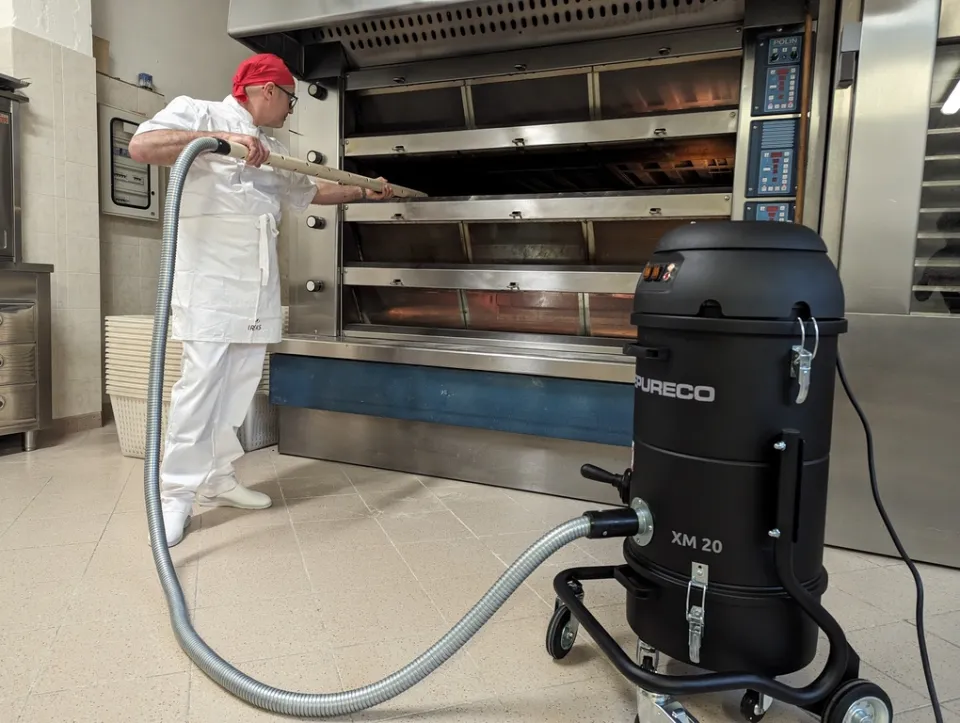
For bakeries that need a dedicated mobile solution, the XM 20 OVEN is designed specifically for hot, dry oven-cleaning applications. Depureco also offers broader oven and bakery vacuum solutions when the cleaning requirement extends beyond a single portable vacuum.
Compliance-aware note
Hot oven residue and combustible flour or sugar dust should not automatically be treated as the same vacuum application. Final equipment selection should consider the material being collected, its temperature, the cleaning area, dust behavior, and the full vacuum configuration.
Remove loose crumbs and dry baked residue directly instead of moving debris around the oven during manual cleanup.
High-temperature configurations can support earlier residue removal when material temperature and application conditions are appropriate.
Long-reach tools can simplify cleaning around decks, corners, conveyors, and other areas that are difficult to access manually.
A dedicated cleaning setup can make recurring oven cleanup more consistent across operators, shifts, and production runs.
A vacuum selected for hot oven crumbs is not automatically the correct configuration for combustible flour or sugar dust. Material behavior, temperature, area conditions, and the full system configuration should be reviewed before equipment selection.
Mobile Vacuum or Automated SYstem?

Not every bakery needs the same oven-cleaning setup. The right approach depends on how many ovens need to be cleaned, how often cleaning interrupts production, and how much of the process should remain operator-controlled.
Dedicated Mobile Oven Vacuum
A mobile oven vacuum is typically the simpler path for bakeries cleaning one oven, several individual ovens, or specific production areas as needed.
The XM 20 OVEN gives maintenance and sanitation teams a dedicated unit that can be moved where it is needed and paired with oven-cleaning tools for hot, dry residue.
This approach is best suited to facilities that want flexibility without installing permanent vacuum infrastructure.
Engineered or Automated Oven Cleaning
Larger bakeries may reach a point where repeatedly moving a portable vacuum between ovens is no longer the most efficient workflow.
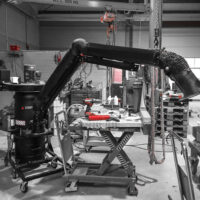
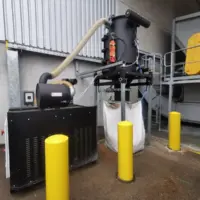
For multi-deck ovens, multiple cleaning points, or highly repetitive production schedules, an engineered centralized vacuum system can connect fixed piping, vacuum arms, or dedicated pickup points to a central suction source.
Depureco has used this approach in an industrial bakery oven cleaning application where multiple vacuum arms were integrated into a multi-deck oven cleaning process.
The deciding factor should be the cleaning workflow. If a mobile vacuum can comfortably support the required cleaning frequency, it may be the most practical option. If cleaning occurs across many ovens or repeated pickup points, an engineered system may offer a more efficient long-term path.
A flexible option for targeted oven cleaning without permanent vacuum infrastructure.
One oven, several individual ovens, or flexible cleaning points.
Operator-controlled and moved where cleaning is required.
Minimal fixed installation requirements.
XM 20 OVEN high-temperature bakery oven vacuum.
A scalable option for repeated cleaning across multiple ovens, decks, or fixed pickup points.
Multi-deck ovens, multiple cleaning points, and high-frequency cleaning.
Fixed piping, vacuum arms, or dedicated pickup points.
Requires application review, layout planning, and system design.
Engineered centralized vacuum solution for the bakery process.
Bakery Oven Cleaning FAQs
Yes, when the vacuum, filter, hose, tools, residue, and operating conditions are designed for the temperatures involved. The Depureco XM 20 OVEN is specifically designed for hot, dry bakery oven residue, which can help reduce the amount of time spent waiting for a complete cooldown before cleaning begins.
Final suitability should always be confirmed for the actual residue temperature and application before cleaning.
Typical bakery oven applications can involve loose crumbs, burnt flour, cornmeal, seeds, toppings, and other dry baked residue.
The material matters just as much as the temperature. Sticky, wet, glowing, chemically reactive, or otherwise unusual residues may require a different cleaning method or vacuum configuration.
Not automatically. Hot crumbs and baked oven residue present a different application than fine flour, sugar, or starch dust that may create a combustible dust hazard elsewhere in the facility.
Vacuum selection for combustible dust should consider the material, dust behavior, area classification, grounding and bonding requirements, accessories, filtration, and the complete collection system. Equipment should not be selected only because both applications occur in the same bakery.
Shorten the Cleaning Window
Bakery oven cleaning will always require time, but the cleaning method can determine how much production time is lost in the process.
For a single oven or flexible cleaning points, a dedicated high-temperature vacuum may be the most practical solution. For larger bakeries with multiple ovens, decks, or repeated cleaning points, an engineered system may provide a more efficient long-term approach.
Depureco USA can review your oven type, residue, cleaning temperature, current process, and production requirements to help determine the right setup for your bakery.
Tell us about your oven type, residue, cleaning temperature, current cleaning process, and production schedule. Depureco can help determine whether a mobile oven vacuum or an engineered cleaning system is the better fit.
