



Choosing an industrial vacuum for food or pharmaceutical production involves more than finding a machine with enough suction.
The material being collected, where cleanup takes place, filtration requirements, equipment cleanability, collection method, and any contamination or combustible-dust concerns can all influence the correct configuration. A vacuum can support sanitation, housekeeping, and contamination-control procedures, but no single feature makes one vacuum suitable for every food or pharmaceutical process.
The best place to start is with the application: what is being collected, where it is being collected, and what the cleaning process needs to accomplish.
Pharmaceutical vs. Food Processing Vacuum Requirements
Food and pharmaceutical facilities both depend on controlled, repeatable cleaning, but the factors driving vacuum selection are not always the same.
Food production often places greater emphasis on sanitation, ingredient and allergen residue, wet or sticky material, changeover speed, and combustible organic powders. Pharmaceutical production may place greater emphasis on fine-powder containment, cleanability, filtration, batch separation, and documented cleaning procedures.
That means a vacuum should not be selected simply because it is labeled for the “food” or “pharmaceutical” industry. The actual material, process, cleaning zone, and facility requirements should determine the configuration.
Food Processing: Ingredients, Allergens & Sanitation
- Sanitation and routine housekeeping
- Ingredient and allergen residue
- Dry, wet, sticky, or hot materials
- Faster line and product changeovers
- Combustible powder review where applicable
Pharmaceutical Manufacturing: Fine Powders, Containment & Cleanability
- Fine-powder collection and containment
- APIs, excipients, and tablet dust
- Equipment cleanability
- Batch separation and repeatable cleaning
- Filtration and disposal requirements
5 Factors for Choosing a Pharmaceutical or Sanitary Industrial Vacuum
Choosing the right vacuum starts with understanding the application, not comparing motor size or suction alone.
1. Material and Powder Characteristics
Start with the actual material. Fine pharmaceutical powder behaves differently from flour, crumbs, wet residue, or sticky ingredients.
Important characteristics include particle size, dry or wet condition, temperature, material volume, allergen content, and whether the material presents exposure, conductivity, or combustible-dust concerns.
2. Cleaning Zone and Process Location
Consider where the vacuum will operate. General floor housekeeping, machine cleaning, ingredient recovery, and product-adjacent cleanup can have very different requirements.
The closer the equipment operates to a sensitive production process, the more important cleanability, accessories, collection method, and facility cleaning procedures may become.
3. Filtration and Dust Load
Filtration should match the material and operating conditions. Fine powders can load filters quickly, so filtration efficiency is only part of the equation. Filter area, filter cleaning, operating duration, and disposal method can also affect performance.
HEPA filtration may be appropriate for some applications, but HEPA alone does not establish sanitary suitability, containment performance, or GMP compliance.
4. Construction, Cleanability and Disposal
Stainless-steel construction can be useful in hygienic environments, but it is not automatically required for every food or pharmaceutical application.
Also consider how the vacuum itself will be cleaned, how filters are serviced, whether tools need to be dedicated to a product or allergen, and how collected material will be removed without creating unnecessary dust or contamination.
5. Combustible Dust, Static and Facility Hazards
Some food and pharmaceutical powders can introduce combustible-dust or static-control concerns.
Final equipment selection should consider the material properties, cleanup location, facility requirements, and any applicable dust hazard analysis or area classification.
Simple rule: Material → Cleaning Zone → Filtration → Cleanability → Hazard Review.
Identify the powder, ingredient, residue, liquid, or debris being collected and how it behaves during pickup and filtration.
Define where cleanup occurs, what equipment or surfaces are involved, and how sensitive the surrounding production process is.
Match filtration, filter area, and filter-cleaning performance to the particle size, powder characteristics, and actual dust load.
Consider equipment construction, accessories, servicing, collection method, emptying, and how the vacuum itself will be cleaned.
Confirm combustible-dust, static, exposure, contamination-control, and facility-specific operating requirements before selecting equipment.
Match the Industrial Vacuum to the Pharmaceutical, Biotech, Nutraceutical or Food Application
There is no universal “food and pharma vacuum.” The correct path depends on the material, cleaning process, and operating environment.
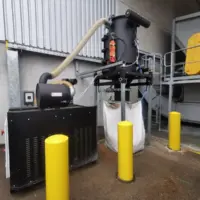
Food Processing and Ingredient Cleanup
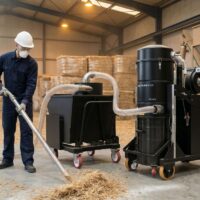
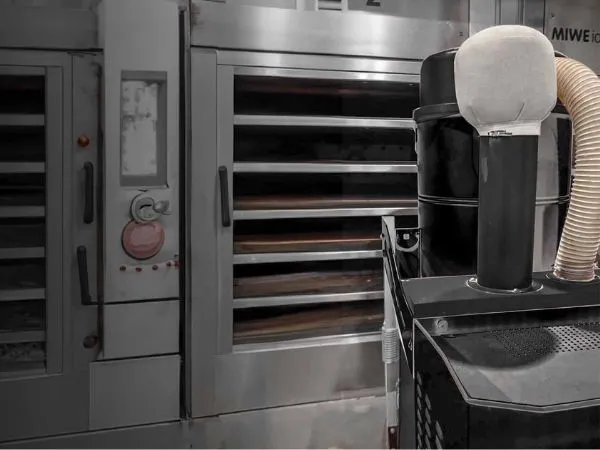
For flour, sugar, starch, crumbs, ingredient spills, and general food-production housekeeping, start with Depureco industrial vacuum cleaners for the food industry.
Depending on the material, the application may then require a fine-dust, wet and dry, or combustible-dust configuration.
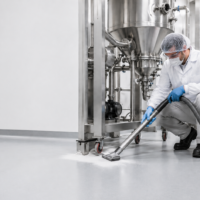
Pharmaceutical Powder and Tablet Dust Cleanup
For APIs, excipients, tablet dust, nutraceutical ingredients, and other fine powders, filtration, cleanability, containment, and collection methods become more important parts of the selection process.
The SWAN pharmaceutical industrial vacuum is one of Depureco’s options designed for pharmaceutical, nutraceutical, and fine-powder applications. Final suitability still depends on the material and process requirements.
Machine-Integrated Applications
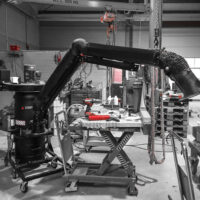
Packaging lines and production equipment may need continuous, machine-side extraction rather than a mobile housekeeping vacuum.
For these applications, the BF JC on-board industrial vacuum may provide a more appropriate starting point, depending on airflow, installation space, material, filtration, and duty requirements.
Recommended path: Match the vacuum category to the application first, then confirm the specific model and configuration.
Start here for ingredient dust, crumbs, powders, spills, sanitation, allergen-control cleanup, and routine food-production cleaning.
Explore Food Processing VacuumsStart here for APIs, excipients, tablet dust, biotech powders, nutraceutical ingredients, and other fine-powder applications requiring careful filtration, collection, and cleanability.
View the SWAN Pharmaceutical VacuumStart here when packaging equipment, production machinery, or a process line needs fixed, continuous, or on-board dust and material extraction.
View the BF JCIndustrial Vacuum Selection Checklist Before Ordering
A food or pharmaceutical application usually cannot be qualified from the industry name alone. Providing the right application details upfront helps narrow the vacuum category, filtration, construction, accessories, and collection method before a specific model is selected.
Confirm Before Ordering
Provide as much of the following information as possible:
- Material name and SDS, when applicable
- Particle size or general material description
- Dry, wet, sticky, or hot condition
- Approximate material volume
- Pickup location and cleaning zone
- General housekeeping or machine-integrated use
- Allergen or batch-changeover considerations
- Desired filtration or containment requirements
- Collection and disposal method
- Combustible-dust information, if applicable
- Dust hazard analysis or area classification, when relevant
- Expected operating frequency or duty cycle
- Available electrical power or compressed air
Final suitability should be confirmed using the actual material, process, operating environment, temperature, collection method, and hazard profile. This information gives Depureco a much better starting point for recommending the appropriate configuration.
Common Questions About Pharmaceutical and Food Processing Vacuums
Does HEPA filtration make a vacuum suitable for pharmaceutical manufacturing?
No. HEPA filtration may be an important part of a pharmaceutical vacuum configuration, but suitability also depends on the material, process, construction, containment objective, cleaning procedure, collection method, and complete system configuration.
HEPA filtration by itself should not be treated as proof of GMP suitability.
Does a food plant always need a stainless-steel industrial vacuum?
No. Stainless steel can provide advantages for cleanability, corrosion resistance, and certain sanitary applications, but the proper material of construction depends on the process, residue, cleaning method, and facility requirements.
When does combustible dust affect food or pharmaceutical vacuum selection?
When the collected powder can create a combustible-dust hazard, equipment selection should be reviewed against the material properties, cleanup location, facility dust hazard analysis, area classification, and complete vacuum configuration.
The ingredient name alone should not be used to determine the required vacuum.
What information should I provide when requesting a vacuum recommendation?
Start with the material being collected, SDS when available, particle size, wet or dry condition, pickup location, cleaning process, required filtration, disposal method, duty cycle, and any combustible-dust or area-classification information.
The more application detail provided upfront, the easier it is to narrow the appropriate vacuum category and configuration.
Pharmaceutical Industrial Vacuum Selection Starts With the Application
Food and pharmaceutical facilities can have very different sanitation, powder-control, and contamination concerns even when they appear to need the same type of industrial vacuum.
The most reliable starting point is to identify what is being collected, where it is being collected, and what the cleaning process needs to accomplish.
From there, filtration, construction, accessories, collection method, and vacuum configuration can be matched to the actual application.
If you are evaluating a vacuum for food processing, pharmaceutical powders, nutraceutical production, or another hygiene-sensitive process, Depureco can review the material and operating requirements before recommending a configuration.
Recommended path: Start with the application details, then confirm the vacuum.
Need Help Selecting a Pharmaceutical or Food Processing Vacuum?
Share the material, cleaning location, operating conditions, and process requirements with Depureco. We can use those details to narrow the appropriate vacuum category and configuration before you order.
Get an Application Recommendation