




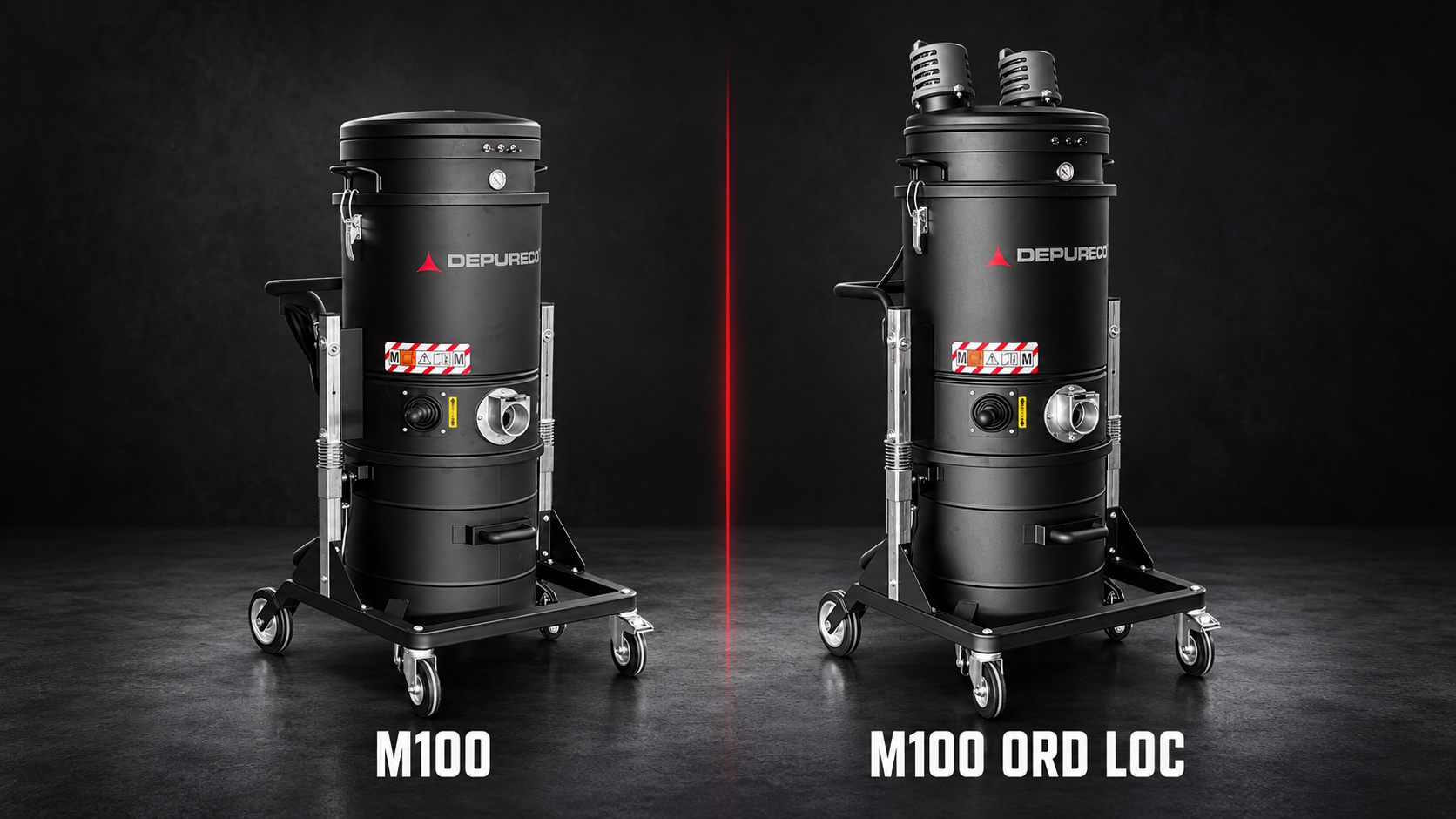
Choosing between the M100 and M100 ORD LOC starts with the material you collect and the location where you work. Both offer a mobile, three-motor platform and a 26-gallon collection bin, but their intended application differ.
The M100 is built for general industrial cleanup of compatible, noncombustible dust and debris. The M100 ORD LOC is designed for combustible-dust housekeeping in ordinary, unclassified locations. Understanding that distinction helps you choose the configuration your application needs.
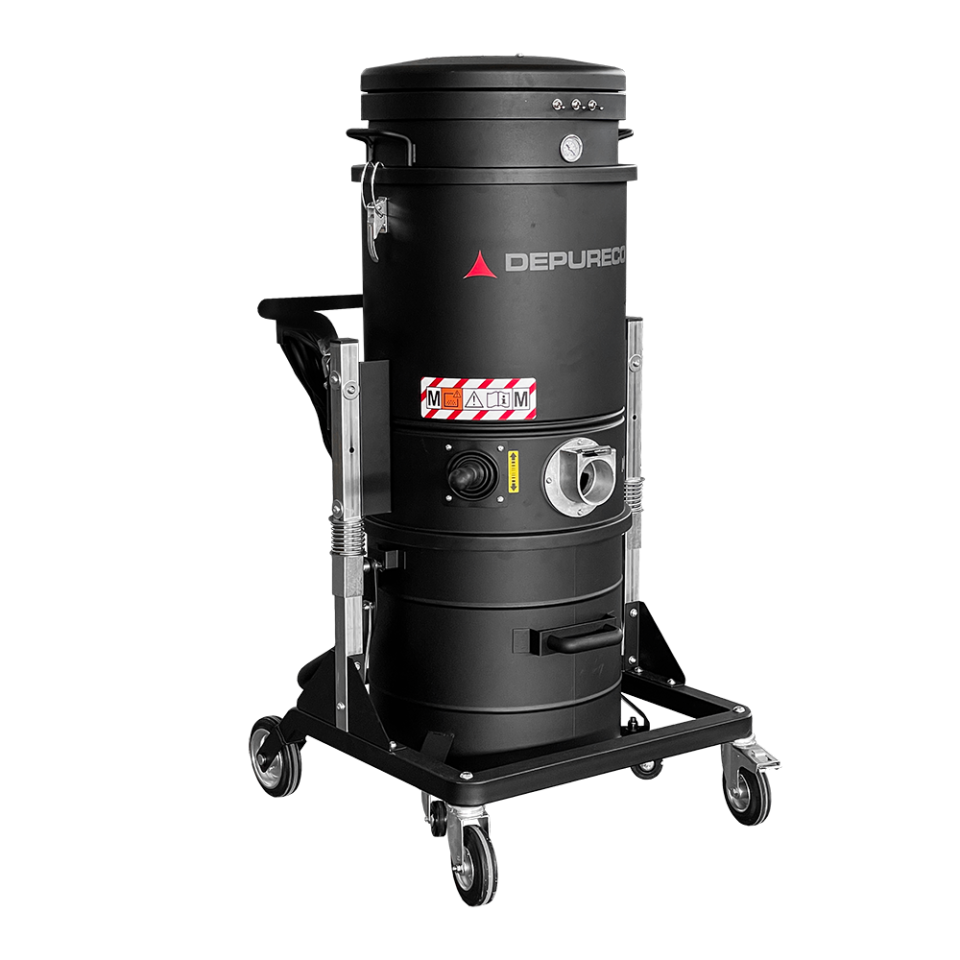
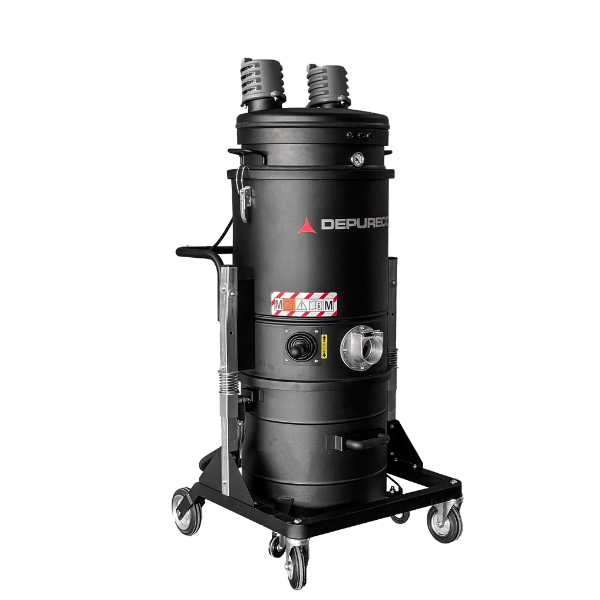
M100 vs. M100 ORD LOC at a Glance
Both models provide the same listed motor power and bin capacity. The main selection differences are their intended applications, primary filter media, and documented static-control configuration. Compare those requirements before choosing accessories or additional filtration
Scroll sideways to compare both models.
| Feature | M100 | M100 ORD LOC |
|---|---|---|
| Primary application | General cleanup of compatible, noncombustible dust and debris | Combustible-dust housekeeping in ordinary, unclassified locations |
| Primary filter | M-class polyester star filter | M-class antistatic polyester star filter |
| Static-control configuration | Antistatic media and GRD grounding are listed as options | Technical sheet identifies antistatic media and grounded components |
| Motors and power | 3 by-pass motors · 3.3 HP | 3 by-pass motors · 3.3 HP |
| Electrical supply | 120 V · 60 Hz · single phase | 120 V · 60 Hz · single phase |
| Collection bin | 26 gallons · detachable | 26 gallons · detachable |
| Primary-filter cleaning | Manual shaker | Manual shaker |
Confirm the supplied configuration. Adding an antistatic filter or grounding option to a standard M100 does not by itself make it suitable for combustible-dust collection.
When the M100 Is the Better Fit

The M100 is a practical choice for portable cleanup around machinery, production floors, and maintenance areas. It suits frequent batch recovery of compatible, noncombustible dust, loose debris, and suitable chips or shavings.
The wheeled platform moves between cleanup tasks, while the detachable bin simplifies handling and emptying collected material. The manual shaker removes buildup from the primary filter as part of routine maintenance.
In a machine shop, confirm the metal, chip shape, and any fine dust mixed with the material. Coarse chips and fine combustible metal dust require different selection decisions.
For compatible, nonflammable liquid pickup, specify the appropriate wet-recovery configuration, including liquid protection and accessories. A standard dry setup should not be assumed ready for every wet application.
When the M100 ORD LOC Is the Better Fit
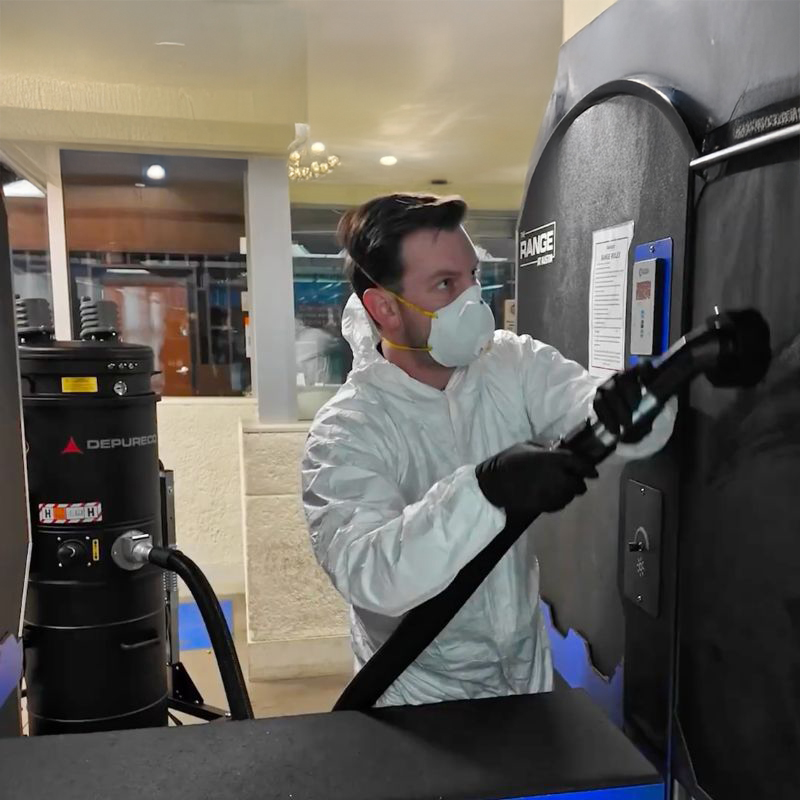
The M100 ORD LOC is designed for combustible-dust housekeeping in ordinary locations. Its technical sheet identifies three features worth understanding:
- An M-Class antistatic polyester star filter: supports static dissipation within the filter media
- Grounded components: form part of the machine’s static-control arrangement
- Double-stage filtration in the head: a documented feature of the ORD LOC design.
For facilities managing combustible dust, these construction details matter alongside suction and capacity. The complete setup also needs compatible hoses, tools, grounding connections, filtration, and collection arrangements.
Residual flour or sugar dust, wood or paper dust, and combustible plastic are examples that may warrant an ORD LOC evaluation in an unclassified area. Suitability depends on the actual material and housekeeping conditions; an industry label alone is not enough to select the vacuum.
Why "Ordinary Location" Matters
ORD LOC means ordinary location: an area that is unclassified for hazardous-location purposes. It describes the work area, while combustibility describes a property of the material. Combustible dust can still require specialized housekeeping equipment in an ordinary location.
A classified area, such as Class II, Division 2, calls for equipment suited to that location and the specific dust involved. The M100 ORD LOC designation does not establish that approval. Confirm the area’s classification before selecting the machine.
Our guide to NFPA 660 vacuum requirements explains how material hazards, area classification, and vacuum configuration work together.
Match the Vacuum to Your Cleanup Task
Use the job itself to narrow the selection:
- Production-floor debris and noncombustible solids: evaluate the M100 for general housekeeping, with hoses and tools matched to the material.
- Suitable machining chips and shavings: evaluate the M100 after confirming the metal, chip geometry, and any fines or liquid present.
- Residual combustible dust in a confirmed ordinary location: evaluate the M100 ORD LOC with the complete dust-handling configuration specified.
- Classified areas, combustible metal dust, or reactive material: request an application-specific equipment review before choosing either model.
M100 and M100 ORD LOC FAQs
Does the M100 ORD LOC have more power than the M100?
Both models are listed at 3.3 HP with three by-pass motors. Their main difference is the intended application and dust-handling configuration. Choose based on the material, location, and cleanup requirements.
Is the M100 ORD LOC approved for classified hazardous locations?
The ORD LOC designation refers to ordinary, unclassified locations. It does not establish approval for Class II, Division 2 or another classified area. Equipment for a classified location must match the area's requirements and the specific material.
Will adding a HEPA filter make a standard M100 suitable for combustible dust?
No. HEPA filtration addresses particle capture. Combustible-dust suitability also depends on the complete vacuum design, static control, accessories, material, and location. A filter change alone does not establish that suitability.
Can the M100 collect liquids as well as dry debris?
The M100 can be configured for compatible, nonflammable liquid recovery. Confirm the liquid, optional float shutoff, filter arrangement, and accessories with Depureco USA before selecting a wet-pickup setup.
Which model should I choose if I do not know whether my dust is combustible?
Establish the material's hazards and the work area's classification first. Share available safety data sheets, process information, and dust test results with your facility's safety team and Depureco USA so the equipment recommendation matches the application.
Get Help Choosing Between the M100 and M100 ORD LOC
Tell us what you collect, the typical quantity, cleaning frequency, expected runtime, hose length, and where cleanup takes place. Include a material photo and any availible safety data sheets, dust test results, dust hazard analysis (DHA), or area-classification information. Depureco USA can help you compare the M100 and M100 ORD LOC and specify the configuration for you application.
What to tell our team
- 01 Material
- What are you collecting, and is it dry, damp, or mixed?
- 02 Work Area
- Where will cleanup take place, and are there any known area-classification requirements?
- 03 Workload
- How much material, how often, and what runtime or hose length is required?
Let’s talk about your cleanup task.
You don’t need every answer to get started.
