


10.9-28.5 HP | 480V 3∼

7,000 in²

100-213 inH2O
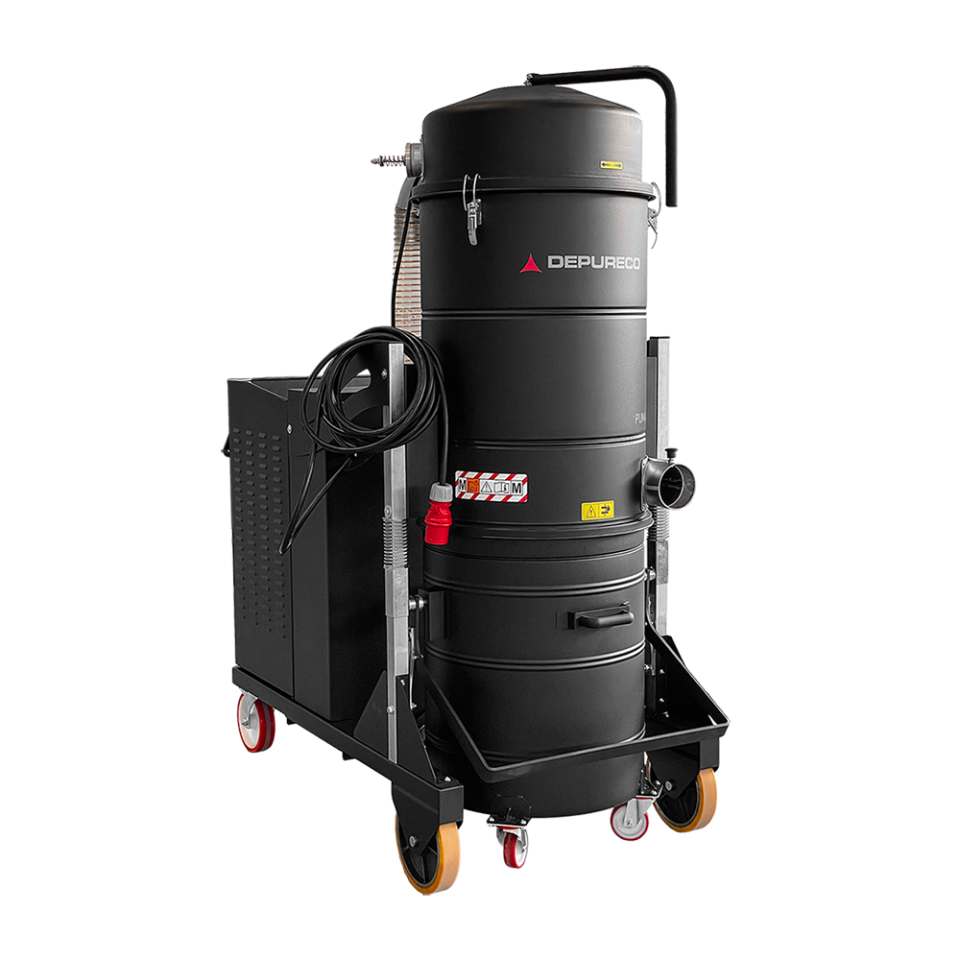
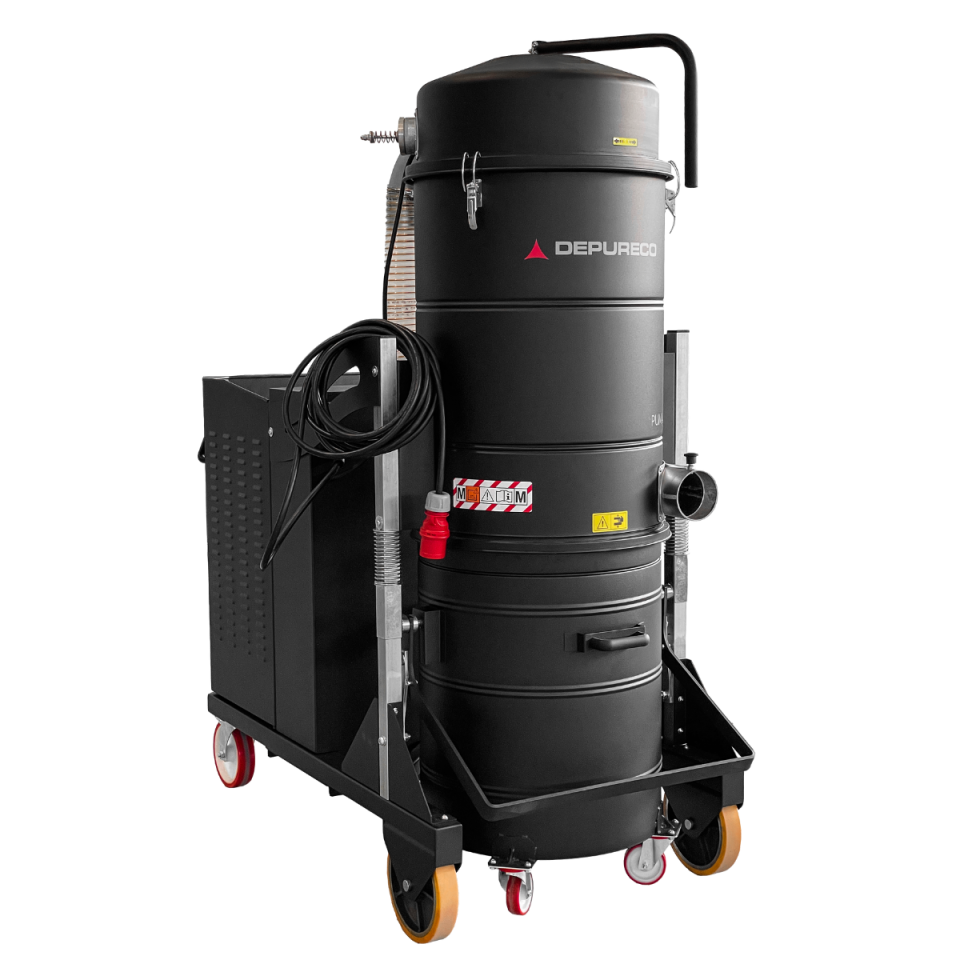
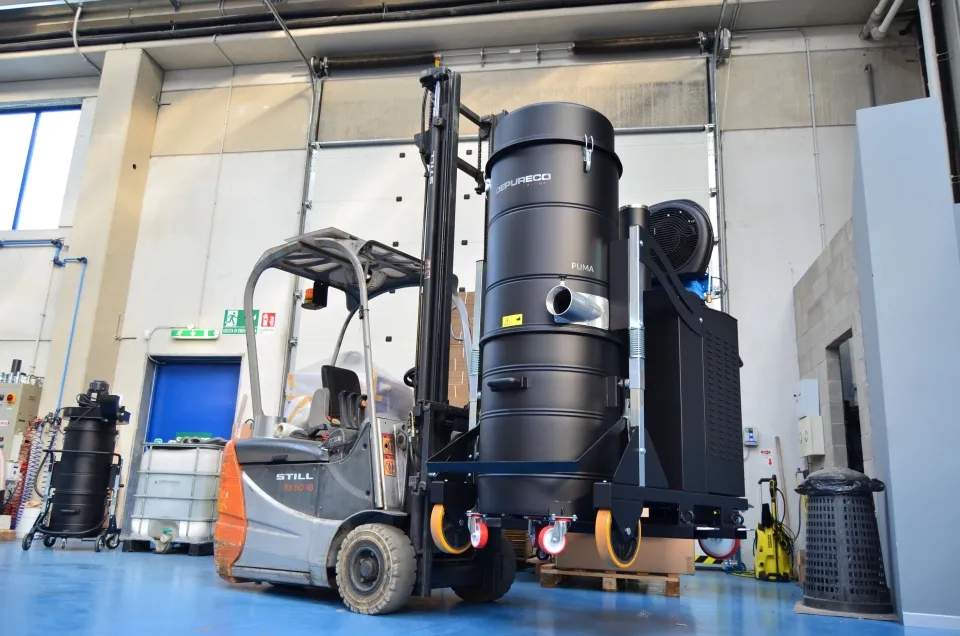
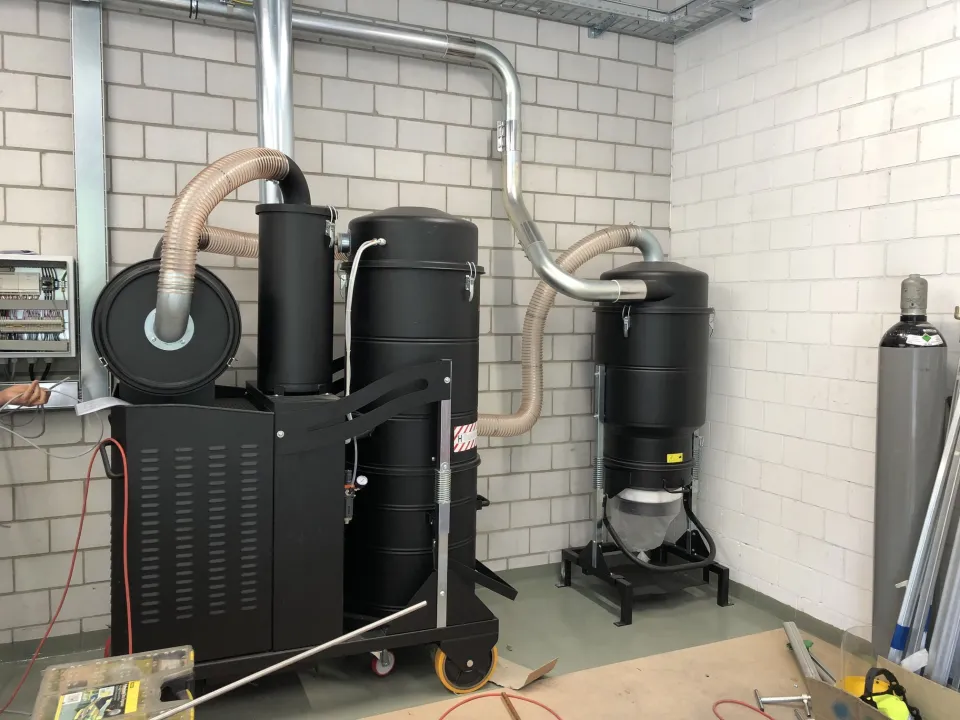
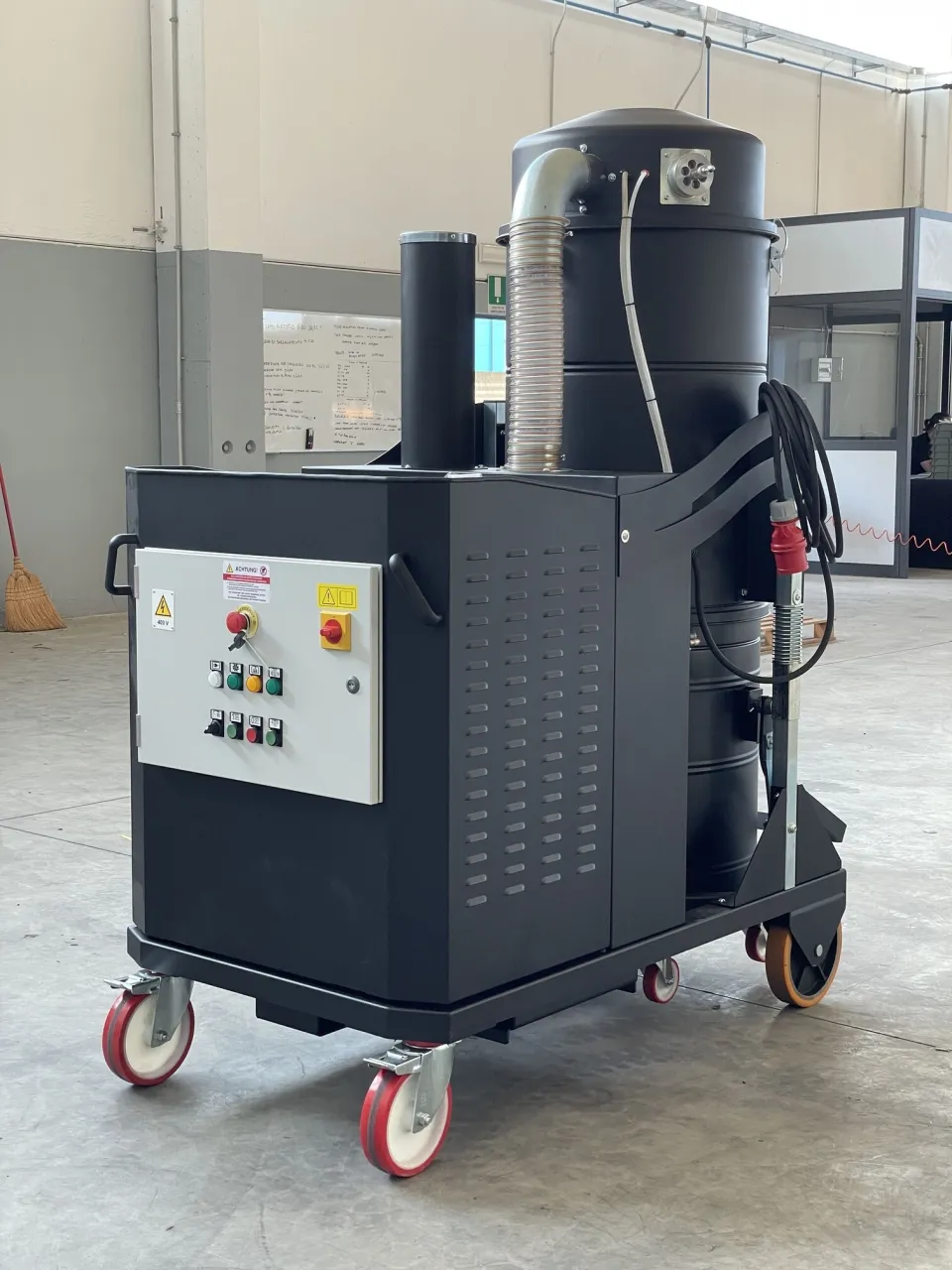
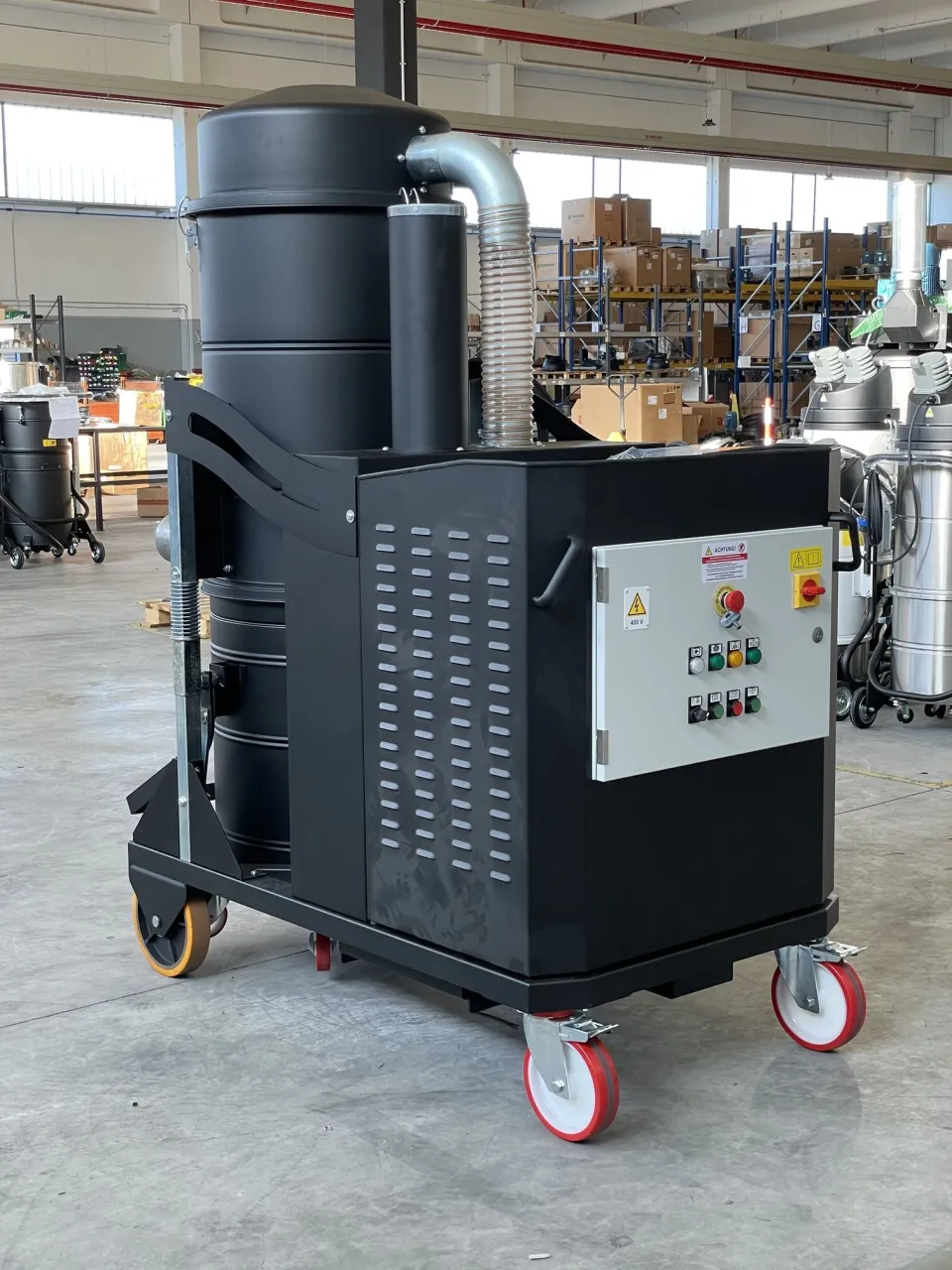
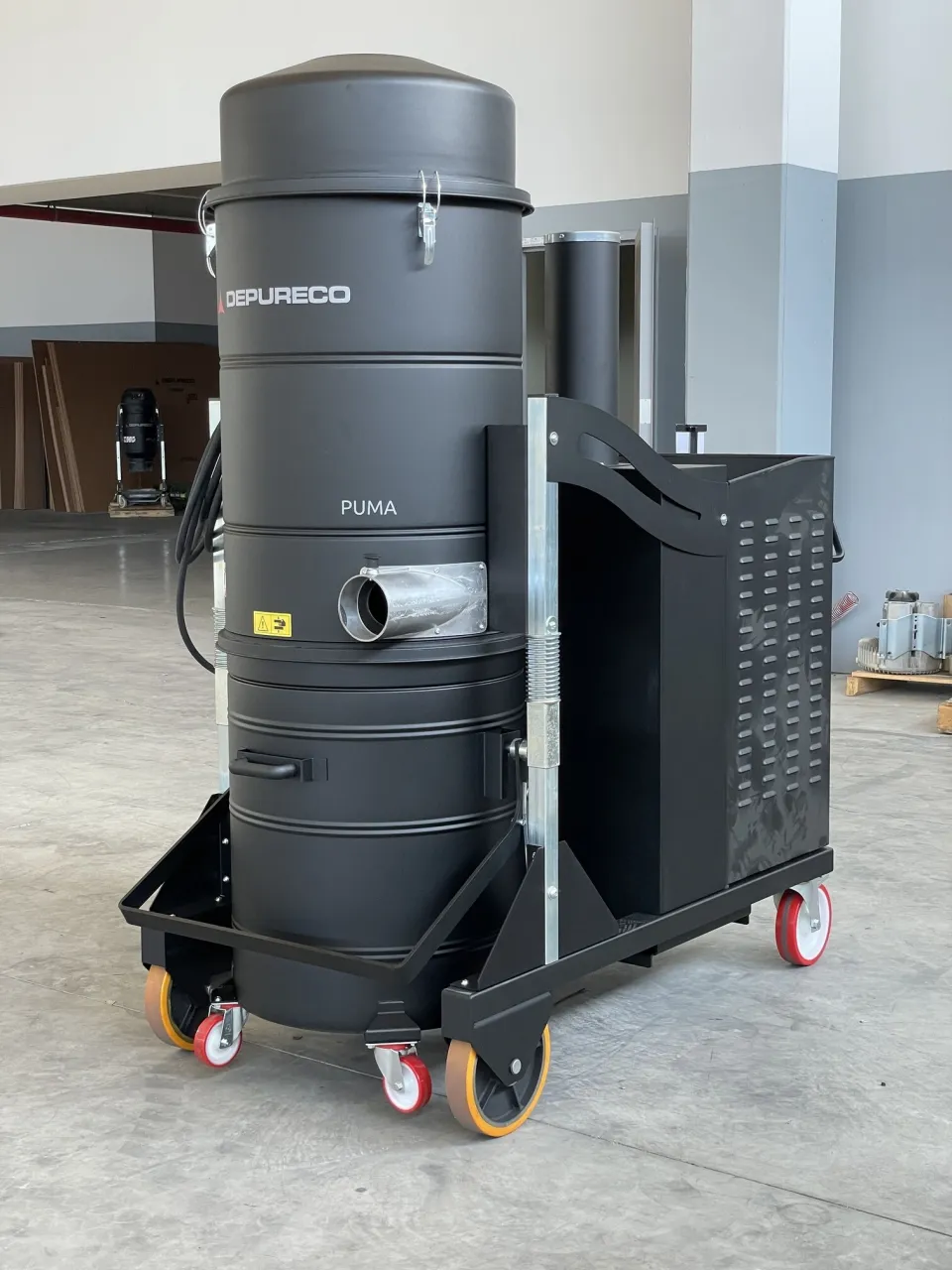
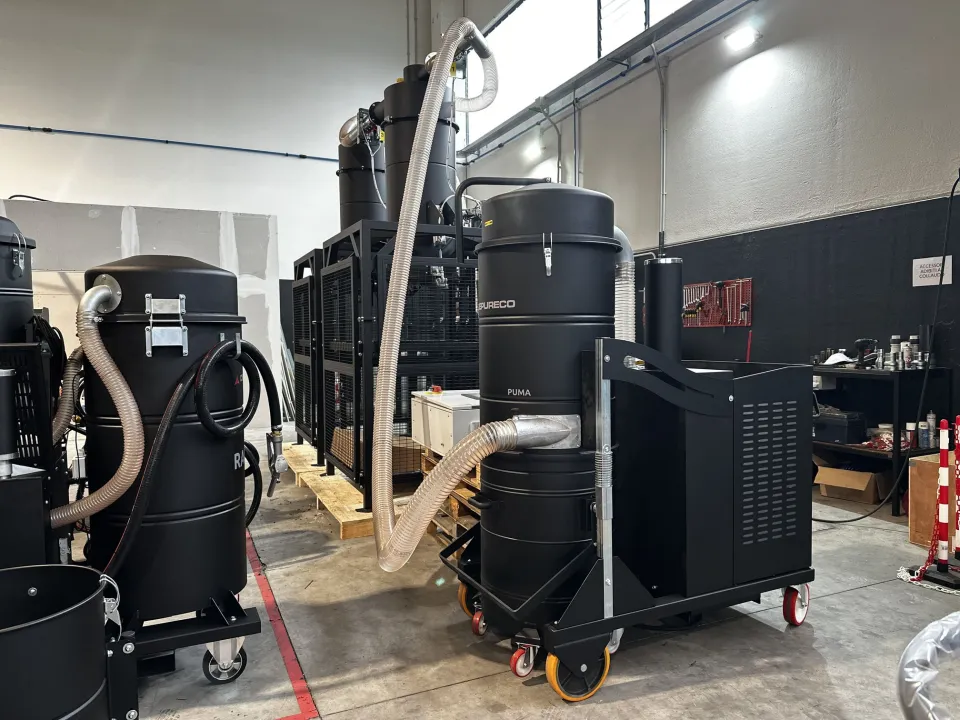
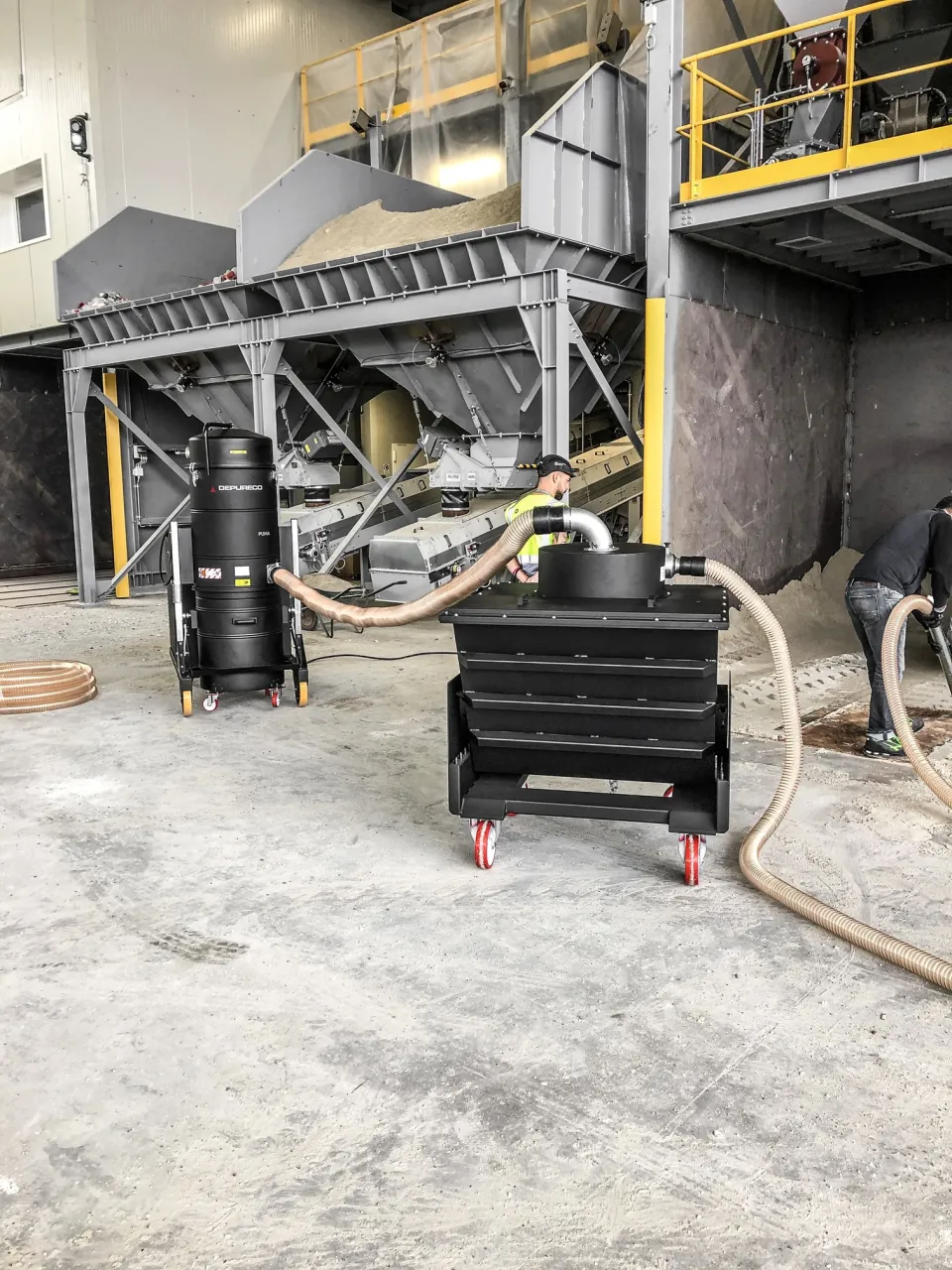
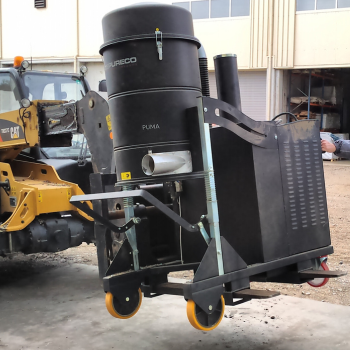
The PUMA is a high power industrial vacuum built for heavier-duty cleanup where strong airflow, larger material loads, and continuous-duty performance matter. Its three-phase side channel blower, welded internal cyclone, and M-class filtration make it a strong fit for metalworking, woodworking, mining, chemical processing, and other demanding industrial environments.
With 46-gallon collection capacity, configurable filter media, and manual or automatic filter-cleaning options, PUMA is designed for facilities that need reliable recovery of fine dust, heavy debris, or mixed materials without stepping up to a full centralized system.

The PUMA uses a three-phase side channel blower to deliver strong, continuous-duty suction for heavier industrial cleanup. This should be positioned as a performance advantage for plants that need more airflow and more reliable long-run operation than lighter industrial vacuums can provide.

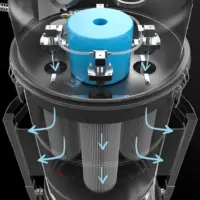
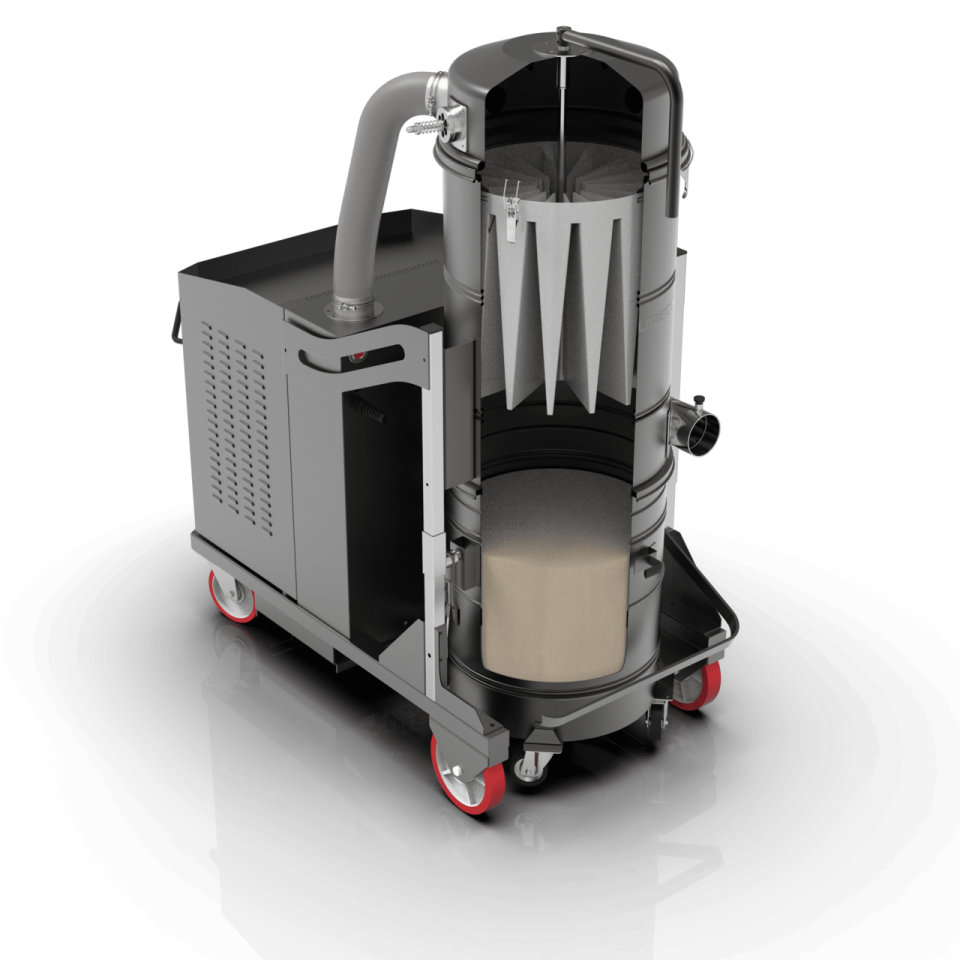
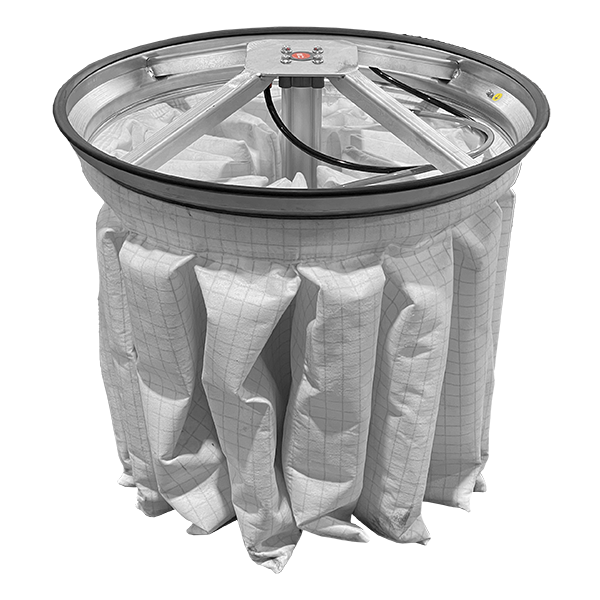
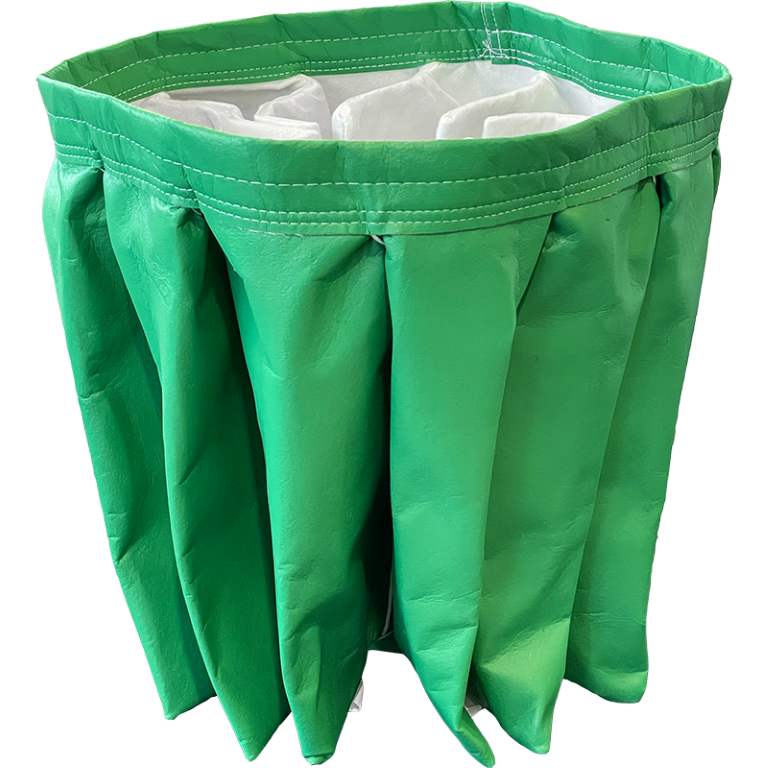
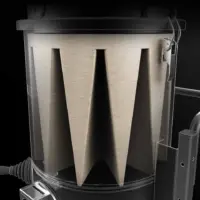
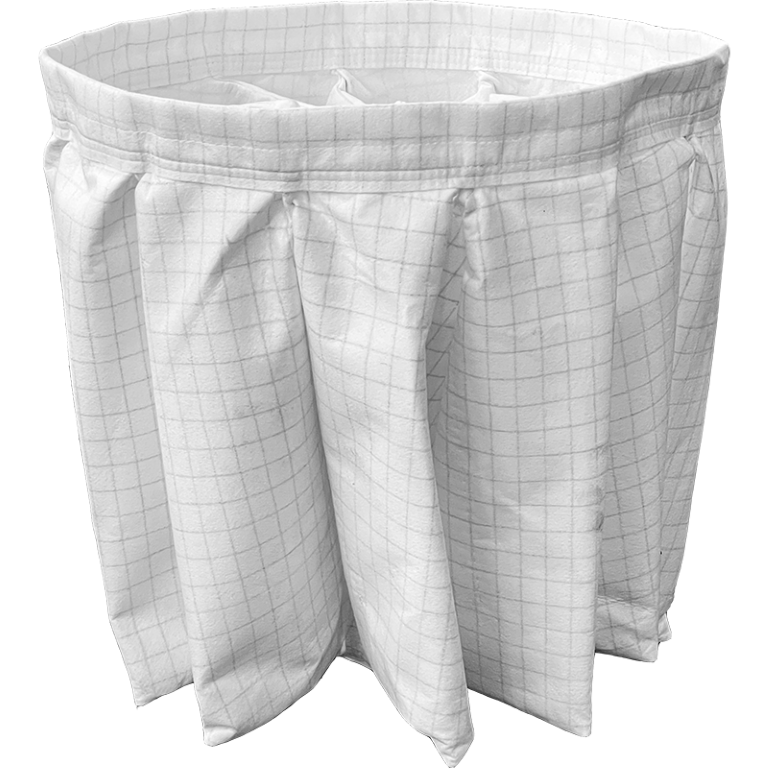
The filtration system is ensured by an M class polyester filter, designed to effectively capture particles during operation. The unique star shape of the filter allows for continuous airflow even when it becomes dirty, maintaining optimal suction performance. The fabric used in the filter is classified as M Class according to BIA | EN 60335-2-69 standards. This classification signifies that the filter has the ability to stop particles as small as 1 micron, providing crucial protection for both the blower and the operator working in the vicinity of the vacuum cleaner.

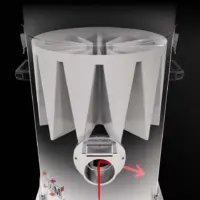
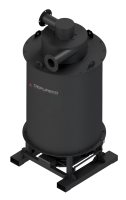
The purpose of the tangential inlet is to facilitate the smooth movement of material into the bin. Within the chamber, a robust metal cyclone is securely welded, significantly reducing the entry speed of the material. As a result, the material directly falls into the bin without causing any damage to the filter. This efficient design ensures effective protection of the filter and minimizes the risk of clogging.

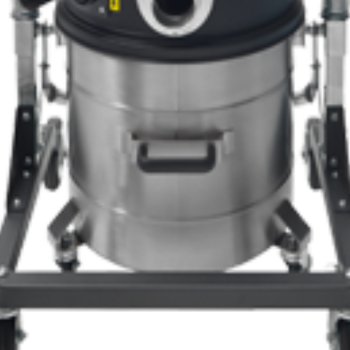
The detachable 46-gallon collection bin is built for easier handling of larger recovered material volumes. The collected material is stored in a painted container that features a sturdy metal handle, allowing the bin to be easily detached from the machine. With the inclusion of 4 swiveling wheels, the bin can be effortlessly maneuvered and emptied. Each wheel is reinforced to ensure optimal stability during handling, providing a secure and reliable transportation experience.

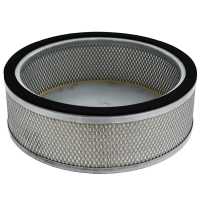
H14 Absolute Filter (EN 1822) Glass fiber


Get answers about using the PUMA for high-volume industrial material recovery, heavy debris, metal chips and swarf, powders and bulk solids, long hose runs, continuous-duty operation, cyclone pre-separation, filtration, PUMA model selection, and choosing between PUMA and smaller three-phase or centralized vacuum systems.
The PUMA is a high-power three-phase industrial vacuum designed for continuous-duty recovery when material volume, airflow demand, hose distance, or pickup conditions exceed what smaller industrial vacuums are intended to handle.
The current portable PUMA range uses side-channel blowers from 10.9 to 28.5 HP, with model-specific performance up to 945 CFM and 200 inH₂O among the verified current configurations. Every model uses a large 46-gallon detachable collection bin and a tangential inlet with an internal welded cyclone.
Typical applications include high-volume production cleanup, metal chips and swarf, powders, granules, abrasive material, dense dry debris, bulk production waste, foundry cleanup, woodworking debris, mining and mineral material, and demanding machine-side or facility housekeeping.
PUMA is particularly useful when a facility still needs a mobile industrial vacuum but requires more material-handling capability than a compact or mid-range three-phase machine.
Choose the PUMA model according to the balance of airflow and vacuum pressure required by the material and pickup path rather than selecting by horsepower alone.
The PUMA 10 provides 490 CFM and 100 inH₂O and is the entry point in the verified current portable range.
The PUMA 15P increases airflow to 660 CFM with 110 inH₂O, making it useful when higher material volume and airflow are important.
The PUMA 15S takes the opposite approach, providing 364 CFM with substantially higher vacuum pressure at 200 inH₂O. That can be useful when the pickup path is more restrictive or the application places a greater premium on suction pressure.
The PUMA 20 provides 680 CFM and 140 inH₂O, while the PUMA 25 reaches 945 CFM with 135 inH₂O for larger-volume recovery.
Material density, hose length and diameter, vertical lift, bends and restrictions, pickup rate, particle or chip geometry, and the amount of material being recovered should all be considered when choosing the model.
The PUMA is designed for demanding recovery of suitable industrial dusts and solids, including powders, granules, metal chips, swarf, shavings, abrasive media, grit, dense dry debris, and larger volumes of production waste.
Its high-power side-channel blower range and cyclone-assisted inlet make PUMA particularly useful when material loads become too large, dense, or demanding for smaller portable industrial vacuums.
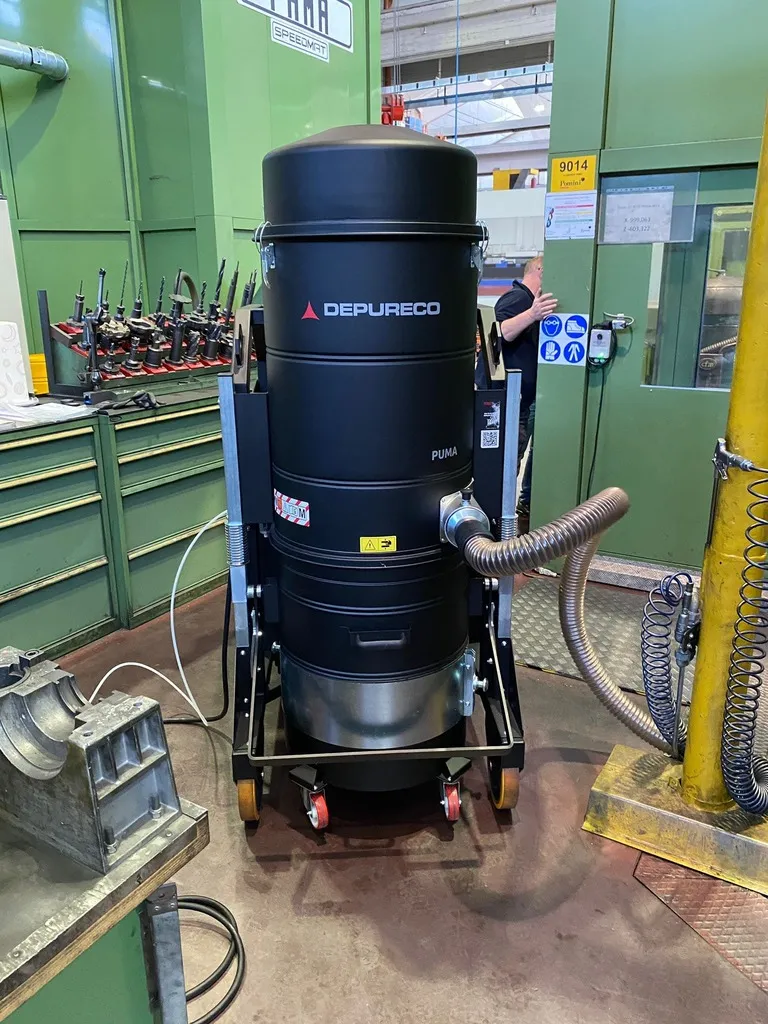
In machining and metalworking environments, PUMA can be evaluated for repeated recovery of dry chips, drill shavings, machining debris, and suitable swarf. Depureco Labs has also tested a PUMA 20 SP on dry aluminum drill shavings and machining chips using an antistatic hose and conic pickup nozzle.
Material characteristics still determine the correct vacuum and accessories. Very fine metal dust, combustible material, reactive powders, hot material, sticky products, unusually abrasive solids, or hazardous substances require additional application review.
The PUMA uses a tangential inlet to introduce material around the outside of the filter chamber instead of directing the incoming stream straight at the primary filter.
Inside the chamber, a welded metal cyclone creates a circular material path. As incoming debris changes direction and loses velocity, heavier particles are encouraged to fall toward the 46-gallon collection bin before reaching the filter.
This is particularly useful when recovering chips, shavings, granules, grit, abrasive media, dense solids, or mixed material containing both coarse debris and finer dust.
Reducing direct impact on the primary filter can help limit unnecessary filter loading and protect the filter from larger incoming material.
The cyclone is a pre-separation feature, not a replacement for the primary filter. Very high material volumes may still benefit from an external pre-separator or larger collection arrangement.
PUMA should be evaluated when an application requires more airflow, more available vacuum pressure, or greater material-handling capacity than a compact or mid-range three-phase industrial vacuum can practically provide.
Longer hose runs, vertical lift, multiple bends, restrictive pickup tools, dense material, and high pickup rates all create resistance that affects vacuum performance. Depending on the application, the additional performance available across the PUMA range can provide more margin for these losses.
This does not mean the largest PUMA is automatically the best choice for a long hose. Some applications require more airflow while others benefit from greater vacuum pressure, which is why the PUMA range includes different performance combinations.
The complete pickup path should be sized using material density, hose diameter, total hose distance, vertical lift, fitting losses, required material rate, and expected duty cycle.
For especially long permanent piping systems or multiple simultaneous pickup points, a stationary or centralized vacuum system may be a better solution than a mobile PUMA.
The verified regular PUMA configurations use a 7,000 in² polyester star filter with an IFA/BGIA M-PES Class M classification under EN 60335-2-69.
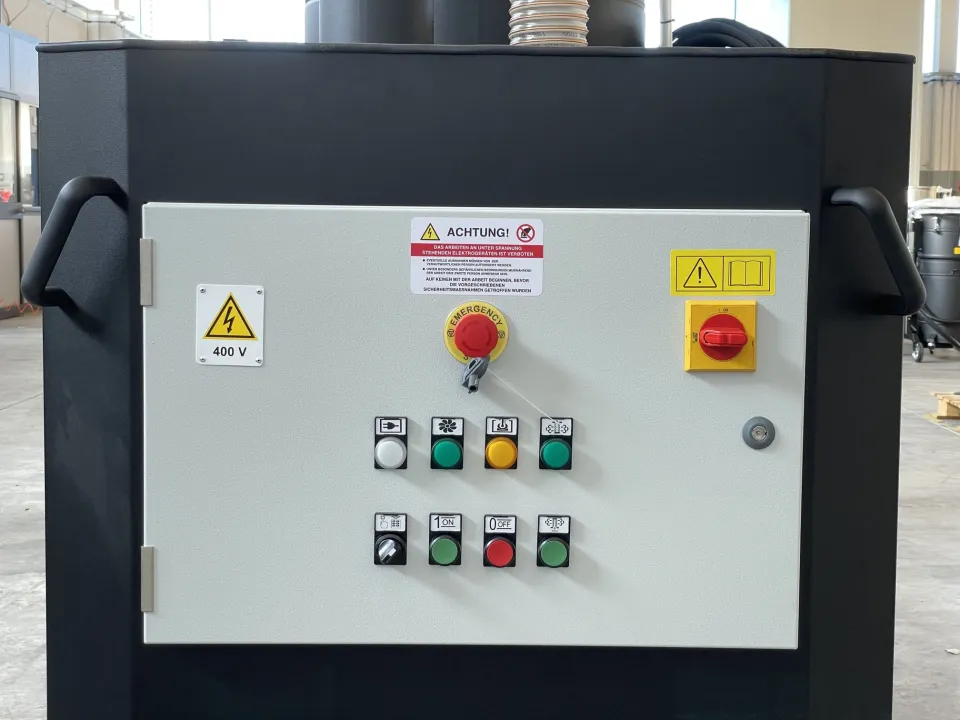
Manual filter cleaning is standard on the regular portable PUMA configurations.
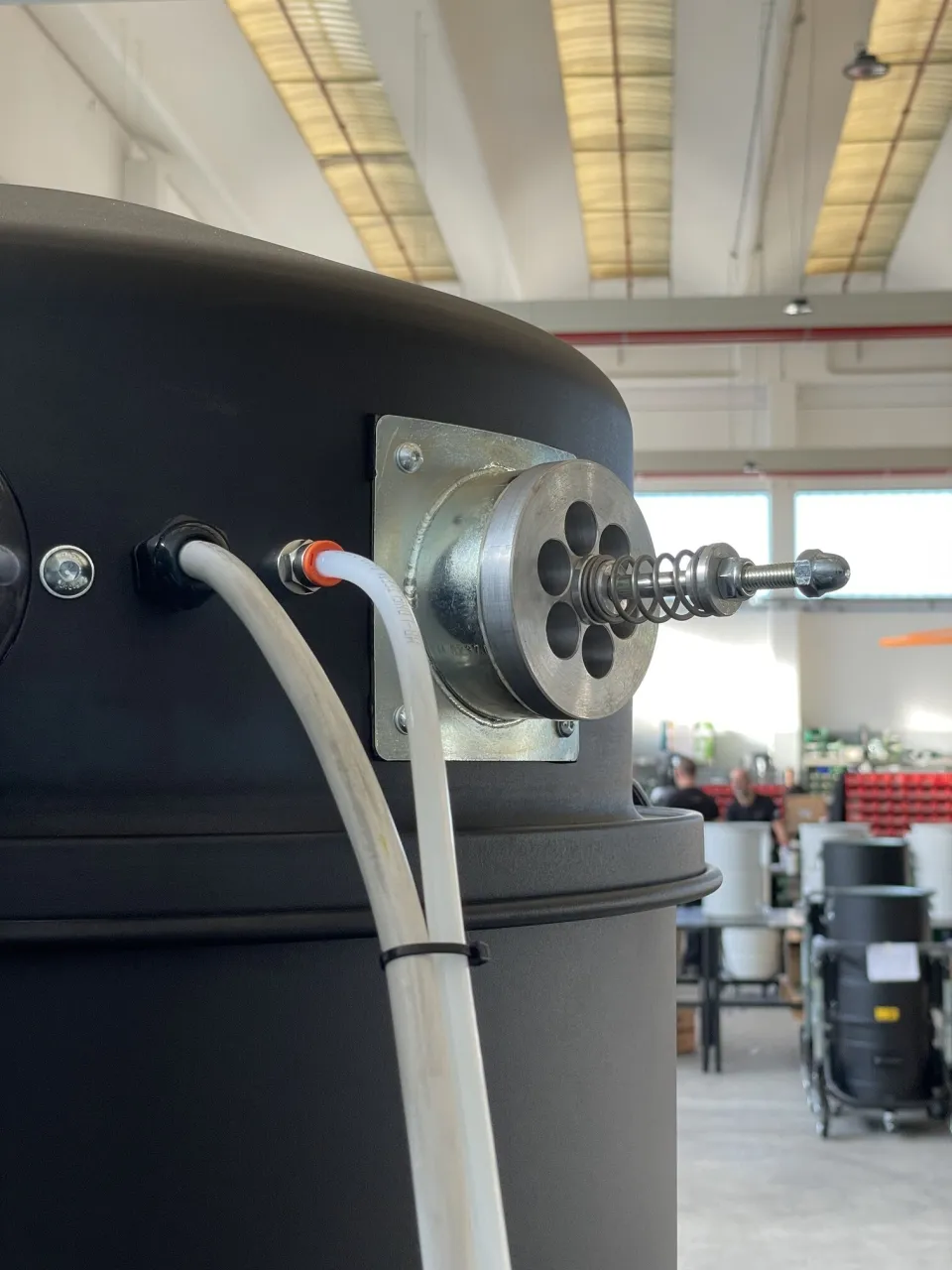
For applications with heavier fine-dust loading, an optional SP automatic reverse-jet configuration is available. The SP system uses four antistatic polyester cartridges with approximately 18,600 in² of total filter surface and uses compressed-air pulses for automatic cleaning.
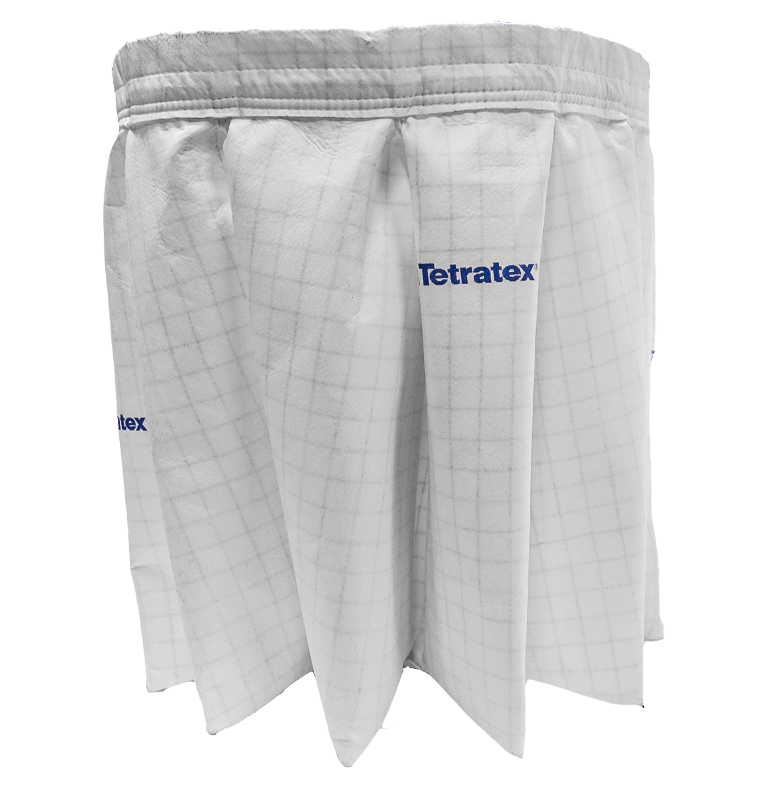
Alternative filter media are also available, including Teflon, Nomex, PTFE, antistatic PTFE, and antistatic filtration. H14 absolute filtration is available as an additional high-efficiency filtration option.
The correct filtration and cleaning configuration should be selected from the material and dust-loading conditions rather than automatically specifying the largest filter system.
Choose the TX when the application needs a heavy-duty continuous-use three-phase vacuum but its airflow, vacuum pressure, collection capacity, and material volume remain within the TX operating range.
Move to PUMA when the application requires substantially more airflow, a larger collection bin, larger inlet sizes, or additional performance margin for demanding material recovery and longer pickup paths.
The regular TX range reaches up to approximately 390 CFM and uses a 26-gallon collection bin. The verified portable PUMA range reaches up to 945 CFM and uses a 46-gallon collection bin, with available PUMA models offering different combinations of airflow and vacuum pressure.
PUMA also incorporates a tangential inlet and welded internal cyclone as a core material-pre-separation feature.
The decision should still be based on the application rather than simply moving to the larger machine. A correctly sized TX can be more practical for moderate production loads, while PUMA becomes increasingly relevant as material volume, airflow demand, hose resistance, or recovery rate increases.
PUMA may not be the right solution when the application is small enough that a more compact three-phase vacuum can handle the material efficiently, or when the material volume and system layout have grown beyond what a mobile collection platform is intended to support.
If the main limitation is collection capacity rather than suction performance, an external cyclone or filtering pre-separator may allow more material to be recovered before the PUMA’s 46-gallon bin needs to be emptied.
If the facility requires permanent piping, multiple fixed pickup points, long plant-wide runs, or simultaneous suction at several locations, a centralized vacuum system may provide a better architecture than repeatedly moving a portable PUMA.
Very large bulk-material volumes or particularly demanding recovery rates may also justify a PUMA HD, ATLAS, or another higher-capacity engineered system.
A regular PUMA should not automatically be assumed suitable for combustible dust, hazardous classified locations, flammable vapors or liquids, hot or burning material, reactive powders, or unknown hazardous material. Those conditions can change the required construction, filtration, electrical equipment, grounding, accessories, certification, and collection method.
Final selection should consider the material, bulk density, particle or chip geometry, quantity, pickup rate, hose or piping distance, vertical lift, operating time, filtration, collection/disposal workflow, electrical service, and facility hazards.