




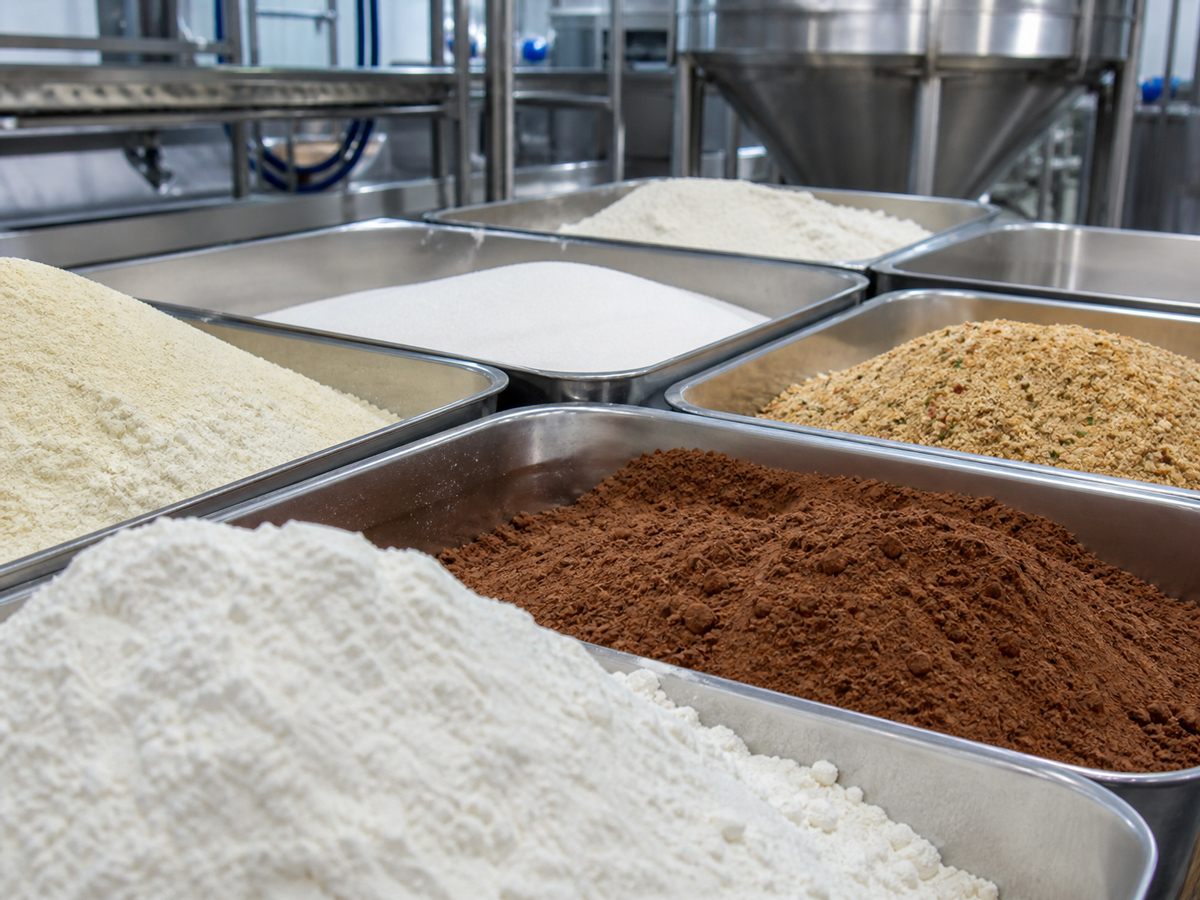
Food powder cleanup is not one-size-fits-all.
A vacuum setup that works well for coarse crumbs may perform differently when used on fine starch powder. A system that handles flour dust may need a separate accessory path when the same line also handles allergens. A standard dry-cleanup vacuum may not be the right fit when the material, area classification, or housekeeping program requires the selection of combustible-dust-aware equipment.
This guide helps food processors, bakeries, ingredient suppliers, sanitation teams, EHS managers, and plant engineers choose the right vacuum path for common food powders including flour, sugar, starch, cocoa, spices, seasoning blends, crumbs, and allergen-containing dust.
Simple rule: choose the vacuum setup by material behavior, not just the ingredient name.
Food Powder Vacuum Quick Selection Matrix
| Material / Residue | Common Behavior | Main Cleanup Concern | Recommended Path |
|---|---|---|---|
| Flour dust | Fine, dry, airborne, possible combustible-dust concern | Housekeeping, dust buildup, ingredient residue | Food powder vacuum, combustible-dust-aware review, central vacuum for larger plants |
| Sugar dust | Dry, crystalline, can become sticky or caked | Filter loading, buildup, static review | Fine powder vacuum or dust collection path with filter-cleaning review |
| Starch | Very fine, lightweight, filter-loading | Loss of suction, dust escape, frequent filter cleaning | Fine-dust vacuum, larger filter area, contained disposal where needed |
| Cocoa powder | Fine, staining, aromatic, may contain oils/fats | Product carryover, odor, color residue | Dedicated tools, fine-powder filtration, cleanout workflow review |
| Spices / seasonings | Fine, aromatic, staining, sometimes irritating | Odor carryover, product separation, operator exposure concerns | Dedicated accessories, controlled pickup, filtration review |
| Allergen dust | Fine, contamination-sensitive, product-specific | Cross-contact risk and changeover cleanup | Dedicated tools, controlled collection, sanitation SOP support |
Important compatibility note: this is a starting point, not a universal compatibility guarantee. Final fitment should be confirmed by material, particle size, dry/wet condition, temperature, collection method, facility requirements, and hazard profile.
Why Food Powder Vacuum Selection Depends on the Material
Food powders behave differently in the real plant.
The right vacuum selection depends on:
- Particle size
- Dust loading
- Whether the material is dry, sticky, oily, hot, or mixed with debris
- Whether the dust may be combustible
- Whether the material is an allergen
- Whether the cleanup is routine housekeeping, source capture, or product recovery
- Whether the operators need mobile cleanup, or a fixed central vacuum system
- Whether the area is classified or non-classified, and whether the material or process has additional ignition-sensitive requirements.
- Whether the facility needs conductive accessories, antistatic filtration, contained discharge, or dedicated cleaning tools
A better food powder vacuum setup should help the team clean faster without creating a bigger maintenance, sanitation, or safety problem downstream.
Flour Dust Vacuum Selection

Flour dust is a common dry ingredient cleanup challenge in bakeries, mills, dry mix rooms, bag dump areas, and ingredient handling spaces.
Best for: flour transfer areas, mixer zones, bag dump stations, floors, ledges, mezzanines, packaging areas, and general dry housekeeping.
Common issues:
- Dust buildup around ingredient transfer points
- Airborne dust after dumping, blending, or filling
- Fine dust collecting on floors, ledges, and equipment bases
- Repeated cleanup during production or changeovers
- Combustible-dust housekeeping concerns where applicable
Recommended path:
For non-classified areas where the facility’s material and hazard review does not require a specialized configuration, start by matching the industrial vacuum to flour dust loading, filtration needs, cleanup frequency, collection method, and facility procedures.
Confirm before ordering:
- Is the flour wheat-based or allergen-relevant?
- Is cleanup dry only, or is there washdown/moisture present?
- Is the area classified or reviewed for combustible dust?
- How much material is collected per shift?
- Is the goal housekeeping, product recovery, or source capture?
- Do operators need portable equipment or fixed vacuum drops?
Sugar Dust Vacuum Selection

Sugar dust can behave differently from flour. Sugar may be granular or finely powdered, and sugar-containing residues can cake or become difficult to remove when moisture affects the process.
Best for: confectionery, dry beverage mixes, sugar transfer points, blending rooms, packaging lines, and powdered sugar cleanup.
Common issues:
- Buildup around filling, bagging, and packaging equipment
- Dust layers near transfer points
- Caking or sticky residue where moisture/humidity affects the material
- Filter loading or caking
- Static and combustible-dust concerns depending on material and process conditions
Recommended path:
For powdered sugar and recurring dust cleanup, review filtration, filter-cleaning method, discharge workflow, and conductive accessory requirements. For sugar dust in a risk-reviewed area, compare standard food powder cleanup against a combustible dust vacuum or explosion-proof industrial vacuum path.
Common mistake: treating sugar dust exactly like flour dust. Sugar may cause filter loading, caking, and cleanup issues, especially in humid or sticky production areas.
Starch Powder Vacuum Selection

Starch is often very fine and lightweight. That makes it as much a filter-loading problem as a pickup problem.
Best for: starch processing, dry mix production, snack coating, ingredient transfer, powder blending, and packaging cleanup.
Common issues:
- Fine dust escaping from weak filtration
- Frequent filter loading
- Loss of suction during long cleanup cycles
- Dust buildup around bag dumps, mixers, and filling stations
- Combustible-dust housekeeping concerns where applicable
Recommended path:
Start with a fine-dust vacuum review. Look at filter area, filter-cleaning method, disposal method, dust loading, and whether the facility wants contained discharge. For high-volume or repeated cleanup, review the central vacuum system design rather than moving a single portable unit across the plant all day.
Confirm before ordering:
- What type of starch is being collected?
- Is the powder dry, damp, sticky, or mixed with other ingredients?
- Is product recovery required?
- How often does the filter need to be cleaned today?
- Does the facility need contained disposal?
- Has the dust been evaluated for combustible properties?
Cocoa Powder, Spices, and Seasoning Dust

Cocoa, spices, and seasoning blends create a different problem: carryover.
Even when the dust volume is not the largest in the plant, these materials can create odor, color, staining, irritation, and product-changeover concerns.
Cocoa Powder
Cocoa powder can be fine, strongly colored, and aromatic. Depending on formulation and fat content, residue behavior and cleanability may differ from flour or starch.
Best for: chocolate production, bakery ingredients, dry beverage mixes, cocoa transfer points, and packaging cleanup.
Avoid if: the same hose, tool, or container will be used across incompatible products without a facility-approved cleaning/changeover procedure.
Recommended path: dedicated tools, fine-powder filtration review, and a cleanout workflow that matches QA expectations.
Spices and Seasoning Dust
Spice and seasoning dust may be fine and highly aromatic; some materials may also be irritating, staining, or allergen-relevant.
Best for: seasoning lines, snack food plants, spice processing, blending rooms, and packaging lines.
Recommended path: dedicated accessories by product or zone, controlled pickup, and filtration/disposal review.
Confirm before ordering:
- Is the material strongly aromatic or staining?
- Does it contain allergens?
- Is the same vacuum used across multiple product families?
- Are dedicated hoses, brushes, or nozzles required?
- Is cleanup part of a validated changeover procedure?
Allergen Dust Vacuum and Changeover Cleanup
Allergen dust changes the vacuum conversation.
For wheat, milk, soy, sesame, peanut, tree nut, egg, or other allergen-containing powders, the issue is not only suction. The issue is whether the vacuum setup supports the plant’s cleaning procedure, tool segregation, and cross-contact control program.
A vacuum can support allergen-control housekeeping, but it should not be presented as a standalone allergen-control solution.
Compliance-aware note: vacuum selection should support the facility’s sanitation SOPs, validation process, and allergen-control procedures. It should not be described as “allergen-proof” or guaranteed to remove allergens from a process.
Best for: dry changeovers, allergen-containing powder cleanup, dedicated production zones, QA-controlled cleanup, and sanitation support.
Recommended path:
- Dedicated hoses, tools, and nozzles by allergen, color, zone, or product family
- Controlled collection and disposal workflow
- Fine-powder filtration review
- HEPA or contained-discharge review where the facility requires it
- Written cleanup process aligned with QA/sanitation expectations
For fine particulate or controlled discharge needs, review HEPA dust extractors with Longopac collection and industrial vacuum accessories as supporting paths.
Combustible Dust, Static Control, and Food Powder Housekeeping
Some food powders can present combustible-dust concerns when finely divided, dispersed, and exposed to the right conditions. OSHA identifies food materials such as sugar, spice, starch, flour, and feed among examples of materials that can be explosive in dust form.
This does not mean every food powder cleanup application requires the same vacuum. It means the material, process, dust behavior, area classification, ignition sources, and housekeeping program must be reviewed before assuming a standard vacuum is the right fit.
Confirm before ordering:
- Has the material been tested or reviewed for combustible dust properties?
- Is the cleanup area classified or non-classified?
- Are bonding and grounding required?
- Are conductive hoses or antistatic accessories required?
- Does the hazard review call for a specific hazardous-location rating, ignition-source-control strategy, conductive/bonded system configuration, pneumatic operation, or other documented equipment requirement?*
- Is the vacuum being used for settled dust cleanup, source capture, or process recovery?
- What does the facility’s DHA, safety team, insurer, or AHJ require?
For higher-risk or classified-area applications, review explosion-proof industrial vacuums, air-powered industrial vacuums, and combustible dust vacuums.
* Important: Air-powered operation alone should not be treated as proof that a complete vacuum system is suitable for combustible-dust or classified-area application.
Mobile Vacuum vs Central Vacuum System vs Dust Collector
The biggest selection mistake is choosing a machine type before defining the cleanup process.
| Need | Better Starting Path | Why |
|---|---|---|
| One operator cleaning multiple small areas | Mobile industrial vacuum | Flexible, portable, and easier to move between cleanup points. |
| Repeated cleaning across multiple rooms, floors, or operators | Central vacuum system | Fixed drops reduce movement and support plant-wide housekeeping. |
| Dust released at a mixer, bag dump, sifter, or filling point | Dust collector or source capture system | Captures dust closer to where it is created. |
| Fine powder cleanup with disposal concerns | Fine-dust or HEPA/contained-discharge path | Better fit for controlled collection and disposal. |
| Combustible-dust-reviewed cleanup | Combustible dust / explosion-proof / air-powered review | Equipment must match the material and facility hazard profile. |
If the dust is already settled, start with an industrial vacuum or central vacuum review. If the dust is still airborne during the process, review dust collector options or source-capture strategy. If the same cleanup path repeats across the facility, review industrial central vacuum systems.
Bakery, Crumbs, and Oven Residue

Bakery applications are not only flour dust. They can include crumbs, burnt flour, baked residue, cornmeal, seeds, toppings, and warm or hard-to-reach debris around ovens and conveyors.
Best for: bakeries, snack plants, bread lines, cookie lines, cracker lines, tortilla lines, and industrial oven areas.
Confirm before ordering:
- Is the material hot, warm, or cooled?
- What is the maximum material temperature?
- Is the cleanup inside, near, or outside the oven?
- Are long wands or specialty tools required?
- Is the residue dry, oily, sugary, or sticky?
- Is the application manual cleanup or automated/arm-based cleanup?
For this narrower use case, review Depureco’s vacuum solutions for ovens and bakeries.
Quote Checklist: What Depureco Needs to Know
Before requesting a food powder vacuum recommendation, gather the details below.
| Question | Why It Matters |
|---|---|
| What material are you collecting? | Flour, sugar, starch, cocoa, spices, allergens, and crumbs require different selection paths. |
| Is the material dry, damp, sticky, oily, hot, or mixed? | Moisture, oil, heat, and mixed debris affect filters, hoses, tools, and collection method. |
| Is the dust combustible or has it been tested? | Combustible-dust applications may require special review. |
| Is the area classified or non-classified? | This can change the equipment path completely. |
| How much material is collected per shift? | Volume affects tank size, filter area, pre-separation, and central system fit. |
| Is the goal cleanup, recovery, source capture, or transfer? | These are different system types. |
| Is the material an allergen? | Allergen cleanup may require dedicated tools, contained disposal, and QA-approved SOP alignment. |
| Do operators need mobile equipment or fixed vacuum drops? | This determines whether a portable vacuum or central system should be reviewed. |
| What power or utilities are available? | Electric, three-phase, compressed air, and installation constraints affect fit. |
| Are stainless steel, food-contact tools, or color-coded accessories required? | These may be needed for cleanability, zone separation, or sanitation procedures. |
Important compatibility note: final fitment should be confirmed by model, serial number where applicable, material, wet/dry condition, temperature, collection method, and hazard profile.
Recommended Depureco Solution Paths
Start here for dry ingredients, powders, food production cleanup, and plant-wide food processing applications.
Food Industry Industrial Vacuum Cleaners for Food IndustryReview food plant vacuum options for flour dust, crumbs, ingredient spills, packaging lines, and housekeeping.
Bakery Cleanup Vacuum Solutions for Ovens & BakeriesUse this path for crumbs, burnt flour, oven residue, and bakery-specific cleanup requirements.
Combustible Dust Combustible Dust VacuumsReview this path when flour, sugar, starch, spice, or other powder cleanup has combustible-dust considerations.
FAQs
Need Help Matching a Food Powder Vacuum to Your Application?
Tell Depureco what powder you handle, where it builds up, how often you clean it, and whether the material is allergen-related, combustible-dust-reviewed, hot, sticky, or part of a changeover process.
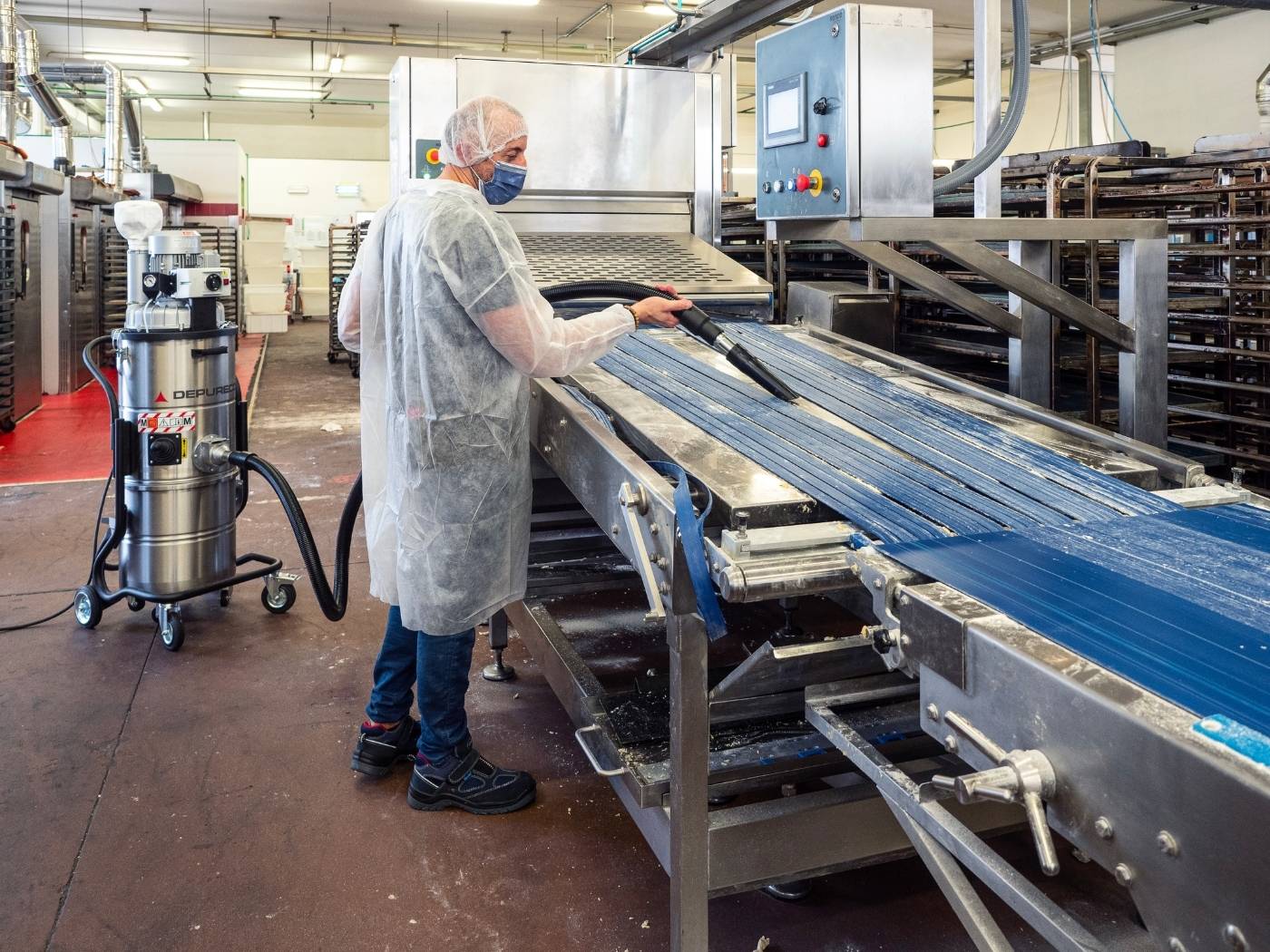
We can help narrow the right starting path for food powder cleanup, bakery residue, dry ingredient dust, central vacuum layouts, combustible-dust-aware housekeeping, or accessory selection.
