Search
INDUSTRIAL SOURCE CAPTURE

Airborne Dust Collector Systems for Source Capture

Stop dust at the process, not after it reaches the floor.
Control grinding, sanding, cutting and process dust at its point of generation with mobile or stationary collectors, extraction arms, HEPA options and engineered systems matched to your process.

Pinpoint your airborne-dust challenge

Choose the capture method that matches your process, pickup point and dust behavior.

Dust Escaping Into Open Air?

Grinding, sanding, dumping or transfer points releasing dust into the workspace?

Dust Created at the Tool?

Using grinders, saws or shrouded tools with narrow extraction connections?

Combustible or Reactive Dust?

Handling metal, food, chemical or additive powders requiring hazard-specific review?

Fixed Machines or Multiple Sources?

Need extraction for several machines, workstations or permanent pickup points?

Match the Capture Method to the Dust Source

Start with the process, pickup point and dust behavior.

These determine the airflow, filtration and collection method required.

Common dust-generating processes, materials and source-capture solution paths
Process or Dust Source Common Materials Typical Solution Path
Grinding, Deburring & Polishing Metal, composite and coating dust Extraction arm, capture hood or point-of-source vacuum; dry or wet collection based on the hazard review
Sanding, Routing & Cutting Wood, plastic, fiberglass and composite dust Machine connection, mobile or stationary collector, or high-vacuum on-tool extraction
Mixing, Bag Dump & Powder Transfer Flour, sugar, ingredients, chemical and pharmaceutical powders Enclosed capture hood with a dust collector or engineered central extraction system
Concrete & Stone Surface Preparation Respirable crystalline silica and mineral dust Tool-connected high-vacuum HEPA dust extractor with contained collection
Additive & Battery Manufacturing Polymer powder, metal powder, graphite and carbon black Contained source capture with conductive, wet or inert handling when the application requires it
Fixed Machines & Multiple Pickup Points CNC routing, packaging and production-line dust Stationary dust collector or engineered central extraction system

Application note: Material names are only the starting point. Final equipment selection must also consider particle characteristics, combustibility or reactivity, process heat and sparks, operating time, capture geometry and the facility’s hazard assessment.

Why Source Capture Works Better Than Cleanup Alone

Housekeeping removes dust after it settles. Source capture intercepts it before it spreads through the workspace.

Reduce Airborne Migration

Capture dust near the grinder, sander, machine, mixer or transfer point before it reaches neighboring work cells, HVAC pathways and overhead surfaces.

Protect Equipment and Product Quality

Localized extraction helps keep fine particulate away from sensors, bearings, electrical components, optics, finished parts and sensitive production areas.

Reduce Repeated Cleanup

Continuous capture limits the amount of material that settles on equipment and floors, reducing manual cleanup without replacing routine industrial vacuuming.
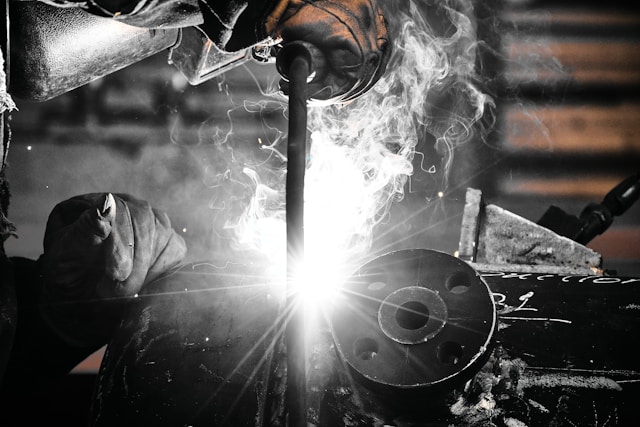
Welder producing sparks and metal fume in a fabrication shop
Effective source capture starts with the right hood, extraction arm, tool shroud or machine connection. The collector must then provide the airflow, static pressure, filtration and collection method required by the process and material.

Choose the Right Source-Capture Solution

The best system depends on where the dust originates, how it must be captured and how the material should be filtered and collected.

Mobile Dust Collectors

Flexible source capture for changing workstations, extraction arms and processes where permanent ductwork is not practical.

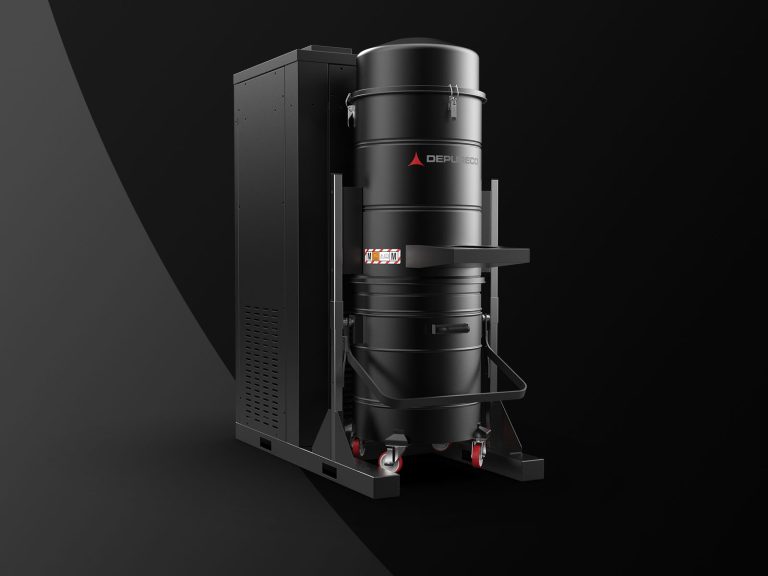
Stationary Depureco dust collector with external power cabinet on a fixed frame, dark studio backdrop.

Stationary Dust Collectors

Continuous extraction for fixed machinery, production lines and permanently connected process points.

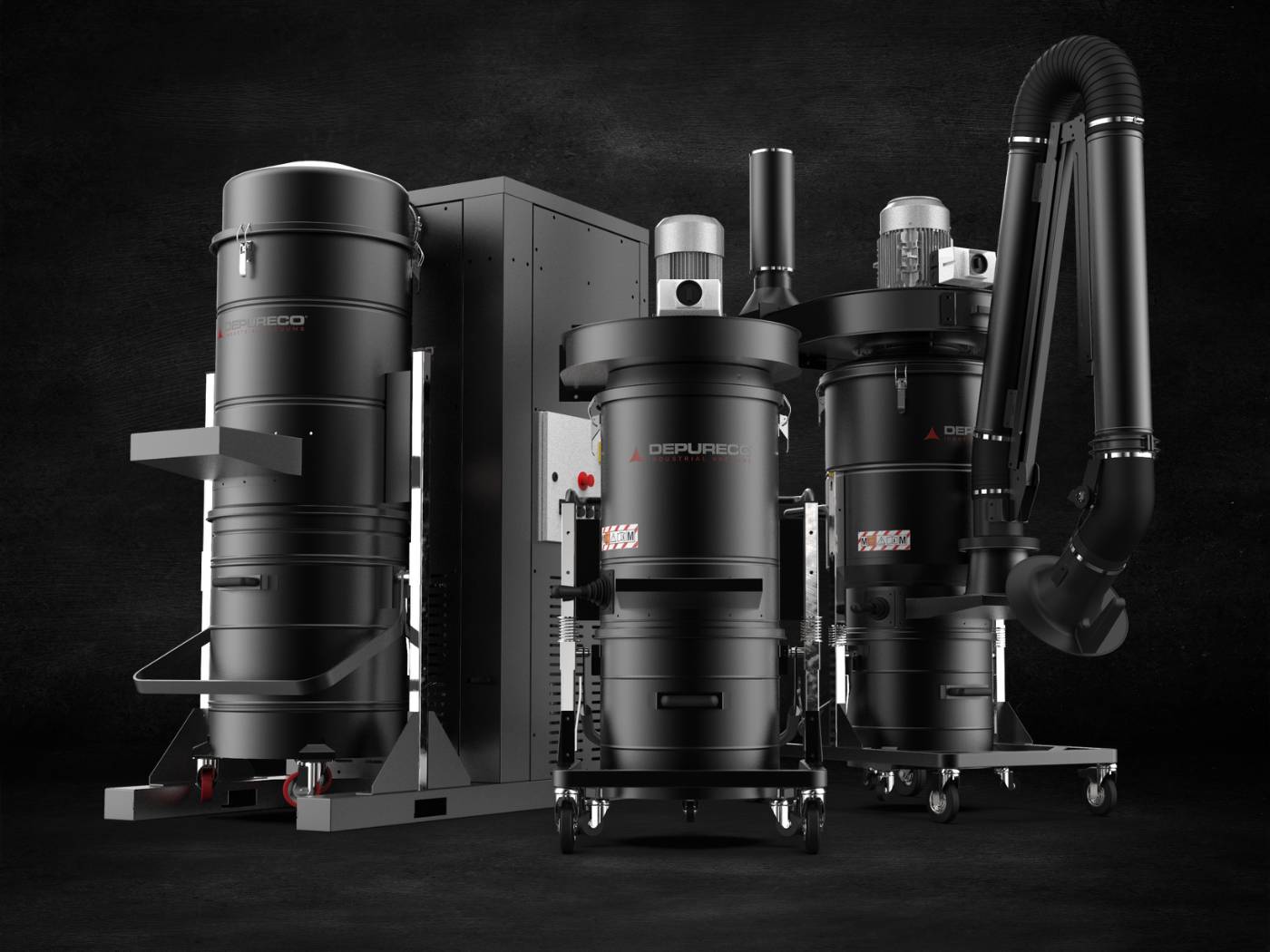
Three Depureco fine-dust industrial vacuum cleaners on wheeled frames against a dark studio backdrop.

High-Vacuum HEPA Extractors

Higher static pressure for grinders, saws, tool shrouds and narrow machine connections requiring contained dust collection.

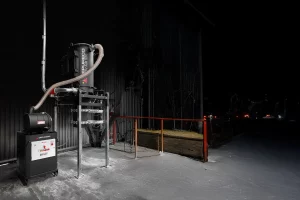
Engineered central vacuum system for multi-point combustible dust recovery and plant-wide housekeeping

Central Extraction Systems

Engineered suction, piping, filtration and discharge for multiple machines, workstations or fixed pickup points.

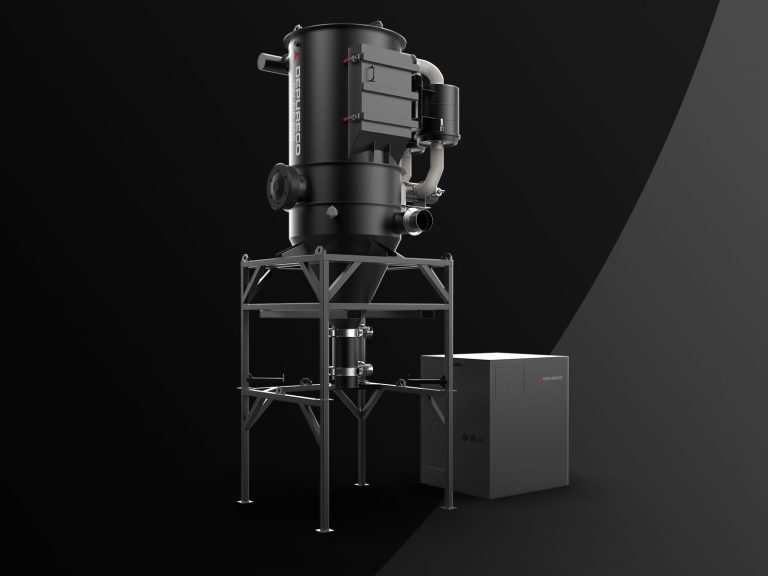
Industrial dust collector configured for source capture of airborne process dust and fine particulate

Combustible-Dust Solutions

Conductive, classified-location or application-specific equipment selected around the material, process and facility hazard assessment.

Industrial dust collector configured for source capture of airborne process dust and fine particulate

Pre-Separation and Wet Collection

Cyclones, separators and wet systems for high material loading, sparks or reactive dust when the application requires them.

Suction of airborne dust flour - Dust collector

When to Use an Airborne Dust Collector

An airborne dust collector is best when lightweight particulate escapes into open air during grinding, sanding, cutting, mixing, bag dumping or material transfer.

Higher-volume airflow draws the dust through an extraction arm, capture hood, enclosure or machine connection before it migrates into surrounding work areas.

If the material has already settled, contains heavier chips or liquids, or must be extracted through a narrow tool connection, an industrial vacuum or high-vacuum dust extractor may be more appropriate.

Many facilities use both: source capture during production and industrial vacuuming for equipment and floor cleanup.

Depureco's ATEX vacuums to clean flour dust safety in mixing and baking productions.

Combustible and Reactive Dust Change the Equipment Path

Flour, sugar, wood dust, polymers and certain metal powders can introduce ignition, explosion or reactivity concerns. The correct solution depends on the material, process and operating environment.

  • Ordinary or classified location: The documented area classification determines whether an ORD LOC, classified-location, air-powered or other specialized configuration is appropriate.
  • Dry, wet or inert collection: Particle behavior, reactivity, heat and spark potential determine the appropriate collection method. Reactive metal dust does not have one universal solution.
  • Complete conductive path: Grounding, filtration, hoses, tools, collection components and discharge methods must be evaluated as one system.


No vacuum or dust collector makes a facility NFPA compliant by itself. Final selection should consider the SDS, available dust-test data, Dust Hazard Analysis, area classification, process conditions and disposal requirements.

Capture Respirable and Hazardous Dust at the Tool

High-vacuum HEPA dust extractors support localized control when fine particulate must be captured through a grinder shroud, saw connection, enclosed machine port or other narrow extraction point.

  • Point-of-source extraction: Strong static pressure maintains suction through tool connections, narrow hoses and demanding pickup points.
  • Application-matched filtration: Primary filtration and H13 or H14 HEPA options can be configured around the material, exposure concern and operating conditions.
  • Cleaner material containment: Longopac continuous liners and other sealed collection options help reduce material disturbance during emptying and disposal.

Applications can include silica and mineral dust, lead-containing dust, pharmaceutical powders and other exposure-controlled particulate. HEPA filtration supports the control strategy, but effective capture, equipment sizing, filter maintenance, disposal practices and exposure assessment must work together.

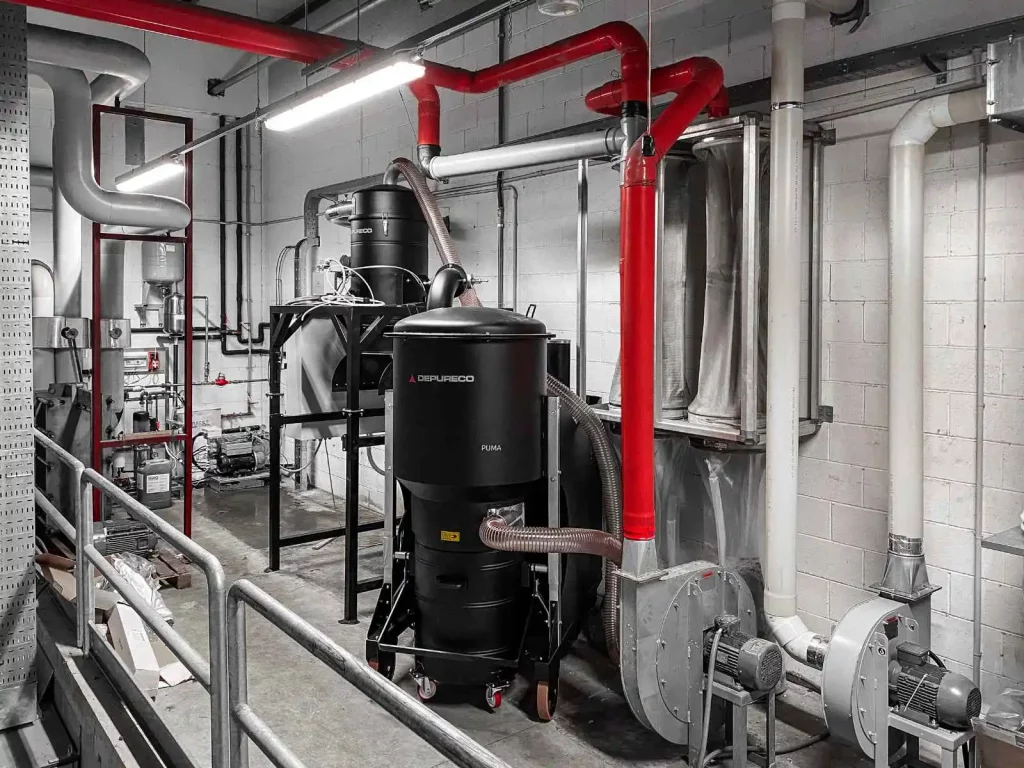
Overhead duct network from central vacuum hub serving several workstations

When multiple processes generate dust around the clock, a single high-power hub feeding a steel duct loop keeps 4,000 + CFM available at 20–30 pick-ups—no portable units to shuffle, no airflow dead-spots.

  • Variable-speed fans & PLC pulse cleaning maintain stable suction while trimming kWh and compressed-air costs.
  • Remote ΔP dashboards alert maintenance teams before filter load jeopardises airflow.
  • Scalable design—add drops or inline cyclones without replacing the core power unit.

Central Dust Extraction for Multiple Fixed Sources

A central extraction system can connect multiple machines, workstations or pickup points to one stationary suction and filtration unit. Dust is captured through defined machine ports, hoods, enclosures or cleaning drops before being conveyed through fixed piping.

  • Engineered suction: The blower, pipe diameters and system layout are sized around the required airflow, static pressure and number of simultaneous pickup points.
  • Application-matched separation: Cyclones, interceptors, filters and discharge systems can be configured around the material, dust loading and recovery requirements.
  • Integrated controls: Variable-speed drives, filter monitoring and automated cleaning can support stable performance as system demand changes.


Central extraction is not automatically the best answer for every large facility. Moving sources may be better served by mobile collectors, while individual high-loading processes may require dedicated equipment.

See Airborne Dust Source Capture in Action

Watch the DF 22 collect airborne particulate close to its point of release using an articulated extraction arm.

Depureco DF 22 source-capture dust collector with an articulated extraction arm. The video shows a European ATEX configuration. U.S. projects should be reviewed for ORD LOC or classified-location requirements based on the application.

Send Us the Dust Source. We’ll Help Narrow the System.

Share the process, material, source photos, operating hours, pickup-point dimensions and any available SDS or dust-test data.

Our team can help compare mobile and stationary collectors, high-vacuum extractors, central systems, pre-separation and combustible-dust configurations around your actual application.

Helpful details include the number of simultaneous pickup points, available power, desired collection method and whether the material will be recovered or discarded.

Industries & Dust Types We Handle

Industry / Process
Typical Airborne Dust
Go-to Depureco Setup
Food & GrainFlour, Sugar, SpicesDF 40 cart + Extraction Arm
Wood & FurnitureFine sawdustPUMA hub + Cyclone
CNC & Metal FabAluminium, Titanium FinesBL PRO ATEX + Wet Separator
Concrete / StoneRespirable SilicaXM35 JC LP HEPA
Additive ManufacturingNylon 12, Metal AM PowderDF 40 mobile + Inert-Gas Kit
Battery / EVGraphite, Lithium DustHF hub + Isolation Valve

Related Airborne Dust & Source Capture Case Studies & Posts

Airborne Dust Collector and Source-Capture FAQ

What is an airborne dust collector, and when is it the right solution?

An airborne dust collector uses higher-volume airflow to capture lightweight particulate through an extraction arm, hood, enclosure or machine connection before it spreads through the workspace.

Use one when grinding, sanding, cutting, mixing, dumping or transferring material releases dust into open air. Source capture does not replace general ventilation or settled-dust cleanup, so many facilities also use industrial vacuums for equipment and floors.

A dust collector captures airborne particulate using higher airflow through a hood, arm or machine connection.

An industrial vacuum uses stronger vacuum pressure to recover settled dust, heavier solids, liquids and production debris through a hose.

A HEPA dust extractor combines higher vacuum pressure with fine-particle filtration and may include contained collection for tool-connected or exposure-controlled dust. The correct choice depends on where the material is located and how it must be captured.

Use an extraction arm for open or changing work areas where the pickup must be repositioned.

Use a fixed hood or enclosure for predictable release points such as bag dumping, mixing, filling and transfer operations.

Use a machine connection when dust is generated inside enclosed cutting, routing or processing equipment.

Use a tool shroud with a high-vacuum extractor when the dust must be pulled through a narrow grinder, saw or handheld-tool connection.

The correct solution depends on the material, tool, spark generation, dust volume and capture geometry.

Open benches and changing work areas may use a mobile DF collector with an extraction arm. Fixed grinding cells can use a stationary DF FIX or AF collector. Shrouded handheld tools usually require a high-vacuum dust extractor. Combustible or reactive metal dust requires application review before choosing dry, wet or inert collection.

Open hoods and extraction arms generally depend more heavily on sufficient CFM to move contaminated air into the collector.

Tool shrouds, narrow hoses, long runs and restrictive machine connections require stronger static pressure to overcome resistance.

A system must provide the required airflow at its actual operating pressure after accounting for the hood, hose, duct, filters and fittings. Free-air CFM alone does not determine capture performance.

Place the pickup as close as practical without interfering with the process. Capture effectiveness falls quickly as the distance between the emission point and hood increases.

Cross-drafts, operator position, moving equipment and obstructions can also pull dust away from the collector. Final placement should be verified under real operating conditions. This follows established NIOSH source-capture guidance.


Use a mobile collector such as the DF 22 or DF 40 when the process moves, workstations share equipment or permanent ductwork is impractical.

Use a stationary DF FIX or AF collector for fixed machinery, production lines, continuous processes and permanently connected capture points.

The final choice also depends on operating hours, dust loading, available utilities, filter cleaning and collection capacity.

Yes, but the system must be engineered around the number of simultaneous capture points, required airflow at each point, pressure loss, pipe layout, dust loading and discharge method.

A multi-point project may require a stationary collector or central extraction system rather than one portable unit. Materials that are incompatible, contamination-sensitive or handled under different hazard requirements may need separate systems.

Manual filter cleaning can work well for intermittent processes and lighter dust loading where operators can pause for maintenance. Automatic reverse-jet or pulse cleaning is better suited to continuous production, heavier loading and applications where stable airflow is critical. Filter cleaning helps maintain performance, but it cannot correct an undersized collector, poorly positioned hood, blocked duct, air leak or unsuitable filter media.

Consider pre-separation when the process generates heavy dust loading, abrasive material, recoverable product or more material than the collector bin can practically hold.

A cyclone, interceptor or filtering pre-separator can reduce loading on the primary filters, increase collection capacity and reduce bin changes. It does not replace required filtration or convert standard equipment into a combustible-dust system.

No. HEPA requirements depend on the material, exposure hazard, process, applicable regulation, disposal method and facility control plan.

The primary filter, optional HEPA stage and collection method must be selected together. For silica work, OSHA requirements vary by task: certain systems require filters rated at 99% efficiency with filter cleaning, while other tasks or cleanup methods specify HEPA-filtered vacuuming. Review the applicable task rather than applying one universal rule. See OSHA 1926.1153.

No. Material name alone does not determine the collection method.

The SDS, particle characteristics, dust-test data, process, heat or spark generation, Dust Hazard Analysis and area classification determine whether the application needs dry collection, a source-capture wet collector, immersion separation, inert handling, classified-location equipment or another engineered approach.

Conductive hoses, grounding or antistatic filters are important system components when required, but they do not make otherwise unsuitable equipment safe for every combustible dust.

Airborne particles reach the lungs, can form explosive clouds, and spread contamination plant-wide.

No dust collector makes a process or facility compliant by itself.

Equipment can support an exposure-control, ventilation or combustible-dust program when the hood, ducting, filtration, discharge, work practices and safety systems are selected for the application. Compliance also depends on exposure assessment, the facility’s hazard analysis, area classification, maintenance and operating procedures.

Use application-specific language instead of claims such as “OSHA-approved dust collector” or “NFPA-certified facility.” OSHA describes source capture as a complete ventilation system, while NFPA 660 addresses facility and process-level combustible-dust hazards.


Provide:

  • Process creating the dust
  • Material and available SDS
  • Source photos and dimensions
  • Hood type and capture distance
  • Dust volume and operating hours
  • Number of simultaneous capture points
  • Hose or duct diameter, length and layout
  • Available voltage and compressed air
  • Filter and disposal requirements
  • Spark, heat, toxicity or combustibility concerns
  • Whether filtered air will return indoors or exhaust outside


These details help determine whether the application fits a mobile DF collector, stationary DF FIX or AF collector, high-vacuum HEPA extractor, central extraction system, pre-separator or application-specific wet system.

Use a real-time particulate monitor or collect a gravimetric sample and compare to mg/m³ limits.

5 mg/m³ for general industry per Table Z-1.

A systematic review that identifies combustible-dust risks, required by NFPA 660 every five years.

Within five years of the previous study or sooner if you change processes or materials.

Yes—typical K<sub>st</sub> ≈ 100 bar·m/s, classified St-1.

Yes—any combustible organic powder requires conductive, brushless equipment with bonding and isolation.

Stay below 5 : 1; derate further if relative humidity exceeds 60 %.

Vertical orientation sheds dust evenly, reducing blinding and lowering pulse-cleaning frequency.

Yes—Pneumatic Venturi vacuums have no electric motor, so they’re accepted in Zone 1 provided all contact surfaces are conductive and the air supply is oil-free and grounded.

For reactive metals like aluminum, titanium, or magnesium that may spark or ignite in dry filters.

High CFM clears room air; high static pressure (> 7 000 Pa) powers long hoses or on-tool capture.

Yes—size duct diameters and blower power so each pickup stays above minimum conveying velocity.

2–6 in w.g.; a rising trend without recovery signals filter loading.

For continuous processes, start at 30-second intervals and adjust to keep ΔP stable.

Continuous measurement of pressure drop across filters—used to schedule cleaning and predict cartridge life.

Yes, if duct diameter is ≥ 6 in or if dust K<sub>st</sub> exceeds 200 bar·m/s.

Typically < 5 mJ—static discharge can ignite it.

Yes, if upstream explosion protection prevents flame propagation into the HEPA stage.

A well-tuned pulse manifold consumes ≈ 0.3–0.5 ft³ per pulse; at 30-second intervals that’s 0.6–1 CFM—roughly 30 % less than legacy pulse jets.

Arms capture near the cloud; shrouds capture inside the tool enclosure. Choose based on accessibility and airflow.

Yes—removing 95 % of mass before cartridges lowers pulse frequency and air consumption.

Typically annually, or sooner if ΔP remains above 6 in w.g. after cleaning.

Use sensors that export ΔP, airflow, and runtime to CSV or cloud dashboards.

Cartridges offer larger media area per footprint and capture sub-micron particles more efficiently.

Bonding, grounding (< 1 MΩ), conductive hoses, and antistatic cartridges.

Yes—ensure high vacuum capability and use spark arrestors to protect filters.

Maintain conveying velocity (≥ 4 000 fpm for dust) and limit total pressure drop below blower capacity.

Early alerts on rising ΔP let you clean or change filters before airflow is compromised.

Contact Us

Request a free quote