SP – 4C – 18,600
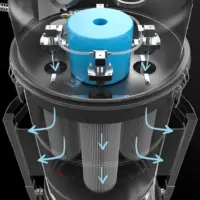
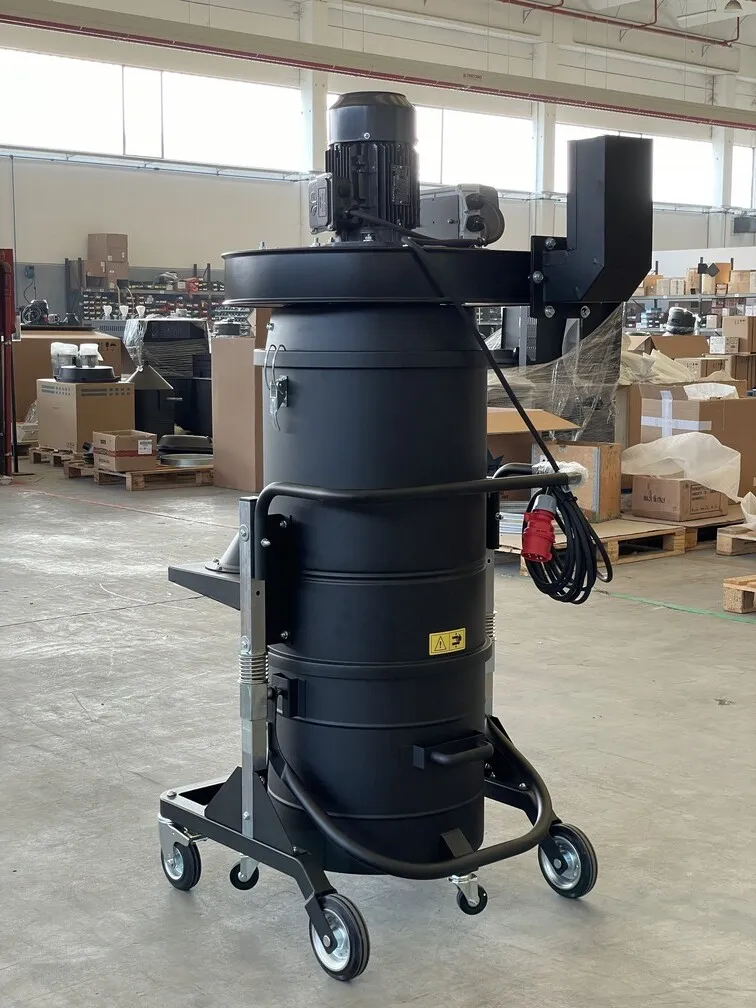
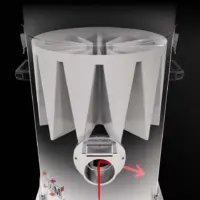
Automatic reverse jet cleaning system. Antistatic M class filter (EN-60335-2-69), 4x Polyester filter cartridges, 18,600 in² filter surface.
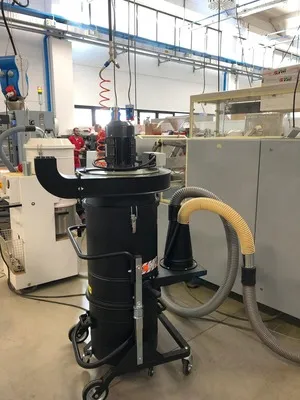

1.5 - 3.5 HP | 480V 3~

3,800 in²

26 gal
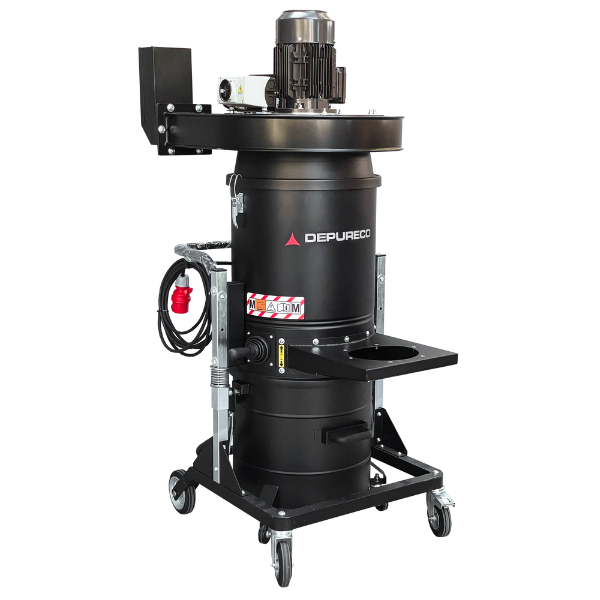
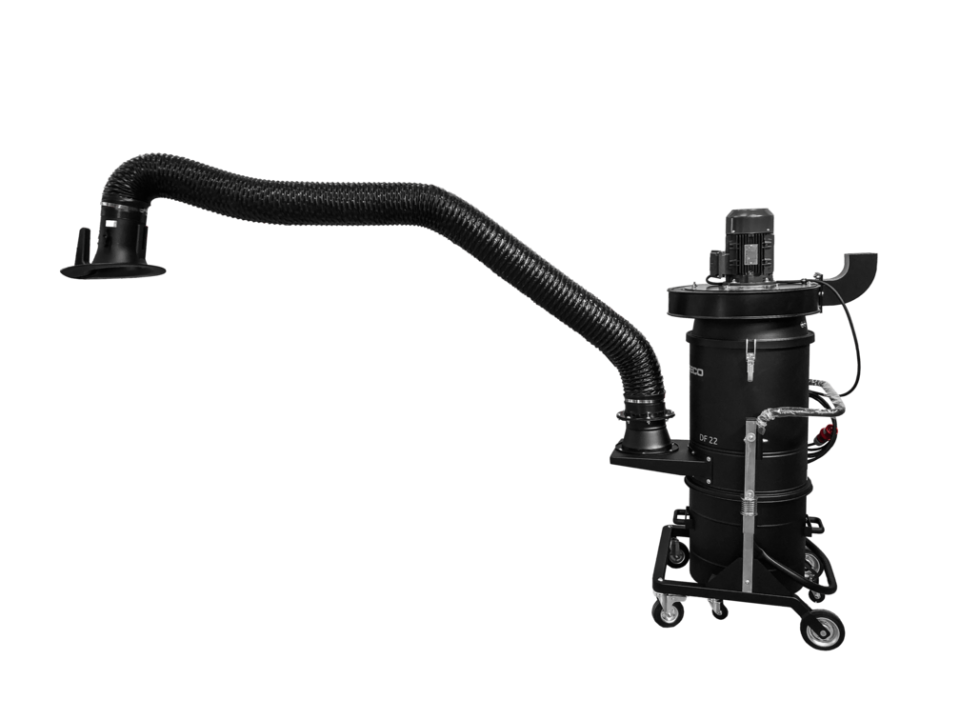
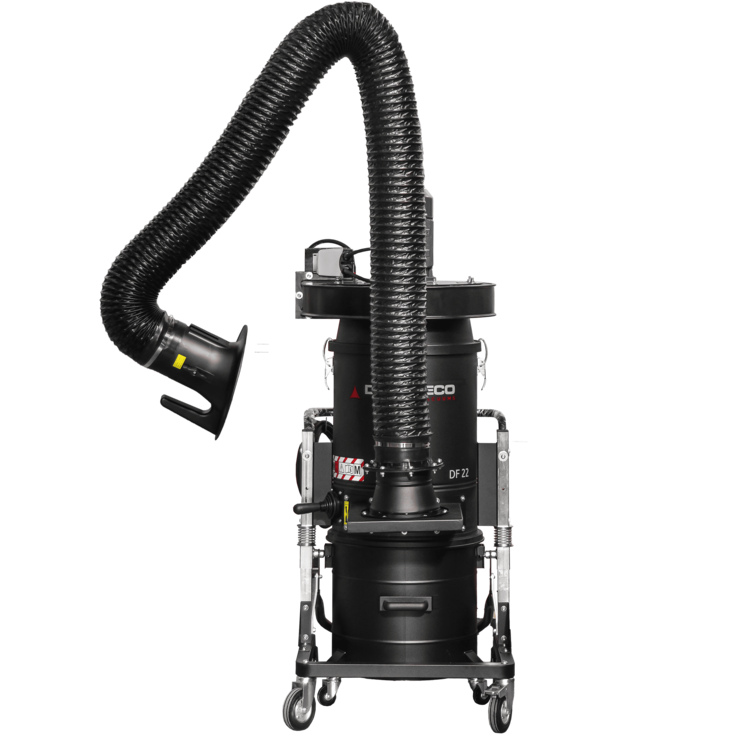
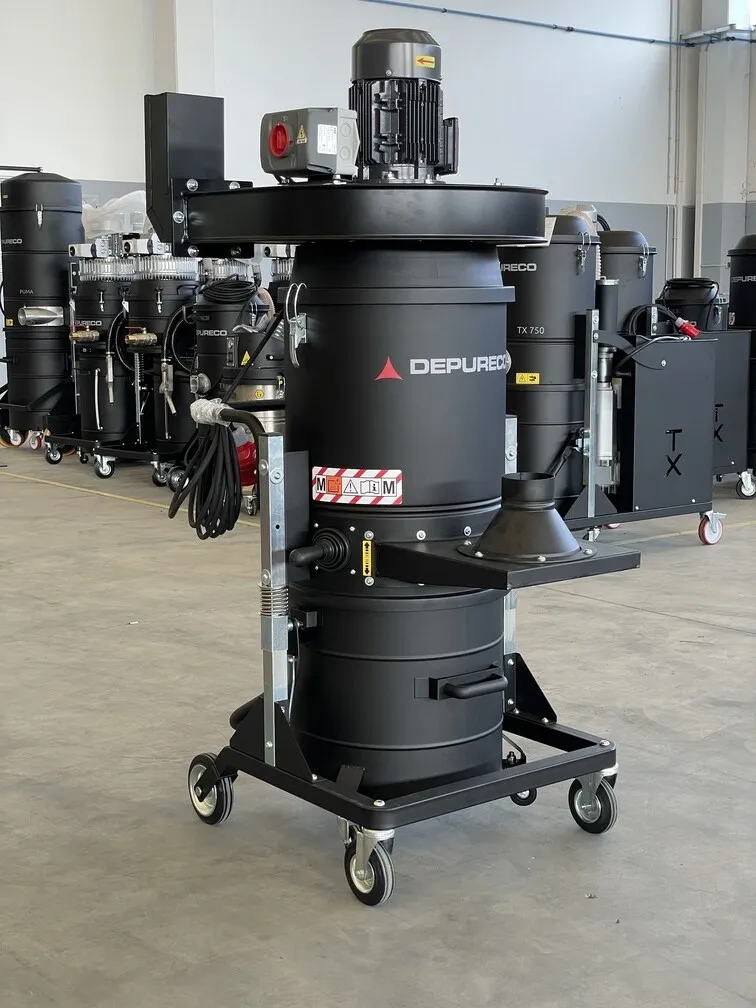
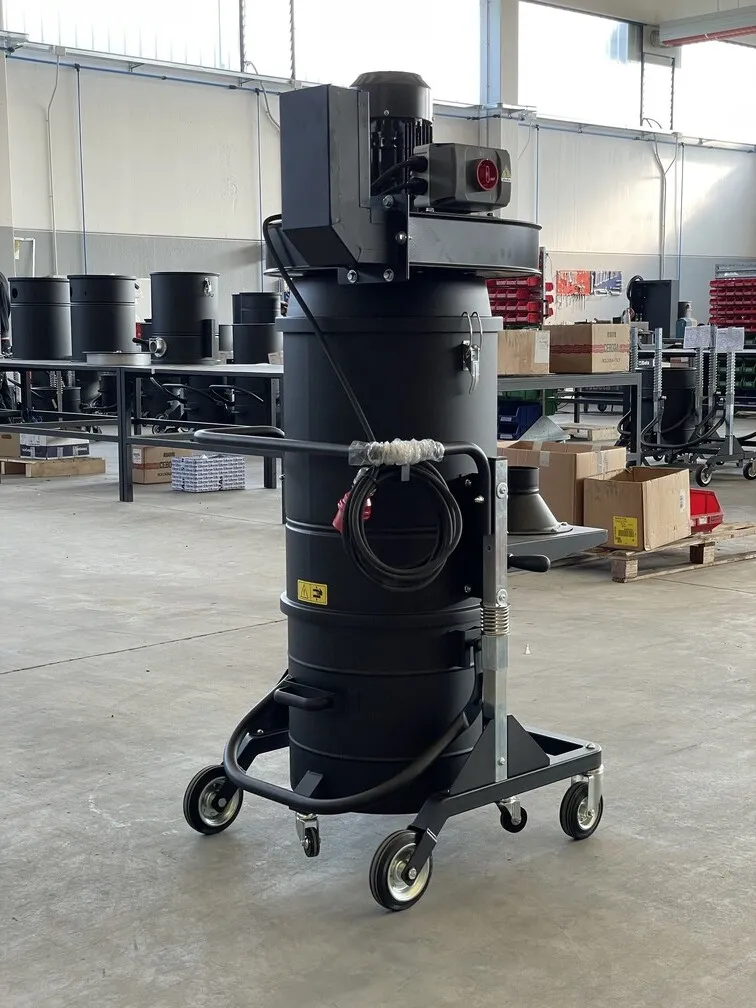
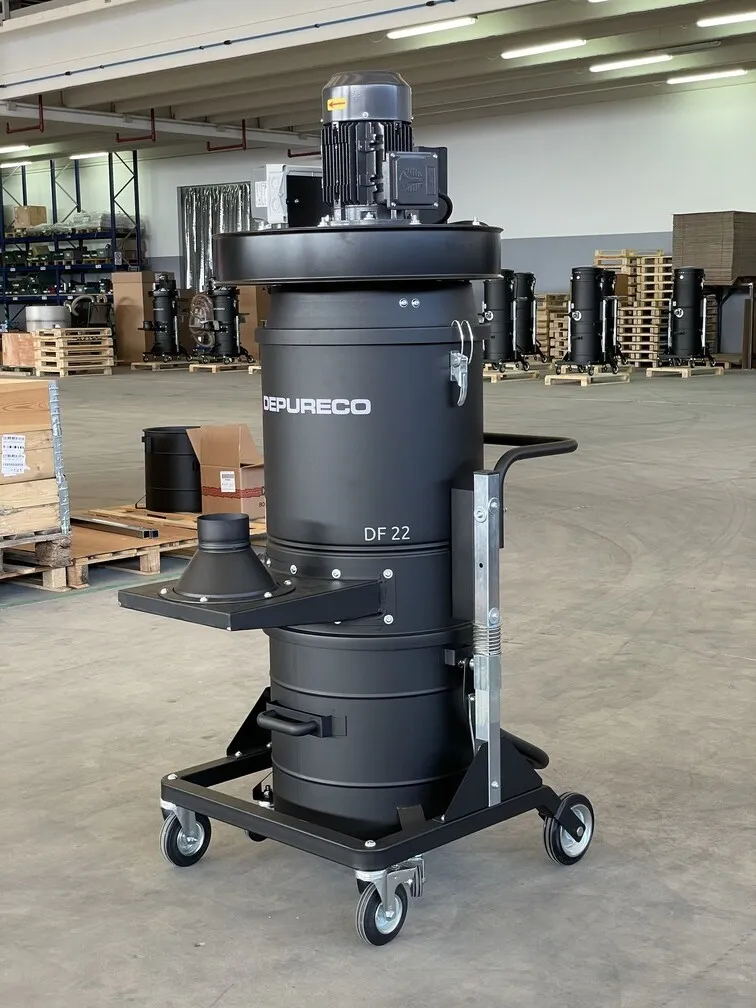
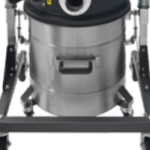
The DF 075 and DF 22 are compact source capture dust collectors designed to collect qualified dry airborne dust close to the process where it is generated. These fan-driven systems are built for localized machine extraction at cutting, routing, sanding, grinding, trimming, hoods and other defined dust-generation points.
Unlike an industrial vacuum used primarily to recover settled material from floors, machines or containers, the DF range prioritizes higher airflow for airborne dust capture. The DF 075 provides the smaller airflow range with 1.5 HP fan power and published airflow configurations from 176 to 470 CFM. The DF 22 increases fan power to 3.45 HP and supports published airflow configurations from 470 to 824 CFM.
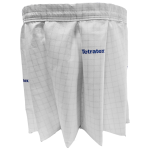
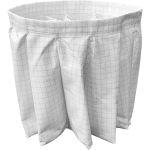
Standard configurations use a Class M polyester star filter with 3,800 in² of primary filter surface, manual filter cleaning and a 26-gallon detachable collection bin. The DF 22 can also be configured with optional H13 secondary filtration when required for the application. Additional filter-media and automatic-cleaning configurations are available for qualified processes.
Typical applications include: machine-connected dust extraction, CNC and digital cutting, woodworking, sanding, routing, plastics processing, dry powders and other localized production dust. The correct configuration should be selected around the actual material, required airflow, capture-point geometry, inlet size, filter loading, disposal method and any combustible-dust or classified-location requirements.

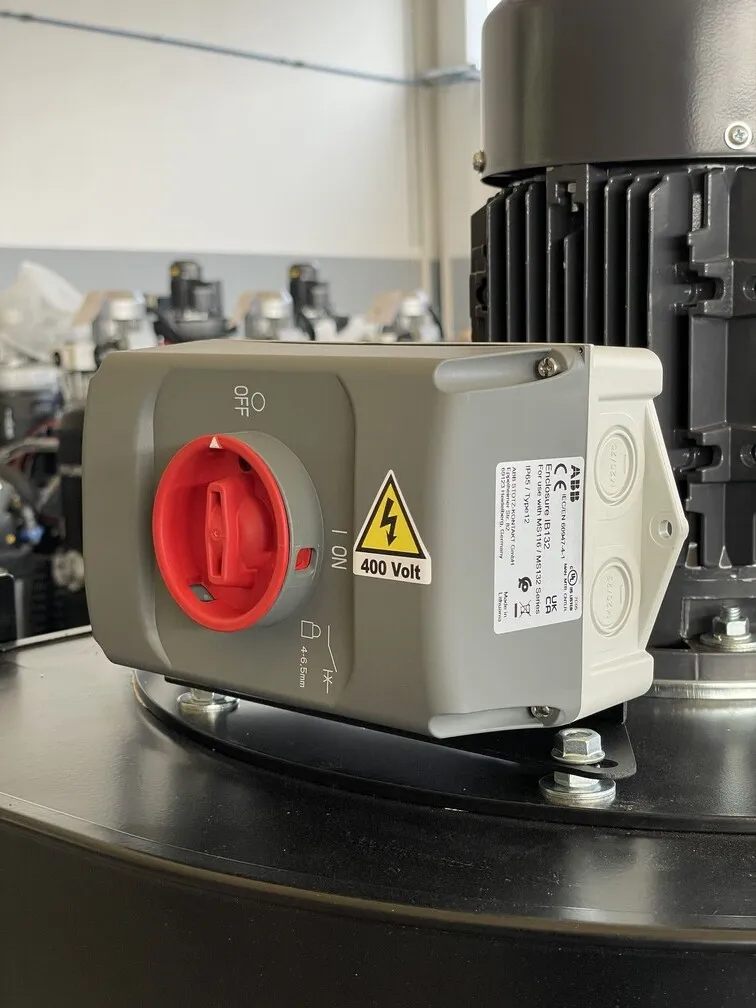
DF 075 and DF 22 use electric fan configurations designed for localized airborne dust capture. Depending on model and inlet size, maximum airflow ranges from 176 to 824 CFM. Fan-driven airflow for localized capture of airborne dust near machines, hoods and defined process points. Published airflow depends on model, inlet and configuration.

Standard configurations use a polyester Class M star filter with 3,800 in² of primary filter surface for qualified dry process dust and particulate. Additional media options should be selected according to the material and application.

Multiple Inlet Configurations - Match inlet diameter, ducting and capture geometry to the machine, hood or process generating the dust.

Removable collection bin simplifies collected-material handling and disposal without dismantling the main dust collector.
Automatic reverse jet cleaning system. Antistatic M class filter (EN-60335-2-69), 4x Polyester filter cartridges, 18,600 in² filter surface.
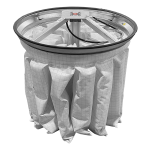
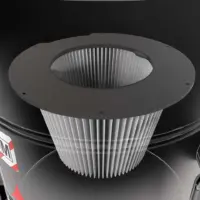
H13 Absolute conical Filter (EN 1822)
Answers to common questions about source capture, airflow, filtration, machine connections, model selection and application requirements for the DF 075 and DF 22.
The DF 075 and DF 22 are compact, fan-driven industrial dust collectors designed for localized source capture of qualified dry airborne dust and process particulate.
They are intended to collect dust close to where it is generated, such as at cutting machines, CNC routers, sanding or grinding points, production equipment, extraction hoods, trimming processes, and other defined dust-generation locations.
Depending on the model and inlet configuration, the DF range provides published maximum airflow from 176 to 824 CFM. This higher-airflow design makes the DF range particularly useful when the primary problem is capturing airborne particulate before it spreads away from the process.
Final selection should account for the material, required airflow, capture geometry, inlet size, filtration, filter loading, disposal method, and any combustible-dust or classified-location requirements.
The DF 075 is the smaller-airflow option, while the DF 22 is the step up when the process requires greater air movement or a larger capture envelope.
The DF 075 uses 1.5 HP fan power and supports published airflow configurations from 176 to 470 CFM. The DF 22 uses 3.45 HP fan power and supports published airflow configurations from 470 to 824 CFM.
Both are designed around localized source capture, Class M primary filtration, manual filter cleaning, and detachable collection. The correct model should not be selected by maximum CFM alone. Hood design, capture distance, inlet diameter, duct or hose losses, material behavior, and the amount of dust generated all affect the airflow required at the actual process.
Choose the DF 075 for smaller localized capture requirements. Move to the DF 22 when the process requires higher airflow, a larger connection, greater capture reach, or additional configuration options.
The main difference is what the equipment is trying to capture and how it moves air.
A source capture dust collector such as the DF 075 or DF 22 is designed primarily to move a relatively high volume of air around a defined process point. The goal is to intercept airborne dust close to where the machine or process is generating it.
An industrial vacuum is generally used to recover settled material through a smaller hose from floors, machinery, containers, equipment surfaces, or other cleanup points. Industrial vacuums typically rely more heavily on vacuum pressure to pull material through the hose.
If dust is becoming airborne while a machine is cutting, routing, sanding, trimming, or processing material, source capture may be the better starting point. If the material has already accumulated and needs to be picked up, an industrial vacuum may be more appropriate.
Some facilities need both.
Yes, when the process and dust are appropriate, the DF range can be configured for machine-connected and localized source capture.
Potential applications include CNC routers, digital cutting equipment, woodworking machines, saws, sanding stations, trimming processes, production machinery, extraction hoods, and other equipment with a defined dust-generation point.
The connection should not be selected by hose diameter alone. Effective machine dust collection depends on the dust-generation rate, machine-port size, duct or hose length, elbows and restrictions, hood geometry, capture distance, and the airflow required at the source.
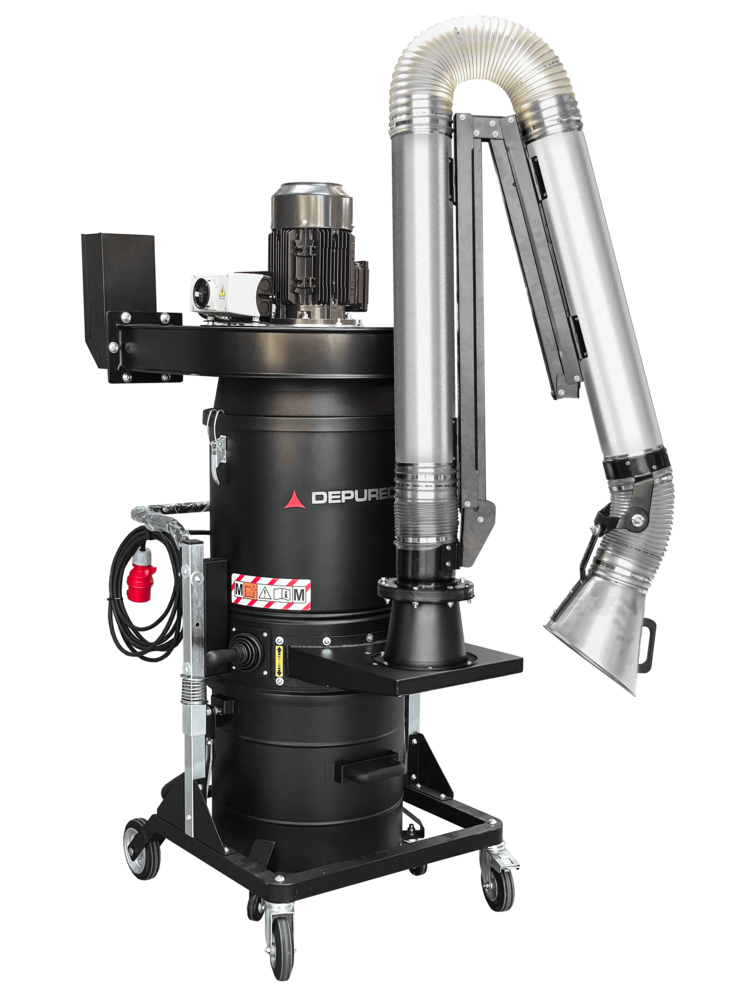
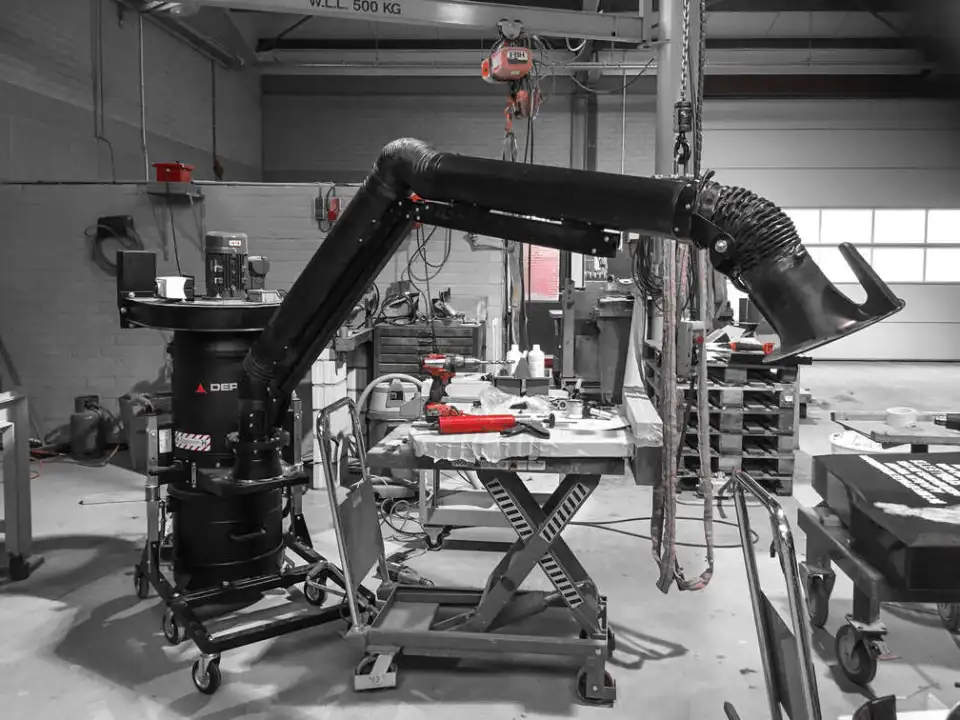
For machines with an existing dust-extraction port, Depureco can review the port diameter and airflow requirement. For open processes, an extraction arm or properly positioned hood may provide a better capture arrangement.
Airflow is only part of effective source capture. Where the hood or extraction arm is positioned relative to the dust-generation point can substantially affect how well the system captures airborne particulate.
As the pickup point moves farther from the source, the air has a larger area to influence and more airflow may be required to control the same dust. Bringing the hood closer to the generation point generally concentrates the capture zone and makes better use of the available airflow.
The DF 075 and DF 22 support different published airflow configurations, but maximum CFM should not be treated as the airflow that will automatically exist at every hood or machine connection. Hose or duct length, diameter, elbows, reducers, filters, inlet configuration, dust loading, and capture geometry all introduce system resistance.
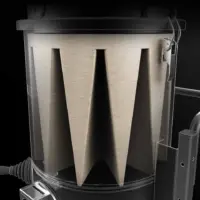
Standard DF 075 and DF 22 configurations use a polyester star filter rated Class M under EN 60335-2-69, with approximately 3,800 in² of primary filter surface and manual filter cleaning.
The DF 22 can also be configured with an optional H13 secondary filtration stage where that filtration level is appropriate for the application. Published DF 22 technical documentation lists an H13 absolute filter under EN 1822 as an optional secondary stage.
Other available filter-media options can include antistatic polyester, PTFE, antistatic PTFE, and NOMEX depending on the selected model and application.
Filter selection should be based on the actual dust, particle characteristics, filter loading, temperature, static considerations, required downstream filtration, and any process or regulatory requirements. Do not describe a machine as HEPA equipped unless the H13 option is actually installed.
Standard DF 075 and DF 22 configurations use a manual filter-cleaning system. The operator uses the filter shaker to help release accumulated dust from the primary filter and restore filter performance.
For applications with heavier or more frequent filter loading, a separate DF 22 SP configuration is available with automatic reverse-pulse filter cleaning. This allows the filter-cleaning cycle to be automated rather than relying only on manual shaking.
The SP should be treated as a distinct configuration rather than a standard feature on every DF 22. Whether automatic cleaning is worthwhile depends on dust loading, operating time, material behavior, filter media, production schedule, and how frequently the standard filter would otherwise need to be cleaned.
The DF 075 and DF 22 are intended for qualified dry airborne dust and process particulate that can be safely handled by the selected collector and filter configuration.
Potential applications can include wood dust, sanding or routing dust, qualified plastics and PVC process dust, dry powders, production fines, trimming dust, and other dry particulate generated at machines or defined process points.
Material name alone is not enough to determine suitability. Particle size, bulk density, abrasiveness, temperature, conductivity, moisture, toxicity, combustibility, reactivity, and how the material is generated can all affect equipment and filter selection.
Materials such as aluminum dust, composite dust, carbon-fiber particulate, combustible organic powders, reactive materials, and regulated hazardous dusts require additional application review before a DF configuration is specified.
Do not assume that a standard DF 075 or DF 22 is suitable for combustible dust or a classified hazardous location simply because it is a dust collector.
Combustible-dust selection should consider the exact material, process, dust-hazard information, ignition hazards, grounding and bonding requirements, filtration, collection method, area classification, disposal workflow, and applicable facility requirements.
Depureco has separate engineered DF 22 configurations for specific combustible-dust applications, including ORD LOC configurations intended for qualified combustible dust in unclassified ordinary locations. Classified-location requirements are a separate engineering question and must be matched to the exact location and equipment configuration.
The standard DF 075 / DF 22 product page should therefore be treated as the base source-capture platform. If the dust is combustible, conductive, reactive, or the area has a documented electrical classification, provide that information before equipment is selected.
The DF 075 and DF 22 are strongest when the application calls for compact, localized source capture at one machine, work area, hood, or defined process point.
A larger or stationary dust collector may be a better fit when the process generates more airflow demand than the DF range can support, when several pickup points need to operate together, when long duct runs create significant resistance, or when the collector will become a permanent part of a production line or facility dust-extraction system.
Examples can include applications better suited to a larger DF-series collector, a stationary DF FIX configuration, or an engineered centralized extraction system.
The right step up depends on simultaneous pickup demand, required airflow at each source, duct layout, material loading, filter-cleaning requirements, collection capacity, operating schedule, and future expansion. Depureco can review the process before determining whether a compact DF unit or a larger engineered system is the better fit.